

Startup Gadgets: Build & Launch Physical Products Faster
Overview
Why startup gadgets matter now: a quick primer
In 2026, many people think of "tech startups" as companies that only make apps or software. But actually, a new kind of startup is growing fast. These companies use "startup gadgets" to bring their ideas to life. What are these gadgets? We’re talking about real hardware, special tools for makers, devices built for developers, and quick-build kits that help create new things fast.
These aren’t just toys. They are becoming super important again, especially for new companies focused on making physical products or smart devices that use AI. Think of it this way: instead of just talking about an idea, a startup can build a working model, even a simple one, much faster than before. This helps them show off what they are creating.
Here’s why these startup gadgets are so important for businesses today:
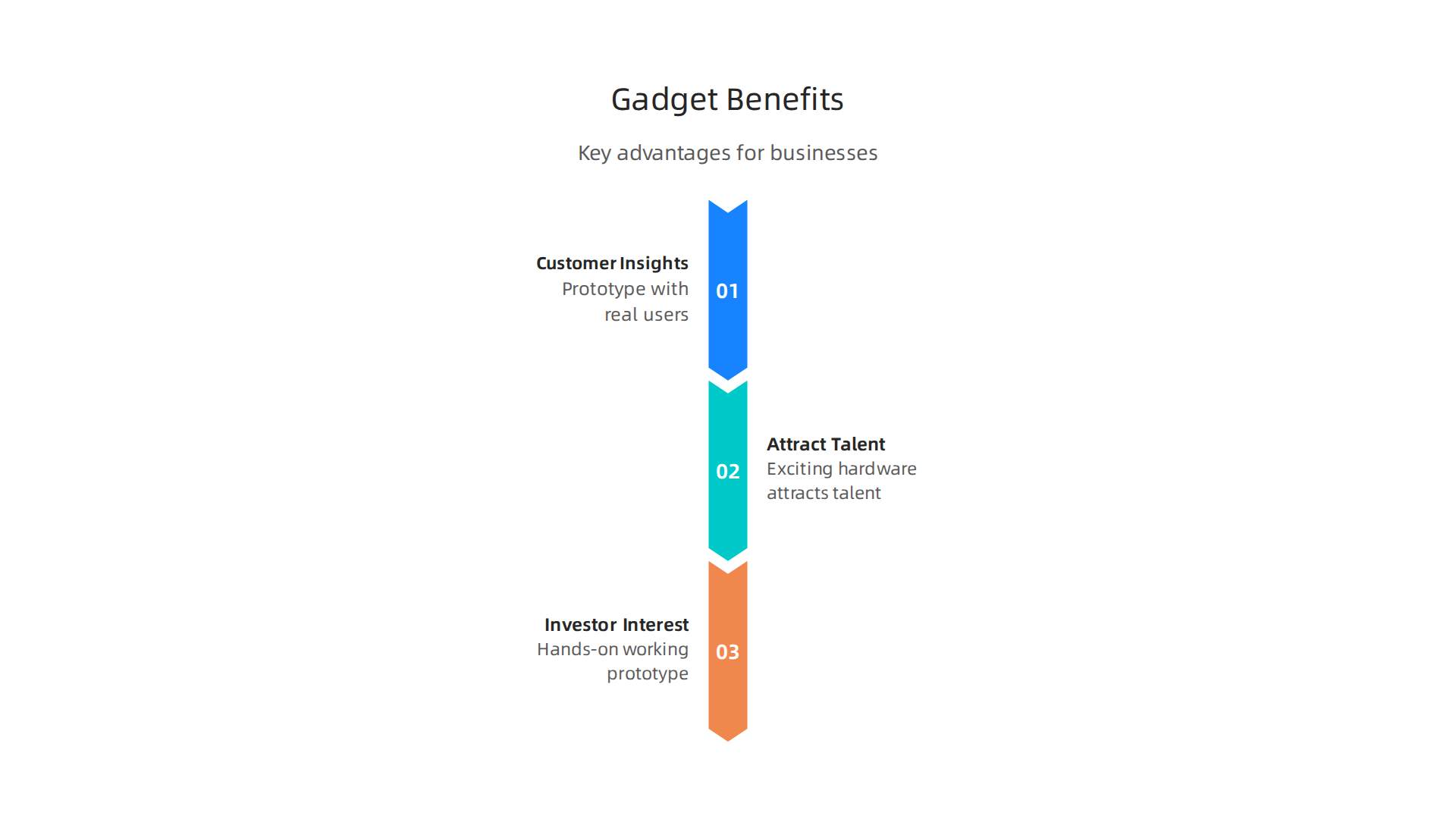
- Learning what customers want: When a company builds a physical prototype, they can put it in front of real people. This helps them quickly learn what works and what doesn’t. They can find out if their product solves a real problem for customers without spending a lot of money first.
- Attracting top talent: Imagine a tech startup in a busy place like New York City (NYC tech startups, for example). If they have exciting hardware and cool tools, it helps them stand out. Talented engineers and designers want to work on interesting projects, and seeing real gadgets helps them get excited.
- Getting investors interested: It’s one thing to tell investors about a great idea. It’s another to put a working prototype of an AI-enabled product right in their hands.

This makes the idea feel more real and shows that the team can build things. It can help convince investors to give money to the startup.
For companies making products with AI, these gadgets are even more crucial. They allow teams to test how their AI works in the real world, not just on a computer screen. This hands-on approach helps these businesses learn faster and get ahead. In fact, the market for connected devices, which includes many of these gadgets, is expected to reach 650 billion dollars by 2032, showing just how much these physical products matter Connected Devices Market Report 2026 [Free PDF].
Choosing the right tools for your AI development can make a big difference. For more insights on this, you can learn how to choose and optimize AI developer tools 2026.
If you want to stay updated on the latest AI trends and how they impact development, consider subscribing to The AI Newsletter Worth Reading.
How startup gadgets accelerate product discovery and developer workflows
Building on the idea of why physical products matter, let’s talk about how these startup gadgets help companies learn and build even faster. It’s like having a superpower that lets you try out your ideas with real people and quickly make them better.
When a company makes a physical model or "prototype" using startup gadgets, they can discover what customers truly need and want. This is much faster than just writing down ideas or making software simulations. People can touch and use the real thing, giving much clearer feedback.

For example, a startup in a busy city like one of the many NYC tech startups might quickly test a smart device prototype in public. They learn right away if it’s easy to use or if people find it confusing. This fast learning helps them change their product quickly, saving time and money. According to a Spring 2026 survey, many designers and builders see the value in prototyping for quick feedback loops State of Prototyping: Spring 2026 – UX Tools.
For developers, special gadgets are like secret tools. These are things like debugging tools that help find mistakes in code, or on-device development kits that let them test software directly on the hardware. These gadgets fit right into how developers already work, using systems like CI/CD (which helps teams build and test code often) and MLOps (which helps manage AI models).
Think of it this way: instead of waiting a long time to see if their AI code works on a real device, developers can use these tools to test it right away. This means they can fix problems much faster and make changes more easily. This quick back-and-forth helps reduce the time it takes to get a new product ready for customers. By using the right AI developer tools in 2026, teams can truly unlock peak productivity with AI developer tools in 2026.
Expert Tip: Always make sure your physical prototypes are easy to change. This way, when you get feedback, you can quickly make updates without starting all over again. Being flexible is key for learning fast.
Now that we know how helpful fast learning is, let’s look at the different kinds of special tools, or startup gadgets, that companies use today. These gadgets fall into a few main groups, each with its own job to help businesses grow and build cool new things.
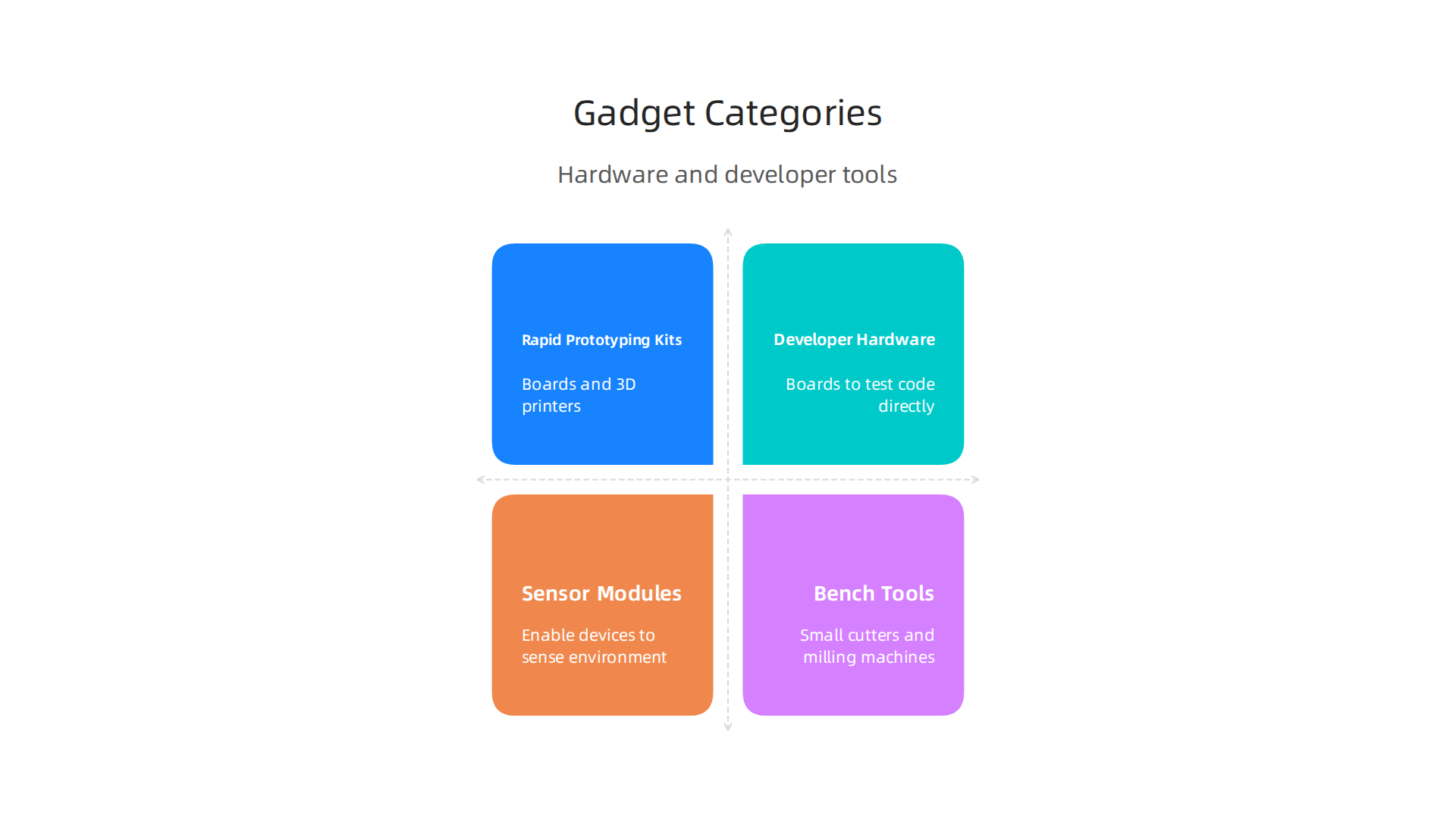
Rapid-Prototyping Kits
These are like building blocks for ideas. They include things like easy-to-use computer boards (think Raspberry Pi or Arduino) and 3D printers. Startups use these to quickly build physical models of their ideas. Imagine a company wanting to make a new smart toy; they can print out different shapes or test how buttons feel before making thousands. This helps them get real feedback fast for products that customers will hold and use.
Developer Hardware (On-Device Dev Kits)
For companies building software that runs inside other devices, like tiny computers or AI tools, these gadgets are a must. They are special boards and setups that let developers test their code directly on the actual small computer it will live on. This is super important for AI edge devices, where AI works right on the device without needing the internet all the time. Being able to test on real hardware early helps fix bugs and make sure everything works smoothly. As modern software trends show, embedded development needs validation early on to avoid costly fixes later, according to a 2026 analysis of 2026 Software Stack Trends: Embedded, AI & Cross-Platform.
Sensor and IoT Modules
These small parts help products "sense" the world around them. Think of sensors that measure temperature, light, or movement. IoT (Internet of Things) means these devices can talk to each other and to the internet. Startups making smart home devices or industrial sensors use these modules to collect data. The market for connected devices is expected to grow a lot in the coming years, showing how important these gadgets are.
Bench Tools for Small-Batch Production
Once a prototype is great, a startup might not want to make millions of units right away. They might want to make a small number first. This is where bench tools come in. These are things like special soldering stations, small laser cutters, or desktop milling machines that let companies make a limited number of high-quality products without needing a huge factory. This step is perfect for launching an early version of a product.
Different kinds of startups use these startup gadgets in different ways. A company building a new hardware-enabled product, like a smart speaker, would use rapid-prototyping kits and developer hardware. Startups creating platforms for smart cities would rely heavily on sensor and IoT modules. Even for a business that might become one of the top SaaS companies later, using these gadgets for their hardware components can give them a big head start.
Choosing the Right Gadget Category
Here’s a quick guide to help you pick:
- For Discovery: If you’re just exploring ideas, start with rapid-prototyping kits. They are flexible and cheap.
- For Your First Product (MVP): Use developer hardware to make sure your software runs well on the actual device. Add sensor modules if your product needs to gather information from the world.
- For Scaling Up (Small Batches): When you’re ready to make more than just one or two, bench tools for small-batch production are your friend.
Want to stay updated on all the smart tools and technologies helping developers build amazing things, especially with AI? Get clear daily AI updates from The Deep View Newsletter.
The AI Newsletter Worth Reading
Using these helpful startup gadgets for building and testing is just one part of making a new product. Once you move past creating an idea, you also need to think about big topics like security, following the rules, and how you buy all your parts. These are super important for any company, from a small new business to big leading tech companies reshape AI developer tools for engineering success.
Security, compliance, and procurement: what engineering leaders must know
When you bring physical devices and small computer gadgets into your work, safety should always be a top concern. This is especially true for devices that connect to the internet, often called Internet of Things (IoT) devices, or special "edge" gadgets that run AI right where the data is gathered. You need to make sure these startup gadgets are safe from people who might want to cause harm or steal information.
Keeping Your Gadgets Safe
First, think about how to protect the gadgets themselves.
- Secure by Design: Try to choose devices that are built with security in mind from the very start. Ask suppliers how they make their products safe. This means looking for products from makers who think about security as they design, not just adding it on later. This is a key step, as mentioned in guidance for mitigation strategies for edge devices.
- Protect Data: Many startup gadgets collect important information. Make sure this data is kept secret and safe, whether it’s stored on the device or sent over the internet.
- Network Safety: Any gadget that connects to your company’s network can be a way for bad actors to get in. Make sure these connections are secure. For general tips on buying and using IoT devices safely, you can look at the Internet of Things Acquisition Guidance.
Smart Buying and Following Rules
When you’re buying all these developer hardware kits, sensors, and bench tools, it’s not just about getting the best price. It’s also about making sure you buy from trusted sources and follow certain rules. This is called procurement and compliance.
- Trusted Suppliers: Always buy your startup gadgets and parts from well-known and trusted companies. This helps avoid fake or unsafe items. Some rules, like those for hospitals, even say suppliers must share security documentation as part of procurement.
- Clear Policies: Even a small startup in a city like New York should have clear rules for how they buy tech. This means having a Global IT Procurement Policy that makes sure everything bought meets security standards.
- Checking Components: Know where your parts come from. This helps you avoid risks in your supply chain, which is the path a product takes from raw materials to you.
Before You Deploy: A Simple Checklist
Before your startup gadgets go out to customers or even into a bigger test area, do these basic checks.
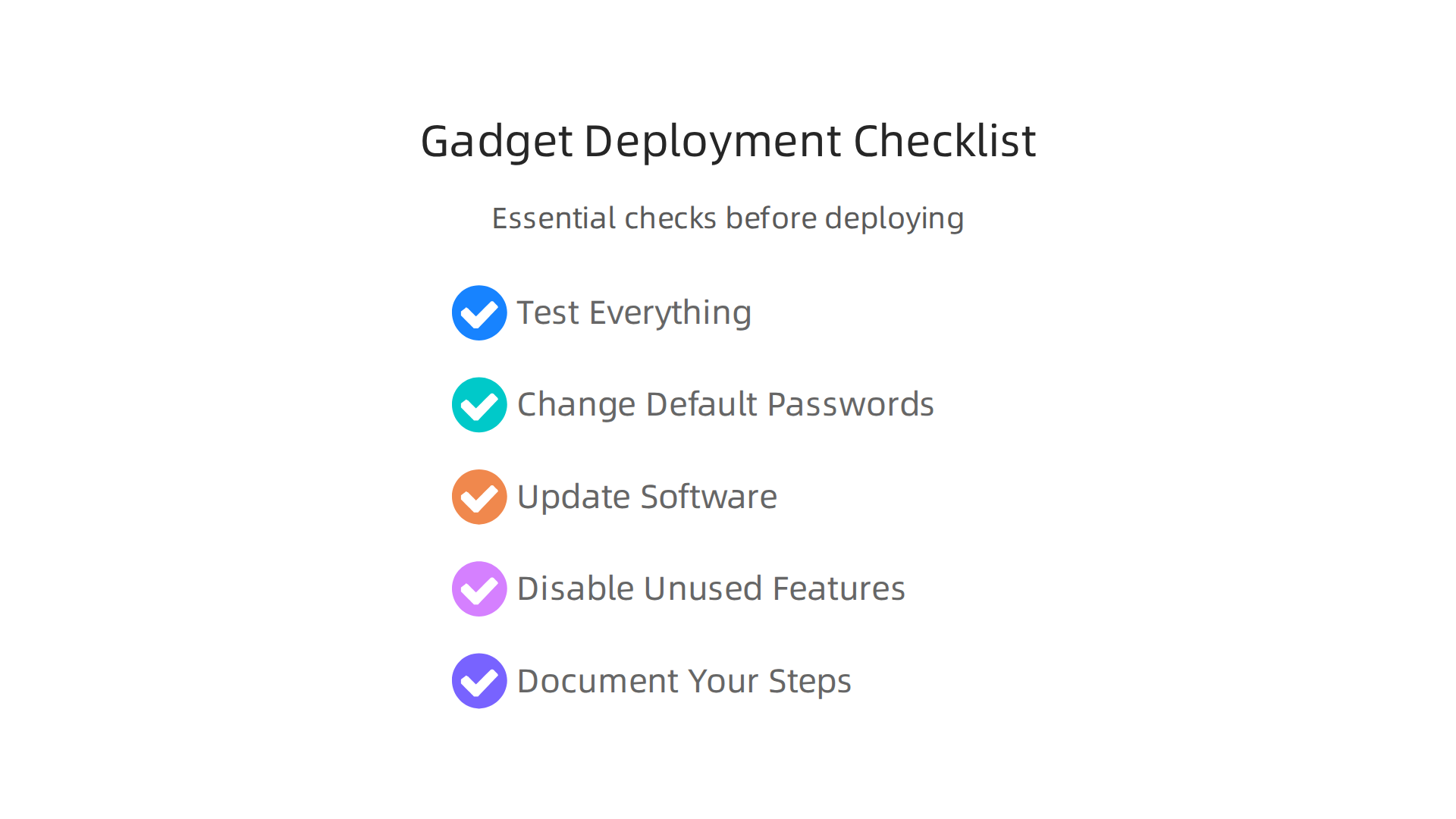
This helps you lower risks and stay compliant. Taking a risk-based approach to software and hardware security is important.
- Test Everything: Make sure the gadgets work exactly as they should and don’t have any obvious security holes. This includes checking the hardware and any software or firmware on it. You should always include acceptance testing in your buying process, as highlighted in Hardware and Firmware Security Guidance.
- Change Default Passwords: If your device comes with a common password, change it right away to something strong and unique.
- Update Software: Always make sure the software on your devices is the newest version. Updates often fix security issues.
- Disable Unused Features: Turn off any features or connections (like Wi-Fi or Bluetooth) that your gadget doesn’t need to do its job. Less open doors mean fewer ways for problems to arise.
- Document Your Steps: Keep a simple record of what you did to make the device secure. This helps you remember for next time and shows you’ve been careful.
By thinking about security and following rules from the very beginning, your startup can build stronger, safer products. This is a crucial step for developers to build AI systems master implementation for engineering success that customers can trust. Staying updated on how developers are choosing and adopting tools for safety is also helpful for understanding what works best for AI developer tools 2026: how developers are adopting and choosing what works.
After making sure your designs and parts are super safe and follow all the rules, the next big adventure is turning your ideas into real products. This means moving from a single test version, called a prototype, to making a small number of your startup gadgets for first customers or bigger tests. This is called small-batch production.
There are a few main ways to go about making your prototype and then producing a small batch of your startup gadgets. Each way has its good points and bad points.
Different Ways to Make Your Gadgets
- Doing it Yourself (In-House Maker Workflows): This is when you and your team build the prototypes and even the first small batches by hand in your workshop. It’s great for quickly trying out new ideas and making changes on the spot. It also helps keep your new ideas secret. However, it can be slow if you need many items, and it’s hard to make sure every single item is exactly the same.
- Hiring a Company (Contract Manufacturers): Many startups work with special companies that build electronics for them. These companies have the machines and people to make many copies of your design. They can often build things fast, especially for printed circuit boards (PCBs). For example, some quick-turn PCB assembly companies can deliver small amounts of boards in just a few days if components are ready to go, according to Fast PCB Prototype Assembly for Hardware Startups. You can find companies that do low volume PCB assembly with no minimum order.
- Kickstarter-Style Preorders: This is more about how you fund your product than how you build it, but it affects the building process. You show off your prototype to get people to pay for it before it’s even made. This money helps you pay a contract manufacturer to make the first batch. It’s a smart way to test if people really want your product.
- Local Assembly: This is like using a contract manufacturer, but you choose one that is close by. For instance, if you’re an NYC tech startups, you might look for an assembler in the area. Being close helps you check on quality more easily and fix problems faster.
What to Think About for Each Path
Choosing the right way depends on what’s most important to you:
| Point to Consider | Doing it Yourself (In-House) | Hiring a Company (Contract Manufacturer) |
|---|---|---|
| Cost | Lower upfront tool cost, higher time cost per item | Higher upfront setup cost, lower cost per item |
| Speed | Very fast for one item, slow for many | Slower for first item, much faster for many |
| Quality | Hard to make perfect every time | Consistent quality if you pick a good partner |
| Secret Ideas | Easier to keep secret | Needs careful agreements (NDAs) |
| Effort | A lot of your team’s time | Less of your team’s time, more managing |
One common mistake startups make is thinking a working prototype means they’re ready for mass production. Actually, a few working units don’t show that you have stable parts, repeatable assembly, or that you’ve done enough testing to avoid problems later on, as explained in Why Hardware Startups Fail at Scale: The Prototype Trap.
Getting Ready for Small-Batch Manufacturing
Before you send your startup gadgets to be built in small batches, there are important steps to take. These steps help you avoid big problems later.
- Design for Manufacturing (DFM): Make sure your design is easy to build in a factory, not just by hand. This means thinking about how parts fit together, how they’ll be soldered, and if they can be easily tested. This kind of planning helps avoid issues that cause prototypes to fail during production, as noted in 9 Reasons Working Hardware Prototypes Fail During Production Ramp.
- Lock Down Your Parts List: Make a final list of all your parts, called a Bill of Materials (BOM). Make sure all these parts are available and won’t suddenly become expensive or hard to find. It’s suggested to finalize your BOM 8-12 weeks before you want to start production, which leaves time for getting parts and testing processes, according to 7 Costly Mistakes That Derail Prototype-to-Mass-Production.
- Test, Test, Test: Your prototype should work perfectly. Make sure all tests you did in the lab can also be done quickly and reliably in a factory setting. This is part of making sure your product truly makes it to the shelves, which is often hindered by insufficient testing, says 3 Reasons Your Prototype Won’t Make it to the Shelves.
- Plan for Changes: Even with good planning, you might need to make small changes. Make sure your manufacturing partner can handle these changes without too much delay or cost.
Staying informed about how other successful companies manage their hardware development and supply chains can give you a real edge.
Get clear daily AI updates from The AI Newsletter Worth Reading.
Getting your startup gadgets ready for small-batch manufacturing is a big step. But once you can make a few, the next challenge is to figure out how to sell them. This is called building a "go-to-market" (GTM) plan. It’s about how you introduce your new gadget to customers and get them to buy it.
Testing Ways to Sell Your Gadgets
Selling hardware can be different from selling just software. You need to test different ways to reach people.
- Pilot Programs: This is like giving your startup gadgets to a small group of early customers to try out. They use your product and give you feedback. This helps you learn if people like your gadget and if it really helps them. This is a great way to see how your product works in real life before selling it widely.
- Developer Communities: If your gadget works with software or has a special way for others to build things on it, working with developer communities is smart. These are groups of people who love to create and work with new tech. They can help you find new uses for your gadget and even make it better. An important part of this is making sure your hardware and software work well together, as good integration is key to a smooth user experience, according to Hardware & Software Integration: Definition & Best Tips. You might also want to explore how to build AI systems for engineering success to get the most out of your smart products.
- Enterprise Pilots: If your gadget is for businesses, you might run special tests with bigger companies. They use your product to solve their work problems. This can help you get bigger sales later on.
Learning how other startups create their sales plans for hardware can be very helpful. Knowing the right steps can lead to success, as noted in the Hardware Startup Go-to-Market: The Founder’s Playbook.
How to Price Your Gadget
Deciding how much to charge for your startup gadgets is tricky. You need to cover your costs and make a profit.
Here are some things to think about:
- SaaS + Device: Many modern gadgets come with a software service that you pay for regularly (like a subscription). So, you might pay a one-time fee for the gadget, then a monthly fee for the software part of it.
- One-Time Device Fee: This is simple. People buy your gadget once and own it. You need to make sure this price covers all your costs to make and sell it. You should always include the cost of all parts, shipping, and even warranty in your price. In 2026, pricing needs to cover the "cost of goods sold" (COGS) plus a good profit, meaning your retail price is often 2 to 4 times your COGS, says The Definitive Guide to Pricing Your New Electronic Hardware Product.
- Subscription Model: Sometimes, the gadget itself is almost "free" or very cheap, but customers pay a monthly fee to use its features or service.
It’s a good idea to set prices that work for your most expensive sales channels from the very start. This way, you don’t have to raise prices later, which can upset customers.
What to Watch When You Start Selling
When you launch your product, you need to track how well it’s doing. These are some important things to measure:
- Activation: This means how many people actually start using your gadget after buying it. Is it easy for them to set up and get going?
- Retention: How many people keep using your gadget over time? If people stop using it quickly, you might have a problem with your product or how it works.
- Fulfillment Velocity: This is how fast you can get your startup gadgets from your factory to your customers’ hands. Can you ship products quickly enough to meet demand?
Tracking these numbers helps you see if your sales plan is working. It also helps you spot problems early, so you can fix them. A good go-to-market strategy in 2026 will carefully track metrics like these to ensure success, according to How To Create A Winning Go-To-Market Strategy In 2026. You can also learn how to evaluate AI tech products for engineering success, which can inform how you measure your gadget’s performance if it has smart features.
Okay, you’ve figured out how to sell your new gadget and how to price it. That’s great! Now, let’s talk about the actual things you need to make it happen. This means looking at the tools, how much money you need, how long things take, and the people you’ll need on your team.
Practical checklist: tools, budgets, timelines, and team skills
Making sure you have all your ducks in a row for your startup gadgets is key to moving from a good idea to a real product people can buy.

It’s like having a proper checklist before a big trip.
Essential Tools and Timelines for Production
For hardware products, getting your circuit boards (PCBs) made and put together is a big part of the journey. For small amounts, many companies offer "quick-turn" services. This means they can make your PCBs fast.
- PCB Fabrication and Assembly: You’ll need partners who can quickly make and put together your circuit boards. Some top PCB suppliers can get you prototypes in as little as 24 to 72 hours if the boards are simple and parts are ready to go, like those mentioned in the Top 10 PCB Prototype Manufacturers for Fast Electronics. For more complex boards, it might take a few days, around 3 to 5 working days for fabrication, and a bit more for assembly, as shown by some quick turn PCB assembly companies.
- Small Batch and Low MOQ: For your first small runs, you want manufacturers who don’t ask you to order a huge amount. Many places offer low MOQ PCB assembly for prototypes, meaning "Minimum Order Quantity" can be very small, even just one board. This is perfect for testing your startup gadgets without spending too much money at first. Some even offer small batch PCB assembly services with no minimum order.
- Avoid the "Prototype Trap": It’s important to make sure your gadget is truly ready for production, not just a working prototype. Don’t rush into mass production without proper checks, as this can lead to costly mistakes. Testing how well your design can be manufactured is crucial. Rushing can cause problems, as noted in the article From Prototype to Production: 7 Pitfalls for Tech Products.
Early-Stage Budgets
When starting with hardware, many founders wonder how much money they really need. For a "Minimum Viable Product" (MVP) that is ready to sell, a good goal is to launch for under $500,000. This number includes getting your first products ready and out to market, according to advice on How To Build A Hardware Startup. This helps nyc tech startups keep costs down in the beginning.
Key Skills and Roles for Your Team
Even with the best tools, you need the right people. Here are some key roles for your startup:
- Embedded Engineer: This person works on the software that lives inside your gadget. They make sure the hardware and software talk to each other correctly. They also help integrate new features, like how a smart device might use AI.
- Electronics Designer: This expert designs the actual circuit boards and how all the electronic parts fit together. They make sure the gadget works as planned and can be made without too much trouble.
- Manufacturing Liaison: This person is your bridge to the factories. They help make sure your design can actually be built, that parts are available, and that production goes smoothly. They understand things like lead times and quality checks.
These roles often work closely with any AI or software development teams you have. For example, the embedded engineer might work with your AI team to make sure your gadget’s smart features run smoothly. Understanding how to use mastering engineering firms top careers skills and AI for 2026 can help you find the right people.
Expert Tip: Before ramping up production, make sure you have a formal check to see if your product is truly ready for manufacturing. This step helps avoid big problems later on, according to insights into 9 Reasons Working Hardware Prototypes Fail During Production Ramp.
Staying updated on the latest AI advancements is also crucial, especially if your startup gadgets use smart tech.
Get clear daily AI updates from The AI Newsletter Worth Reading.
Summary
This article explains why physical