
Build AI Systems: Master Implementation for Engineering Success
Overview
Why ‘build ai’ matters now: scope, promise, and common pitfalls
The world of technology is moving very fast, especially when it comes to Artificial Intelligence (AI). New AI tools and ways to build AI systems pop up almost every day. It can feel hard to keep up! For people who make software and lead tech teams, knowing how to choose, use, and even create AI solutions is super important in 2026.

This is not just about using AI for fun; it’s about making your work better and smarter.
Right now, almost all software development teams use AI coding tools. Studies show that about 97% of companies are using AI in their development work [^1, ^2]. But here’s the thing: just having the tools isn’t enough. Many teams face big problems when they try to build AI into their daily work.
Some common problems include:
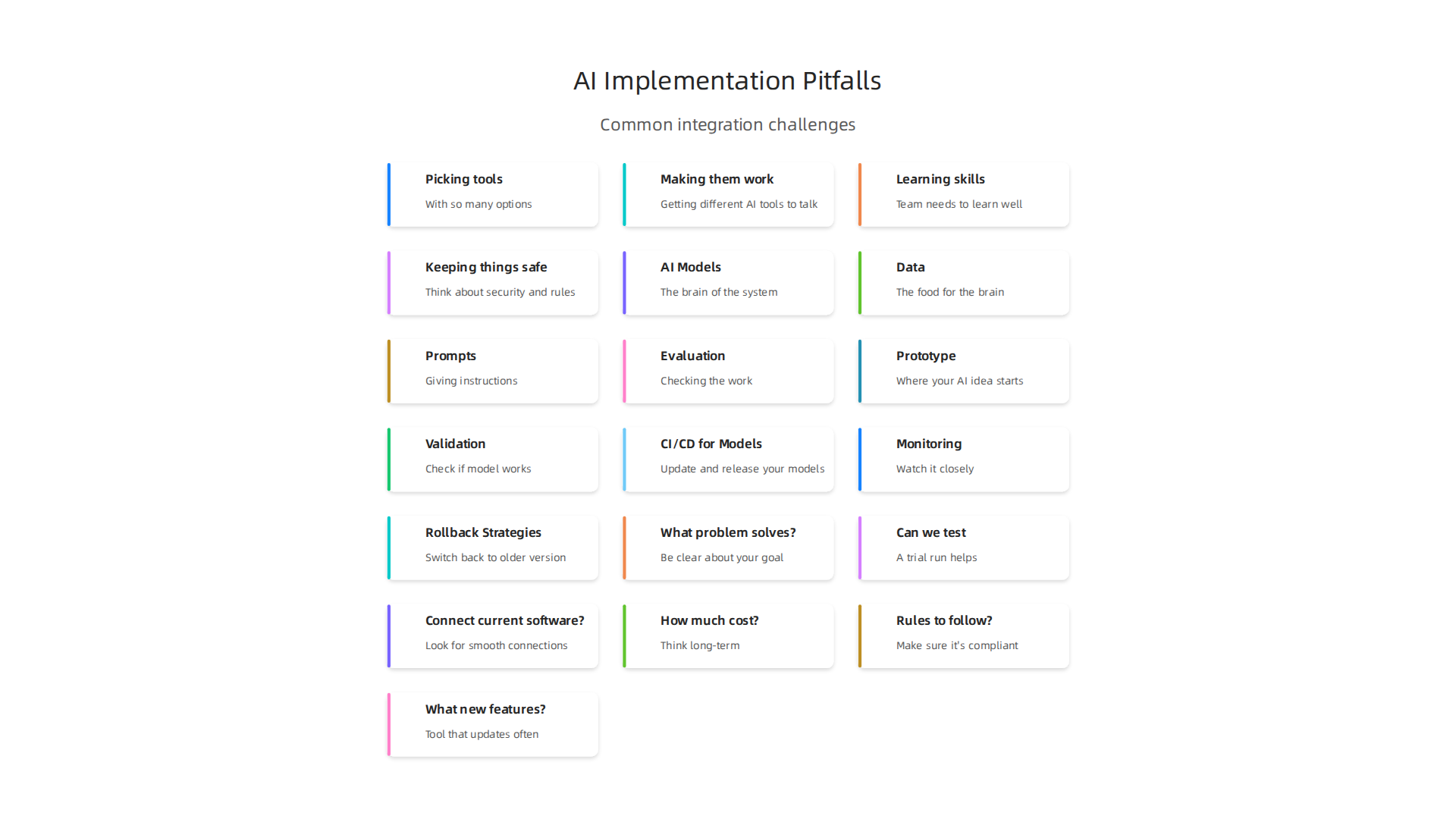
- Picking the right tools: With so many options, how do you know which AI tools are the best fit for your team? It’s like trying to find the best car when there are hundreds of models.
- Making them work together: Getting different AI tools to talk to each other and fit smoothly into your current work can be a real headache. In fact, 57% of tech leaders say putting AI into their work is their biggest challenge in 2026 [^3].
- Learning new skills: Your team needs to learn how to use these new AI helpers well. This can take time and effort. Many developers also do not fully trust AI-generated code, which means they spend more time checking it [^4].
- Keeping things safe and sound: When you use AI, you need to think about security and rules. For example, many developers use AI coding tools from their personal accounts, which can be a risk for company information [^5]. This is about making sure your data is safe and that you follow important rules like the ones for google ai principles.
The good news is that this article is here to help you. We will give you a clear, step-by-step guide to help you build AI systems and use AI tools better in your work. We’ll show you how to pick the right tools, bring them into your projects, and make sure your team has the skills to succeed. Our goal is to make it easier for you to navigate this exciting but sometimes tricky world of AI.
Want to stay on top of the fastest moving AI news every day? Keep up with all the changes in AI. Get clear daily AI updates from The Deep View Newsletter.
[^1]: AI Coding Adoption Hits 97% but Governance Lags Behind
[^2]: AI Reaches 97% of Software Development Organizations – Futurum
[^3]: 57% of Tech Leaders Cite AI Integration as Top Dev …
[^4]: State of Code Developer Survey report
[^5]: Sonar Data Reveals Critical "Verification Gap" in AI Coding
When you want to build AI systems, it helps to understand the main parts that make them work. Think of an AI product not just as one smart program, but as a team of important pieces working together. Knowing these parts helps you choose the right tools and make smart decisions.
Here are the core concepts that help build ai:
AI Models: The Brain of the System
An AI model is like the brain of your AI system. It’s a special computer program that has been trained to understand things and make predictions or create new things. For example, some models can understand spoken words, while others can write text or find patterns in pictures. When people talk about the most powerful ai, they are often talking about advanced models that can do many complex tasks.
It’s important to remember that a model on its own isn’t a complete product. It’s just one piece of the puzzle.
Data: The Food for the Brain
Data is what feeds the AI model. There are two main types:
- Training Data: This is the information the model learns from. Imagine teaching a child by showing them many pictures of cats and dogs. The pictures are the training data. The more good data an AI model sees, the smarter it gets at its task.
- Inference Data: This is the new information you give to the trained model to get an answer or a result. If you trained an AI to tell cats from dogs, the inference data would be a new picture it has never seen before.
Without good, clean data, even the most powerful ai model won’t work well. Data quality is super important.
Prompts: Giving Instructions
Prompts are the instructions you give to an AI model to tell it what to do. If you ask an AI tool a question, or tell it to write a paragraph, that’s a prompt. For example, when you ask your phone, "Hey Siri, is siri ai?" you are giving it a prompt.
Learning how to give clear and helpful prompts is a skill called prompt engineering. Good prompts help you get the best results from your AI tools, whether you’re using them to answer questions or to help you build ai faster. If you want to dive deeper into this skill, you might find more helpful information on Advanced prompt engineering 2026 techniques for reliable AI systems.
Evaluation: Checking the Work
Evaluation is how you check if your AI model is doing a good job. You need to know if the AI is accurate, fair, and helpful for what you need. Without proper evaluation, you won’t know if your AI product is truly working as it should.
For example, if you build AI to suggest new clothes, you need to check if people like the suggestions. If you’re building AI for important tasks, you need a way to carefully test its outputs. Many companies use checklists and frameworks to judge AI tools before using them, looking at things like security and how well the tool fits their business needs AI Vendor Evaluation Checklist: How to Choose Business AI Tools Without Getting Burned. This process is key to building good co-intelligence: living and working with ai systems. Knowing how to measure success helps you decide if an AI tool is right for your team. You can learn more about how to evaluate these tools effectively by checking out how to evaluate AI tech products for engineering success.
After checking if your AI tool works well, you might wonder how it’s actually put together. It’s like building with LEGOs. You pick different pieces and connect them to make something new. To build AI, you also use a set of special building blocks. These parts help make co-intelligence: living and working with ai a reality.
Let’s look at these important parts:
APIs: Ready-Made Smartness
Think of an API (which stands for Application Programming Interface) as a special door to an AI system that someone else has already built. Instead of making the AI brain yourself, you can just send your data through this door and get an answer back. It’s like ordering food from a restaurant instead of cooking it. Many companies offer their most powerful ai models as APIs. This is a common way to build ai quickly because you don’t have to handle the complex setup.
SDKs: Toolkits for Developers
SDKs (Software Development Kits) are like toolkits that come with instructions and ready-to-use parts to help you use an API or work with an AI model. They make it easier for computer programmers to connect their programs to the AI.
Models: The Core Brains
We talked about models being the brain. When you build ai, you might use models in two main ways:
- Hosted Models: These are models that live on someone else’s computers, often used through APIs. This is like renting a very powerful computer.
- Local Inference Models: These are models that you run on your own computers. This gives you more control but also means you have to manage the computer power and setup yourself.
Datasets and Feature Stores: Organized Information
Data is the food for the AI brain, remember? To make sure your AI gets good food, you need ways to organize it.
- Dataset Pipelines are like assembly lines that clean and prepare your data before it goes to the AI model.
- Feature Stores are like special pantries where you keep all the useful pieces of information (features) about your data, ready for your AI models to use.
Orchestration: Making Everything Play Together
Orchestration is like the conductor of an orchestra. It makes sure all the different AI parts, like the data pipelines, models, and APIs, work together smoothly. It helps manage the flow of information and tasks so your AI system does what it’s supposed to do, when it’s supposed to do it.
Build or Buy: Choosing Your Path
When you want to build ai, a big question is whether to build every part yourself or buy ready-made services.
- Buying means using hosted services or APIs. This is often faster and cheaper to start. It’s good for common tasks like a general chat assistant or summarizing documents, especially when speed is important AI ROI Framework for Executives: Build vs. Buy 2026. In fact, in 2026, many businesses are choosing to buy AI solutions instead of building them from scratch AI Build vs Buy: 2026 Framework for Business Leaders.
- Building means creating and hosting your own models. This gives you more control and lets you use your own special data, which can give you a unique advantage. But it costs more upfront and takes more time.
The choice depends on what you need your AI to do and how much control you want. For more help choosing the right tools, you can read about selecting AI software development tools for your 2026 team.
Learning about these building blocks helps you understand how AI systems are made and how to choose the best way to bring your AI ideas to life.
For daily updates and insights into the world of AI and technology, consider subscribing to The AI Newsletter Worth Reading.
Now that you know the different pieces that make up an AI system, let’s talk about how to get that AI from an idea to something real and useful. This whole journey is handled by something called MLOps. Think of MLOps as a set of rules and tools that help you build, test, and run your AI models smoothly, much like how a factory makes sure cars are built and maintained well. It’s how we make sure co-intelligence: living and working with ai actually works in the real world.
From Idea to Action: The MLOps Journey
Putting an AI model into action has a few main steps:
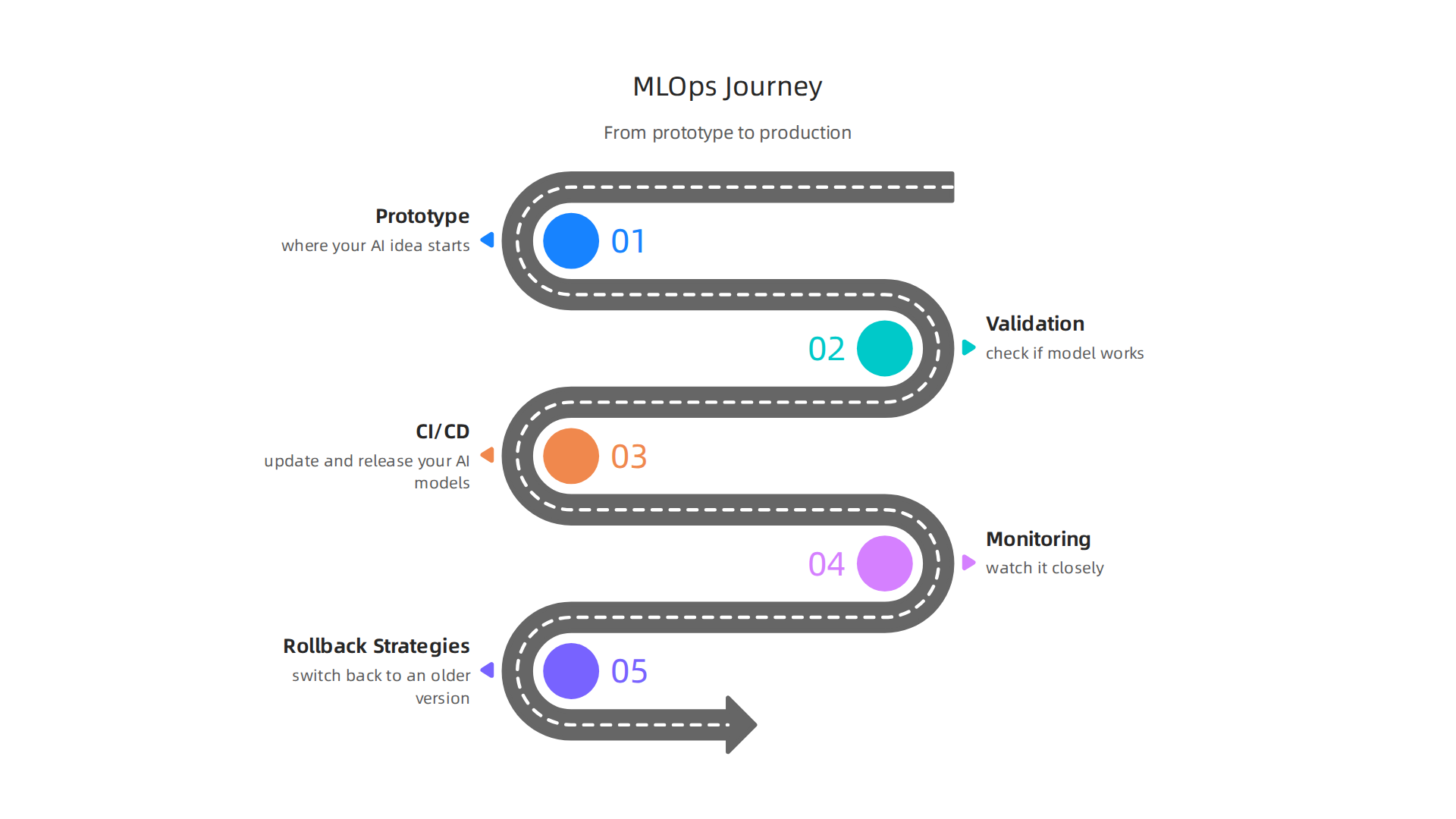
- Prototype: This is where your AI idea starts. You might build a small test version of your AI model to see if it can do what you want, like a rough sketch before painting a picture.
- Validation: After your prototype, you need to check if your AI model really works well. This means testing it with different kinds of data to make sure it’s fair and accurate. It’s like checking a new recipe to make sure it tastes good before serving it to guests.
- CI/CD for Models: CI/CD stands for Continuous Integration and Continuous Delivery. For AI, this means setting up automatic ways to update and release your AI models. This process helps teams quickly bring new AI features to life Architecturally Significant MLOps Guidelines for ML Model. It’s like having a smooth assembly line that puts out new and improved AI versions regularly.
- Monitoring: Once your AI model is working, you need to watch it closely. This is super important because AI models can change over time. Monitoring helps you see if the AI is still performing well and if its predictions are correct.

According to a 2026 guide, actively monitoring your model in action helps prevent its performance from getting worse MLOps & AI Production Operations: The 2026 Guide.
- Rollback Strategies: Sometimes, even with careful checks, a new AI update might cause problems. A rollback plan means you can quickly switch back to an older version of your AI that was working fine. It’s like having an "undo" button for your AI system to keep things running smoothly.
Keeping an Eye on Your AI: Key Metrics and Alerts
When your AI is out there doing its job, you need to know how well it’s doing. This is where tracking key numbers and setting up alerts comes in.
- Performance Metrics: These tell you how fast your AI works, how many errors it makes, and if it’s giving useful answers. For example, if you
build aito answer questions, you’d want to know how often it gives the right answer. - Data Drift: This is a big one for AI. Data drift happens when the real-world information your AI sees starts to look different from the information it was trained on. Imagine training an AI to recognize cats using pictures of house cats, but then suddenly it only sees lions. It might not work as well. In 2026, detecting data drift is a crucial part of making sure AI models stay reliable MLOps in 2026: Monitoring, Drift Detection, and Automated Retraining. It helps you know when your AI might need more training or a tune-up.
- Alerts: If something goes wrong, or if data drift is detected, you need to know right away. Alerts are like alarms that tell the AI team, "Hey, something’s off!" This allows them to fix issues before they become bigger problems. Best practices in 2026 for MLOps monitoring include setting alert thresholds for metrics like Population Stability Index (PSI), which measures data drift MLOps Pipeline Automation Best Practices in 2026.
By using MLOps, teams can feel confident that their AI models, whether simple tools or complex systems powering a most powerful ai like the one behind is siri ai, are working as they should. It’s all about making sure that your AI projects can go from a great idea to a successful part of your daily work, ready to handle new challenges. For more tips on making sure your AI systems are reliable, consider reading about how to evaluate the smartest AI in 2026.
After putting your AI models into action and setting up ways to watch how they work, the next big step is choosing the right tools and platforms to help you build AI in the first place. Think of it like a chef choosing the best kitchen tools for their recipes. You want tools that fit just right, don’t cause trouble, and help you make great food, or in this case, great AI.
Choosing tools and platforms: evaluation criteria and checklist
To make smart choices, we look at a few key things. This helps you pick the best AI tools, whether you’re working with simple AI parts or aiming to create something as complex as a most powerful ai. According to experts, a good way to choose AI vendors involves looking at five main areas: what the tool can do, how easy it is to use with your other systems, its cost, how safe and fair it is, and what the company making the tool plans for its future How to Select an AI Vendor: Enterprise Evaluation Framework.
Here’s a simple way to think about it:
- What it can do (Capability Fit): Does the tool actually do what you need? For example, if you want to
build aithat understands speech, the tool should be good at that. - How well it works with others (Integration Friction): Can this new AI tool easily connect with the systems you already use? You don’t want a tool that causes more work trying to get it to talk to your existing setup for
co-intelligence: living and working with ai. - How much it costs (Cost Profile): Does it fit your budget? Remember to think about both the price tag and any hidden costs, like training your team to use it.
- Is it safe and fair (Security/Compliance): AI tools handle important information, so you need to make sure they are secure. Also, they should follow rules about fairness, much like the famous
google ai principles. - Where is it going (Vendor Roadmap): Does the company making the tool plan to keep making it better? You want a tool that will grow with you.
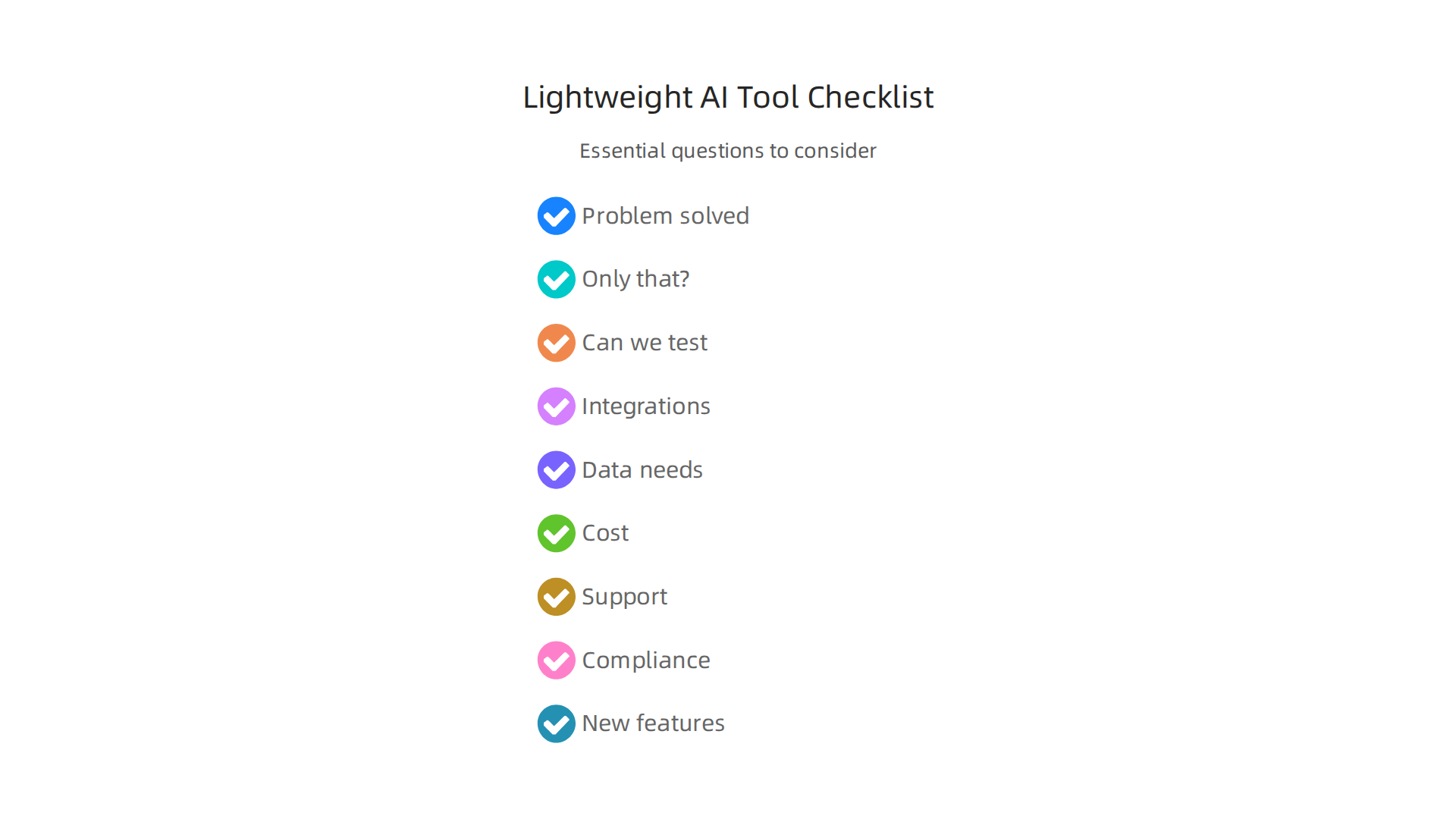
To help you remember these points, here is a simple checklist you can use when looking at new AI tools, platforms, or even ready-made AI services like those that power is siri ai.
Many guides offer detailed questions for this process, helping you avoid problems down the road AI Vendor Due Diligence Checklist 2026: 50+ Questions.
Your Lightweight AI Tool Checklist
- What problem does it solve for us? Be clear about your goal.
- Does it do only that, or more? Sometimes simple is better.
- Can we test it easily? A trial run helps a lot.
- Will it connect with our current software without a lot of fuss? Look for smooth connections.
- What data does it need, and where does that data go? This is super important for privacy and security. In 2026, checking how AI tools handle data is a must-do for procurement Buying AI Tools: The Procurement Checklist for 2026.
- How much will it cost over time, not just upfront? Think long-term.
- What kind of help or support can we get if something goes wrong? Good support is key.
- Are there rules it needs to follow (like laws about data privacy), and does it follow them? Make sure it’s compliant.
- What new features are coming? A tool that updates often is usually a good sign.
By asking these questions and checking these boxes, you can pick AI tools that truly help your team do great work and boost your productivity. If you’re looking for more guidance on selecting the best tools for your engineering team, consider reading about selecting AI software development tools for your 2026 team.
To stay on top of the fast-changing world of AI and make informed decisions, it’s essential to have a reliable source of information.
Get clear daily AI updates from The AI Newsletter Worth Reading.
Choosing the right tools is a great start, but those tools are only as good as the people using them. To truly succeed and build ai effectively, you need a team with the right skills. This means knowing what jobs are important, how different teams work together, and how to help everyone learn new things.
Skills, roles, and upskilling: building an AI-capable engineering team
Building a strong AI team means understanding the key roles needed.

These roles often work closely with other parts of the company, like product teams who decide what to build and platform teams who make sure the basic computer systems are running well.
Here are some important jobs in an AI engineering team:
- Machine Learning (ML) Engineer: This person is like the main builder of the AI brain. They design, create, and train the AI models that learn from data. Their work is central to making any kind of
most powerful ai. - Data Engineer: Before an ML engineer can start building, they need good data. Data engineers are the ones who collect, clean, and prepare this information. They make sure the ML models get the best food to learn from.
- Prompt Engineer: This is a newer but very important role, especially for AI that talks or writes, like what powers
is siri ai. A prompt engineer helps design the questions and instructions given to the AI to make sure it understands and gives the best answers. This job helps us achieve betterco-intelligence: living and working with ai. - AI SRE (Site Reliability Engineer) for Models: After the AI is built, someone needs to make sure it keeps working well all the time. The AI SRE checks on the AI models, fixes problems, and makes sure they run smoothly without breaking down.
These specialists don’t work alone. They often team up with product managers to understand what problems the AI needs to solve and with platform engineers to make sure the AI tools have the computer power and systems they need. This teamwork is crucial for putting AI into action. Just like picking the right tools, having the right people who can evaluate new AI options is vital for success AI Vendor Evaluation Checklist: How to Choose Business AI Tools Without Getting Burned — Apollo Intelligence.
Learning Pathways and Hands-on Practice
The world of AI changes fast, so ongoing learning, or "upskilling," is a must for engineering teams. To close skill gaps quickly, teams should look at these options:
- Online Courses: Many websites offer courses to learn about AI, from basics to advanced topics. These can help new team members get up to speed or experienced engineers learn new tricks. You can find many options to help
accelerate your career with tailored learning paths for software developers in 2026. - Workshops and Training: Sometimes, hands-on training from experts can quickly teach teams how to use new AI tools or how to follow best practices, much like what is outlined in
online computer science degree program skills and career paths. - Real Projects: The best way to learn is by doing. Giving engineers small AI projects to work on helps them practice new skills and see how AI works in the real world.
- Mentorship: Having more experienced AI engineers guide newer ones can speed up learning and share valuable knowledge.
Many AI courses online free for developers in 2026 are available from top places like IBM Skills, Coursera, and edX. These can help close the AI skills gap. By focusing on training and continuous learning, your team can keep up with the latest in AI and ensure they are ready to build the next big thing. For a broader view, check out a software developer roadmap 2026 career paths and skills for the AI era.
Even with the smartest team and the best training, there’s another very important part of building AI: making sure it’s safe, keeps private information private, and follows all the rules. If you want to build ai systems that people trust and that work well for a long time, you must think about security, privacy, and following the law from the very start.
Security, privacy, and regulatory compliance for AI-powered systems
When you work with AI, there are some special dangers to watch out for.
- Data leaks: This is when your AI accidentally shares private information it learned from. Imagine your AI using customer data and somehow showing it to the wrong person.
- Model inversion: Sometimes, clever people try to "reverse-engineer" an AI. This means they try to figure out what private data was used to teach the AI, just by looking at what the AI does.
- Supply-chain risks: The tools and data you use to
build aioften come from other places. If those sources aren’t secure, it can create weak spots in your own AI system.
To keep these dangers away, you can do a few things:
- Use less data: Only collect and use the data your AI truly needs. This is called data minimization. The less sensitive data you have, the less there is to leak. You should also be careful about putting personal information into public AI tools, as some guides advise against this for sensitive institutional data like student grades in 2026.
- Control who sees what: Make sure only the right people can look at or change sensitive AI models and data. This often means using strong access controls, like role-based access to your data and models MLOps and Continuous ML Delivery Pipelines.
- Keep good records: Write down who did what with your AI systems and data. This helps you track problems if something goes wrong. Collecting and storing raw input data alongside outputs is important for monitoring.
Beyond safety, your AI systems also need to follow many rules and laws. These are called compliance considerations.
- Data residency: Some laws say that certain types of data must be stored in specific places, like within a certain country or region. You need to know where your AI’s data lives and if it follows these rules Data Governance for AI in 2026: Privacy, Residency … – Fracto.
- Getting permission: Especially when using personal information, you often need to get clear permission or "consent" from people. This is part of designing systems that put people first, a key part of
co-intelligence: living and working with ai. - Checking the AI’s work: You need to be able to show how your AI makes its decisions. This means setting up ways to audit your AI and check its processes regularly. In 2026, companies need to update privacy notices, keep track of all AI and data, and test out how people can opt-out of data collection 2026 Data Security and Privacy Compliance Checklist.
These rules greatly affect how you design your AI systems and which tools or vendors you choose. Picking the right AI tools for developers means evaluating not just how powerful they are, but also how secure and compliant they are. For more details on checking new AI products, you can learn how to evaluate AI tech products for engineering success. Thinking about these things early helps you build ai that is both smart and responsible. To keep learning about the fast-changing world of AI and its rules, it helps to stay informed.
Get clear daily AI updates from The AI Newsletter Worth Reading.
To really make AI work for your company in the long run, you need a smart plan. This isn’t just about picking the best tools. It’s about deciding where to put your efforts, when to make your own AI, and when to buy it from someone else. It’s also about checking if your AI investments are actually helping your business grow.
Roadmap and strategy: making AI sustainable and strategically valuable
A big question for any business wanting to build AI is: should we build ai ourselves or buy ready-made solutions?

The answer often depends on what makes your business special. If the AI is for common tasks, like a simple chatbot or summarizing documents, buying a solution is often faster and easier. In 2026, many companies are choosing to buy these "off-the-shelf" AI tools, with one report showing that businesses are leaning towards buying 76% of the time, compared to building in-house, because they offer quick value and don’t need much customization for general uses AI Build vs Buy: 2026 Framework for Business Leaders.
However, if the AI needs to handle your company’s secret data, or if it’s a key part of how you do something better than anyone else, then it makes more sense to build ai yourself. Building gives you full control and can create a unique advantage that others can’t easily copy Build vs Buy for Enterprise AI: A Practical Framework. Studies in 2025 even showed that UK businesses buying AI solutions succeeded more often (67%) than those building entirely in-house (33%), highlighting the importance of this decision Build vs Buy AI: The Complete Decision Framework for 2026.
Another important part of your AI plan is figuring out how to measure its worth. You need to know if the money and time you spend on AI are paying off. This is called Return on Investment, or ROI. To track ROI, you should look at how much value the AI creates (like saving money or making more sales) compared to how much it costs to build and keep it running. Some experts suggest aiming for 50-100% ROI in the second year and 200%+ in the third year for AI projects Enterprise AI Services: Build vs. Buy Decision Framework. There are special tools and ways to mastering AI business models and measure this, helping executives see the real value AI ROI Framework for Executives: Build vs. Buy 2026.
Your AI roadmap should also consider new trends. For example, in 2026, using "open-weight" AI models (where the core AI design is shared) can be much cheaper than using big company services, sometimes 10-12 times cheaper. This means you can have more control and save money AI Build vs Buy in 2026: A Decision Framework for Agencies. Keeping up with these changes helps you make better choices for your company’s future. It’s all part of building a solid plan to build your AI roadmap that leads to success.
Summary
This article explains why "build AI" is a crucial capability for software teams in 2026 and walks through the practical pieces you need to succeed. It breaks an AI product into its core parts—models, data, prompts, APIs, SDKs and orchestration—and shows how those pieces fit together when you decide to build or buy. You’ll get a clear MLOps flow from prototype and validation to CI/CD, monitoring, and rollback strategies so models stay reliable in production. The guide also gives a lightweight checklist to evaluate vendors and platforms, discusses security, privacy and regulatory risks, and outlines the team roles and training paths required. Finally, it covers roadmap and ROI considerations so you can prioritize investments that deliver real business value. After reading, you’ll know how to choose tools, set up production-safe workflows, staff and train your team, and measure whether your AI efforts are paying off.