
Apply AI to Build Software for Peak Productivity
Overview
In 2026, something big has changed in the world of computer building. Artificial Intelligence, or AI, used to be mostly for scientists in labs. Now, it’s a real and useful tool that development teams can apply ai every day. This shift means that AI is no longer just a cool idea; it’s a practical part of how software gets made.

Many companies are already using AI in their daily work. A recent survey from 2026 showed that almost 97% of companies that make software are either using AI or thinking about using it very soon AI Reaches 97% of Software Development Organizations. This tells us that AI is one of the top 10 technology trends that no team can ignore if they want to build for a smart future.
Because AI is everywhere, development teams have to make smart choices. They need to figure out the best ways to apply ai to help their business and their engineering work. This means looking at where AI can really make a difference, like making things faster, finding problems, or creating new features that were not possible before. It is all about choosing the right AI tools for the right jobs.
To keep up with these fast changes and learn how to best [apply ai] in your work, you need the right information.
Get clear daily AI updates that help you understand these big changes.
The AI Newsletter Worth Reading
Now, let’s look at how we can truly apply ai to build software. AI is not just for one small part of making software. It can actually help at every single step, from the very beginning ideas all the way to keeping the software running smoothly.
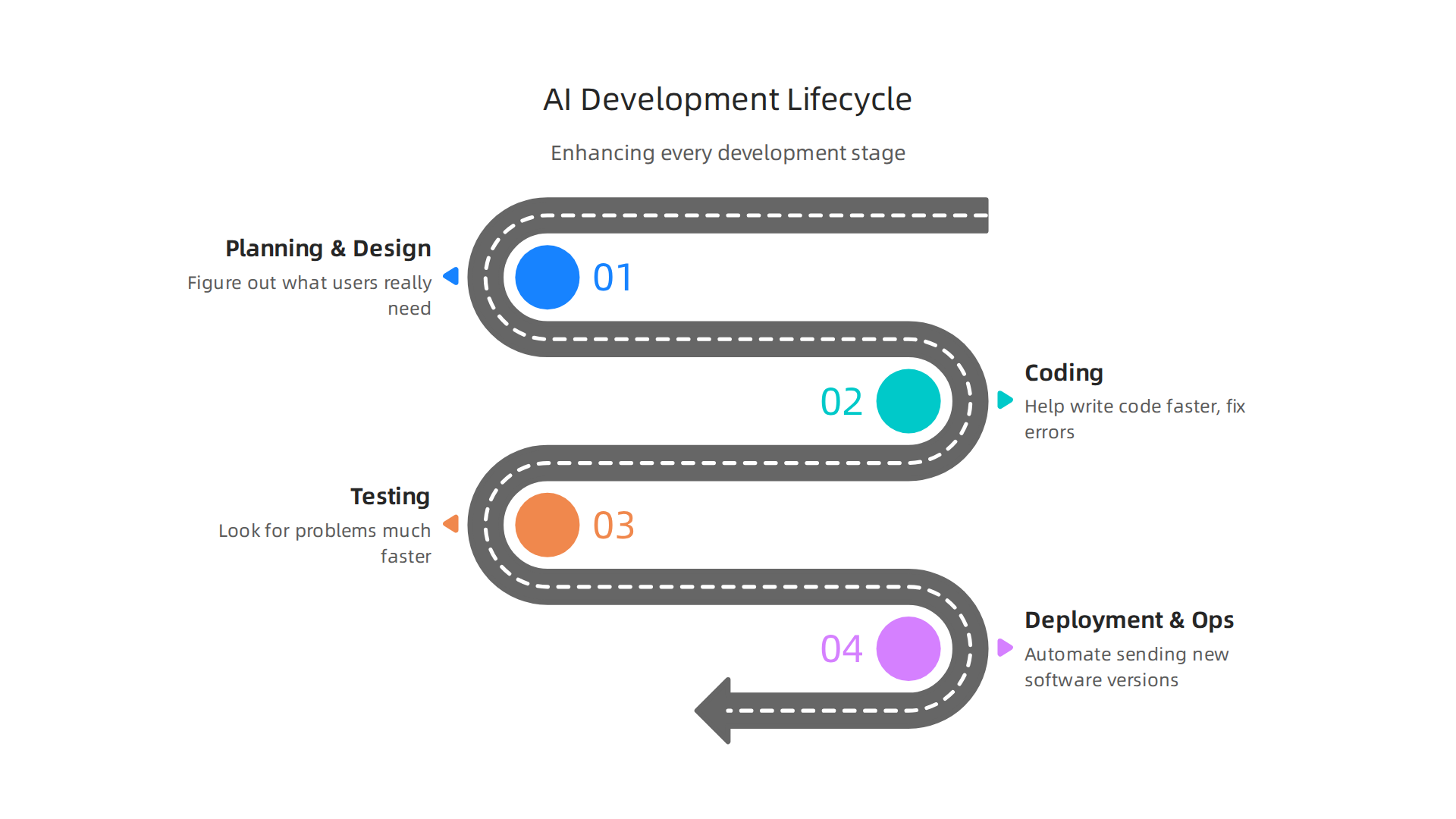
This journey of making software is called the "software development lifecycle."
Think of it like building a house. AI can help with drawing up the plans, mixing the cement, checking if the walls are straight, and even watching for any leaks after people move in.
Planning and Design
At the start, when a team plans a new piece of software, AI can be a big help. It can look at lots of information to figure out what users really need. AI tools can even suggest different ways to design the software or its features. This helps the team make smart choices early on, making sure they build something that people will love to use.
Coding
This is where many developers see AI working wonders. AI coding assistants are tools that can help write code faster. They can suggest the next line of code, fix common errors, and even create whole parts of the program based on what you want. In 2026, a survey showed that 90% of professional developers use at least one AI tool for their work, and 74% use special AI coding tools

AI Coding Tool Adoption Statistics 2026: JetBrains Survey of 10K Developers. Some reports even say that 42% of all code today is either written or helped by AI State of Code Developer Survey report. This shows how much teams apply ai to boost their coding speed. Developers often use AI for finding answers, learning new ideas, and writing important documents about their code AI Coding Assistant Statistics 2026.
Testing
After writing code, it’s super important to test it to find any mistakes, or "bugs." AI is very good at this too. It can look for problems much faster than a person can. It can even create new tests to make sure that all the parts of the software work exactly as they should. A study found that 94% of developers who use AI saw their work get better, and 83% reported fewer errors in their code 94% of Developers Report AI Productivity Gains, but Governance Maturity Lags Behind Adoption, Finds New Study From Info-Tech Research Group. This is a powerful way to apply ai to make software more reliable.
Deployment and Operations
Once the software is built and tested, it needs to be made available to users. AI can automate the process of sending out new versions of software. After it’s launched, AI tools can watch how the software performs, looking for any slowdowns or issues. If a problem pops up, AI can often spot it and even help fix it before users even notice. This helps keep everything running smoothly.
By using AI at each of these steps, development teams can work much faster and build better software. They can reach new levels of AI productivity tools for developers, saving time and making their products shine.
Using AI at each of these steps helps development teams work much faster and build better software. They can reach new levels of AI productivity tools for developers, saving time and making their products shine.
High-impact use cases developers can apply today
AI is not just a fancy idea for the future. It’s already here, helping developers in big ways. In 2026, a report found that 97% of companies involved in software development are either using AI or thinking about it very seriously AI Reaches 97% of Software Development Organizations. This shows how common it is to apply AI now.
Let’s look at some clear ways developers can apply AI to their work today and see real improvements.
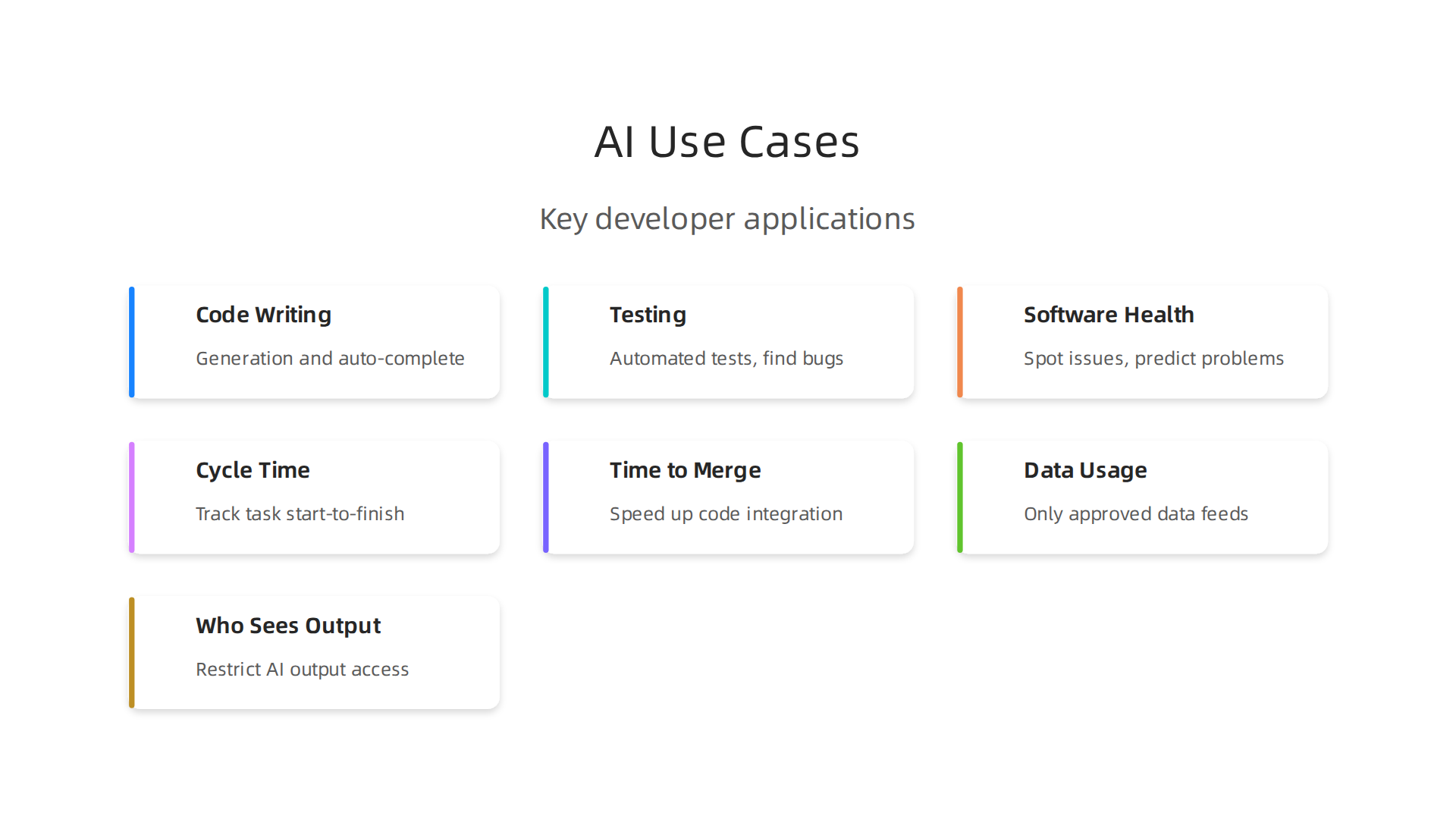
1. Smarter Code Writing with AI
One of the best ways to apply AI is in writing code. AI tools can help you code faster and with fewer mistakes. Think of it like having a super smart helper sitting right next to you.
- Code Generation: AI can write basic code for you. If you need a common piece of code, the AI can often create it in seconds. This saves a lot of time and lets you focus on the harder parts.
- Auto-completion and Suggestions: As you type, AI can guess what you want to write next and offer suggestions. This isn’t just about finishing words; it’s about suggesting whole lines of code or how to use a function correctly.
- Finding and Fixing Bugs: AI can scan your code for errors or bad practices. It can even suggest ways to fix them. This helps make your code cleaner and work better from the start.
Many developers are already using these kinds of generative AI tools for developers in 2026 to boost their everyday work.
2. Faster, More Thorough Testing
Testing software can take a lot of time. But when you apply AI to this part of the job, it becomes much faster and more complete.
- Automated Test Creation: AI can look at your software and automatically create tests for it. This means less manual work for developers.
- Finding Hidden Bugs: AI can sometimes find bugs that human testers might miss, especially in complex systems. It can run many tests quickly, checking every little part of the program.
- Smart Test Prioritization: With AI, you can figure out which tests are most important to run first. This saves time and helps fix the most serious problems sooner.
Studies show that AI can help developers complete tasks about 26% faster, which often means finding and fixing bugs more quickly
Global AI Productivity Impact Report 2026: Evidence, Sectors ….
3. Keeping Software Healthy (Observability Helpers)
Once software is out in the world, it needs to be watched closely. This is called "observability," and AI is a great helper here too.
- Spotting Problems Early: AI tools can watch how your software is running all the time. If something looks wrong, like a part of the program slowing down, the AI can alert you right away.
- Predicting Issues: Sometimes, AI can even see patterns that mean a problem is about to happen, letting you fix it before users notice.
- Automated Troubleshooting: For simple issues, AI can sometimes even suggest or apply a fix on its own. This keeps your software running smoothly with less effort from your team.
Picking the Right AI Tools for You
To get the most out of AI, it’s smart to pick where you apply AI carefully.
- Look for Fast Results: Choose tools that can help you with tasks that take a lot of time now. Quick wins make a big difference.
- Start Small: Don’t try to change everything at once. Pick one or two areas where AI can make a clear impact without being too hard to set up.
- Think About Return on Investment (ROI): Which AI tools will save your team the most time or money? Focusing on these will show the value of AI quickly.
Many companies are seeing real gains. In 2026, 58% of developers regularly use AI-assisted tools in their daily work Multiplex.Digital — SaaS, Web Dev & Digital Growth Agency. This shows that choosing the right AI tools can lead to a truly smart future for your development team.
To stay on top of all the exciting changes in AI, make sure you get regular updates.
The AI Newsletter Worth Reading
To get the most out of AI, it’s smart to pick where you apply AI carefully. This means looking beyond just what a tool can do and thinking about how it fits into your existing work setup, or "stack." Choosing the right AI tools for your development team is very important for future success in 2026. You need to think about several key things to make sure the AI helps, not hurts, your projects.

Important Things to Think About
When you choose AI tools, keep these points in mind:
- How Sensitive is Your Data?
Some AI tools send your code or data to outside servers. If you’re working with very secret or personal information, you might need tools that keep your data safe and private. This might mean choosing options that run on your own computers, not in the cloud. Keeping data secure is a big concern when using AI-powered coding tools, as highlighted in a 2026 report on Security and privacy challenges of AI-powered coding. - How Fast Does It Need to Be (Latency)?
Some AI helpers, like code suggestion tools, need to work super fast. If there’s a delay, it can slow down your work instead of speeding it up. Other tools, like those for testing, might not need to be as quick. Think about what speed you really need for each task. - How Hard Is It to Connect (Integration Effort)?
An AI tool is only good if it can work well with your current tools and systems. How much work will it take to set it up? Will it fit smoothly into your workflow, or will it cause more problems than it solves? Look for tools that offer easy integration, often described as part of best practices for using generative AI in software development. - Could You Get Stuck (Vendor Lock-in)?
When you choose an AI tool from a specific company, sometimes it can be hard to switch to another company’s tool later. This is called "vendor lock-in." Think about if you want to be tied to one company or prefer more flexible options.
Different Ways to Use AI Tools
AI tools come in different forms:
- APIs (Application Programming Interfaces) and SDKs (Software Development Kits): These are like building blocks that let your software talk to AI services. You can add them to your code to use AI features. They are usually cloud-based and good for quick setup. Evaluating APIs is important for integrating AI into your existing systems, as detailed in AI-Driven Development Best Practices In 2026.
- On-Premise vs. Hosted Options:
- On-Premise: You run the AI tool on your own computers or servers. This gives you more control over your data and security. It’s often chosen for very sensitive projects.
- Hosted (Cloud-based): The AI tool runs on someone else’s servers (in the cloud). This is usually easier to set up and maintain, but you have less direct control over the data.
Many companies are looking at how to successfully adopt AI by carefully weighing these choices. It’s important to find the right balance that meets your team’s needs for speed, security, and how much control you want. Choosing wisely now will help you better apply AI to your projects and see the benefits.
Once you pick the right AI tools, the next big step is to actually put them to use in your daily work. This means smoothly bringing AI into how developers write code and how software gets built and sent out, also known as CI/CD. When you apply AI smartly in these areas, your team can become much faster and more efficient.

Practical Ways to Use AI in Your Workflow
AI can help at many points in the software building process:
- Before You Save Code (Pre-commit Checks): Imagine having a smart helper that looks at your code for mistakes, security problems, or style issues before you even save it. AI tools can do this, catching small issues early. This helps keep code quality high right from the start.
- Helping with Code Reviews: AI can act as an extra pair of eyes during code reviews. It can spot tricky bugs or suggest ways to make the code better. This frees up human reviewers to focus on bigger picture ideas. Using AI for these tasks helps ensure good practices, especially when dealing with AI-generated changes, as noted in a whitepaper on AI-Powered Software Development Best Practices.
- Making Tests in CI (Continuous Integration): In the automated process where code changes are regularly put together, AI can create new tests. It can look at your new code and figure out what kinds of tests are needed, saving developers a lot of time. This is part of best practices for using generative AI in software development.
- Checks Before Sending Out Software (Deployment-Time Checks): Before your software goes live for users, AI can perform final checks. It can look for security weaknesses or make sure everything meets important rules. This helps prevent problems from reaching your users.
Using generative AI tools in these ways can really help unlock peak productivity with AI developer tools in 2026.
Watching and Measuring AI Steps in CI/CD
It’s not enough to just use AI. You also need to know if it’s actually working well. This means "instrumenting and monitoring" the AI-driven steps within your CI/CD pipelines.
- Look at the Logs: Check the messages and reports from the AI tools. Are they finding useful things? Are they making good suggestions?
- Track Performance: How fast is the AI working? Is it slowing down your pipeline or speeding it up?
- Check Quality: Look at the output of the AI. If it’s writing code, is that code good? If it’s generating tests, are those tests finding real issues?
- Watch for Issues: Keep an eye out for any unexpected behavior or errors from the AI. Monitoring systems after they are deployed is key to responsible AI use, according to Guidelines for secure AI system development by the U.S. Department of Defense. This constant checking helps you make sure the AI is doing what it’s supposed to and making your team’s work easier, not harder.
To stay on top of all the latest changes and ensure your team is ready for a smart future with AI, it’s wise to keep learning.
Get clear daily AI updates from The AI Newsletter Worth Reading.
Once you start using AI, you need to know if it’s truly helping your team. This means looking closely at how AI affects your work. Measuring the results of applying AI is key to understanding its real value. Many companies are seeing big gains; for example, in 2026, about two-thirds of businesses in Europe, the Middle East, and Africa reported big jumps in how much work they get done with AI tools, and they expect to see their investments pay off quickly, according to one report on Two thirds of firms report major productivity gains from AI.
What Numbers to Watch
To truly see if AI is boosting productivity and offering a good return on investment (ROI), teams should track some important numbers:

- Cycle Time: This is how long it takes for a task to go from start to finish. If AI helps you finish tasks faster, your cycle time should go down.
- Review Time: How long do code reviews take? AI can speed this up by finding small issues before a human even looks at the code. This means less time spent in review.
- Defect Rates: This measures how many bugs or problems are found in the software. If AI helps catch mistakes early, you should see fewer defects later on.
- Time-to-Merge: This is how quickly new code changes get added into the main project. If AI helps with coding and testing, code should be ready to merge faster.
- Developer Task Completion: Studies in 2025 showed that generative AI greatly increases how many tasks software developers complete. This shows a clear boost in getting things done when you skillfully apply AI.
By keeping an eye on these numbers, you can tell if your AI tools are making a real difference. In fact, many reports show that AI can lead to big productivity boosts, with some studies in 2026 showing that AI helped customer support agents resolve 14% to 15% more issues per hour, and developers completing 26% more tasks, as noted in the Global AI Productivity Impact Report 2026.
How to Test AI Tools to See Their Impact
It’s smart to test AI tools in a controlled way before using them everywhere. Think of it like a small experiment:
- Start Small: Pick a small team or project to try out an AI tool.
- Compare Teams: Have one team use the AI tool and another team (the "control group") do things the old way. Make sure both teams work on similar tasks.
- Track Everything: Measure the numbers mentioned above (cycle time, defect rates, etc.) for both teams.
- Look at the Results: After a set time, compare the results. Did the team using AI finish tasks faster? Did they have fewer bugs? This helps you see the actual impact.
- Listen to Feedback: Ask the developers using the AI tools what they think. Is it making their job easier? Do they feel more productive?
This way, you can clearly see the gains from AI. This also helps you decide if it’s worth investing more in certain AI tools. Tools like AI productivity tools for developers deliver measurable ROI and faster output are designed to help you track these benefits. By smartly bringing AI into your daily tasks, you can ensure you are building a strong, smart future for your team.
As teams look to build a strong, smart future with AI, it’s super important to also think about security, privacy, and following the rules. When you apply AI tools, you are often dealing with a lot of information. Some of this information can be private or very important to your company.
Keeping Data Safe and Private
When you apply AI, you need to be careful with the data that goes into the AI system and the data that comes out. This is called data governance. You need to make sure that sensitive company code or personal information (like names, addresses, or other private details about people) doesn’t get used in a way that is not safe or allowed. For example, the Artificial Intelligence Risk Management Framework talks about how to handle data privacy and intellectual property risks when using AI.
You should have clear rules about:
- What data AI can use: Make sure only necessary and approved data feeds into the AI.
- How AI handles data: The AI system must keep sensitive information private and not share it wrongly.
- Who can see AI’s output: Check that the information the AI creates is only seen by the right people.
There are many new guidelines helping companies figure this out. For example, the U.S. Department of Defense provides Guidelines for secure AI system development to help create safe AI systems from the start.
Following the Rules: Third-Party vs. Self-Hosted AI
When you decide to apply AI tools, you usually have two main choices:
- Using third-party AI services: These are tools from other companies, like cloud-based AI platforms.
- Using self-hosted AI models: This means your team builds and runs the AI system yourselves.
Each choice has different rules and things to think about for compliance. In 2026, new rules and updates are happening all the time. For instance, there’s a Data Privacy AI Regulatory and Compliance Update 2026 that many teams need to know about.
- Third-Party AI Services: When you use these, you are trusting another company to keep your data safe and follow the rules. You need to read their agreements carefully. Ask them how they protect your data and what their rules are for privacy. You should also check if they meet the standards your company needs to follow. When selecting AI software development tools, it is vital to check their security and compliance.
- Self-Hosted AI Models: If you build and run your own AI, your team has more control. This means you are fully in charge of setting up the security, making sure data stays private, and following all the necessary rules. This can give you more flexibility but also puts all the responsibility on your shoulders. You need clear internal guidelines and strong security measures. For a secure and responsible approach, it’s wise to consider the Future Standard for AI Implementation.
No matter how you choose to apply AI, staying on top of security and compliance is key. It helps protect your company, your customers, and keeps your AI projects running smoothly and responsibly.
Want to keep up with the fast-changing world of AI and technology?
Get clear daily AI updates from The AI Newsletter Worth Reading.
Once you have good security and rules in place, the next big step is to make sure your team knows how to truly apply AI tools. This means helping them learn new skills so your company can build a smart future.

In 2026, many teams are focusing on bridging skill gaps to keep up with the fast changes in technology.
Practical Ways to Learn AI Skills
Learning to use AI doesn’t have to be hard. Here are some simple ways teams can get better:
- Hands-on Labs: The best way to learn is by doing. Set up special workshops where your developers can try out AI tools in a safe place. Think of it like a playground for AI. Some companies even use longer programs, like 12-week bootcamps, for enterprise AI upskilling that focus on practical skills.
- Shadowing Experts: New team members can learn a lot by watching someone who already knows how to apply AI well. They can see how an expert uses tools, understands problems, and finds solutions. This helps them get a feel for the process before trying it themselves.
- Incremental Adoption: Don’t try to change everything at once. Start small. Introduce new AI tools slowly. Let your team add more AI into their work as they get more comfortable and see the benefits. This gentle approach helps everyone adapt. Many resources, like the Developer Survival Guide for 2026, offer plans for this kind of learning.
Safe Spaces for Experimentation
It’s super important to let engineers try things out without worrying about breaking real projects. You can create special "sandbox" areas or test environments. In these safe spaces, your team can experiment with different AI models, like those from Immersity AI or Slack AI. They can try new ways to apply AI, test ideas, and learn from mistakes without any risks to your important work. This helps them grow their skills and find creative solutions. Many teams are looking for free online courses to close the AI skills gap to help with this learning.
By planning training and allowing for safe practice, your team will become better at using AI. This makes your company stronger and ready for the future, helping you stay ahead of the top 10 technology trends in 2026.
Summary
This article explains how AI is becoming a practical, end-to-end tool for software development in 2026 and how teams can apply it across the entire software development lifecycle. It covers concrete use cases—from planning and design to coding, automated testing, CI/CD, deployment, and observability—showing how AI speeds work, reduces defects, and creates new capabilities. The guide explains how to choose between hosted APIs and on-premise models, which trade-offs to weigh (latency, integration, data sensitivity, and vendor lock-in), and how to pilot tools safely. It also outlines how to instrument AI-driven pipeline steps and which metrics to track to measure ROI and productivity gains. Finally, the article highlights governance, privacy, and compliance needs, plus practical upskilling strategies and sandboxed experiments so teams can adopt AI responsibly and deliver measurable business results.