
The Tech Sideline Trends Driving AI Innovation in 2026
Overview
The Unseen Forces Driving AI Innovation
You already know about the latest GPT model. You have probably heard about agentic AI taking over workflows. The big headlines are everywhere. But here is what many teams miss. The real difference between a fast-moving engineering team and one that falls behind often lives in the places nobody is watching.
Those places are what we call the tech sideline.
Think of it like sports. The star player gets all the attention. But the supporting cast and the behind-the-scenes strategy determine who actually wins. In AI development, the tech sideline is made up of emerging, underreported trends in tooling, infrastructure, and process design. These are the quiet shifts that shape how fast your team can build, how reliable your deployments become, and how much real value you get from AI investments.

Right now, the numbers show that AI adoption is skyrocketing. By early 2026, generative AI had reached 53% population adoption faster than the personal computer or the internet, according to the 2026 AI Index report from Stanford. But here is the catch. Most teams are still focusing on the headline models, not on the foundational changes underneath.
That is a mistake. The teams that pay attention to the tech sideline are the ones that build a sustainable edge. They understand that future tech advantages come from smarter infrastructure choices, better developer tooling, and smarter workflows. They follow the real tech trends that matter for 2026, not just the flashy demos.
In this article, we explore five critical niche trends that every AI engineering team should monitor in 2026. These trends sit outside the spotlight, but they determine long-term development velocity and product differentiation. If you want to stay ahead, you need to look where others are not looking.
To start your journey into the quieter side of AI, check out our deep dive on the quiet revolution in human AI interaction. It shows how subtle shifts in interface design are changing the way developers work.
And if you want to keep a steady pulse on what is really happening in AI every day, consider getting clear daily updates from The Deep View Newsletter. It cuts through the noise and focuses on the signals that matter.
Let us dive into the first trend shaping the tech sideline in 2026.
On-Device AI and TinyML: Optimizing for the Edge
Here is a quiet shift that deserves more of your attention. While everyone is focused on bigger, faster, and more expensive cloud models, a completely different kind of AI is growing in the background. It runs on tiny devices with very little power. No cloud connection required. No data leaving the device.
This is the tech sideline move that privacy-conscious teams are leaning into hard in 2026.
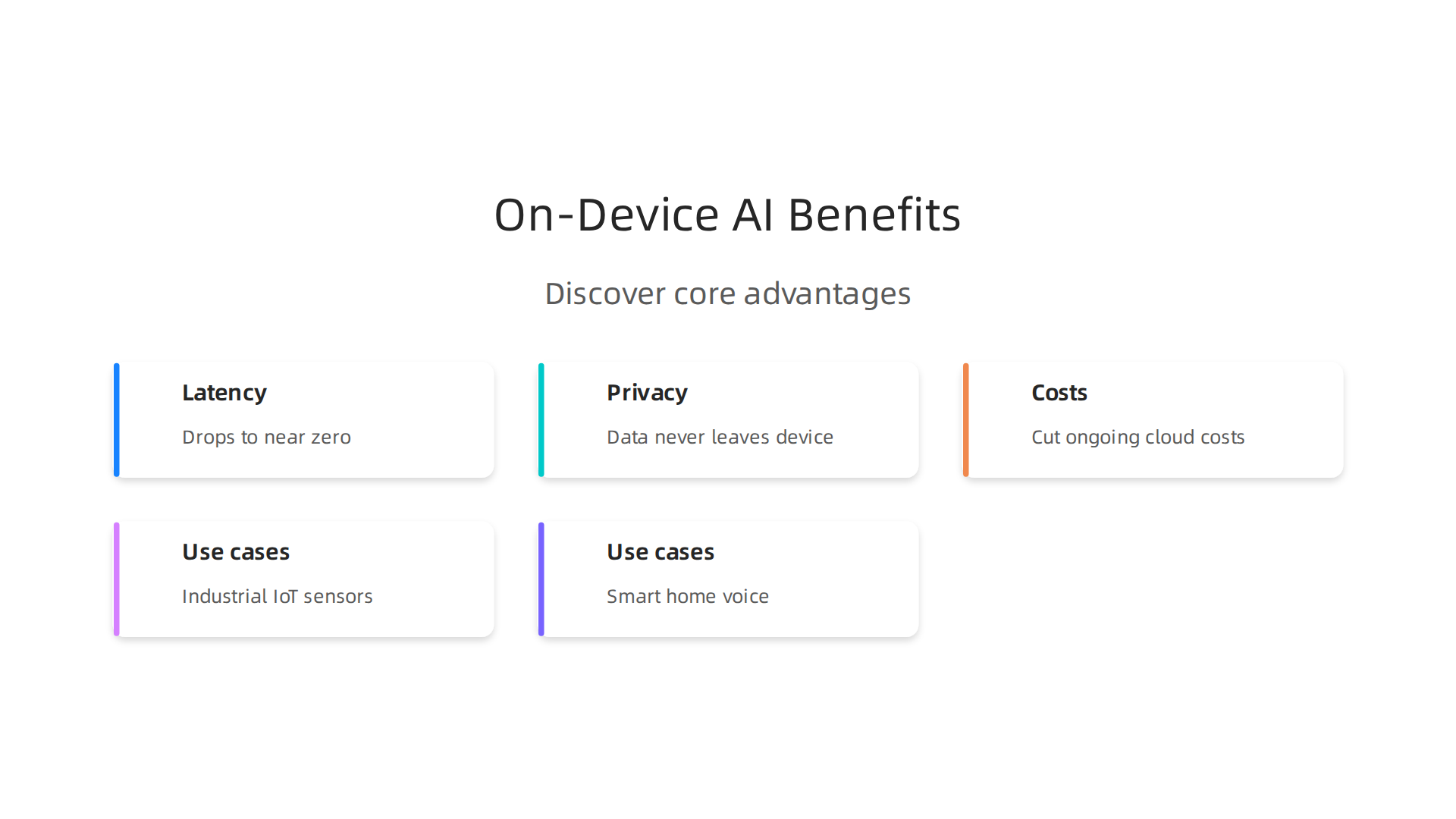
On-device AI means running inference directly on a phone, a sensor, or a microcontroller instead of sending data to a remote server. The benefits are huge. Latency drops to near zero. Privacy improves because sensitive data never leaves the device. And you cut ongoing cloud costs significantly.
TinyML is the field that makes this possible. It is machine learning designed for extremely constrained hardware, think microcontrollers with just a few kilobytes of RAM. According to Shawn Hymel’s annual review, the field has matured so much that the TinyML Foundation rebranded to the Edge AI Foundation at the end of 2024, a sign that this space is now a serious part of the future tech landscape.
Two frameworks are leading the way. TensorFlow Lite Micro, often called TFLM, is the most widely used runtime for microcontroller inference. It runs in C++ and works on common Arm Cortex-M processors. ONNX Runtime is catching up fast for cross-platform work, enabling teams to move models between different hardware without rewriting everything. A detailed comparison by the element14 community shows that these two frameworks handle different jobs well. TFLM gives you more control over memory and power. ONNX Runtime offers flexibility for teams that need to target multiple chip architectures.
The real action is in new use cases. Industrial IoT sensors now run anomaly detection locally. Smart home devices process voice commands without phoning home. Medical wearables track vitals and flag issues instantly, all on a chip that costs a few dollars.
If you want to go deeper on how these tools fit into your stack, take a look at our guide on selecting AI software development tools for your 2026 team. It covers the full picture of tooling decisions that complement edge AI strategies.
The bottom line is this. On-device AI and TinyML are no longer experimental projects. They are production-ready tech trends that give you faster, cheaper, and more private AI deployments. Teams that ignore this shift are leaving real advantages on the table.
Federated Learning and Privacy-Preserving AI Beyond Finance
You have probably heard about privacy regulations like GDPR and CCPA. But here is a quieter trend that is reshaping how AI models are trained. Another tech sideline that deserves your attention is federated learning. This approach is moving beyond its early strongholds in finance and healthcare into industries you might not expect.
Federated learning works by training a shared model across many devices without raw data ever leaving those devices. Your phone, your car, or your industrial sensor can all contribute to a better model while keeping sensitive information local.
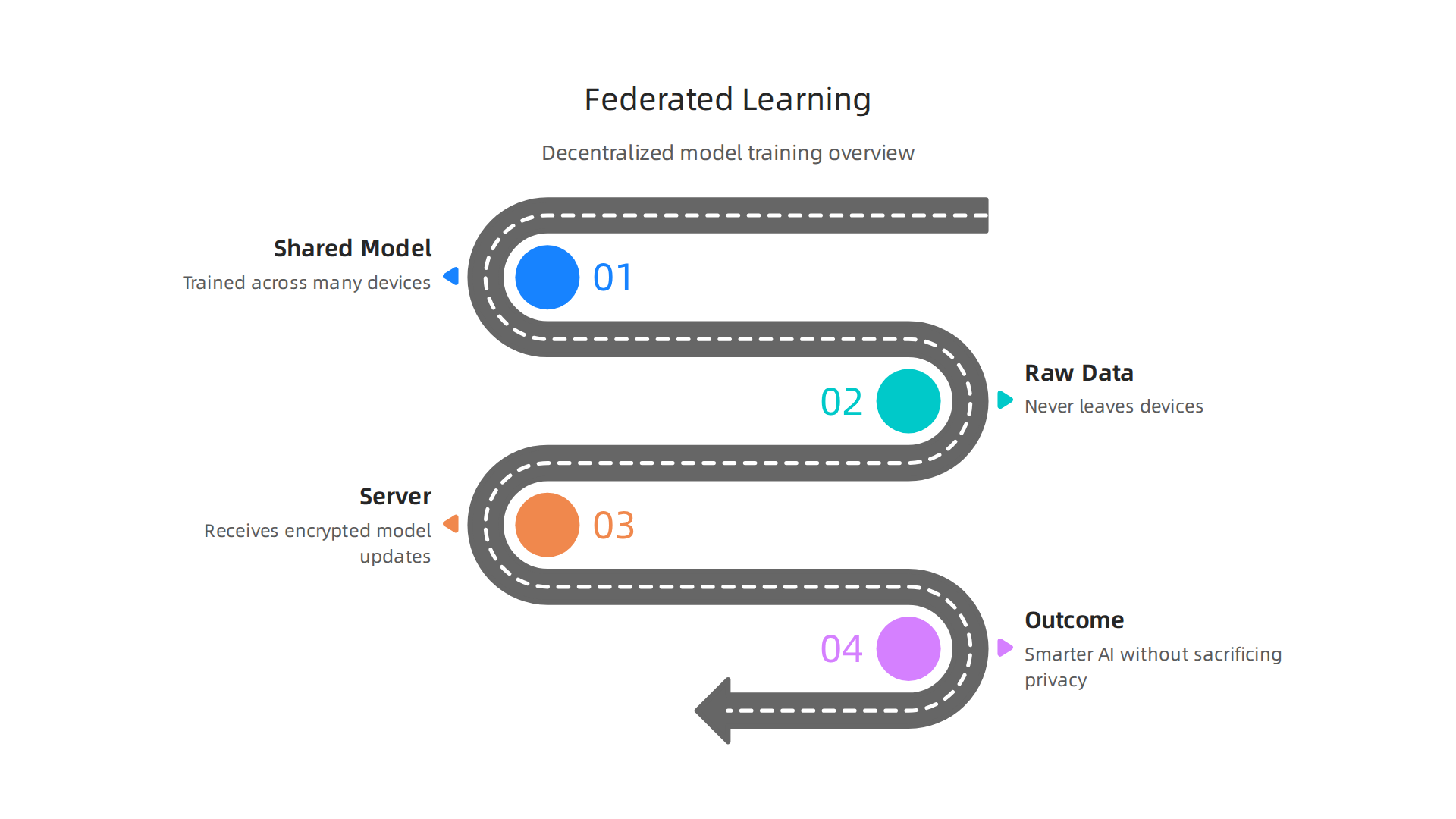
The server only sees encrypted model updates, not the underlying data. This means you get smarter AI without sacrificing privacy.
In 2026, this is no longer an experimental concept. Future tech adoption is accelerating thanks to new frameworks that make federated learning easier to set up. Flower is one of the most popular open-source frameworks right now. It handles the complex communication between devices and servers so you can focus on your model. PySyft is another powerful tool that focuses on privacy guarantees, combining differential privacy with secure aggregation. Both are lowering the barrier to entry for teams that want to experiment with decentralized training.
Why now? Privacy regulations are getting stricter every year. Companies that ignore them face heavy fines. But compliance is only part of the story. The real opportunity is building trust with your users. When you can honestly say "your data never leaves your device," that is a competitive advantage. According to the Stanford 2026 AI Index Report, responsible AI practices like federated learning are becoming a top priority for organizations that want to stay ahead of both regulators and customer expectations.
Organizations like Trimble Tech are exploring federated learning for distributed industrial sensor networks. Coop Tech is using it in cooperative data-sharing models where multiple parties contribute without exposing their proprietary information. These are just two examples of how this tech trend is spreading far beyond its original use cases in banking and medical records.
The bottom line is this. Federated learning and privacy-preserving AI are becoming essential tools for any team that handles sensitive data. If your 2026 roadmap includes AI, you need to think about how you will train models without centralizing everything. That is where your real privacy advantage comes from.
To stay current on these fast-moving topics, you need a reliable source of daily updates. Get clear daily AI updates from The Deep View Newsletter. It will help you track every important shift in the AI landscape.
AI for Code Synthesis: Beyond the Copilot Paradigm
Here is another tech sideline that is quietly transforming how developers work every day. You have probably used GitHub Copilot or something similar. It suggests the next line of code as you type. That is helpful, but the field is moving far beyond simple autocomplete.
In 2026, AI code synthesis means generating entire blocks of logic from a short description. Tools like Continue.dev and Cursor are leading this shift. Continue.dev is the leading open-source library that lets you build your own modular AI development setup inside VS Code or JetBrains. It works locally, so your code never leaves your machine. Cursor remains the benchmark for AI-native IDEs, with its "Composer" mode that handles multi-file edits from a single prompt. Both of these tools are evolving toward local-first code completion, which means faster suggestions and stronger privacy.
The big change is that AI is moving from suggestion to autonomous generation. For boilerplate code like API endpoints, database queries, or CRUD operations, you can now describe what you need and let the AI write it. This frees you up to focus on the harder problems that actually need your judgment.

New code models are also specializing in niche languages and frameworks. It is not just Python and JavaScript anymore. Models now handle Rust, Go, Zig, and domain-specific languages for embedded systems or data pipelines. If you work with an uncommon stack, there is probably a model tuned for it.
According to a comparison of the best open-source AI coding tools in 2026, tools like Tabby provide self-hosted autocomplete with full privacy, while Aider and Goose act as terminal-based agents for autonomous coding. The ecosystem is growing fast.
For developers who want to stay on top of these tools, a good next step is to learn how to evaluate and choose the right AI tools for your specific team needs. Our guide on choosing the right AI tools for developers can help you match tools to your workflow.
This future tech trend is not just hype. It is already changing how teams ship code. The smartest move you can make is to experiment with a few of these tools today and see which ones fit your daily rhythm.
Open-Weight Models and the Governance Shift
While code synthesis tools change how you write software, another tech sideline is reshaping the foundation of AI itself: the rise of open-weight models and the new rules around them. In 2026, models like Llama 3, Mistral, DeepSeek, and Qwen are available for anyone to download. But here is the catch. Not all open-weight models are truly open. The licensing landscape has become a minefield for developers and companies.
Open-weight means the trained model weights are public. You can download, fine-tune, and run them on your own hardware. But the training code and datasets often stay private. The Open Source Initiative explains that open weights are different from open source AI because you do not get full transparency into how the model was built.
This distinction matters when you plan to use a model in a commercial product.
The licenses vary a lot. Some use permissive terms like Apache 2.0 or MIT. These let you do almost anything including commercial use. Others, like the Llama 3 Community License, let you use the model for free only if your business stays below a certain revenue or user threshold. There are also research-only licenses and custom licenses that ban specific uses like surveillance or weapons. A detailed comparison of open-weight models and proprietary alternatives shows how these license differences affect your deployment decisions.
New community-governed model registries are popping up to help sort through the chaos. Platforms like Hugging Face host model collections with clear license labels.
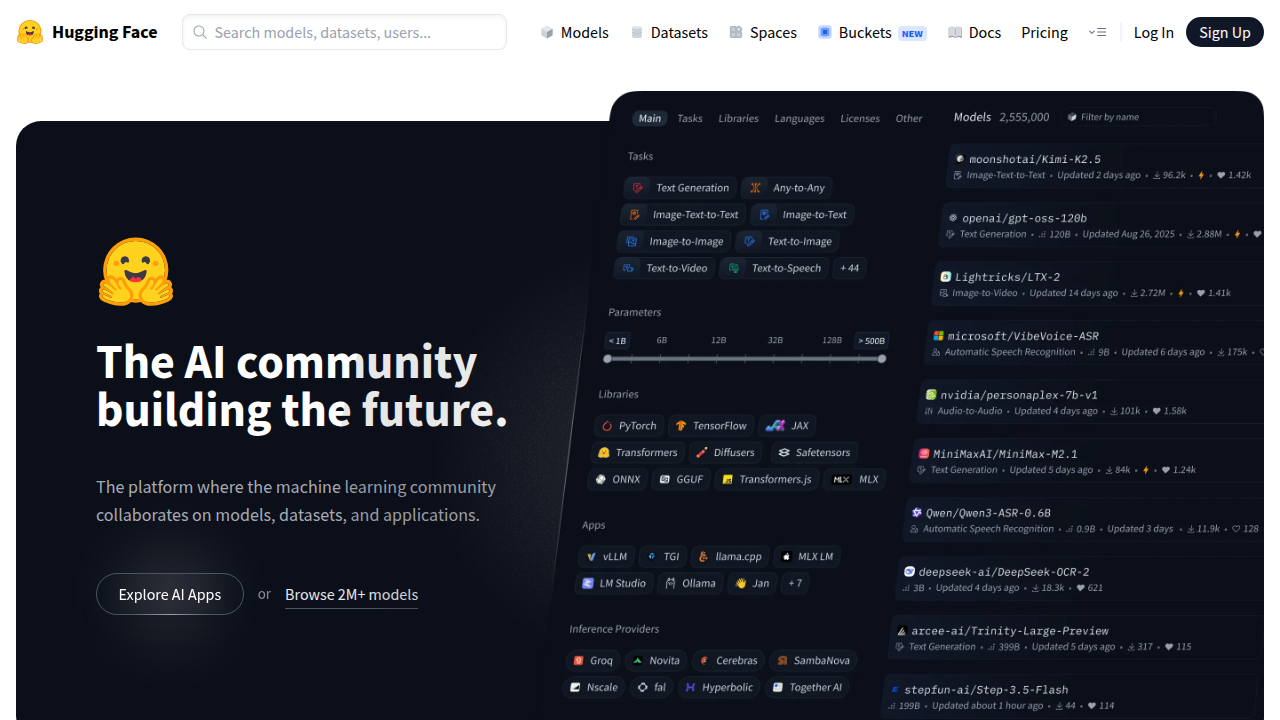
The Open Weights Definition project on GitHub creates a standard for what counts as an open weight. Still, the responsibility falls on you to check the fine print before you integrate a model into your stack.
The tension between openness and safety is real. Some models now use RAIL licenses (Responsible AI Licenses) that add behavioral restrictions. For example, you cannot use the model to harm minors or discriminate against groups. This trend is pushing companies to build compliance tooling. Automated license checkers and policy engines are becoming standard parts of the AI development pipeline. If your team is deploying open-weight models, you need clear rules for AI implementation to avoid legal surprises.
Staying on top of these licensing shifts is a future tech skill that every developer should develop. The tech trends of 2026 are moving fast, and the governance conversation is only getting louder.
For the latest daily updates on AI models, licensing changes, and developer tools, check out The AI Newsletter Worth Reading. It delivers clear, actionable insights straight to your inbox so you never miss an important shift.
AI-Driven Continuous Testing and Observability
You push code, run the pipeline, and hope for green lights. But flaky tests fail for no obvious reason. Bugs sneak into production. Your test suite keeps growing. This is a tech sideline that eats up your team’s time.
AI is stepping in to fix that. In 2026, machine learning models generate test cases automatically. Tools like CodiumAI scan your code and create edge-case tests that humans often miss. They look at the logic and find the spots where bugs hide. This saves hours of manual writing and catches issues before they reach production. For a deep look at these tools, check out the comparison of AI coding tools for test generation in 2026.
AI also helps with flaky test detection. Models learn the patterns of tests that pass sometimes and fail other times. When a test is unstable, the system flags it so your team can fix or remove it. No more rerunning the same test five times hoping it passes.
On the observability side, machine learning now predicts failures before they happen. Platforms analyze logs, metrics, and traces in real time. When they spot a pattern that usually leads to an outage, they alert your team early. This shift from reactive debugging to proactive prevention is a game changer for stable deployments.

But not everything is smooth yet. Integrating AI into CI/CD pipelines is still growing. Many teams report that the tools work well in testing environments but struggle with the complexity of production. Automation pipelines can break when AI models make unexpected decisions. The integration is getting better every quarter, but it is not mature.
To stay ahead, your team should experiment with these tools now. Start with a small pipeline and see how AI test generation fits your workflow. For a broader view of what is available, read this guide on selecting AI software development tools for your team. It covers both testing and observability options so you can pick the right fit.
The future of future tech in software quality is real. The tools exist today. The question is how fast you adopt them.
Navigating the Compliance Maze: AI Act and Global Regulations
The tools you adopted to boost your tech sideline of continuous testing and observability are powerful. But they come with a catch. Governments around the world are writing new rules for artificial intelligence, and the EU AI Act is the most important one so far.

This law requires transparency and risk management for any AI system used in Europe. If your tool makes decisions that affect people, you need to document how it works and what data it uses. That is a big shift from the old "move fast and break things" mindset. In 2026, moving fast without compliance is a good way to get fined.
The EU AI Act sorts AI systems by risk level. High-risk systems, like those used in hiring, credit scoring, or critical infrastructure, face strict rules. You must show that your model is fair, accurate, and secure. Low-risk systems have lighter rules, but you still need to tell users they are interacting with AI.
This is not just a European problem. Other countries are following. In the US, state laws and federal guidance are emerging. China has its own AI regulations. If you sell software globally, you need to comply with multiple frameworks at once.
New tools for AI governance are popping up to help. They scan your model for bias, check your documentation, and flag missing disclosures. Some even generate compliance reports automatically. For developers, the smart move is to build compliance into your toolchain early, not bolt it on later. Waiting until a regulator asks questions is risky and expensive.
Many teams already struggle with trust in AI tools. According to the latest data, only 29% of developers trust AI outputs to be accurate. That trust gap makes compliance harder, because users expect transparency and proof that your system works. Closing that gap starts with clear documentation and testing.
If you want a practical starting point, read about setting clear rules for AI implementation in your team. Having a written policy helps everyone understand what is required.
The regulatory landscape will keep shifting. Staying informed is the best way to avoid surprises. To get clear, daily updates on AI regulations and tools, check out The AI Newsletter Worth Reading. It cuts through the noise and gives you what matters.
Summary
This article argues that the biggest advantages in AI come from underreported infrastructure, tooling, and process shifts — the "tech sideline" — rather than only headline model updates. It walks through five niche yet high-impact trends for 2026: on-device AI and TinyML for low-latency, private edge inference; federated learning for privacy-preserving training; advanced AI code synthesis that moves beyond autocomplete to generate full logic; the open-weight model era and its complex licensing and governance trade-offs; and AI-driven continuous testing and observability to catch failures earlier. The piece explains why each trend matters, gives examples of leading frameworks and tools, and highlights practical implications for teams building production systems. It also stresses the growing compliance burden—especially the EU AI Act—and recommends embedding governance and tool selection into your development workflow. After reading, teams will know which quieter trends to prioritize, which tools to evaluate, and how to start integrating these changes without sacrificing reliability or compliance.