

The Quiet Revolution in Human AI Interaction
Overview
Introduction: The Quiet Revolution in Human-AI Interaction
Think about the last time you asked a voice assistant to set a timer or had a chatbot help you troubleshoot a code error. Those interactions feel simple, right? But behind the scenes, something much bigger is happening. Human-AI interaction has quietly moved far beyond basic question-and-answer bots. In 2026, systems are multimodal, context-aware, and often anticipate what you need before you finish typing.
For developers and technical leaders, this shift is not just interesting. It is critical to understand if you want to build products that people actually trust and enjoy using. The tools you choose and the way you design interactions can make or break your product’s success in a competitive market. The difference between a frustrating experience and a seamless one often comes down to how well you bridge the gap between AI to human communication.
The field of human-AI interaction has evolved rapidly. In the 2010s and 2020s, deep learning enabled breakthroughs in image recognition and natural language generation, leading to conversational agents and recommender systems that felt more natural than anything before. Today, researchers focus on making systems transparent, explainable, and adaptive to individual users. As explained by the Interaction Design Foundation, modern human-AI interaction addresses how to design systems that are responsive, fair, and accountable while respecting user privacy and values. This is a far cry from early rule-based chatbots.
To stay ahead, you need to master these capabilities. That is exactly what this article will help you do. We will cover the current capabilities of AI systems, the human factors that build trust, and practical steps you can take to leverage AI interactions effectively in your own projects. If you are ready to design experiences that feel less like talking to a machine and more like working with a capable partner, keep reading.

And if you want to keep a finger on the pulse of the latest developments, The AI Newsletter Worth Reading delivers clear daily AI updates straight to your inbox.

It is a simple way to stay informed without the noise.
Next, we will look at how far AI interactions have come and what that means for the future of software development.
The Evolution of Human-AI Interaction
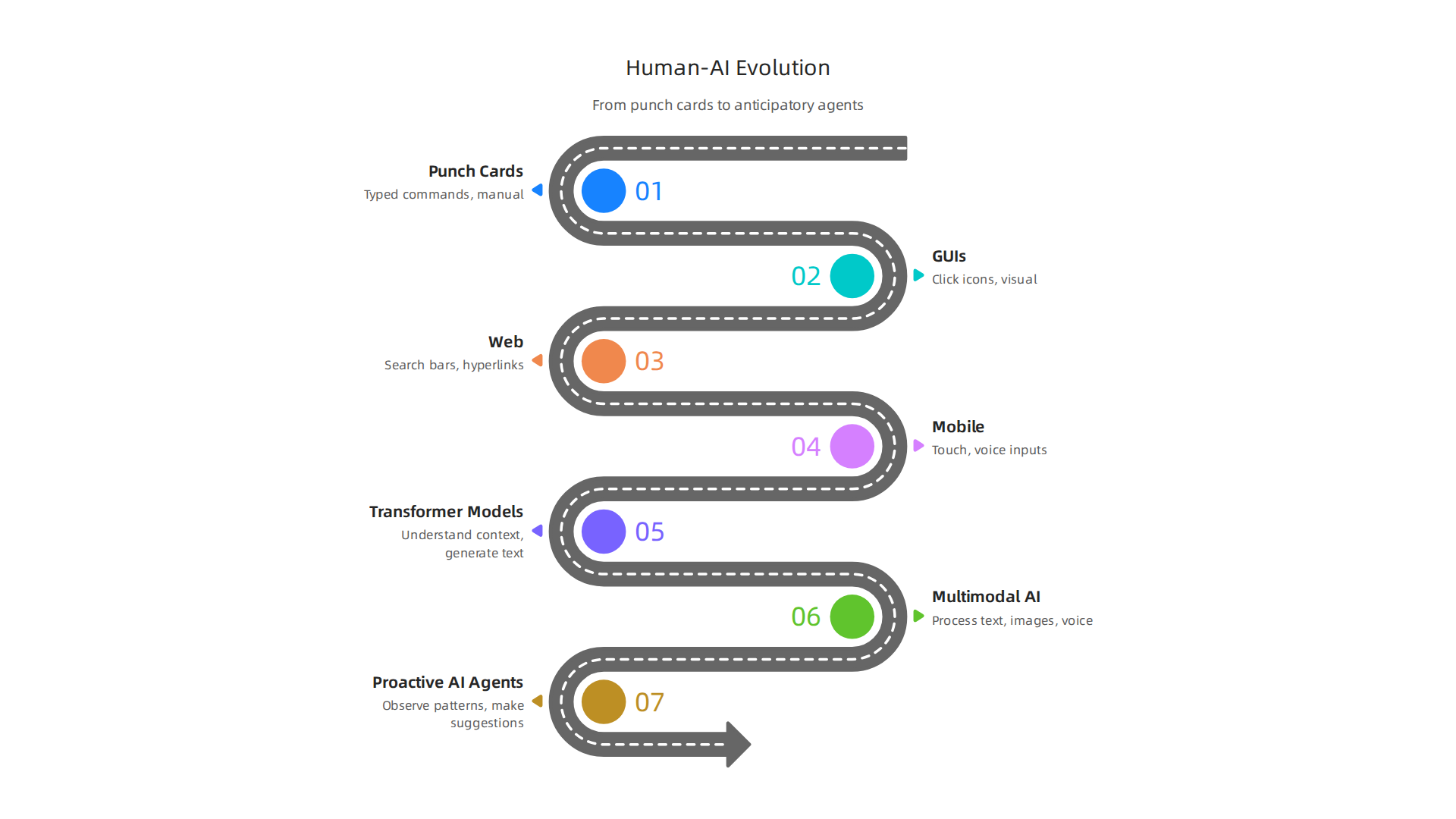
So how did we get here? It helps to look back at the path. Early computers required punch cards and typed commands. Then graphical user interfaces let you click icons instead of memorizing codes. The web brought search bars and hyperlinks. Mobile devices added touch and voice. Each step made computers easier to use, but the basic idea stayed the same: you told the machine what to do, and it did it.
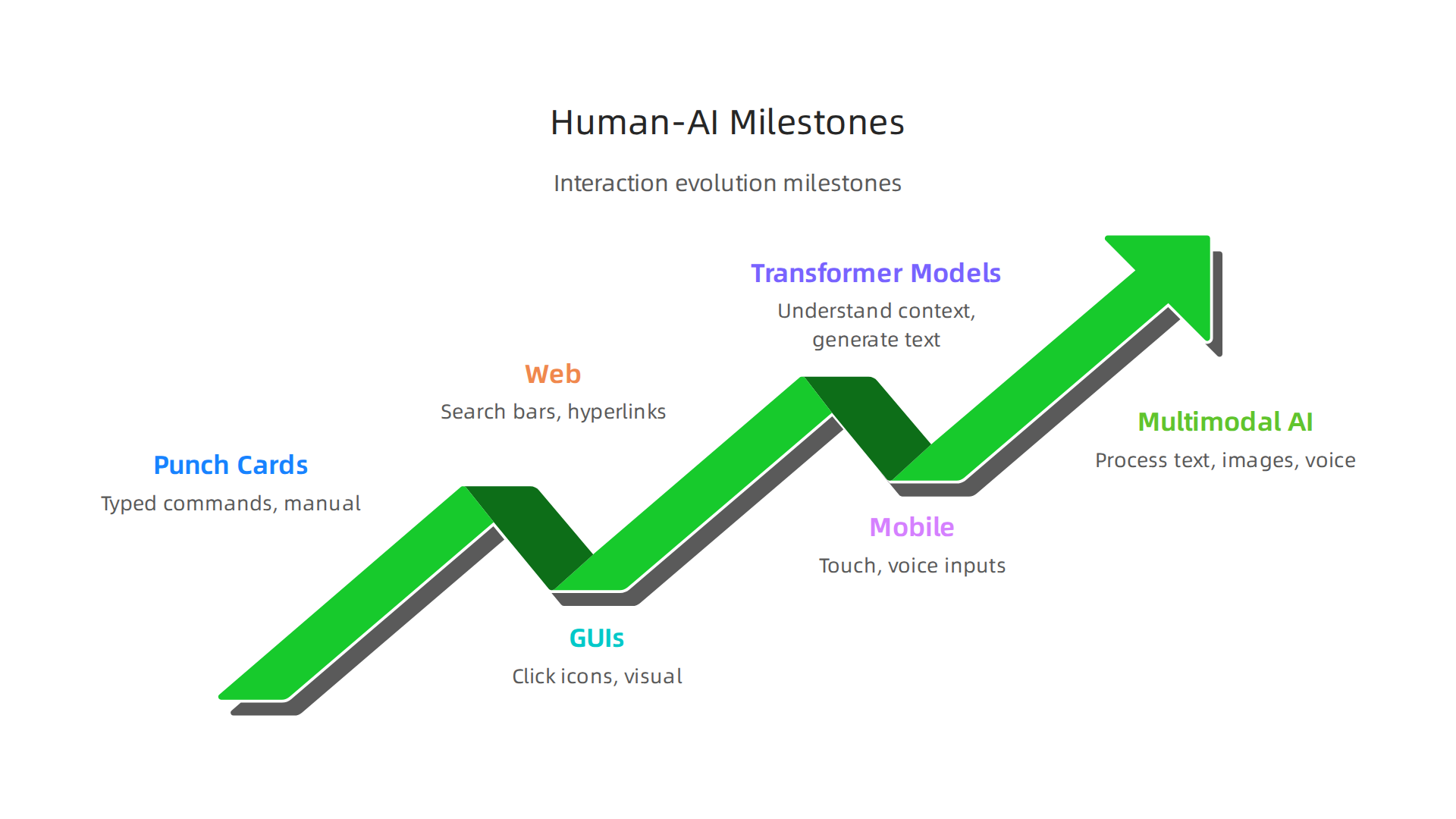
Then something changed. AI stopped being a passive tool. With the rise of transformer models around 2017, systems began to understand context, generate human-like text, and even hold conversations. Suddenly you could ask a question in plain English and get a useful answer. This was a major milestone in the evolution of human-AI interaction. As explained in the Human-AI interaction history and milestones from the Interaction Design Foundation, deep learning unlocked new modes like conversational agents and social robots that feel far more natural than old rule-based chatbots.

The next leap was multimodal interaction. Today’s AI can process text, images, voice, and video all at once. You can show a picture and ask questions about it. You can speak a request and get a visual response. This shift blurs the line between ai to human and human-to-human communication. It also raises the question of ai vs human capabilities. AI is not replacing human judgment yet, but it is becoming a partner that anticipates needs.
Now in 2026, we are seeing proactive AI agents. These systems do not wait for commands. They observe patterns, make suggestions, and take action on your behalf. This is a radical change. It makes the future of ai one where our role shifts from operator to collaborator.

Understanding this evolution helps you design interactions that people actually want to use. For a deeper look at how it all started, check out the 1956 birth of AI at Dartmouth and how that early spark led here.
Looking ahead, the line between agi vs ai may blur further. But one thing is clear: the way we communicate with machines will keep getting more human.
Core Capabilities: How AI Understands Humans
So what exactly makes modern AI feel so human? It all comes down to a few core capabilities that let machines understand us on a deeper level than ever before.
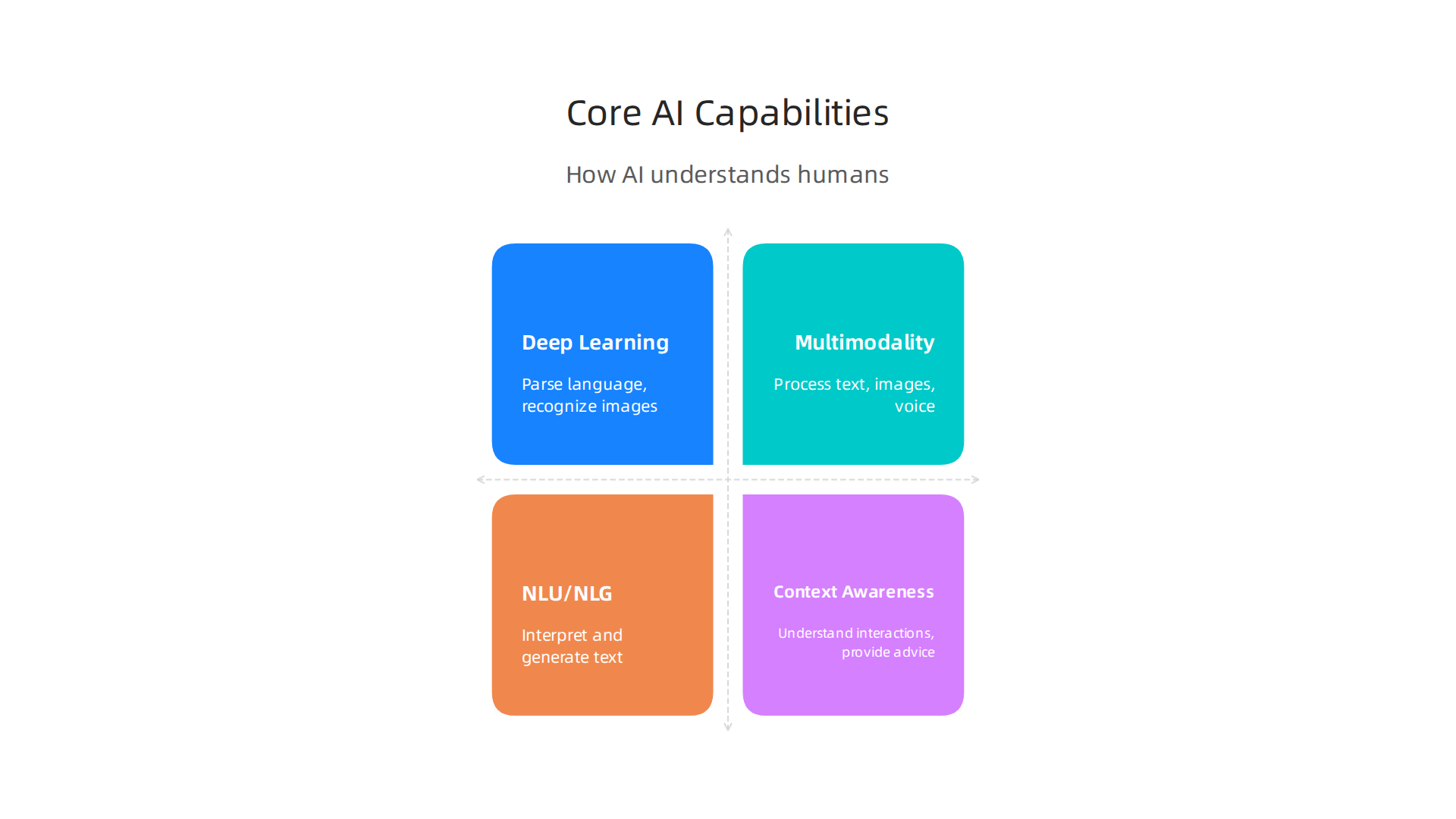
Deep learning is the engine behind most of this progress. It allows AI systems to parse natural language, recognize images, and interpret speech with near-human accuracy. When you type a question into a chatbot or speak a command to your smart speaker, the AI is using layers of neural networks to break down your words, figure out intent, and generate a response. This shift from rigid commands to conversational understanding is a revolution in ai to human communication.
Today’s best systems go even further through multimodality. They can process text, images, voice, and video all at once. You can show a photo of a broken appliance and ask "How do I fix this?" The AI sees the picture, reads your question, and gives you step-by-step repair advice. That kind of context-aware interaction narrows the gap in the ai vs human comparison. It makes the exchange feel less like typing at a machine and more like talking with a knowledgeable friend.
Benchmarks show how fast these abilities are improving. In 2026, AI models score above 90% on several popular language understanding tests. But there is still a big gap in common-sense reasoning and emotional intelligence, as shown in the AI Benchmarks 2026 overview from LLM Stats. We have not reached AGI yet. The difference between agi vs ai remains wide because current systems still fail at tasks that require genuine understanding of human feelings or everyday logic.
Still, these core capabilities are what make the future of ai so promising. They allow us to build tools that truly collaborate with people instead of just following orders. If you want to compare how different models stack up today, check out this AI model comparison for 2026 that covers GPT-4o, Claude 4, Gemini 2.0, and open-source options.
Staying on top of these rapid changes is tough. That is why many developers and technical leaders rely on a trusted daily update. For clear daily AI insights delivered straight to your inbox, you can subscribe to The AI Newsletter Worth Reading called The Deep View. It cuts through the noise so you know what actually matters for your work.
Natural Language Understanding and Generation
Large language models (LLMs) power most conversational AI tools you use today. They handle chatbots, coding assistants, and apps that help you write emails or summarize documents. Their key skill is natural language understanding, the ability to read and interpret human text correctly. Their other key skill is natural language generation, the ability to produce text that sounds fluent and natural.
In 2026, LLMs have gotten very good at both. They can follow complicated instructions, reason through problems step by step, and even call external tools to get answers. For example, you can ask "What is the weather in Tokyo this weekend?" The model understands the intent, calls a weather API, reads the result, and replies in plain English. That is a big step forward in the ai to human interaction loop.
But LLMs are not perfect. They can hallucinate, meaning they make up facts that sound real. They also struggle with tasks that need deep common sense. That gap reminds us of the limits in the ai vs human comparison. Models pass standard tests with over 90% accuracy, but they still fail on tricky adversarial examples designed to trip them up. According to the latest Natural Language Processing Benchmarks insights, models continue to struggle with harder, more nuanced challenges.
To build reliable apps, developers must learn prompt engineering. This means crafting inputs that guide the model toward useful outputs while avoiding mistakes. You can explore this topic further in our guide on advanced prompt engineering techniques for building reliable AI systems.
The landscape shifts fast. Developers and technical leaders who want to stay current rely on a daily update that cuts through the noise. You can subscribe to The AI Newsletter Worth Reading for clear daily insights that keep you focused on what actually matters for your work.
Computer Vision and Multimodal AI
While language models get most of the attention, computer vision has leaped forward in 2026. Modern vision models can now generate and interpret images, videos, diagrams, and even 3D scenes with high fidelity. They go far beyond simple object detection. They understand context, recognize emotions from facial expressions, and read human poses.
What makes this even more powerful is multimodal AI. This approach combines vision with language, audio, and other data types into a single model. Instead of treating a picture and a sentence as separate things, multimodal models understand them together. For example, you can show the model a medical scan and ask "What does this show?" It reads the image, interprets the findings, and answers in plain English. This opens doors for visual question answering, document understanding, and creative content generation.
The applications are huge. Healthcare uses multimodal AI to combine MRI scans, lab results, and patient history for better diagnoses. Autonomous vehicles use vision to navigate roads and detect obstacles. Retail customers can search products using both an image and keywords. And creative tools let you describe a scene and generate a video from your words. You can read more about these top multimodal AI use cases to see how industries are adopting them.
For developers, this means the ai to human interaction now includes visual channels. A user can take a photo, send it to an app, and get a helpful response. That is a big upgrade from text only.
As these capabilities grow, developers need to choose tools that blend vision and language smoothly. If you are building smarter applications, our guide on AI tools for developers to boost productivity covers the platforms that make multimodal integration easier.

To keep learning about these fast-moving trends, many developers rely on a daily update that cuts through the noise. The AI Newsletter Worth Reading delivers clear daily insights so you can stay focused on what matters for your work.
Trust, Ethics, and Human-Centered Design
You build an AI system that works perfectly. It can read medical scans, answer questions, and even generate video from a description. But none of that matters if people do not trust it. Trust is the foundation of every successful ai to human interaction. Users need to know how decisions are made, why the system says what it says, and that their data is safe. Without that confidence, even the best technology collects dust.
This is where ethics comes in. Bias, fairness, and transparency are not optional add-ons. They are core requirements. A 2026 study on AI ethics concerns found that the public ranks privacy and nonmaleficence (avoiding harm) as the two most important principles for any AI system. Developers must address these from day one, not after a problem surfaces.
Human-centered design turns these principles into action. A trustworthy system does three things well. First, it is explainable. Users can ask "Why did you do that?" and get a clear answer. Second, it has feedback loops. People can flag errors, ask questions, and see how their input improves the system. Third, it gives control. Users can adjust settings, override decisions, and opt out.
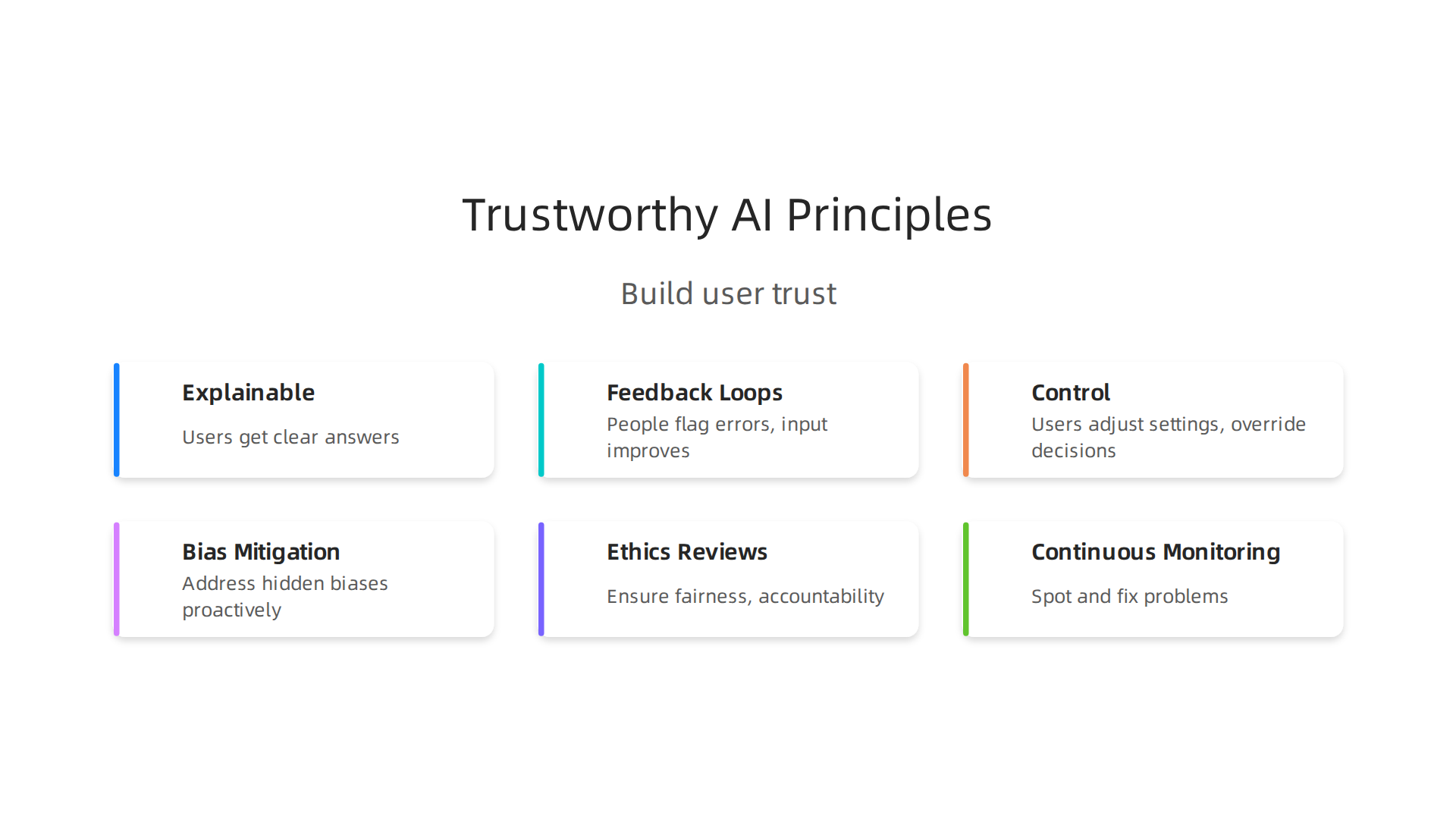
The 2026 transparency best practices guide from ParallelHQ lays out concrete steps for building this kind of trust layer. It includes techniques like bias mitigation, ethics reviews, and continuous monitoring.
When you design for the ai to human relationship, you shift from "AI replaces humans" to "AI helps humans do better work."

That is the real ai vs human story. It is not a competition. It is collaboration. And it requires clear rules, honest communication, and a focus on people first.
The future of ai depends on this human-centered approach. To build systems that earn lasting trust, start with our guide on AI for humans how to design systems that put people first. It walks through practical ways to keep users at the center of every decision.
Staying current on these ethics and design trends helps you build smarter, safer applications. That is why many developers rely on a daily update that cuts through the noise. The AI Newsletter Worth Reading delivers clear daily insights so you can focus on what matters for your work.
Real-World Applications Across Industries
Once you have a trustworthy framework in place, the next step is putting it to work. Ai to human interactions are already reshaping major industries in 2026. The question is no longer "Can AI do this?" but "How can AI help humans do this better?"
Start with healthcare. Doctors now use multimodal AI systems that combine medical scans, patient records, and lab results to spot diseases earlier. According to an overview of top computer vision trends for 2026, healthcare uses AI for diagnostics and early disease detection through imaging analysis. A radiologist can review a flagged scan, ask the system why it flagged it, and make a final call. That is real ai to human collaboration. The system does not replace the doctor. It gives the doctor a faster, sharper second opinion.
Finance is another big area. Banks use AI to detect fraud in real time. The system watches thousands of transactions per second. When something looks wrong, it flags it for a human investigator. The human reviews the case, asks follow up questions, and decides. This pattern shows up again and again in customer support, content generation, and code assistance. Virtual assistants handle the routine stuff. Humans handle the complex edge cases.
Education is changing too. Adaptive learning platforms adjust lessons based on how a student responds. A student struggling with algebra gets more practice problems. One who masters it moves ahead. The teacher sees a dashboard with clear insights and can focus on the students who need personal help. That is the ai vs human tension fading into collaboration.
Enterprise software sees the most obvious gains. Automated customer support chatbots handle simple requests. Content generation tools draft reports. Code assistants write boilerplate code. Developers review and refine the output. Measuring ROI and user satisfaction is key to justifying adoption. Many teams track time saved, error reduction, and net promoter scores.
The future of ai depends on these real integrations. To get the most out of your tools, check out this practical guide on AI productivity tools for developers that deliver measurable ROI and faster output. It covers how to pick the right solutions and track what matters.
Future Implications: Beyond 2026
So where is all this heading? The trends point toward AI systems that do not just respond but act first. Proactive AI agents will anticipate your needs before you ask. They will take autonomous actions within safe boundaries. Think of a virtual assistant that books your flight when it sees your calendar event for a conference. Or a supply chain system that reorders stock before you run out. The shift from reactive to proactive is a major theme in the top agentic AI trends for 2026, where agents are moving from tech demos to daily tools.
The interfaces themselves will change too. Instead of typing or tapping, you will interact through ambient technology. Augmented reality glasses, voice commands, and smart sensors will blend digital help into your physical space. According to the Adobe research on personalized and anticipatory customer experiences, customers expect seamless interaction across digital and physical touchpoints. This is not a far off dream. It is happening now in homes, factories, and retail stores.
But here is the big challenge. Regulation and public trust will shape how fast we move. The EU AI Act is already setting rules for high risk systems. Companies must be transparent about data use and model decisions. As a 2026 analysis of AI ethics points out, the technology is scaling faster than governance can keep up. Ethics, fairness, and accountability are no longer optional. They are requirements for staying in the game.
The companies that succeed will be the ones that design with people in mind. They will build systems that are helpful, transparent, and fair. If you want to stay ahead of these changes, learning how to design systems that put people first is a smart move. The future belongs to those who balance innovation with trust.
And if you want to keep up with the rapid shifts in AI, get clear daily AI updates from The Deep View Newsletter. It is a simple way to stay informed without the noise.
Practical Guidance for Developers and Leaders
Adopting AI that interacts smoothly with humans is not just about buying the newest tool. It takes real planning. Here is a practical roadmap for teams and leaders who want to build systems that work well for people.
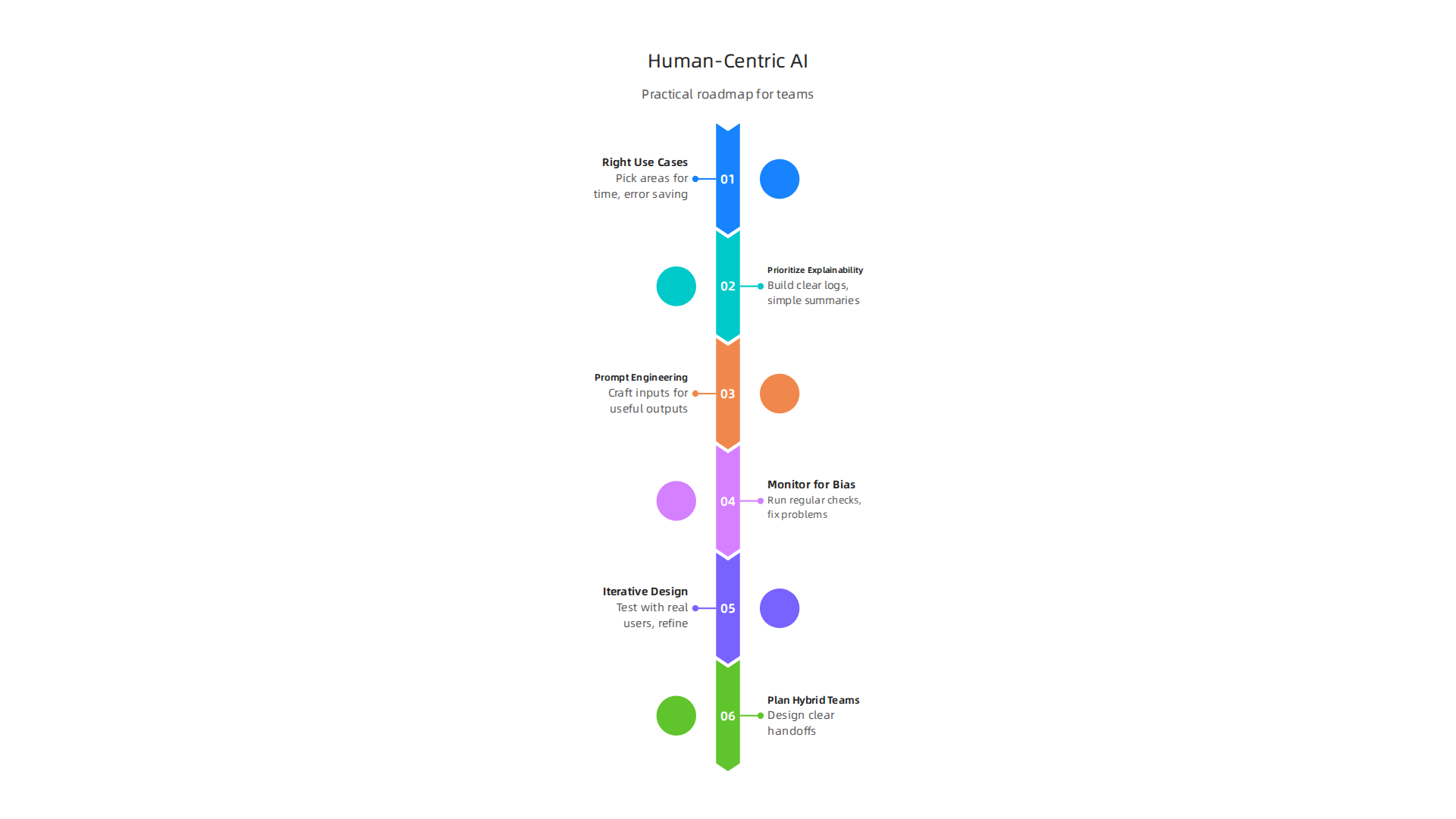
Start with the right use cases. Not every problem needs an AI agent. Pick areas where AI can save time or reduce errors without adding risk. According to the UiPath guide on adopting agentic AI in 2026, you should review your current processes and identify gaps where an agent could speed things up or improve accuracy. Start small. Test one workflow before scaling.
Prioritize explainability. Users and regulators want to understand why an AI made a certain decision. Build in clear logs and simple summaries so anyone can follow the logic. This builds trust and helps catch mistakes early.
Invest in prompt engineering. Even the best models fail with bad prompts. Spend time teaching your team how to write clear, structured prompts. This skill pays off immediately. It improves output quality and reduces weird errors.
Monitor for bias constantly. AI models learn from data, and data often carries hidden biases. Run regular checks to see if your system treats all users fairly. Fix problems as you find them. This is not a one time task. It is an ongoing practice.
Use iterative design with real user testing. Do not launch a complete system and hope it works. Build a simple version, let real users try it, and watch what happens. Then refine. The research from the Center for Long Term Cybersecurity on UX design for human AI agent interaction stresses that users need to feel in control. Testing helps you spot moments where people feel confused or lose trust.
Plan for hybrid teams. Your AI agents and your human employees will work together. Design clear handoffs. Decide when the agent acts alone and when a human must review. This balance keeps things efficient and safe.
For a deeper look at building human centered systems, check out this guide on how to design systems that put people first. It walks through the principles every developer and leader should know.
The teams that succeed in 2026 will be the ones that treat AI interaction as a design challenge, not just a technical one. Start with these steps, learn from each iteration, and keep the human in the loop.
Summary
This article explains how human-AI interaction has shifted from simple question-and-answer bots to multimodal, context-aware systems that act as collaborative partners rather than mere tools. It reviews the technical foundations—deep learning, LLMs, and multimodal models—then shows how those capabilities translate into real-world use cases across healthcare, finance, education, and enterprise software. The piece emphasizes trust, ethics, and human-centered design as nonnegotiable requirements, outlining practical steps for explainability, bias monitoring, and user feedback. It also offers hands-on guidance for technical leaders: pick the right use cases, invest in prompt engineering, run iterative user tests, and plan hybrid human–AI workflows. Finally, the article looks ahead to proactive agentic systems and regulatory pressures, helping readers choose tools and practices that balance innovation with safety and measurable ROI.