
Master Your Software Developer Program for AI-Driven Engineering
Overview
The world of software development is changing faster than ever before, all thanks to new AI tools. In 2026, these AI tools are not just cool gadgets; they are becoming essential parts of how engineers work every day. Many developers now use or plan to use AI tools in their projects. In fact, a survey revealed that over 84% of developers are already adopting or planning to adopt AI tools, which is a big jump from the year before, according to the 2025 Stack Overflow Developer Survey. This huge shift means that the skills needed to be a successful software engineer are also changing, along with how companies find and train their teams.

Why Structured Developer Programs Matter
With AI reshaping nearly every engineering role, having clear, organized plans for learning and career growth is more important than ever. This is where a good software developer program comes in. It acts like a map, guiding both companies and individual developers through the fast-changing tech world. These programs help everyone stay updated and effective. Think of it this way: the ability to work well with AI tools is now just as vital as knowing how to code, says the State of Tech Hiring 2026 report. It’s no longer enough to just know programming languages; you need to know how to work with AI.
High-Level Problems for Companies
Companies face significant challenges when trying to keep their teams skilled and competitive. They need to figure out which AI tools actually work best for their specific needs and how to help all their developers learn these tools quickly. Building an effective software developer program from scratch can be tough, especially when the technology keeps changing. Companies also worry about how AI affects the speed and quality of their engineering work. For instance, a key skill for the AI era is being able to review and make sure that AI-generated code is good and safe, and also knowing how to give clear instructions to AI tools, a process called "prompting." This highlights a big need for companies to invest in new training for their developers, as shown in the State of Code Developer Survey report.
High-Level Problems for Individual Developers
For developers, this new AI world can feel like a constant race to learn new things. Many developers worry about falling behind on AI skills. To keep up, some are spending several hours each week just trying to learn new AI technologies, with AI and machine learning being their top learning goals. This pressure makes the path to becoming a software engineer seem more demanding. Developers often look for ways to gain new expertise, perhaps through free AI certification courses or even online master’s programs to boost their knowledge. In this new landscape, being able to adapt and keep learning is seen as even more important than just having strong technical coding skills, with some leaders willing to pay more for those with good AI abilities, according to the AI Quarterly Pulse Survey Q1 2026. Finding remote computer science jobs that embrace these new AI skills is also a goal for many.
This article will help both companies and individual developers understand how to succeed in this AI-driven world. It will guide them through building or joining a strong software developer roadmap 2026 career paths and skills for the AI era, ensuring they are ready for the future.
Want to stay on top of all the latest AI trends and insights every day?
Get clear daily AI updates from The Deep View Newsletter.
As we discussed, a clear roadmap is key for both companies and individual engineers to thrive in the changing tech world. This is where a focused software developer program becomes truly important in 2026. Such programs help everyone understand and prepare for the new ways AI is shaping jobs and creating special roles for developers.
How AI Changes Developer Jobs
AI is not just a tool; it’s changing what it means to be a software engineer. No longer is it just about writing code from scratch. Now, developers need to know how to work with AI. This means new skills are very important. For example, knowing how to give clear instructions to AI tools, a process called "prompt engineering," is a hot skill. Also, checking the code that AI creates to make sure it is good and safe is a must-have ability.
These new skills mean that traditional developer roles are shifting. Some developers might become "AI integrators," focusing on adding AI into existing systems. Others might become "AI code reviewers," making sure AI-generated code meets company standards. Actually, AI is making changes in many parts of software development, like design, writing code, testing, and even creating documents. It can cut down the time spent on basic, repetitive tasks by more than half, according to a report on The State of Generative AI in Software Development. This means developers can spend more time on creative, complex problems.
A strong software developer program helps guide engineers through these changes. It shows them how to choose and use the Best AI Tools For Developers In 2026 and understand new workflows.

Developers often need help to adapt to these fast changes, and a good program offers that support, making them feel more secure in their careers rather than worrying about falling behind.
Benefits for Companies
For companies, having an AI-focused software developer program offers many good things.
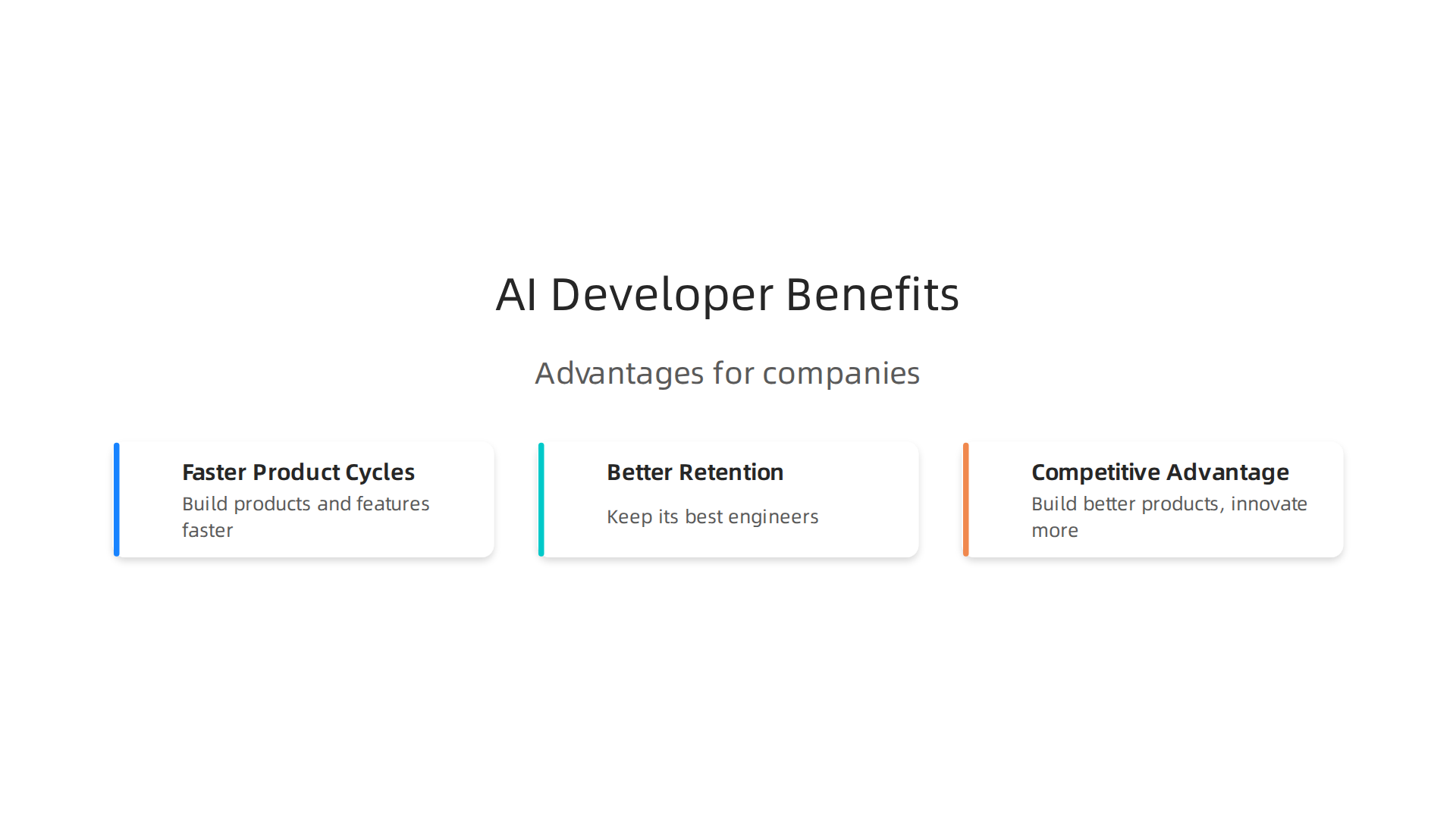
- Faster Product Cycles: When developers know how to use AI tools well, they can build new products and features much faster. AI helps with many steps, from planning to testing. This speed means companies can get their products to customers quicker and stay ahead of others. Learning how to integrate AI into your workflow is key to speeding things up, as shown in the Developer Workflows with AI Tools (2026): Integration Guide.
- Better Retention: Developers want to feel like they are growing and learning. A company that offers a clear program for learning AI skills is more likely to keep its best engineers. This helps avoid the cost and effort of finding and training new people. By offering ways to Accelerate Your Career with Tailored Learning Paths for Software Developers in 2026, companies show they care about their team’s future.
- Competitive Advantage: In 2026, companies that use AI effectively in their software development will have an edge. They can build better products, innovate more, and solve problems faster than those who don’t. This makes them stronger in the market and more attractive to top talent. Ultimately, this helps to Maximize Software Development Efficiency with AI Tools and boosts the company’s overall success.
A good software developer program brings these benefits by making sure everyone on the team is ready for what’s next. It’s about building a team that can use AI as a partner to create amazing things.
Core skills, certifications, and curriculum priorities
To truly build a team that uses AI as a partner, a good software developer program must focus on key skills and learning paths. These skills are split into two main types: technical and soft skills. Both are very important for developers in 2026.
Essential Skills for Today’s Developers
On the technical side, developers need to learn how to build and manage AI tools. This includes understanding model development, which is about creating the AI itself.
It also means learning MLOps, which is how to make sure AI models work well and keep improving once they are out in the real world. Of course, knowing how to give clear instructions to AI tools, called prompt engineering, is still a very hot skill. A recent report from the State of Code Developer Survey report found that checking AI-generated code for quality and security, and then efficiently prompting AI tools, are the most important skills in the AI era.
But technical skills are only part of the story. Soft skills are also super important. These include "product thinking," which means understanding what users actually need and how the software helps them.

Collaboration is another big one, because working together with a team and even with AI tools requires good communication. Actually, some leaders believe that for entry-level jobs, being able to learn and change (adaptability) is even more important than just knowing how to code perfectly, as noted in the AI Quarterly Pulse Survey Q1 2026. Companies also say they are ready to pay more for people with strong AI skills. This mix of technical know-how and soft skills is crucial for anyone thinking about how to land a software engineer entry-level job.
Certifications and Programs Employers Value
When it comes to proving these skills, certifications and formal programs are highly valued. A good software developer program will offer clear paths to these. Many employers in 2026 now look for IT certifications when hiring, and they also consider them for promotions. You can see this trend in the Top Software Developer Certifications in 2026 report, which states that almost half of large employers require IT certifications.
These certifications show that a developer has a solid set of skills and is serious about their career. The 2026 State of Tech Talent Report also shows that technical training and certification programs are highly ranked by hiring managers. If you’re wondering which ones to get, a guide to the best computer science certifications for 2026 can help.
Besides certifications, formal education like online master’s programs in computer science or specialized bootcamps also help engineers gain deep knowledge. For those who want to start learning about AI without a big cost, many free AI courses online for developers are available. Staying updated on AI is key, and programs often guide people to these learning options.
Staying on top of the latest AI trends and developer tools is a constant effort. It helps to have a reliable source for daily updates.
Get clear daily AI updates from The AI Newsletter Worth Reading.
Building an effective in-house software developer program
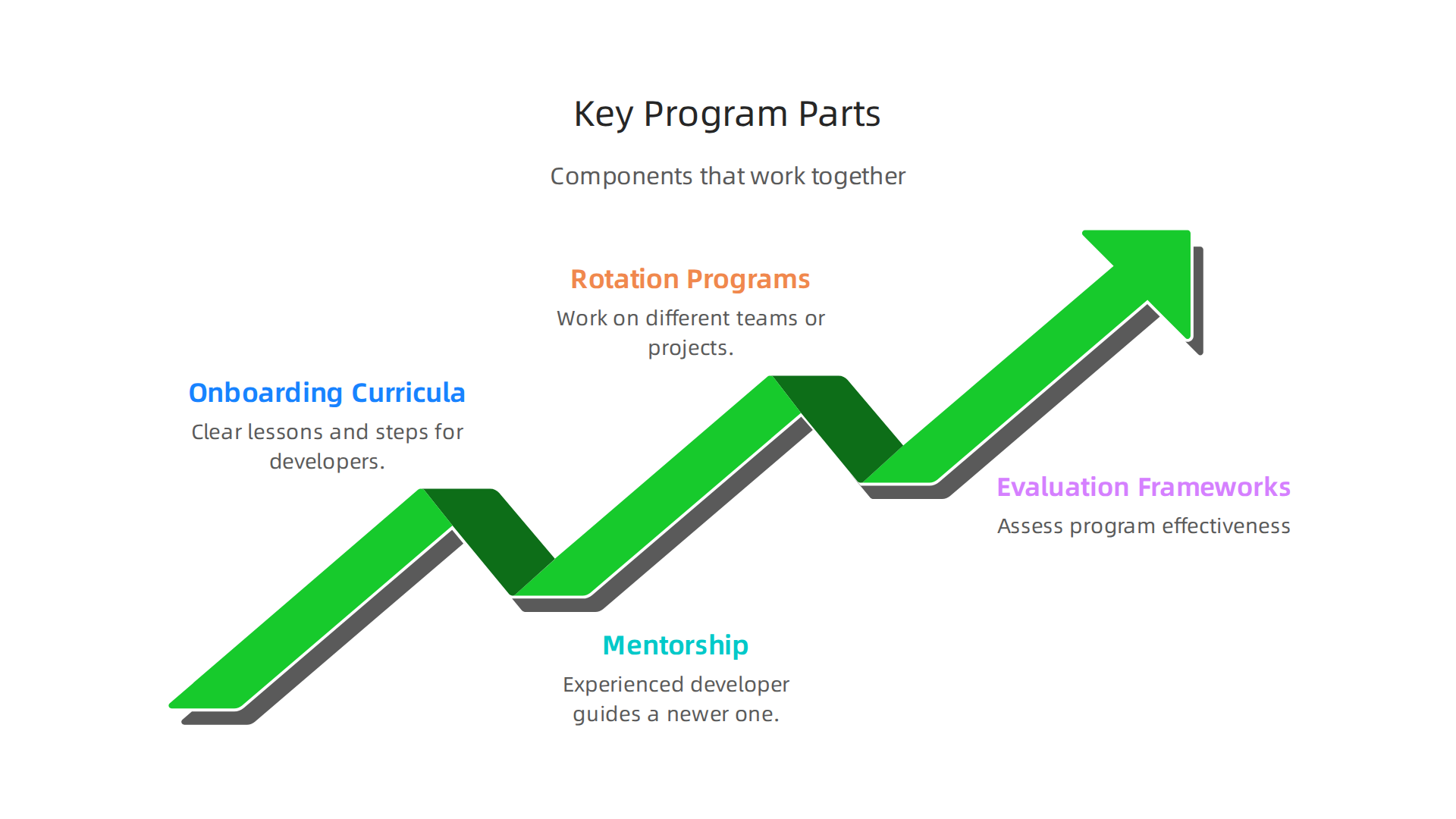
After understanding what skills and certifications are important, the next step for companies is to build their own strong software developer program. This isn’t just about hiring smart people. It’s about helping them grow and make great products for the company. A good program has a few key parts that work together.
Key Parts of a Strong Program
First, new hires need a good onboarding curricula. This means clear lessons and steps for developers joining the team. It teaches them how the company works, what tools they use, and how to build software the company’s way. This helps new developers get up to speed quickly and feel like part of the team.
Next, mentorship is super important. This is when an experienced developer guides a newer one. They share knowledge, help solve problems, and offer advice.

This one-on-one help can make a big difference in a developer’s learning journey and helps them with tasks like finding the best AI tools for developers in 2026.
Many good programs also have rotation programs. This means developers get to work on different teams or different parts of a project. It helps them learn new skills and see the bigger picture. For someone becoming a software engineer, these rotations can be very helpful for choosing their path. These types of training programs can also lead to better job outcomes, as shown in studies on various skills bootcamps, which track things like getting a new job or earning more money Evaluation of Skills Bootcamps: completions and outcomes – GOV.UK.
Finally, evaluation frameworks are needed. These are ways to check if the program is working well. Are developers learning? Are they building quality software? Are they reaching their goals? These checks help the company make the program even better over time. They help ensure the program supports the overall demand for well-trained software engineers, which is still growing in 2026 The demand for well-trained software engineers is soaring.
Rules and Safety for AI Tools
An in-house software developer program also needs clear rules and strong leadership, which we call governance. This means making sure that all developer work, especially when using AI tools, fits with the company’s product goals. The AI tools should help build products that customers want and that work well.
It’s also very important to think about security and compliance. When developers use AI tools, they need to make sure company information stays safe. This means knowing what data can be used with AI and what should not be shared. For example, sensitive company data should never be pasted into public AI prompts Privacy and security considerations when using AI coding tools. Companies should put rules in place, like making sure AI tools only connect to development and testing systems, not live customer databases Data Privacy and Enterprise Policies | Developer Toolkit.
Teams should set up guidelines for what information can be sent to AI models and always have people check the code that AI tools create How should security teams govern AI use in developer tooling?. Also, it’s good to limit what AI tools can access, following a rule called "least privilege" to keep everything secure Securing the AI-Augmented Developer Workflow: From … – GuardionAI. This way, the program helps developers use AI safely and smartly to meet product goals without putting company information at risk.
An effective in-house software developer program needs clear structures for learning and growth. Beyond just having onboarding and mentorship, companies also need to pick the best way to deliver this training. This choice depends on what your company needs. Are you trying to quickly hire new people? Do you want to teach current employees new skills? Or are you looking to help someone change careers into a tech role? Each approach has its own good and bad points, like how fast people learn, how deeply they learn, how much it costs, and how likely people are to stay with the company.
Picking the right learning format
There are several main ways to train software developers, each with different strengths.
Bootcamps
Coding bootcamps are short, intense programs designed to teach practical skills quickly. They are great for getting people job-ready in a shorter time frame than traditional schooling. For instance, bootcamps can help people get access to high-quality jobs and even increase their salaries after completing the program World Bank Document. They focus on career development and can be a good way to bring in new talent quickly. Many bootcamps also cover specific programming languages and modern technologies like those for AI development, making them helpful for those looking for free AI certification courses or practical AI skills. Think of them for a fast hiring pipeline when you need specific skills right away.
Apprenticeships
Apprenticeships offer hands-on training where new developers learn while working. They are often longer than bootcamps, lasting a year or more. This format helps people gain deep knowledge and real-world experience, often leading to better job outcomes and higher income over time Mixed-Methods Evidence from the LaunchCode Program. For example, a software developer apprenticeship typically involves around 2000 hours of on-the-job learning and focuses on developing specific skills Appendix A-2 – SOFTWARE DEVELOPER – Apprenti. Apprenticeships can be very good for retaining talent because participants become deeply connected to the company. They are ideal for building a stable workforce and for people who are becoming a software engineer directly out of school or from a career change.
University Partnerships
Partnering with universities or encouraging online master’s programs can provide the deepest theoretical knowledge. This path is slower and usually costs more, but it results in highly educated developers with a strong foundation in computer science. These programs are excellent for specialized roles, advanced research, or upskilling current senior staff who need to lead complex projects. They can also help current employees gain further professional credentials, which are highly valued by many employers 2026 State of Tech Talent Report. This format is best for long-term strategic growth and developing experts in specific fields.
Matching format to company goals
Choosing the right format for your software developer program means looking at your company’s specific needs:
- For a hiring pipeline: If you need to quickly bring in many developers with specific, job-ready skills, bootcamps are often the fastest way. They get people up to speed for entry-level roles.
- For upskilling existing staff: To teach your current employees new, advanced skills or to help them grow into more complex roles, university partnerships or structured mentorships can be very effective. This also helps with retention by showing employees you invest in their future.
- For reskilling employees: If you’re helping employees move into completely new tech roles, apprenticeships offer a supportive, hands-on path. They blend learning with practical work, making the transition smoother.
By thinking about these trade-offs and your company’s goals, you can build a strong software developer program that truly supports your team and helps your products succeed.
For more updates and deep insights on the world of AI and technology, consider subscribing to The AI Newsletter Worth Reading.
After choosing the best way to train your team, the next big step is to know if your choices are actually working. This means looking at how well your software developer program helps your company. You need good ways to measure success. We do this by tracking special numbers called Key Performance Indicators (KPIs), figuring out the Return on Investment (ROI), and watching how many good people stay with the company.
Measuring success: KPIs, ROI, and retention metrics
To see if your software developer program is really making a difference, you need to track important numbers. These numbers help you understand if your investment in training is paying off.
Practical KPIs for your developer program
KPIs are like scorecards for how well your training program is doing. They help you see clear changes.
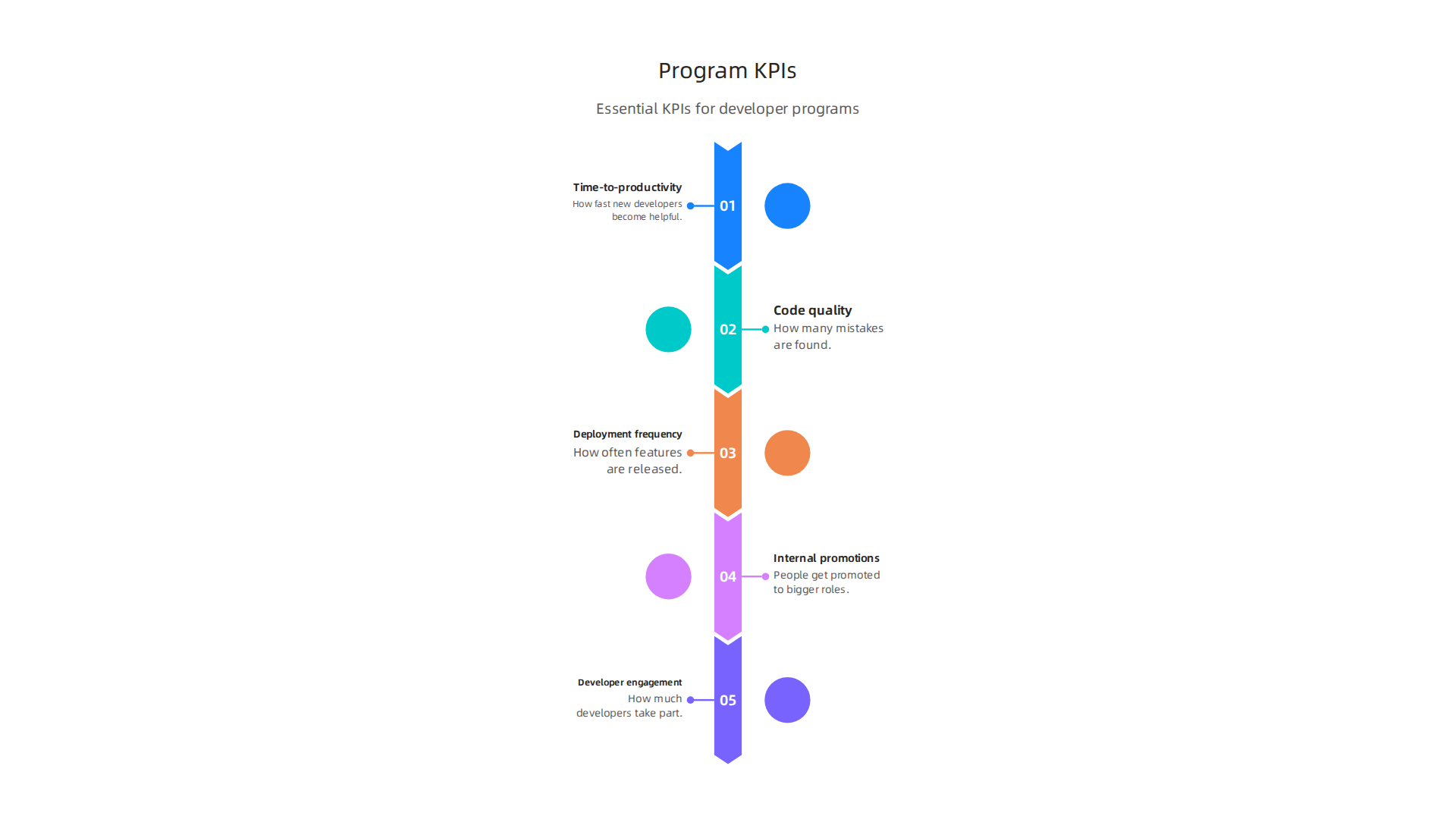
Here are some simple KPIs to watch:
- Time-to-productivity: How fast new developers or those learning new skills become truly helpful in their jobs. A good program helps people get up to speed quickly.
- Code quality: Look at how many mistakes (bugs) are found in the code. Better training should lead to cleaner code and fewer errors.
- Deployment frequency: This is how often new software features are released. When developers are skilled, they can push out new things more often and with fewer problems. This is a key measure for how well developer experience programs are working Executive KPIs that make developer experience programs.
- Internal promotions: See how many people in your software developer program get promoted to bigger roles. This shows they are growing and staying with your company.
- Developer engagement: How much developers take part in team activities or help others. Engaged developers are usually happier and more productive Developer Retention.
These KPIs help you understand the small, day-to-day successes of your program. They give a clear picture of how learning is changing work. For example, some companies look at how different developer program memberships affect key technology outcomes Technology-Focused Developer Program Memberships.
How to show the value: ROI
Return on Investment (ROI) helps you show the bigger picture. It’s about comparing the money you spent on the software developer program to the money or value you gained because of it. It’s how you prove to your company’s leaders that the training was worth it.
To calculate ROI, you look at the financial benefits and subtract the training costs, then divide that by the training costs. You then multiply by 100 to get a percentage Upskilling ROI: How to Measure L&D Impact. It’s often shown as a simple percentage:
ROI (%) = [(Benefits – Costs) / Costs] x 100
What are the "costs"?
- Money spent on courses or bootcamps.
- Money paid to employees while they are training.
- Salaries of people who teach or manage the program Return on Investment (ROI) Framework for Mandatory … – IJFMR.
What are the "benefits"?
- More productivity: People work faster and better. Tools that use AI can help developers work faster and deliver measurable ROI AI Productivity Tools for Developers Deliver Measurable ROI and Faster Output.
- Fewer mistakes: Less time spent fixing problems saves money.
- Better retention: When people learn and grow, they are more likely to stay with your company. This saves money on hiring new staff.
- New ideas: Well-trained teams often come up with new and valuable ideas.
When you present ROI to executives, you should show them how your software developer program helps the company make more money, save money, and become stronger. You can look at resources that show how to measure success for reskilling and upskilling programs to build a clear case Measuring the Success of Reskilling and Upskilling – Springer. Highlighting how the program improves workforce impact like productivity and internal movement helps show its value Upskilling Playbook: Metrics. Many companies use similar ways to track ROI for their IT training programs Connectwise University Drives IT Team Success and ROI.
Keeping your talent: Retention metrics
A good software developer program does more than just teach skills. It also helps keep your best people from leaving. When employees see that your company invests in their future, they feel more valued. You can track things like:
- How long developers stay with the company after completing a training program.
- How many developers move into higher-level roles within the company.
- Feedback from employees about their job happiness and growth chances.
By paying attention to these KPIs and ROI, you can prove that your software developer program is a smart investment. It helps both your team and your company grow stronger.
For your software developer program to keep getting stronger, it needs to use the newest tools. This often means bringing in AI tools that can change how your team works every day. It’s about teaching your team to use these smart tools in their learning and their regular tasks.
Using AI tools in your developer programs
AI tools can help developers with many parts of their job. They can write code, help with testing, and manage how machine learning models work. Here are some smart ways to use these tools in your training programs and daily work:
- For writing code: AI can help developers start new projects faster. They can expand on ideas or create plans for how new features will be built. AI can even write basic code, which saves time. But remember, a person should always check what the AI creates to make sure it’s correct and safe Developer Workflows with AI Tools (2026): Integration Guide. Tools like GitHub Copilot or Cursor AI can fit right into the coding tools your team already uses Best AI Tools For Developers In 2026.
- For testing code: AI can also help find mistakes faster. It can automate tests, meaning it can create and run checks on code all by itself. This helps ensure the software works well before it’s released AI-Powered Dev Workflows: How SWEs Are Shipping Faster in 2026.
- A smart way to start: When bringing in new AI tools, it’s best to start small. Try the new tool with one team on one part of a project first. See what works and what doesn’t. Then, when you learn how to use it best, you can share it with everyone else How to integrate AI into your software development workflow. This helps your team learn how to use these tools properly, whether they are just starting their journey to becoming a software engineer or are seasoned pros.
Learning how to pick and use these tools is very important. To learn more about how different teams are bringing in AI tools, you can explore resources on AI developer tools 2026 how developers are adopting and choosing what works. Many companies also offer free AI certification courses to help developers get these new skills.
Keeping things safe: Security and data privacy with AI tools
When you use AI tools, it’s super important to keep your company’s secrets safe. Think about security and privacy from the very start.
- Protect sensitive data: Before any company data goes into an AI tool, check it carefully. Make sure no private information or sensitive patterns are there. It’s often best to use fake data or changed copies of real data for training, instead of using your actual company databases Data Privacy and Enterprise Policies | Developer Toolkit.
- Control access: Ensure AI tools can only connect to the parts of your systems they really need to. This means they should mainly work with development or testing environments, not live company systems. Also, make sure the AI tool providers promise not to use your company’s private code to train their own AI models Privacy and security considerations when using AI coding tools.
- Human checks are key: Always have a human review the code or suggestions that AI tools create. Don’t just trust the AI completely. This is a crucial step to make sure nothing bad or wrong gets into your main code Privacy and Security | Cursor & Claude Code – Developer Toolkit. It’s also important to define clear rules about what information can be shared with AI models and how much access these tools have to your code How should security teams govern AI use in developer tooling?.
By following these best practices, your software developer program can use AI tools to work smarter and faster, all while keeping your company’s information secure.
Want to stay on top of all the new AI tools and trends?
The AI Newsletter Worth Reading
Summary
This article explains why structured software developer programs are essential in 2026 as AI reshapes engineering roles and hiring. It outlines the new mix of technical and soft skills developers need—like prompt engineering, model development, MLOps, product thinking, and collaboration—and why certifications and clear learning paths now matter to both employers and engineers. The piece guides companies through building an in-house program with onboarding, mentorship, rotations, governance, and safety rules for AI tools, then compares delivery options (bootcamps, apprenticeships, university partnerships) so firms can match format to goals. It also shows how to introduce AI tools safely, measure success with KPIs and ROI, and use retention metrics to prove value. After reading, HR leaders and engineering managers will know how to design, run, and evaluate developer programs for the AI era, and developers will see which skills and learning paths to prioritize.