

How to Land a Software Engineer Entry Level Job in 2026
Overview
Introduction
Landing your first role as a software engineer entry level candidate in 2026 feels harder than ever. You’ve probably heard the numbers before: postings for junior roles have dropped significantly, while the number of applicants per job keeps climbing. According to recent Entry-Level Software Engineer Job Market Statistics 2026, postings declined 15% over the past year while applications per job rose 30%. That kind of competition can make you wonder if a tech career is still worth it.
Here’s the thing: it is. The long-term outlook remains strong, with the U.S. Bureau of Labor Statistics projecting 15% growth for software developers through 2034. The problem isn’t demand. It’s the entry point. Companies want candidates who can hit the ground running, and that means software engineering internships and practical experience matter more than ever.
Employers like IBM, LinkedIn, and Dropbox are expanding their entry-level programs. But these opportunities fill fast. You need a clear plan.
That’s exactly what this article delivers. Whether you’re a new grad or switching careers, we’ll walk you through each step of the journey. From building the right skills to acing interviews and landing your first offer. Along the way, you’ll find resources that help you stay ahead of the curve.
To dig deeper into the junior software developer job market for 2026, check out our dedicated guide on junior software developer job market.
And if you want to keep up with the fast-changing tech landscape, consider subscribing to The AI Newsletter Worth Reading for daily updates that help you make smarter career moves.

Understanding the Entry-Level Software Engineering Landscape
The market for a software engineer entry level role in 2026 is different from what it was just a few years ago. Junior postings have dropped roughly 28% from their 2022 peaks, according to the Software Engineering Job Market 2026: Full Outlook for Developers. At the same time, more computer science graduates enter the field each year. That combination creates real competition.
But here is what many candidates miss. The types of roles are shifting, not disappearing. While traditional junior developer titles have shrunk, demand is growing fast in specific areas.
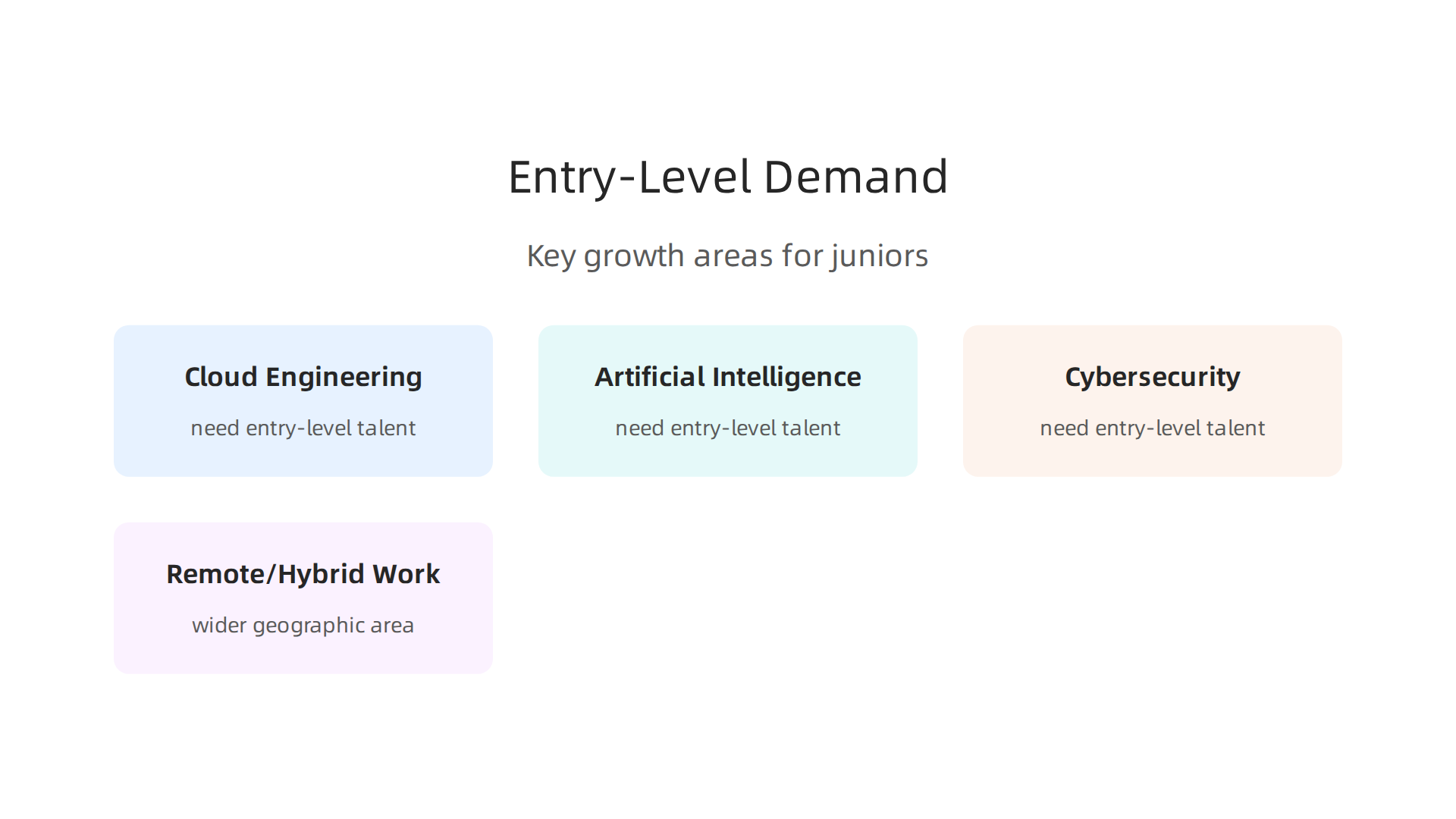
Cloud engineering, artificial intelligence, and cybersecurity all need entry-level talent right now. If you are targeting a junior software engineer role with cloud or AI skills, you actually have an advantage.
Remote and hybrid work have also changed the playing field. Companies now hire from a much wider geographic area. That opens doors for you if you live outside big tech hubs. But it also means you compete against candidates from across the country or even the world. Every role gets more applicants when location is no longer a barrier.
Understanding these trends helps you search smarter. Instead of blasting applications everywhere, you can focus on the sectors that are actively hiring. You can shape your resume to highlight cloud, AI, or security experience. That targeted approach helps you stand out in a crowded pool of applicants for computer science jobs.
To see which career paths are most in demand this year, check out the full software developer roadmap 2026 for career paths and skills. And if you want to stay ahead of fast-moving tech shifts, get clear daily AI updates from The AI Newsletter Worth Reading.
Building a Competitive Skill Set
So what does it actually take to land a software engineer entry role in 2026? You already know the market is competitive. But the candidates who stand out share a few common traits. They focus on the right skills, prove their abilities with real work, and communicate well with others.
Let’s walk through what that looks like.
The Technical Foundation That Matters Most
Start with core programming languages. According to the list of top tech skills for software engineers in 2026 on LinkedIn, Python, Java, and JavaScript lead the pack.
Python is especially valuable because it works for AI, data work, web development, and automation. If you are targeting a junior software engineer role, getting really solid in at least one of these languages makes a big difference.
Beyond languages, employers want framework experience. For front-end work that means React or Angular. For back-end it is Node.js or Spring Boot. And here is a huge one: version control with Git. Every team uses it, and showing you know Git and GitHub on your resume signals you are ready to collaborate from day one.
A guide on the most in-demand tech skills for 2026 from ONLC also highlights cloud computing, AI basics, and SQL as must-haves. Even entry-level candidates who understand AWS, Docker, or how to query a database jump ahead of the pack.
Soft Skills Are Not Optional
Here is something many new grads overlook. Technical ability gets your foot in the door. But communication and teamwork are what help you stay in the room.

The entry-level IT jobs guide from Robert Half makes this clear. Employers want people who can listen, explain their thinking, and work well in a team.
Think about it. A computer science jobs listing might say "strong communication skills required." That is not fluff. When you join a team, you will need to ask questions, give updates, and review code with peers. Showing you can do that during an interview is just as powerful as listing the frameworks you know.
Projects Beat Coursework Every Time
Your degree or bootcamp certificate shows you studied. But your projects show you can build. That is a huge difference. The same Robert Half guide advises creating a small GitHub portfolio with two or three real projects. A full-stack app, an API, or a data analysis script all work.
Open-source contributions also carry weight. They prove you can work on real codebases, follow existing conventions, and collaborate with strangers. That is exactly what a hiring manager wants to see when they decide to hire a software developer at entry level.
A popular YouTube guide on becoming a software engineer in 2026 suggests learning Python first because it is clean and widely used. Then build projects that show off your skills. The combination of a strong language foundation and public project work gives you confidence and proof at the same time.
One More Way to Validate Your Learning
If you want to structure your skill building with trusted credentials, check out the latest best computer science certifications 2026. Certifications from cloud providers like AWS or Azure, or from platforms like Coursera and edX, signal to employers that you invested in structured learning. They are not required, but they can tip the scale in a close decision.
The bottom line: focus your learning on the languages and tools companies actually need. Build stuff and share it. And remember that being easy to work with is a superpower. That combination is what turns a software engineer entry application into an offer.
Crafting a Standout Resume and Portfolio
You have the skills and you have built the projects. Now you need to present them in a way that makes recruiters stop scrolling. A strong resume and portfolio can turn a software engineer entry application into an interview invite. Here is how to do it right.
Show Impact with Numbers
Most junior resumes list job duties. That does not grab attention. Instead, highlight measurable results. For example, instead of "fixed bugs," write "resolved 20+ production bugs per month, reducing system downtime by 15%." Or "optimized a SQL query that cut load time by 30%." Numbers prove you made a difference.
The same applies to your projects. If you built something, mention the outcome. Did your app handle 1,000 requests per second? Did your script save the team 10 hours a week? Put those figures in.
A good overview of the skills needed to become a software engineer in 2026 from TripleTen emphasizes that real experience matters more than coursework. Your resume should scream "I can build and deliver."
Build a Small but Strong Portfolio
Employers want proof you can code. A GitHub portfolio with two or three well-documented projects does that better than any degree.
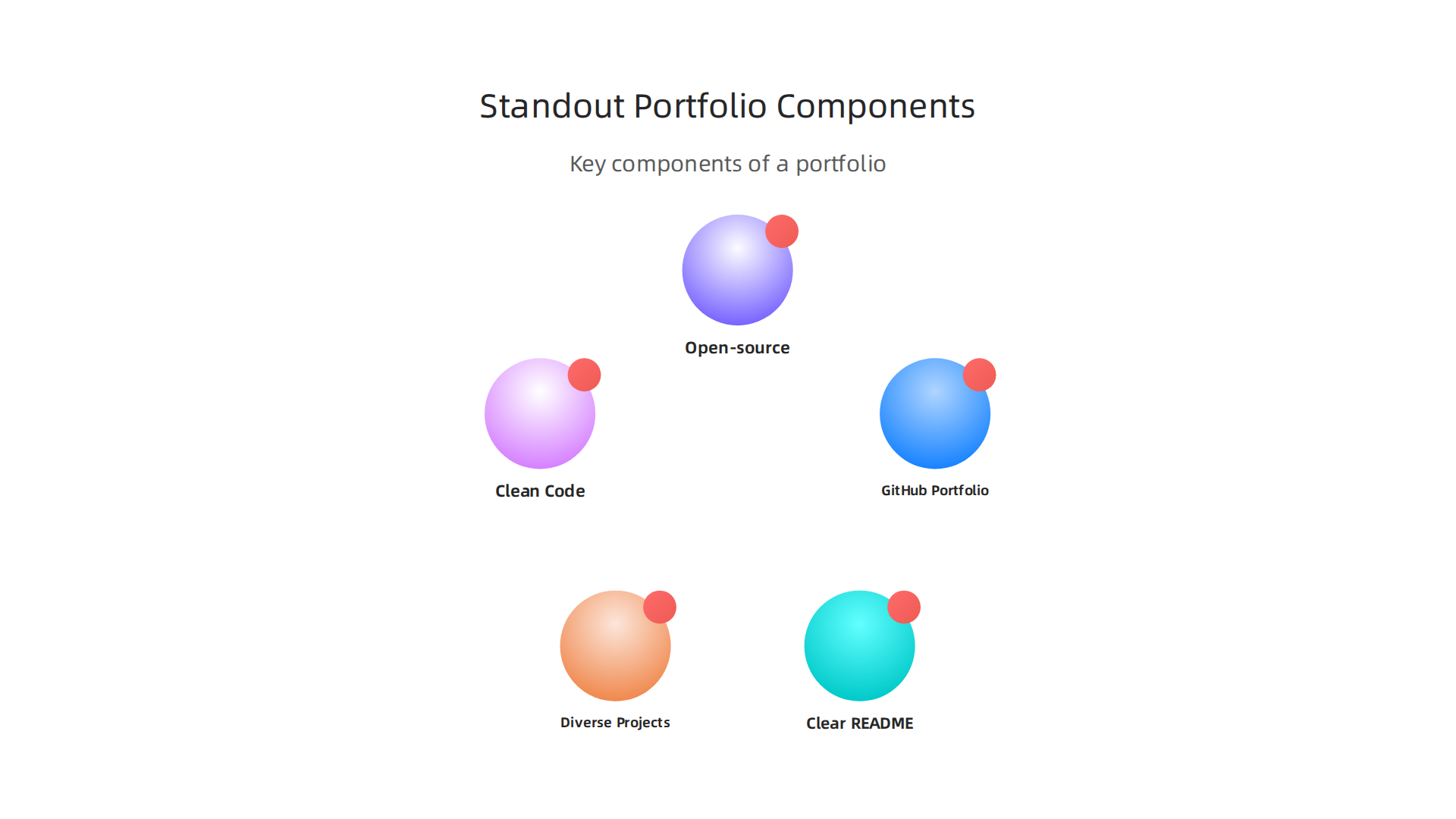
Each project should have a clear README that explains what the project does, how to run it, and what you learned.
Pick projects that show different skills. Maybe a full-stack web app with React and Node.js. An API built with Python and Flask. A data analysis project using SQL and Pandas. Make the code clean and include comments.
If you are targeting a junior software engineer role, also consider contributing to open source. It shows you can collaborate on real codebases. The junior software developer job market in 2026 guide from AI Developer Tools News explains that hiring managers love candidates who already work well with teams.
Tailor Every Resume to the Job
Here is a simple trick that works: copy the job description into a word cloud tool to find the top keywords. Then include those same keywords in your resume where they fit naturally. If the job asks for "REST API experience" and "Agile," make sure both appear in your skills and project descriptions.
Do not use the same resume for every computer science jobs listing. Customizing takes extra time, but it dramatically improves your chances. Automated systems scan for keywords first. If your resume does not match, a human never sees it.
Keep Learning and Stay Current
The tech world moves fast. Even after landing a role, you need to keep up. One easy way is to read a daily newsletter that cuts through the noise. Get clear daily AI updates from The Deep View Newsletter to stay informed about tools and trends that can give you an edge in interviews and on the job.
A resume that shows measurable impact, a portfolio with real projects, and a habit of continuous learning is what separates a software engineer entry candidate who gets overlooked from one who gets the offer.
Networking and Finding Opportunities
You have built a strong resume and portfolio. Now comes the part that many entry-level candidates rush past: networking. The truth is, most of the best entry-level jobs never show up on job boards. They get filled through people you know or people you meet.

According to a guide on getting tech job referrals, employee referrals lead to a hiring pipeline that is 55% faster than applying online. That is a huge edge. So how do you start building that network?
Start with LinkedIn
Your LinkedIn profile acts like an online resume that recruiters check first. Fill it completely. Use a professional photo and a headline that clearly says "software engineer entry" or "junior software engineer." Write a short summary that explains what you build and what you are looking for.
Connect with alumni from your school first. These are people who already share a connection with you. Send a short, personal note. Do not ask for a job immediately. Instead, ask for a 15-minute video chat to hear about their work. That is called an informational interview.
Informational interviews work because they build trust. When you show genuine curiosity, people want to help. Many will offer to refer you later. The guide to tech job employee referrals explains how to write messages that get responses instead of spam folders.
Go Local and Go Wide
Do not only apply to big tech companies. Local tech meetups and career fairs are gold for computer science jobs that never get advertised. Attend one in your city. Bring a simple business card with your GitHub link. Talk to engineers at smaller startups. They often struggle to find candidates and will appreciate someone who shows up ready to learn.
Also look for companies outside the tech industry. Banks, retailers, and hospitals all need developers. Their software engineering internships and entry-level roles get far fewer applications than remote positions at trendy startups.
Use Your Existing Contacts
You already know more people than you think. Scroll through your phone contacts and LinkedIn connections. Anyone who works at a company that might hire software engineers is a potential referral. Send them a text or a message: "Hey, I am looking for a software engineer entry role. Does your company have any openings?" You might be surprised how often it leads somewhere.
If you want a broader view of where a junior software engineer career can go, check out this software developer roadmap for 2026. It maps the skills and roles you can grow into over time.
Networking takes consistent effort. Send five connection requests today. Follow up next week. One conversation can open the door to your first job.
Preparing for Technical Interviews
You have built a solid network and started landing conversations. Now the real gate stands in front of you: the technical interview. Most companies in 2026 still use a structured coding round that focuses heavily on data structures and algorithms. The format is predictable, and you can prepare for it.
The best way to prepare is consistent practice. Platforms like LeetCode and HackerRank let you work through hundreds of real problems sorted by difficulty and topic. Start with easy problems. Build up to medium. Keep a schedule. Even 30 minutes a day beats cramming the night before.
When you solve problems, do not just write code. Practice explaining your thought process out loud. Interviewers want to see how you think, not just whether you get the right answer. Talk through your approach, write pseudocode first, test your logic with a small example, then code.
System Design Is No Longer Just for Seniors
Here is something many entry-level candidates miss. Top tech companies now ask system design questions even for junior roles. You might not need to design a massive distributed system, but you should be able to sketch a simple chat app, a URL shortener, or a rate limiter. The expectation is lower for a software engineer entry candidate, but showing you understand the basics of databases, caching, and APIs gives you a huge edge.
To get better, study common patterns. Read about how real services work. Practice drawing diagrams on a whiteboard or a shared doc. Focus on trade-offs: why pick one database over another? When does caching help?
For a deeper look at the exact questions you might face, check out this list of web developer interview questions 2026. It covers JavaScript, AI concepts, and system design topics that match what companies are asking right now.
Go Deep, Not Wide
One mistake beginners make is trying to know everything a little. Instead, pick a few core areas such as arrays, trees, graphs, and dynamic programming. Master them. The pragmatic engineer’s blog post on advice for less experienced software engineers makes this point clearly: bringing depth in one or two areas stands out far more than shallow knowledge across many.
When you interview for a junior software engineer role, your goal is to show you can solve problems methodically. Be honest when you do not know something. Interviewers respect that.
Finally, stay current. Technology moves fast, and interviewers notice when you follow trends. One easy way to keep up is by subscribing to The AI Newsletter Worth Reading for clear daily updates on AI and software engineering developments.
Practice consistently, study system design basics, and go deep on a few topics. That is how you turn leads into offers.
Acing Behavioral Interviews
You have the coding skills. But in 2026, that is only half the story. The other half is behavioral interviews. These questions test how you work with other people, handle hard situations, and learn from mistakes. For a software engineer entry role, your behavioral answers can make or break the offer.
Use the STAR Method
The best way to structure your answers is the STAR method: Situation, Task, Action, Result.
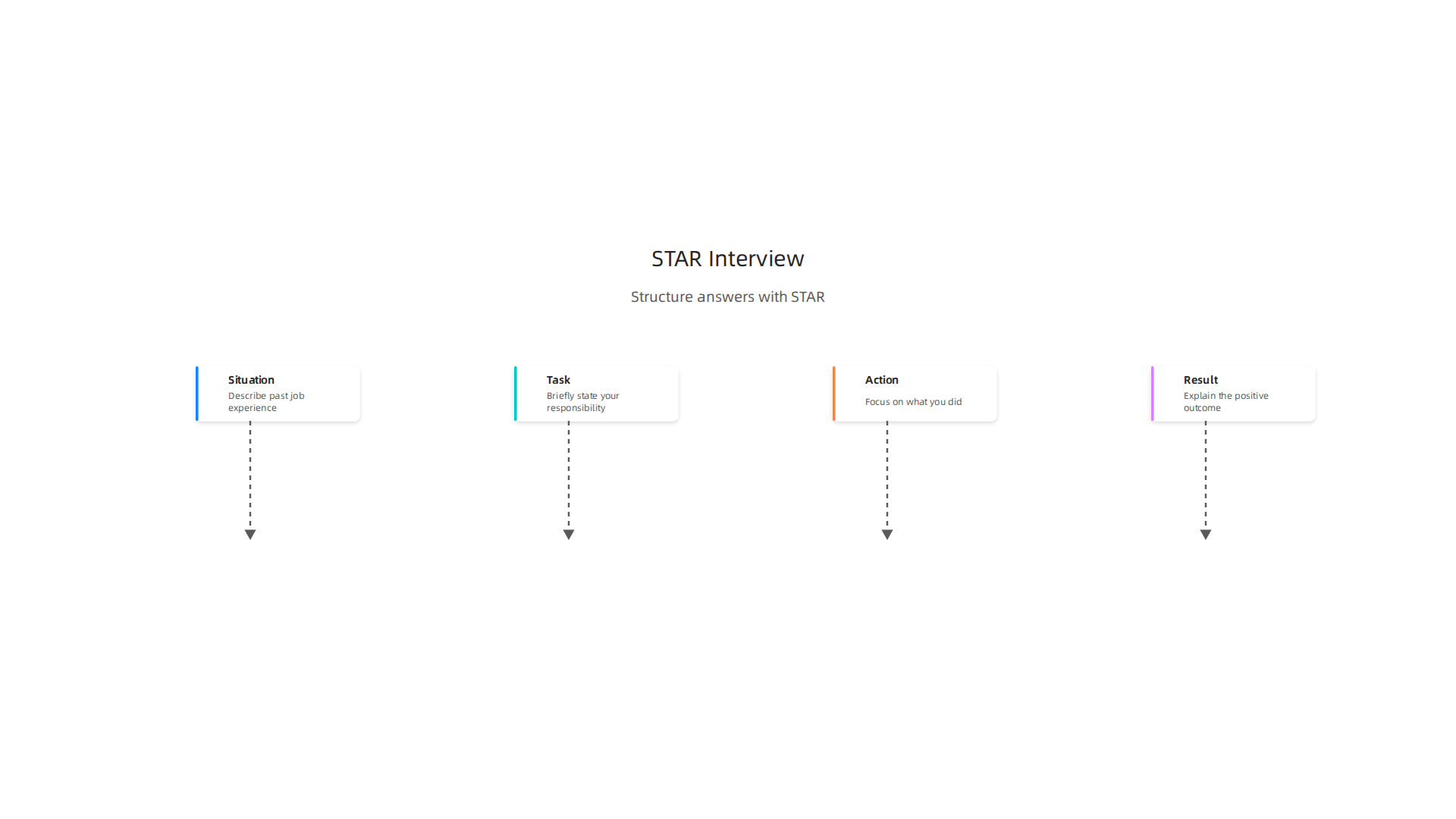
Pick a real experience from a past job, an internship, or even a school project. Describe the situation and your task briefly. Then spend most of your time on the action you took and the result you got.
For example, if the interviewer asks about a time you had a conflict with a teammate, you could tell a story like: "Our team disagreed on which database to use. I suggested we each test our option for one day. We ran a quick benchmark. My choice was faster, so we went with it. The project finished on time." That keeps the focus on your actions and the positive outcome.
Be Ready for Failure Questions
Many people fear the "tell me about a time you failed" question. But interviewers want to see that you can own mistakes and grow from them. Do not pick something tiny like "I arrived five minutes late." Pick a real technical failure, explain what happened, and what you changed afterward.
The company also wants to see if you fit their culture. Research their values before the interview. If they value collaboration strongly, prepare a story about working well within a team. If they value innovation, think of a time you tried a new approach.
For a deeper look at exactly what questions you might face, the career center at Brown University has a useful guide with entry-level software engineer interview questions with answers. It covers common behavioral prompts and how to handle them.
Prepare Your Stories Ahead of Time
Do not walk into the interview hoping to think of good examples on the spot. Write down three to five real stories from your past. They should show teamwork, leadership, problem solving, and learning from failure. Practice telling them aloud using the STAR format. Keep each story under two minutes.
Behavioral skills are also a big part of what hiring managers look for today. The current junior software developer job market 2026 shows that companies value communication and collaboration just as much as coding. Prepare your stories now, and you will walk into that behavioral interview with confidence.
Making the Most of Internships
Internships are one of the best ways to get your foot in the door as a software engineer entry candidate. They give you real world experience, mentorship from senior developers, and a chance to see how a software team actually works. Many companies also use internships as a direct pipeline for full time hires. A strong internship often leads to a return offer before you even finish school.
So how do you make sure your internship turns into a job? Treat it like a three month job interview. Every task you complete, every question you ask, and every relationship you build is being noticed.
Be Proactive From Day One
Do not wait for your manager to tell you what to do next. When you finish a task, ask what else you can help with. Look for small improvements in the codebase or documentation. Ask thoughtful questions about the architecture and the product. This shows that you care about more than just getting a checkbox done.
Also, document your work. Write clear notes on what you learned, what you built, and how you solved problems. This helps your team and also gives you concrete stories to use in future interviews. Many junior engineers forget that the experiences they earn during an internship are perfect for answering a common software engineer behavioral interviewer’s question. For example, a guide on 10 behavioral interview questions for software engineers can show you exactly what interviewers look for in your answers.
Build Real Relationships
Internships are not just about coding. They are about people. Get to know your teammates over lunch or coffee. Ask a senior developer to review your code and explain their reasoning. Attend team meetings and contribute ideas. When people like working with you, they will advocate for you during hiring decisions.
One smart move is to keep in touch with your mentor after the internship ends. That connection can lead to future referrals or even another offer down the road.
Treat Every Task Like It Matters
Even if a task feels small like fixing a typo or writing a test, do it well. Consistency builds trust. Your manager will notice that you deliver quality work every time. That trust is what gets you the return offer.
If you want to keep learning and stay sharp during your internship, check out this guide on online school for developers to keep your skills growing.
Stay Informed While You Learn
The tech world moves fast in 2026. New tools and best practices come out all the time. As you build your internship experience, staying informed about industry trends will give you an edge. A great way to do that is to follow The Deep View Newsletter for clear daily AI and tech updates. It helps you bring fresh knowledge into your team conversations.
Internships are a golden opportunity. Make the most of them by being proactive, building relationships, and delivering consistent value. That is how you turn a short term role into a long term career.
Navigating Job Offers and Starting Your Career
Once you have internship experience and start receiving job offers, the next big step is making the right choice.

The first offer can feel exciting, but it is rarely the best deal you can get. Many things matter more than the starting salary.
Look Beyond the Base Pay
When you evaluate an offer, think about the whole picture. A software engineer entry role might offer a lower salary but provide great growth opportunities, strong mentorship, and a healthy company culture. Location also matters. Working in a city with a lower cost of living can make a smaller salary go further. Remote policies can shift your pay too.
A 2026 guide on software engineer total compensation and career growth breaks down base salary, sign-on bonuses, equity, and performance bonuses. It also explains how location and remote work policies affect your pay. Take time to understand the full package before you say yes.
Negotiate Like It Is Expected
Many new graduates are afraid to negotiate. But companies expect it. In fact, a recent 2026 report shows that tech professionals who negotiate earn $24,479 more annually on average. That is an 18.83% boost compared to accepting the first offer.
So how do you negotiate well? Start by showing you are excited about the company. Tell the recruiter why you want to work there before you ask for more money. Then make a reasonable counteroffer based on research. If salary is fixed, ask for a sign-on bonus or more equity. The worst thing they can do is say no. They will not rescind the offer just because you asked.
Focus on Learning in Your First Year
Your first year as a junior software engineer is not about proving everything. It is about learning how to code in a real production environment. You will need to understand business needs, work with legacy code, and build relationships with your peers.
Do not expect to know everything. Ask lots of questions. Volunteer for tasks that stretch your skills. Over time, the trust you build will open doors to bigger projects and promotions. For a broader look at what it takes to grow as a junior, check out this guide on the junior software developer job market in 2026.
Computer science jobs are competitive, but with the right offer evaluation, smart negotiation, and a learning mindset, you can set yourself up for a strong career. Your first job is a launchpad. Choose it well.
Summary
This article explains how to land your first software engineer entry-level role in 2026 by combining smart market awareness with practical preparation. It outlines why junior postings have tightened while long-term demand remains strong, and shows how focusing on growth areas like cloud, AI, and security gives you an advantage. You’ll learn which technical fundamentals matter (Python, JavaScript, Git, cloud basics), why real projects and open-source contributions beat coursework, and how to present measurable impact on your resume and portfolio. The guide also covers high‑leverage job search tactics—networking, referrals, and internships—plus concrete interview prep for coding, system design, and behavioral rounds. Finally, it walks through evaluating offers and negotiating so your first role becomes a launchpad for career growth.