
Best Computer Science Certifications 2026: 7 Platforms Compared for Career Growth
Overview
Introduction: Why Computer Science Certifications Matter in 2026
The tech world in 2026 moves fast. Really fast. AI is reshaping how we build software, and new tools pop up almost every week. If you are a developer, engineer, or technical leader, you probably feel the pressure to keep learning just to stay relevant. The problem? There is so much information out there that it is hard to know where to focus your time and money.
That is where computer science certifications come in. They give you a clear path to validate your skills and prove to employers that you know your stuff. And the payoff is real. IT professionals who hold a top certification earn an average of $138,800 per year, which is about 25 percent more than their uncertified peers.
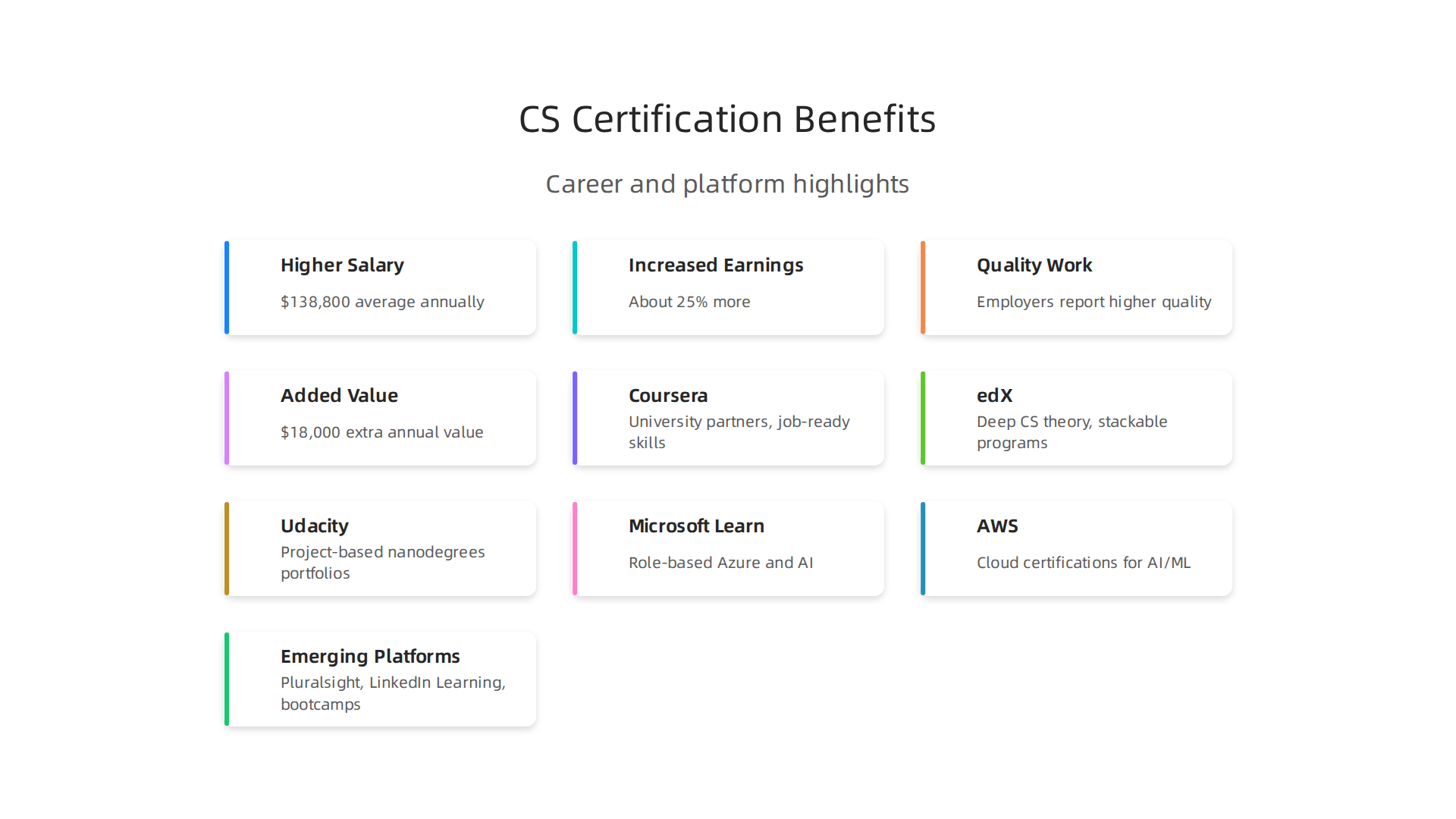
Employers themselves say certified employees deliver higher quality work and add nearly $18,000 in extra annual value per person. Those numbers show that certifications are not just pieces of paper. They are career boosters.
But with so many options out there—from udemy courses to coursera free courses, from bootcamps to great courses in computer science—it is easy to get stuck in analysis paralysis. Do you go for a broad computer engineering course or a specialized AI credential? Do you pay for a premium platform or pick a free option? That is why we put together this listicle.
We compared seven leading platforms based on cost, recognition, curriculum quality, and how well they prepare you for AI and developer roles in 2026. Whether you are looking to break into the field or level up your current career, this guide will help you pick the right certification without wasting time or money.
And if you want to stay ahead of the curve every day, we recommend checking out The Deep View Newsletter for clear, daily AI updates that help you make smarter career decisions. For a deeper look at the career paths available today, also read our software developer roadmap for 2026.
1. Coursera: University-Grade CS Certifications with Flexible Tracks
If you want the prestige of a top university name on your resume without paying for a full degree, Coursera is a smart choice.
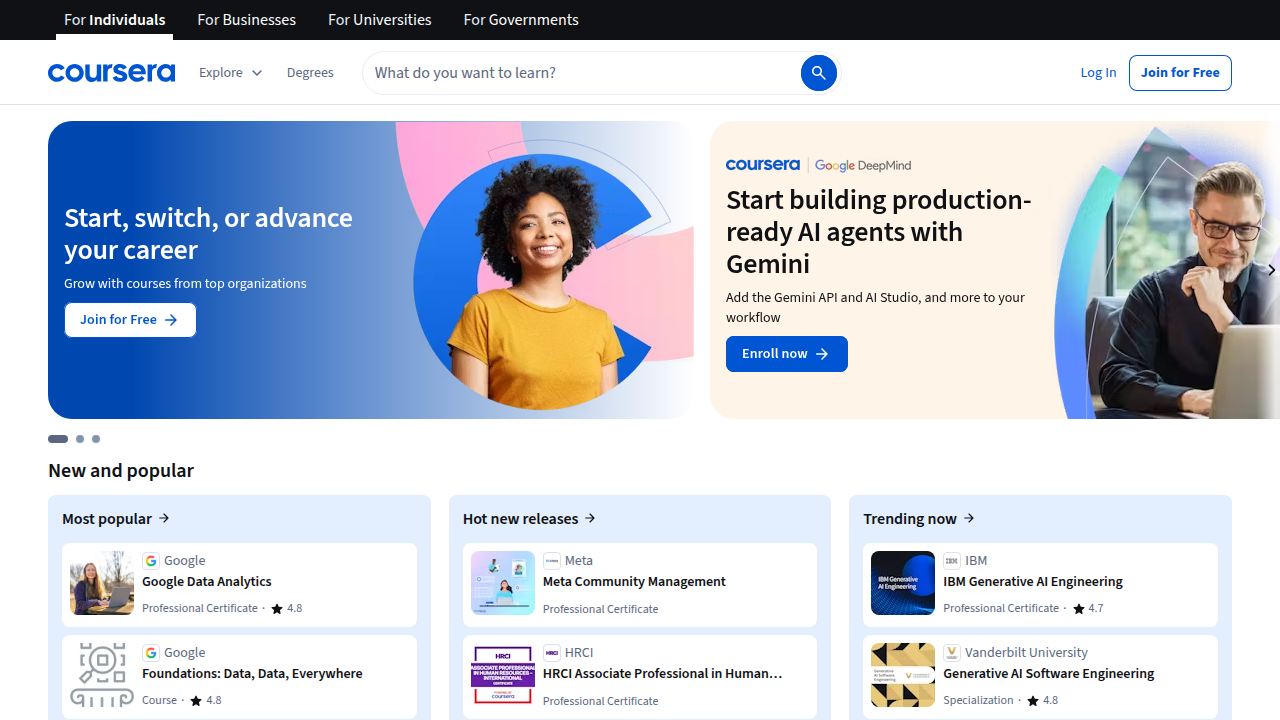
The platform partners with schools like Stanford, University of Michigan, and Imperial College to offer computer science certifications that carry real weight. You can pick from topics like machine learning, algorithms, cybersecurity, and AI engineering.
Coursera’s Professional Certificates and Specializations are designed to be job-ready.
Courses are built with input from employers, so the skills you learn match what companies actually need. The Google Data Analytics Professional Certificate is a great example. It teaches in-demand skills with AI training from Google experts, and you don’t need a degree or experience to start.
Recognition varies by employer, but a certificate from a well-known university or company like Google can open doors. As one review notes, “Coursera certificates’ recognition varies based on the employer, industry, and course.” Still, many employers respect the hands-on projects and rigorous curriculum.
One of the best parts? You can audit most courses for free. That makes coursera free courses a great way to test the waters before paying for a certificate. Financial aid is also available if you need it. And once you earn a certificate, you can share it directly on your LinkedIn profile to boost your visibility.
Coursera is a solid pick if you want flexibility, university-level content, and a path that fits your schedule. If you are still deciding between this and a traditional computer engineering course, check out our breakdown of computer science vs software engineering to see which path fits your goals.
And to stay ahead in the fast-moving AI world, get clear daily updates with The Deep View Newsletter. It helps you make smarter career decisions without the noise.
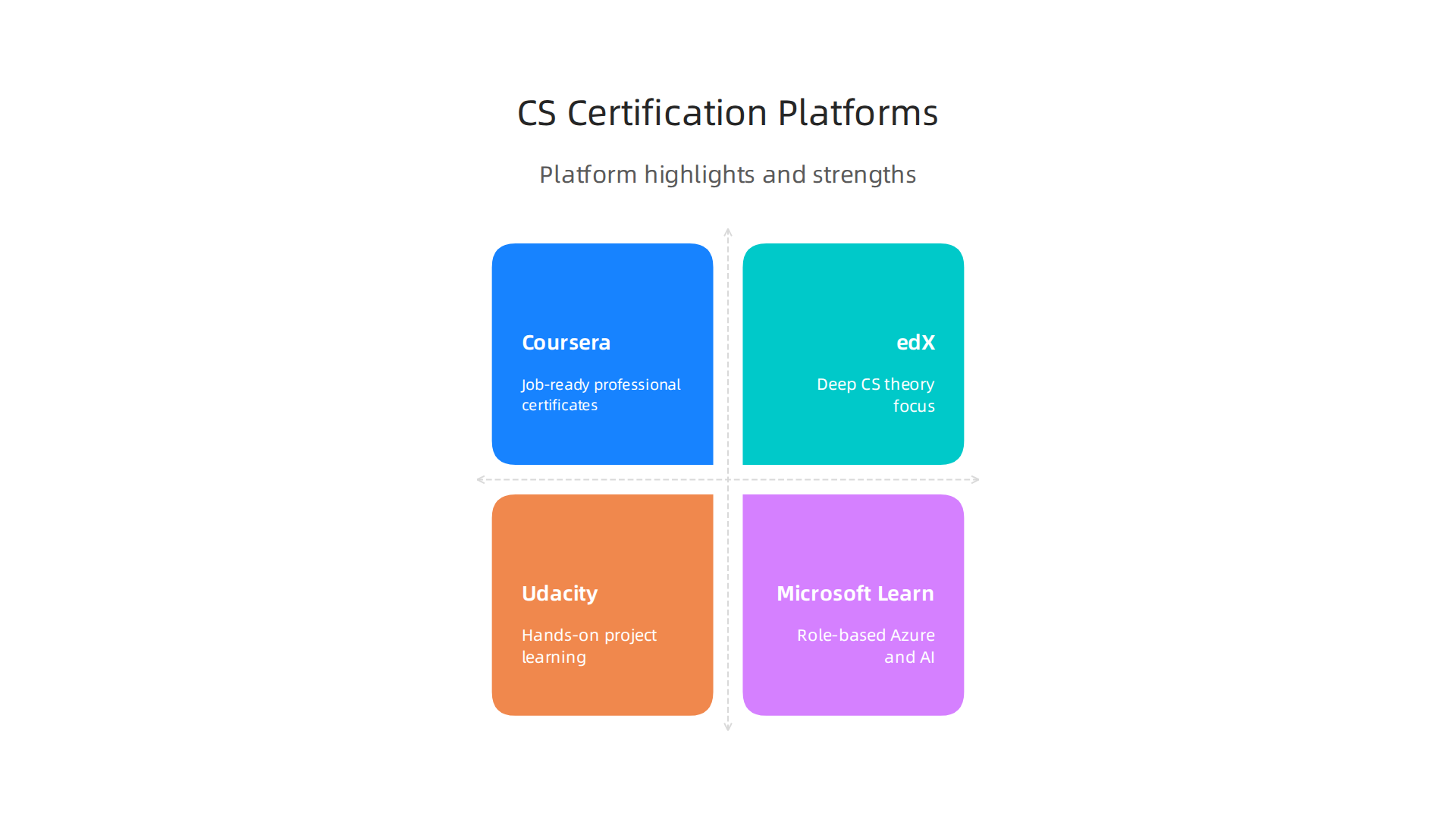
2. edX: Bootcamp-Style and MicroMasters Programs for Deep CS Knowledge
If Coursera feels a bit too broad, and you want something that digs deeper into theory, edX might be your better match.
This platform was founded by Harvard and MIT, so it carries serious academic weight. When it comes to recognition, some say edX wins by just a small margin over Coursera, especially for employer credibility.
edX shines with its MicroMasters and Professional Certificate programs. These are not lightweight courses. They often include capstone projects and proctored exams. You work through real assignments that test your understanding, not just your ability to watch videos. That makes a verified certificate from edX stand out when you apply for jobs.
Here’s what makes edX different:
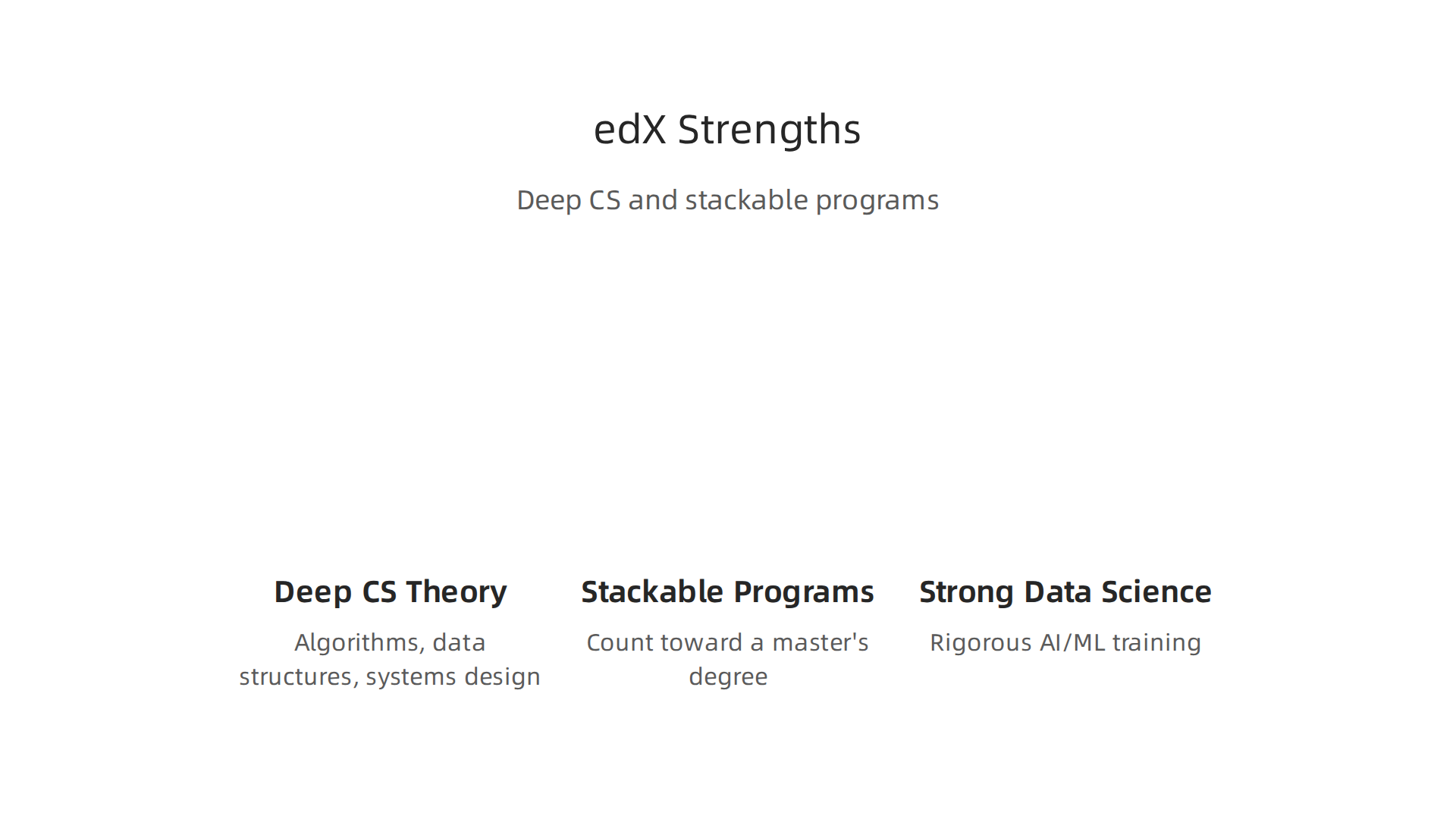
- Deep foundational CS theory. If you want a computer engineering course that covers algorithms, data structures, and systems design from the ground up, edX has strong options.
- Stackable toward a full master’s degree. Many MicroMasters programs count as credit toward an actual degree at partner universities. That is a huge win if you might want to finish a master’s later.
- Strong in data science and AI. Programs from MIT, Harvard, and UC Berkeley give you rigorous training in machine learning and artificial intelligence. These are not watered-down introductions. They are the same content used in on-campus classes.
The catch? edX courses tend to cost more than what you would pay for udemy courses or even some coursera free courses. Prices often range from $50 to $300 per course. But if you want a credential that holds weight in hiring, the investment makes sense.
One thing to watch out for. Completion rates on edX are low, just like on other platforms. MIT and Harvard’s own research found a median completion rate of only 5.5% for edX courses. That means you have to stay motivated. But if you finish, you walk away with something real.
If you are trying to build skills that match what the industry needs right now, check out the software developer roadmap for 2026. It can help you pick the right computer science certifications for the AI era.
And to stay sharp on the tools and trends that matter, get clear daily AI updates with The Deep View Newsletter. It cuts through the noise so you can make smarter career moves.
3. Udacity: Nanodegrees for Hands-On, Project-Based Learning
If edX feels too academic and you want something more hands-on, Udacity might be your platform.
Udacity is known for its Nanodegree programs in AI, data science, cloud computing, and autonomous systems. These programs are co-created with top companies like Google, Amazon, and NVIDIA. So you learn exactly what employers need.
What makes Udacity different is the focus on real projects.
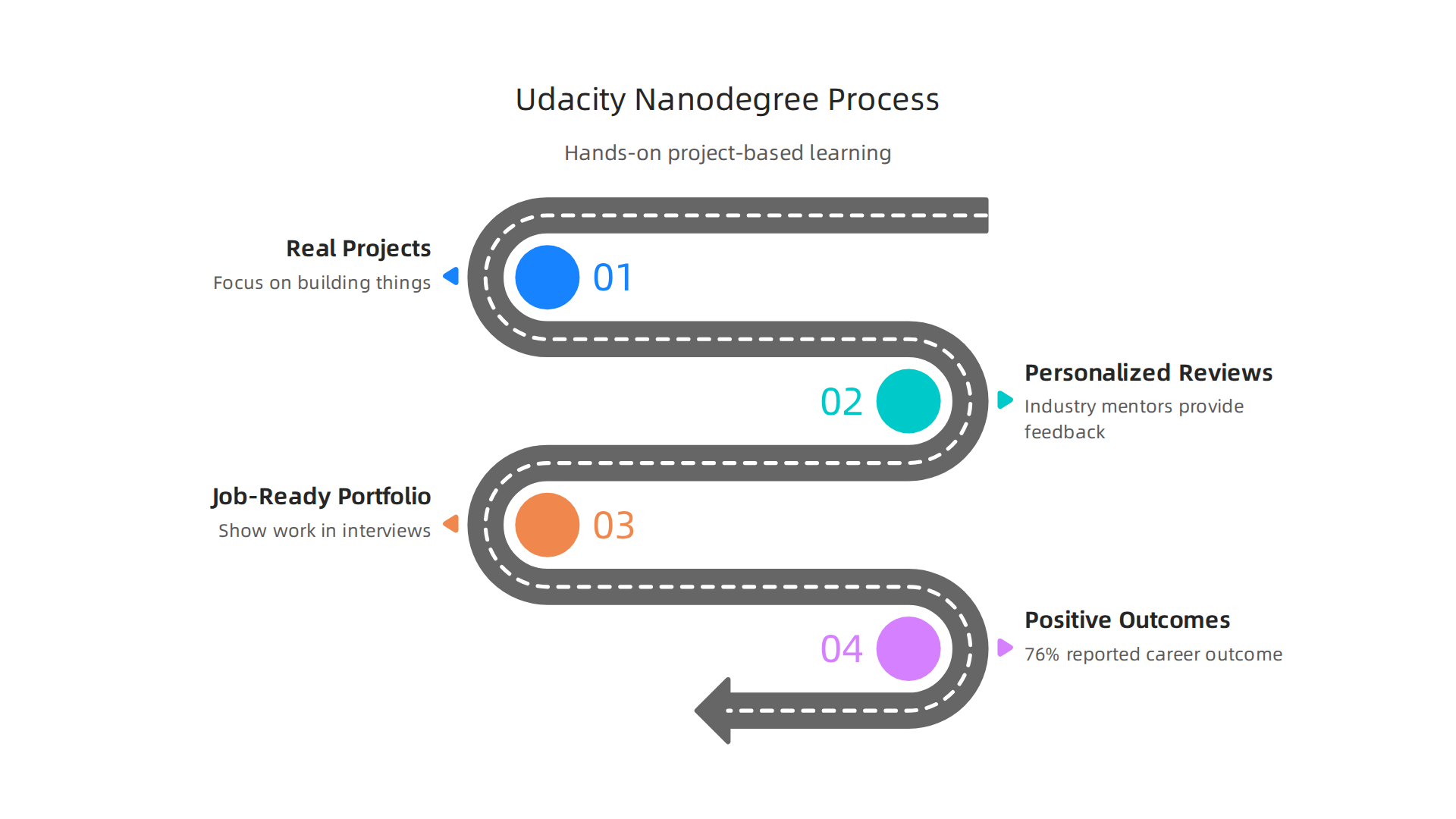
You do not just watch videos. You build things. Each Nanodegree includes hands-on projects with personalized code reviews from industry mentors. That feedback helps you improve fast. And when you finish, you have a portfolio of work you can show in job interviews.
How well does it work? Udacity’s own data shows strong results. According to their Career Outcomes Report 2026, 76% of graduates reported a positive career outcome and 90% said they achieved their enrollment goal. Those are solid numbers for anyone worried about return on investment.
The AI Nanodegree is a great example. Graduates often land roles with salaries between $134,180 and $208,800, according to a guide for 2026. Tech companies value these certificates because they prove you can do the work.
One thing to note. Udacity has pivoted more toward enterprise training in 2025 and 2026. But they still offer individual subscriptions. You can pay monthly and work through a Nanodegree at your own pace. Prices are higher than many udemy courses or even some coursera free courses. Expect to pay around $150 to $400 per month depending on the program.
If you are serious about building skills that match what the industry needs, Udacity is worth a look. To figure out which path fits your goals, check out the software developer roadmap for 2026. It helps you connect computer science certifications to real career moves.
And to stay sharp on the latest tools and trends, get clear daily AI updates with The Deep View Newsletter. It cuts through the noise so you can make smarter decisions about your learning journey.
4. Microsoft Learn: Role-Based Certifications for Azure and AI
Now if you work in enterprise IT or plan to, here is a platform built for you. Microsoft Learn offers free learning paths and paid computer science certifications that match real job roles.
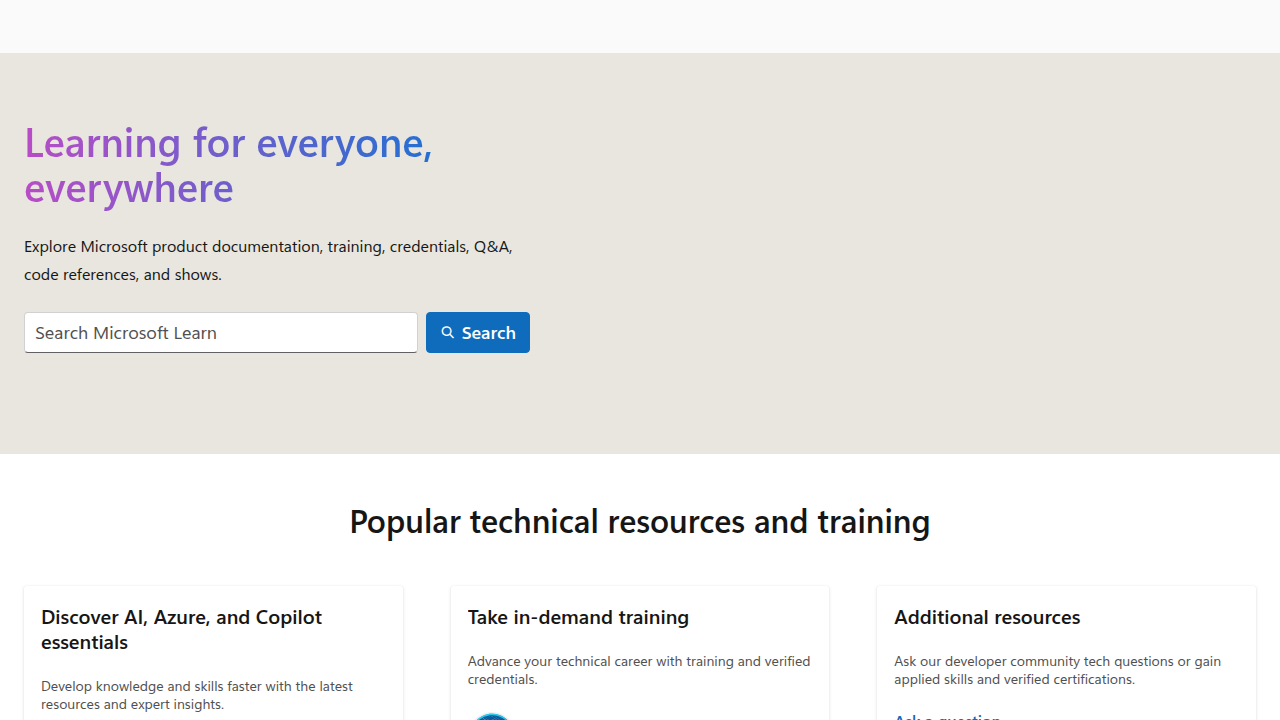
Think Azure AI Engineer, Data Scientist, or Developer. These are not just general courses. They are designed to prove you can handle specific tasks in the Microsoft ecosystem.
The model is smart. You start with free interactive modules. You work through hands-on labs using actual Azure services. No fake environments. You build real skills. Then when you are ready, you pay for the certification exam. Passing it gives you a credential that carries serious weight inside enterprises.
Why do employers trust these? Because Microsoft is everywhere. Most large companies run on Azure, Office 365, and Dynamics. So a Microsoft certification signals you understand the tools they already use. According to industry reports, certified professionals earn more and get hired faster. Unlike some udemy courses or even coursera free courses, these certifications require you to prove your skills through rigorous exams and practical labs.
One standout feature is the renewal process. Microsoft requires you to recertify every year by passing a free online assessment. That keeps your knowledge current. No one wants a five-year-old certificate for a platform that changes monthly. The labs also stay updated with the latest Azure features, so you always learn what is actually in production.
If you are aiming for cloud roles, this is one of the great courses for building credibility. For a full comparison of Azure against other cloud platforms, check out our guide on enterprise AI platforms compared for 2026. It helps you see where Microsoft fits in the bigger picture.
And to keep up with all the fast changes in cloud AI and certification updates, get clear daily insights with The Deep View Newsletter. It cuts through the noise so you always know what matters next.
5. AWS Training and Certification: Cloud Certifications for AI/ML Workloads
Moving from the Microsoft world, you might wonder where to put your cloud energy next. The answer for many is Amazon Web Services (AWS).
AWS Training and Certification is a cornerstone of modern cloud skills. If you want to build or manage AI workloads, AWS offers some of the most respected computer science certifications in the industry. In 2026, two of the top requested credentials are the AWS Certified Machine Learning Specialty and the AWS Certified Solutions Architect. According to industry analysis, these specific certifications are key to getting hired in the current market.
The model is smart and practical. You get tons of free digital training on the official AWS website. This is perfect for getting started. But the certification exams are no joke. They test your real ability to work with AWS services in a live environment. This hands-on requirement makes them far more valuable than many udemy courses or a basic coursera free courses badge. People treat these paths as some of the great courses for serious career growth. Earning one is like completing a rigorous computer engineering course that proves you can handle the real world.

Why do employers trust these credentials so much? Because AWS powers a massive share of the internet, from scrappy startups to Fortune 500 enterprises. A certification here signals that you understand the cloud infrastructure running a huge chunk of modern technology.
For a full look at how AWS stacks up against Azure and Google Cloud, check out our guide on enterprise AI platforms compared for 2026. It helps you choose the right ecosystem for your career goals.
And to stay ahead of the fast changes in cloud AI tools and certification updates, get clear daily insights with The Deep View Newsletter. It cuts through the noise so you always know what matters next.
6. Google Cloud Skills Boost: Hands-On Labs and Professional Certifications
Now let’s turn to Google Cloud. If you love getting your hands dirty with real tools, Google Cloud Skills Boost is built for you. It focuses heavily on hands-on labs and practical work through a platform called Qwiklabs. You don’t just watch videos. You actually spin up cloud environments, solve problems, and prove you can handle real scenarios.
The top certifications here include the Professional Cloud Architect, Data Engineer, and Machine Learning Engineer. These are some of the most valuable computer science certifications in 2026, especially if you want to specialize in AI. According to the official Google Cloud certification page, earning one of these shows you are proficient with Google Cloud products and solutions. And because Google is a leader in AI with tools like Vertex AI, having a certification here signals deep knowledge of modern machine learning workflows.
What makes these certifications different? The exam questions are scenario-based. You are given a business problem and must design a solution using Google Cloud services. This is not like a typical udemy courses where you just pass a multiple-choice quiz. It is closer to a rigorous computer engineering course that tests your real decision-making. That practical focus is why employers trust these credentials so much.
If you are comparing cloud platforms, a recent analysis shows that GCP certifications are increasingly recognized for AI and data roles. Plus, you get access to free or low-cost labs through the Skills Boost subscription. It is one of the great courses for building actual skills you can use on day one of a new job.
For a deeper look at how Google Cloud stacks up against AWS and Azure for AI work, check out our guide on the best computer science courses for AI development in 2026. It covers the learning paths that actually get you hired.
And to keep up with the fast changes in cloud certification requirements and new AI tools, get clear daily updates with The Deep View Newsletter. It helps you cut through the noise so you always know what matters next.
7. Emerging Platforms: Pluralsight, LinkedIn Learning, and Specialist Bootcamps
Not every learning path fits into the big cloud platforms we just covered.

Some people need skill assessments to figure out where they stand. Others want short videos with certificates that automatically appear on their profile. And some want to go deep into one niche like data science or DevOps. That is where platforms like Pluralsight, LinkedIn Learning, and specialist bootcamps come in.
Pluralsight is different from typical udemy courses because it starts with a skill test. You take an assessment, and the platform builds a custom learning path to fill your gaps. This is great if you are preparing for computer science certifications but do not know where to start. The courses feel more like a computer engineering course that adapts to you. According to a 2026 roundup of top learning platforms, Pluralsight remains one of the most trusted for tech professionals who need structured certification prep.
LinkedIn Learning takes a different approach. Each course is bite sized, usually under an hour, and you get a certificate at the end. That certificate links directly to your LinkedIn profile. For anyone looking to quickly add credentials and show recruiters what they know, this is a practical choice. It is also a great way to explore new topics without committing to a long program.
Then there are specialist bootcamps like DataCamp for data science and Cloud Academy for DevOps. These focus on one skill area and go deep. They are among the great courses for building hands on expertise fast. DataCamp, for example, offers interactive coding exercises right in your browser. Cloud Academy provides guided labs for AWS, Azure, and Google Cloud. If you already know your niche, a bootcamp can be more efficient than a general platform.
If you are mapping out your career in 2026, check out our software developer roadmap 2026 to see which skills actually lead to jobs. It pairs well with the practical training these platforms offer.
The learning landscape shifts quickly. New tools and certifications appear all the time. To stay ahead without the noise, get clear daily updates with The Deep View Newsletter. It cuts through the clutter so you always know what matters next.
Summary
This article compares the leading computer science certification options for 2026 to help developers, engineers, and technical leaders decide where to invest their time and money. It evaluates seven platforms—Coursera, edX, Udacity, Microsoft Learn, AWS Training, Google Cloud Skills Boost, and emerging providers like Pluralsight and bootcamps—on cost, employer recognition, curriculum depth, and how well they prepare you for AI and cloud roles. You’ll learn which platforms favor university-level theory versus hands-on project work, how certifications translate to real hiring value, and realistic cost and time expectations. The guide highlights role-based recommendations (cloud, AI, data) and practical trade-offs such as audit options, exam rigor, and renewal requirements. Read it to identify the right mix of credential, portfolio work, and platform so you can accelerate your career without wasting money or time.