
Online School for Developers Keeps You Relevant in 2026
Overview
Introduction: Why Every Developer Needs a Structured Online School in 2026
Have you ever felt like by the time you learn a new framework, it’s already outdated? You’re not alone. The speed of AI innovation in 2026 is relentless. New tools, APIs, and workflows appear almost weekly. For developers, this means one thing: you either keep learning or get left behind.
Here’s the problem. Traditional bootcamps and university degrees move too slowly. They take months or years to update their curriculum. And they cost a small fortune. Meanwhile, over a third of the skills you have today might be outdated by 2030, according to AIHR’s 2026 L&D research. That’s a scary thought.
That’s where a good online school comes in. These platforms offer structured, targeted learning that adapts to the real world. In fact, 61% of learning and development professionals say their main goal is closing skill gaps. And 70% of employees now prefer online training over traditional methods. The shift is clear. Developers are choosing flexible, self-directed paths to stay sharp.
But not all online schools are equal. You need one that gives you hands-on projects, up-to-date content, and a clear path forward. Whether you call it a streaming university, follow creators like Tech With Tim, or learn through communities like Engineering Village, the core idea is the same. You need a structured way to learn, not just random YouTube videos.
Choosing the right online school in 2026 can directly impact your career growth, your daily productivity, and how quickly you adopt new tools.

It’s not just about completing courses. It’s about building real skills that keep you relevant in an AI-driven world.
If you want to stay ahead without drowning in daily noise, check out The Deep View Newsletter. It delivers clear AI updates straight to your inbox, so you spend less time searching and more time building.
In the next sections, we’ll break down what makes a great online school for developers and how to pick the right one for your goals.
Why Traditional Education Falls Short for Modern Developers
Think about it. You spent four years earning a computer science degree. But by the time you graduated, the AI tools that are now standard didn’t even exist in your curriculum. That’s the reality for too many developers in 2026.
University programs move slowly. They take years to update courses. Meanwhile, over a third of today’s skills will be outdated by 2030. Fields like AI, machine learning, and cloud computing change so fast that a lesson from last semester could already be behind. Almost 70% of employees now prefer online training over traditional methods because it adapts faster.
Bootcamps try to fill the gap, but they have their own problems. Many cost thousands of dollars and promise job-ready skills in weeks. In reality, they often skim the surface. They teach you the basics of a popular framework but skip the depth needed for real-world AI work. And since bootcamps create one curriculum per cohort, that content can be stale by week two.
Then there’s self-directed learning. You know the drill. You watch a YouTube tutorial here, read a blog post there, maybe follow a few GitHub repos. It feels productive, but it’s messy. You end up with knowledge gaps, no clear path forward, and no way to know what you’re missing. 61% of learning professionals say closing skill gaps is their main goal, but without structure, you’re just guessing.
All of this leads to wasted time, frustration, and a growing sense of falling behind.

You need something that keeps up with the real world. That’s where a structured online school makes a real difference. It gives you a curated path, updated content, and hands-on projects that actually match what companies need right now.
If you’re ready to skip the guesswork and find a learning path built for modern AI development, check out our guide on the best computer science courses for AI development in 2026. And to keep your finger on the pulse of daily AI changes without drowning in noise, start your morning with The Deep View Newsletter. It delivers clear, actionable updates straight to your inbox.
What to Look for in an Online School for Developers in 2026
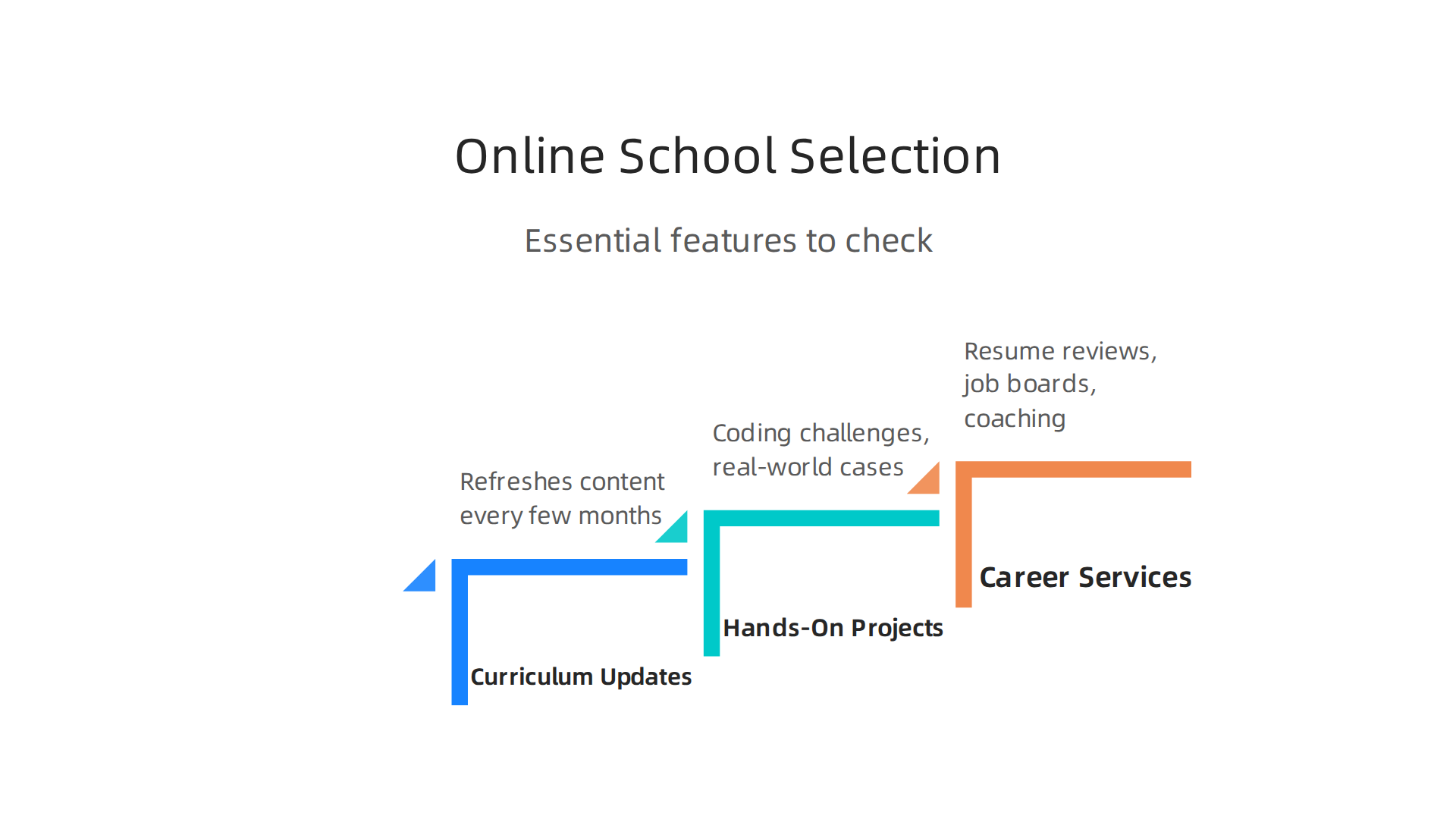
So now that you know why traditional paths fall short, how do you pick the right online school? Not all programs are built the same, especially in 2026. You need a school that actually keeps up with the AI revolution. Here are the three biggest things to check before you sign up.
1. A Curriculum That Updates as Fast as the Industry
The best online schools don’t write a course and leave it alone for two years. They refresh content every few months. This is especially important for AI and machine learning topics. You want a program that teaches you tools like GitHub Copilot, Docker, and modern MLOps pipelines out of the box. For example, the free MLOps Zoomcamp from DataTalks.Club is a great example of hands-on training that covers real tools like MLflow and AWS. When a school offers certification programs that are reviewed regularly, you know they care about quality. Some top platforms even have their courses certified by independent standards, like those from Quality Matters, to prove the content meets high benchmarks.
Look for schools that openly advertise their AI/ML integration. If they are still teaching only the basics of Python without touching AI agents or modern deployment, keep looking. You want a streaming university model where content is live or regularly updated, not a stale recording from 2023.
2. Hands-On Projects That Mirror Real Work
Theory is useless if you cannot build something that works. The best online schools throw you into coding challenges, real-world case studies, and project-based learning from day one. You should be deploying models, building APIs, and using version control. Programs like Edureka’s MLOps full course show you a 12-hour curriculum packed with practical demos. That is the kind of structure you need.
Also, check if the school has a community or mentorship component. Having peers and a mentor can make the difference between giving up and landing a job. Platforms like Tech with Tim and Engineering Village offer community-driven learning that supplements formal education. You want to learn alongside others who are solving the same problems.
3. Career Services and Mentorship
The point of learning is to level up your career. A great online school helps you get there. They should offer resume reviews, job boards, and direct connections to hiring partners. Some even provide one-on-one coaching. Do not settle for a program that just gives you a certificate and waves goodbye. You want people invested in your growth.
If you are ready to find structured programs that check all these boxes, start with our comparison of the best computer science certifications for 2026. And once you are in a program, stay ahead of daily changes by signing up for The Deep View Newsletter. It delivers clear AI updates straight to your inbox so you never fall behind again.
Top Online Schools for AI and Machine Learning in 2026
Now you know what to look for. So which online school actually delivers in 2026? Here are the top platforms that check every box from the previous section. They update their content fast, put you in real projects, and teach the tools employers actually want.
Coursera and Stanford
Coursera is still a giant for good reason. It hosts Stanford’s Machine Learning course, which is often called one of the best foundations you can get. The course covers core algorithms and has been updated for 2026. You can pair it with a specialization track to get a full curriculum. Coursera constantly refreshes its content, so it acts like a streaming university that never goes stale.
Fast.ai
Fast.ai takes a different approach. It is free, practical, and designed for people who want to build models fast. The course skips a lot of math theory upfront and throws you into coding neural networks right away. In 2026, Fast.ai has added lessons on LLM fine-tuning and using Hugging Face. It is a perfect choice if you learn by doing.
DataCamp
DataCamp earns top marks for hands-on rigor. In their 2026 ranking of AI courses, their Associate AI Engineer track takes the number one spot.
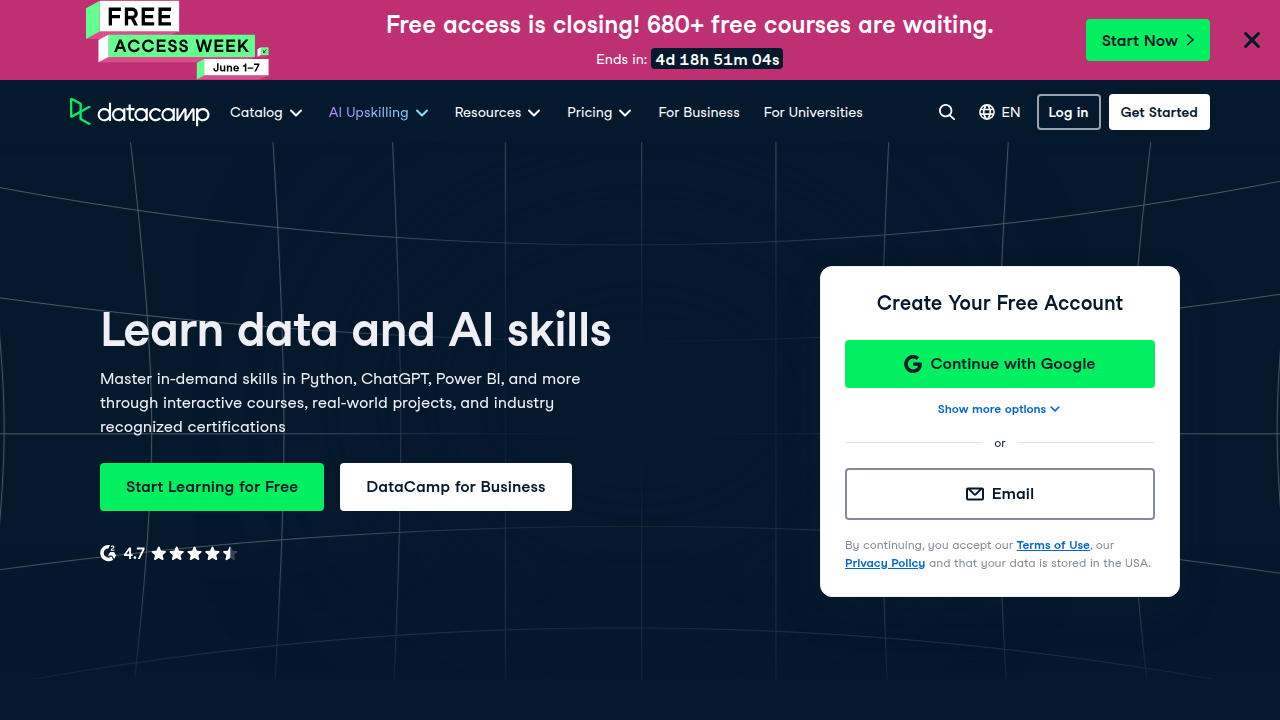
You work through real exercises on LangChain, Docker, and MLOps pipelines. Everything runs in the browser, so you never waste time setting up environments.
New Players for LLMs and AI Agents
A new wave of schools focuses specifically on LLM fine-tuning and AI agent development. Platforms like Hugging Face’s own course and DeepLearning.AI’s short courses teach you how to chain models with LangChain and deploy agents in production. These are perfect after you have the basics.
The Community Layer
Don’t forget independent creators. Channels like Tech with Tim and communities like Engineering Village fill gaps that bigger schools miss. They provide peer support and real-world troubleshooting that can save you weeks of frustration.
If you want a deeper breakdown of the best programs, check our guide to the best computer science courses for AI development in 2026.
And to keep up with how these tools evolve week by week, join thousands of developers who read The Deep View Newsletter every morning. It delivers clear AI updates straight to your inbox so you never miss a shift in the landscape.
The Best Platforms for Full-Stack Web Development in 2026
The previous section showed you top online schools for AI and machine learning. But what if you want to build the full web applications that those AI models run inside? In 2026, full-stack web development is still the backbone of the tech world. And the best online school for full-stack work now blends classic front-end and back-end skills with the ability to plug in AI features.
The Classics That Still Deliver
Some platforms have stood the test of time. The Odin Project remains a top free option. It is open source, project-heavy, and teaches you Git, databases, Ruby on Rails, and JavaScript from scratch. Codecademy offers a structured Full-Stack Engineer Career Path that you can finish at your own pace. A 2026 review highlights Codecademy among the best full stack developer courses for its hands-on exercises and clear progression. Frontend Masters is the go-to for advanced developers who want deep dives into React, Node.js, and performance optimization.
According to an updated ranking, Udemy’s "The Complete Full Stack Web Development Bootcamp" also remains a popular budget-friendly choice for self-paced learners. These platforms act like a streaming university that never goes stale because they update their content year after year.
AI-Assisted Coding Platforms Become Learning Tools
Here is the big shift in 2026. New tools like GitHub Copilot, Cursor, and Replit Agent are not just productivity boosters. They are becoming learning tools themselves. Instead of waiting for an online school to teach you syntax, you can now use an AI assistant to explain code, suggest improvements, and even build small projects in real time. This changes how full-stack curricula evolve. Many programs now include lessons on how to integrate AI APIs into web apps. You might learn to add a chatbot to a React site or use LangChain to build a tool that processes user data.
If you want to see which AI coding tools developers are using most, check our guide to the best AI apps for developers in 2026.
How to Pick Your Online School
Your choice depends on your style. Do you prefer self-guided open source? Pick The Odin Project. Want a structured path with certification? Codecademy or BloomTech’s 960-hour online course are solid options. Need university credit? ASU Online offers a full-stack web development degree concentration that covers both design and back-end logic.
Don’t forget the community layer. Channels like Tech with Tim offer free full-stack tutorials on YouTube. Communities like Engineering Village give you real peer support when you get stuck on a bug. Pair a good online school with these extras, and you will save months of frustration.
For a complete plan on what to learn next, read our software developer roadmap for 2026.
And to stay on top of how these platforms and AI tools change week by week, join over 200,000 developers who start their morning with The Deep View Newsletter. It delivers clear AI updates straight to your inbox so you never miss a shift in the landscape.
Specialized Learning Paths for DevOps, Cloud, and MLOps
Full-stack development gives you the front-end and back-end skills to build apps. But in 2026, companies need people who can deploy, scale, and monitor those apps in production. That is where specialized paths in DevOps, cloud computing, and MLOps come in. The best online school for these fields is no longer just theory. It combines hands-on cloud labs, real infrastructure, and AI pipeline tools.
Cloud-Native Learning Platforms Are Maturing
Platforms like A Cloud Guru (now part of Pluralsight) and Linux Academy have grown up fast. They offer browser-based sandboxes where you spin up actual AWS, Azure, or Google Cloud resources without needing your own credit card. You learn by doing. In 2026, these platforms mix video lessons with interactive labs that simulate real production environments. If you follow our software developer roadmap for 2026, you will see cloud-native skills right near the top.
MLOps Courses Are Now AI Pipeline Bootcamps
Here is where things get interesting. MLOps used to be a niche skill for data engineers. Not anymore. Courses from DataCamp and Udacity now teach you how to deploy models using MLflow, Docker, Kubernetes, and monitoring tools. DataCamp’s Associate AI Engineer track ranks among the best AI courses in 2026 because it blends machine learning theory with hands-on ops work. Another standout is the free MLOps Zoomcamp from DataTalks Club, which covers the full pipeline from model building to deployment to monitoring. If you want a university-backed option, Georgia Tech offers a dedicated course on machine learning operations that focuses on infrastructure, automation, and pipelines.
Certification Paths Bundled With Practical Schools
Cloud certifications from AWS, GCP, and Azure used to feel like separate exams. Now they are woven directly into the curriculum of many online schools. When you choose an online school that includes certification prep, you save months of study time. Microsoft Learn, for example, offers a full learning path on operationalizing machine learning models with Azure ML that covers automating pipelines and hyperparameter tuning. Google Cloud Skills Boost and AWS Skill Builder follow the same pattern.
These specialized paths turn your full-stack foundation into a real career advantage. Want to see how the cloud platforms compare side by side? Read our guide on enterprise AI platforms compared: AWS, Azure, Google Cloud.
The landscape shifts every week. Tools get better. Curricula get smarter. To catch every update, the 200,000+ developers who start their morning with The Deep View Newsletter get clear AI news in minutes. You can too.
How to Create a Personalized Online Learning Curriculum
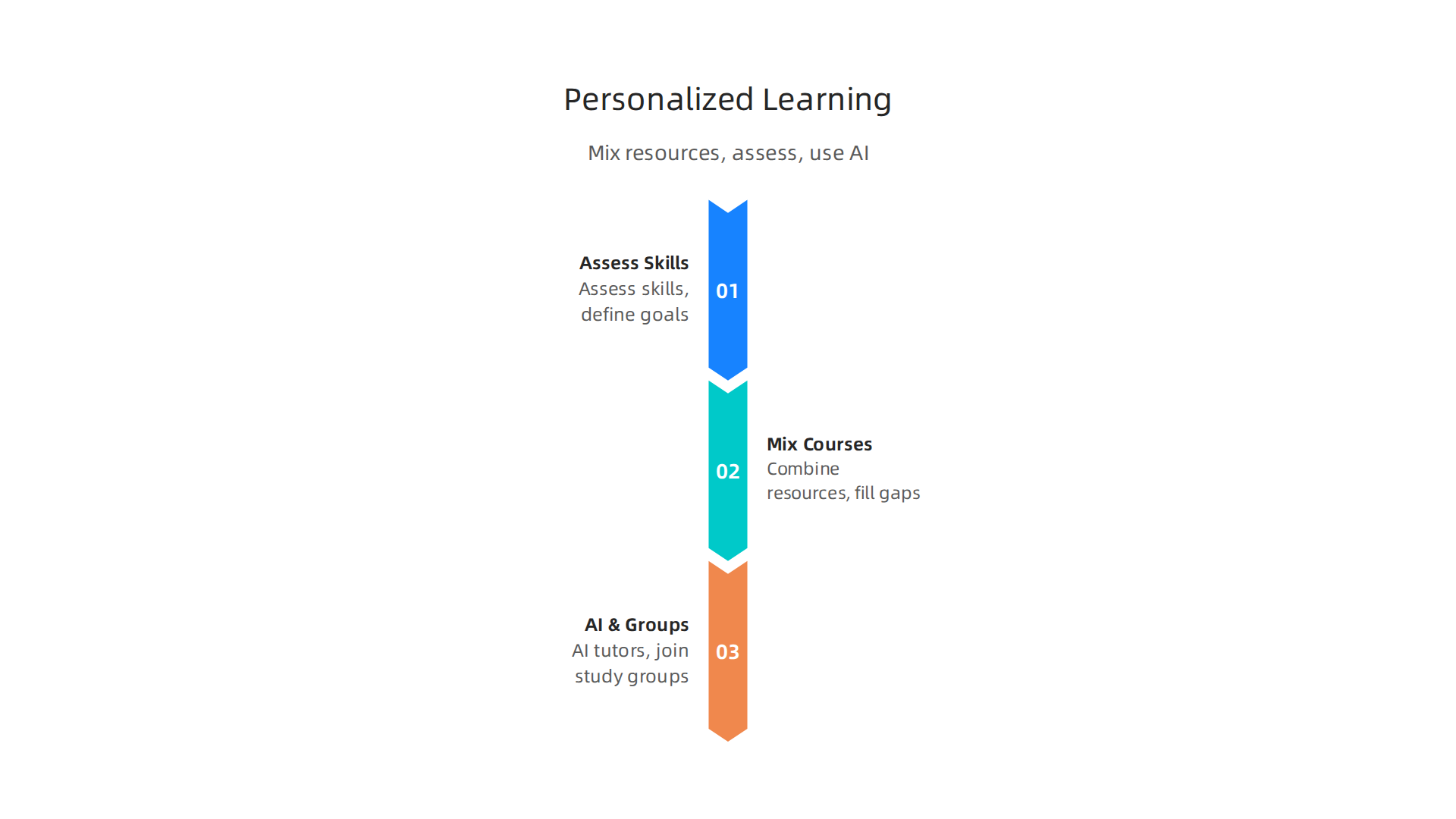
Feeling overwhelmed by all the course options out there? You are not alone. In 2026, there are hundreds of platforms promising to turn you into a developer. The trick is not to pick just one online school. Instead, build your own curriculum by mixing the best pieces from different places.
Step 1: Know Where You Stand
Before you sign up for anything, figure out what you already know and where you need to go. Use free diagnostic tools to map your current skill level. Many platforms now offer quick skill assessments. For example, adaptive learning platforms adjust the content based on your answers. This saves you from sitting through lessons you have already mastered.
Ask yourself: Do I want to build web apps? Work with AI models? Manage cloud infrastructure? Your career goals will shape your path. If you are aiming for an AI-focused role, our best computer science courses for AI development in 2026 can help you choose the right starting point.
Step 2: Mix and Match Courses
No single platform covers everything well. That is why the smartest learners combine resources. Take a full-stack bootcamp from one place, a cloud lab from another, and a YouTube series from creators like Tech With Tim. You might grab a comprehensive full-stack course from Udemy for the basics, then jump into a specialization on engineering village style communities for deeper practice.
The goal is to fill gaps. If a streaming university like Coursera gives you theory but not hands-on labs, add a project-based course from BloomTech or a bootcamp from Course Report. Each platform becomes a tool in your learning toolbox.
Step 3: Use AI Tutors and Study Groups
Here is where 2026 really shines. AI tutoring tools now act like personal mentors. Platforms such as Coursera are pioneering personalized learning with generative AI. These tools quiz you, explain tricky concepts, and even generate custom practice problems.
Pair that with a study group. Join Discord servers, Reddit communities, or local meetups. Teaching someone else what you learn is the fastest way to lock it in. And to stay ahead of new tools and curriculum changes, the 200,000+ developers who start their morning with The Deep View Newsletter get clear AI news in minutes. You can too.
A personalized curriculum is not a one-time thing. Revisit it every few months. Your skills grow. The industry shifts. Your online school should evolve with you.
Measuring Your Progress and Staying Motivated
Building your own curriculum is a smart move. But here’s the thing. A plan only works if you stick with it. And sticking with it means knowing you are actually moving forward. Let’s look at how you can measure your progress and keep your motivation high in 2026.
Use Real Work to Track Your Skills
Course completion certificates are nice, but they don’t prove much to employers. What does prove you can code? Real projects. Build a portfolio of apps, websites, or automation scripts. Contribute to open-source projects on GitHub. Take on coding challenges on platforms like LeetCode or HackerRank.
Why does this work? Because you see your own growth. A project that took you two weeks last month might take you three days this month. That is real progress. And it aligns with what the data shows. According to recent research, 61% of learning and development professionals say closing skill gaps is the main goal of training programs. You can track that gap closing by looking at your own output.
Join a Community for Accountability
Learning alone can feel lonely. And lonely learners often quit. That is where communities come in. Join Discord servers focused on your tech stack. Follow creators like Tech With Tim on YouTube. Find your people on an engineering village style forum or Reddit group.

When you share your weekly progress with a group, you feel accountable. You don’t want to show up empty-handed. Plus, you get help when you are stuck. The 2026 workforce trends show that building skills is a top business priority. But you do not need a corporation to hold you accountable. A small study group works just as well. If you are unsure which direction to take first, our software developer roadmap 2026 can help you set the right milestones.
Set Small Milestones and Celebrate Every Win
Big goals are overwhelming. "Become a senior developer" is too vague. Break it down. This week, finish one module on your streaming university course. This month, deploy one small app. This quarter, contribute to one open-source project.
Each time you hit a milestone, celebrate. Take a night off. Buy yourself a new tool or a nice dinner. Your brain releases dopamine when you acknowledge progress. That dopamine keeps you coming back for more. And with over 70% of employees now preferring self-directed online training, you are not alone in needing this kind of structure.
Keep Your Curriculum Alive
Your online school curriculum is not set in stone. Skills get outdated quickly. The best developers revisit their learning path every few months. They drop topics they have mastered and add new ones the industry demands.
To stay on top of what is shifting, you need a steady stream of clear, concise information. That is why many developers rely on The Deep View Newsletter. It gives you daily AI and tech updates in just a few minutes, so you always know what to learn next. You can get started with The Deep View Newsletter here.
Measure your progress with real work. Lean on a community for support. Celebrate the small wins. And keep your curriculum fresh. That is how you turn a plan into real career growth.
Summary
This article explains why developers in 2026 need structured online schools to stay relevant amid rapid AI and tooling changes. It outlines the shortcomings of traditional degrees and bootcamps, then defines the three core criteria for picking a modern online school: frequently updated AI-ready curriculum, project-based hands-on work with community or mentorship, and real career services. The piece lists top platforms for AI, full‑stack web development, and specialized paths like MLOps and cloud, and shows how to mix resources into a personalized curriculum. Practical guidance covers using AI tutors, study groups, and measurable milestones to track progress, plus tips for turning coursework into portfolio work employers value. Overall, readers will learn how to select the right programs, assemble a practical learning plan, and keep their skills current as tools and models evolve.