
Choose the Right AI Tools for Developers to Boost Productivity
Overview
Introduction
Every week a new AI tool pops up promising to change how you code. It can get overwhelming fast. You might feel excited about the possibilities but unsure where to start.

You are not alone.
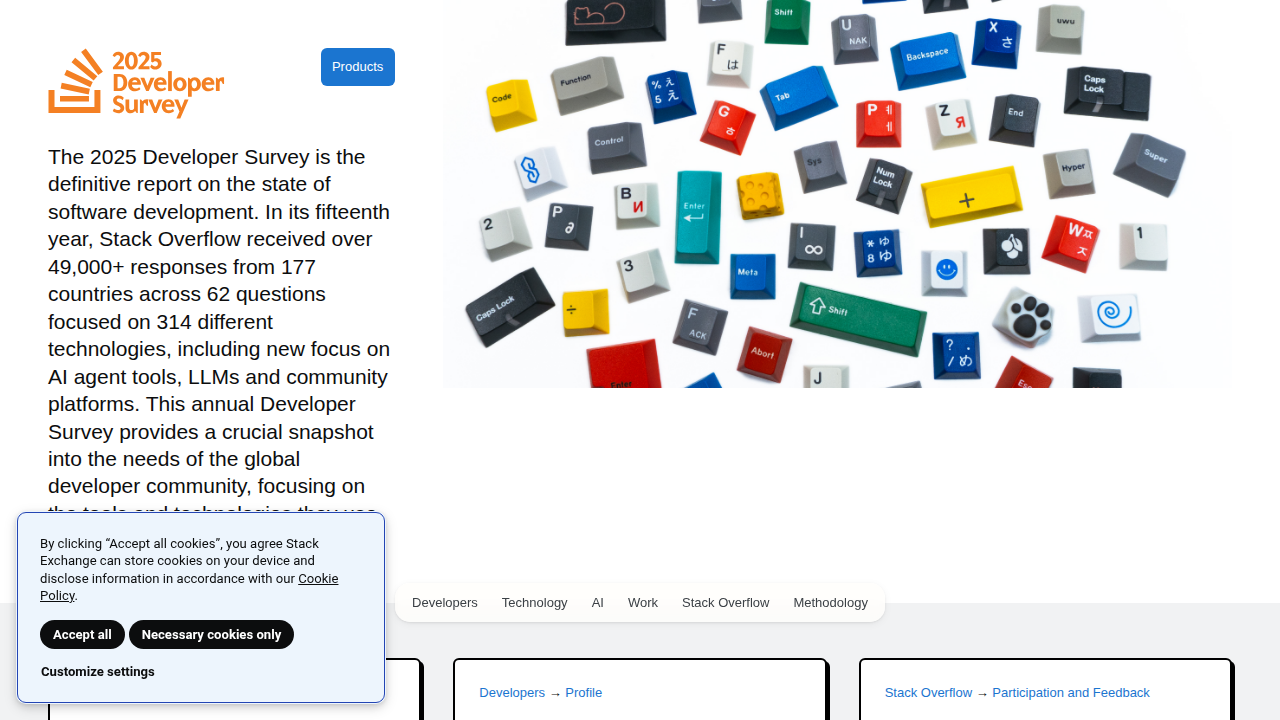
In 2025, 84% of developers reported they already use or plan to use AI tools in their work, according to the Stack Overflow Developer Survey.
That number keeps climbing. But here is the real challenge: finding the ones that actually make you faster and more productive.
That is exactly what this guide is for. We will cut through the noise and give you a structured way to think about productivity ai tools. You will learn how to categorize them, what to look for when choosing, and how to weave them into your daily workflow without breaking everything.
We will cover the main categories of tools that can boost your ai solution development from code completion to testing and deployment. You will get practical tips for evaluating tools like elevenlabs ai for voice, magic ai for code generation, and more. We will also peek at where things are heading next, including insights from the the genai divide state of ai in business 2025 report.
The goal is to help you turn opportunity into real results. If you want to keep up with the latest tools and trends, consider checking out the best AI apps for developers in 2026 for a hands on starting point. And for daily updates that save you from information overload, the The Deep View Newsletter delivers clear AI insights straight to your inbox.
Let us dive in.
The Productivity Paradox of AI in Development
Here is a strange truth about AI in 2026. More developers than ever are using AI tools. Yet many teams still feel stuck.
We talked about the 84% adoption number earlier. That comes from the 2025 Stack Overflow Developer Survey. It is huge. But here is the catch. 51% of developers now say they feel reluctant about AI despite using it. They are typing prompts and getting code. But the big productivity gains they expected are not showing up.
That is the productivity paradox.
AI promises you will do more in less time. It suggests you can build faster, ship quicker, and focus on the hard problems. In practice, many developers spend just as much time fixing bad suggestions, debugging generated code, or trying to get the tool to understand their exact need. The result feels like more work, not less.
Why does this happen? There are two common pitfalls.
First, people overestimate what AI can do out of the box. A tool like magic ai might produce a working function instantly. But it will not understand your codebase, your business rules, or your edge cases without lots of tuning. Expecting magic right away leads to frustration.
Second, teams skip integration planning. They adopt a tool without thinking about how it fits their workflow, their team norms, or their review process. This is where ai solution development falls apart. The tool becomes an island instead of a helpful partner.
The the genai divide state of ai in business 2025 report from Menlo Ventures shows another layer. 50% of developers now use AI coding tools daily, but the teams that see real gains are the ones with clear rules and strong integration. Adoption without structure does not boost productivity.
So what does this mean for you? It means the tools are not the problem. The way you bring them in is. If you want to avoid these traps, having clear AI rules for your team is a great place to start. And for daily updates that help you stay sharp without the noise, the The Deep View Newsletter delivers clear AI insights straight to your inbox.
Next we will look at how to pick the right tools and set them up for real results.
Top AI Tools Categories Reshaping Developer Workflows
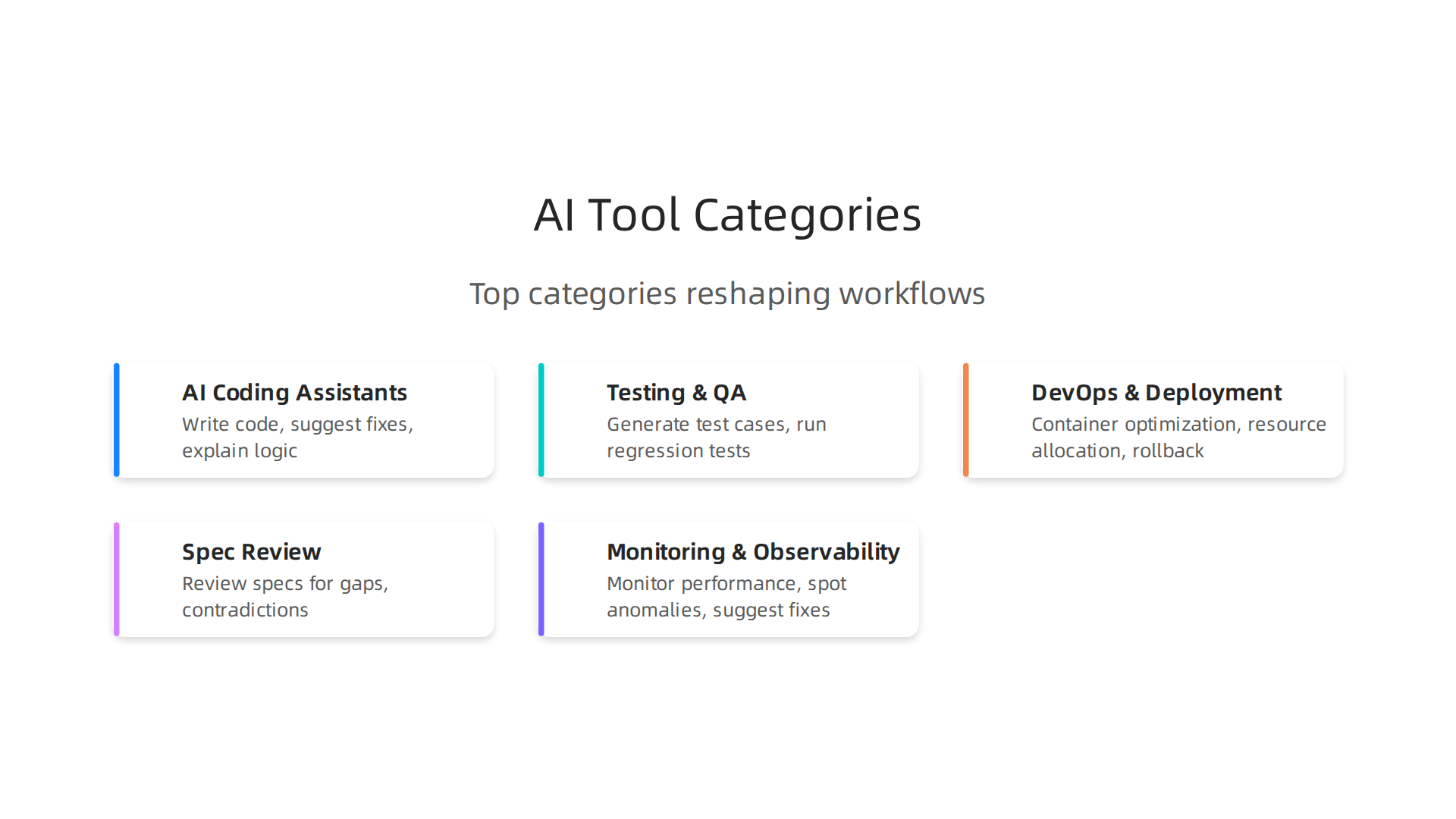
Now that we know the productivity paradox is real, the next step is understanding the landscape. AI tools are not all the same. They fall into clear categories, each designed to solve a different bottleneck in your workflow.
When you know these categories, you can stop guessing and start picking tools that actually move the needle on productivity ai.
AI Coding Assistants and Agents
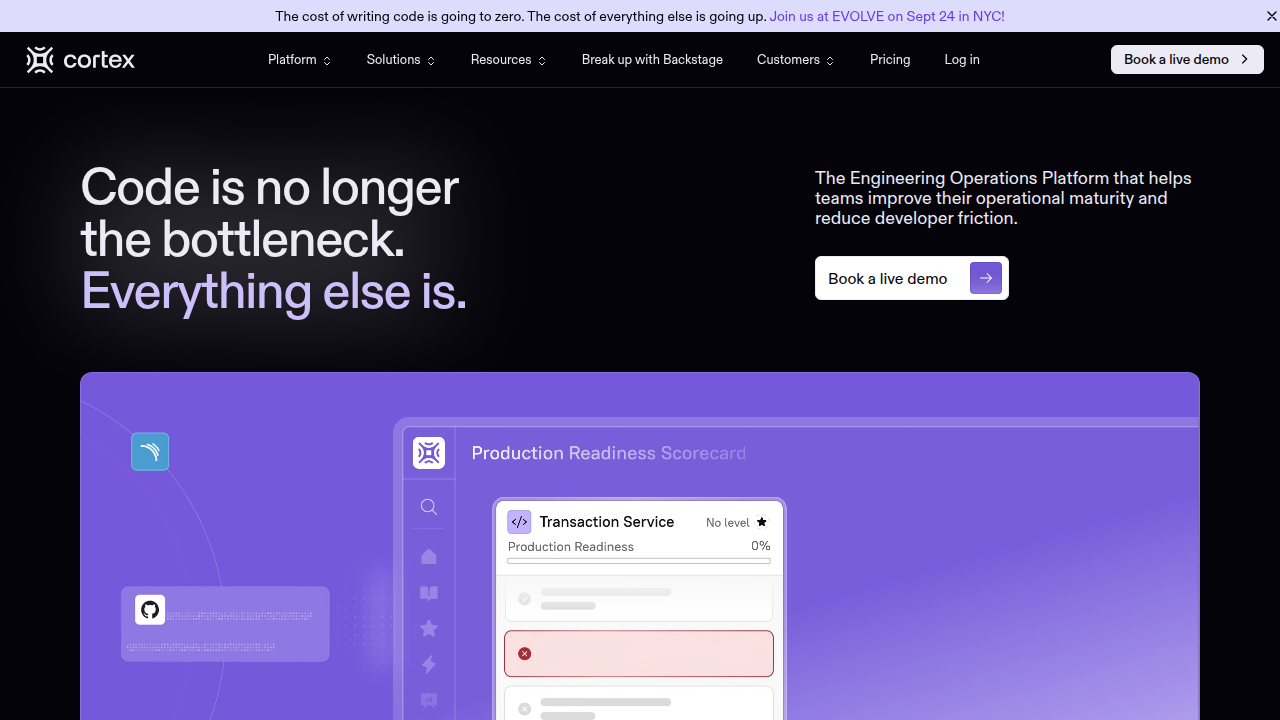
This is the category most developers know first. Tools like Claude, ChatGPT, and Copilot act as pair programmers. They write code, suggest fixes, and even explain logic. The key here is to treat them as partners, not replacements. A 2026 guide from Cortex breaks down how these assistants have evolved into agents that can plan and execute tasks across your whole codebase.
That is powerful, but only if you integrate them with clear rules.
AI Testing and QA Tools
Testing is often the slowest part of development. AI tools in this category automatically generate test cases, run regression tests, and spot bugs before they hit production. The Checkmarx list of top AI tools for 2026 highlights how security and quality tools now use AI to scan for vulnerabilities while you code.
That means fewer surprises at deployment time.
AI DevOps and Deployment Tools
Deployment pipelines used to be manual and error prone. Now AI helps with container optimization, resource allocation, and even rollback decisions. These tools watch your infrastructure and suggest changes before things break. For teams using platforms like AWS or Azure, this category is where ai solution development really shines, because it ties everything together.
AI Spec Review and Design Tools
Before you write a single line of code, you need clear specs. AI tools now review your specifications for gaps, contradictions, and risks. The Augment Code evaluation of spec review tools (2026) shows how these tools catch issues early. That saves hours of rework later.
AI Monitoring and Observability Tools
Once your app is live, AI monitors performance, user behavior, and logs. It spots anomalies you would miss and suggests fixes in real time. This category turns raw data into clear actions.
By understanding these categories, you can focus your productivity ai efforts where they matter most. Not every tool fits every team. But knowing the options helps you build a smarter stack.
Want to stay on top of which tools are actually worth your time? Our best AI apps for developers in 2026 page rounds up the top picks. And for daily coverage of the latest AI tools and trends, the The Deep View Newsletter delivers clear updates straight to your inbox.
Code Generation & Completion
The most common entry point for most developers is code generation and completion. Tools like GitHub Copilot, Claude, and ChatGPT can write entire functions, generate boilerplate, and even suggest complete blocks of logic. This is where productivity ai becomes visible fast. You type a comment or a function name, and the tool fills in the rest.
But here is the thing: not all tools deliver the same quality. The Checkmarx evaluation of top AI developer tools for 2026 highlights how context awareness is a key differentiator. Some tools understand your entire codebase. Others only see the current file. That difference matters a lot.
The best approach is to treat these tools as smart pair programmers. Review every suggestion. Test the output. Use them to speed up repetitive work, not to replace your own judgment. When you focus on ai solution development, the tools that respect your existing patterns and coding style will save you the most time.
Want to know which code generation tools deliver the best results this year? Our guide to the best AI apps for developers in 2026 breaks down the top options. And for daily updates on the latest AI tools and trends, the The Deep View Newsletter delivers clear insights straight to your inbox.
Automated Testing & Debugging
Testing is one of those tasks that everyone knows is important but nobody wants to do more of. Manually writing test cases, hunting for regressions, and chasing down bugs can eat up hours of your day. That is where AI steps in and changes the game.
AI tools in 2026 can automatically generate test cases based on your code, detect regressions before they reach production, and even suggest fixes for failing tests. The result is less manual QA effort and faster release cycles. You spend more time building features and less time babysitting tests.
According to the Cortex Engineering Leader’s Guide to AI Tools for Developers in 2026, testing and QA tools are now one of the top categories to watch. They slot right into your workflow and start reducing friction immediately. When you focus on productivity ai across your entire pipeline, you free your team to do higher value work.
This is especially true when you are building an ai solution development pipeline. Every automated test gives you more confidence to ship faster. To make sure your practices stay solid, check out our guide on how to set clear rules for AI implementation in 2026.
For a daily dose of practical AI updates that help you test smarter and build faster, subscribe to the The Deep View Newsletter. It brings clear insights straight to your inbox.
How to Evaluate and Select AI Tools for Your Team
So you are ready to bring AI into your workflow. Awesome. But with so many options in 2026, how do you pick the right ones without wasting time and money?
The trick is to stop chasing shiny objects and start using a clear process.

You want tools that actually boost productivity ai for your whole team, not just one developer.
Here is a simple three-step framework that works.
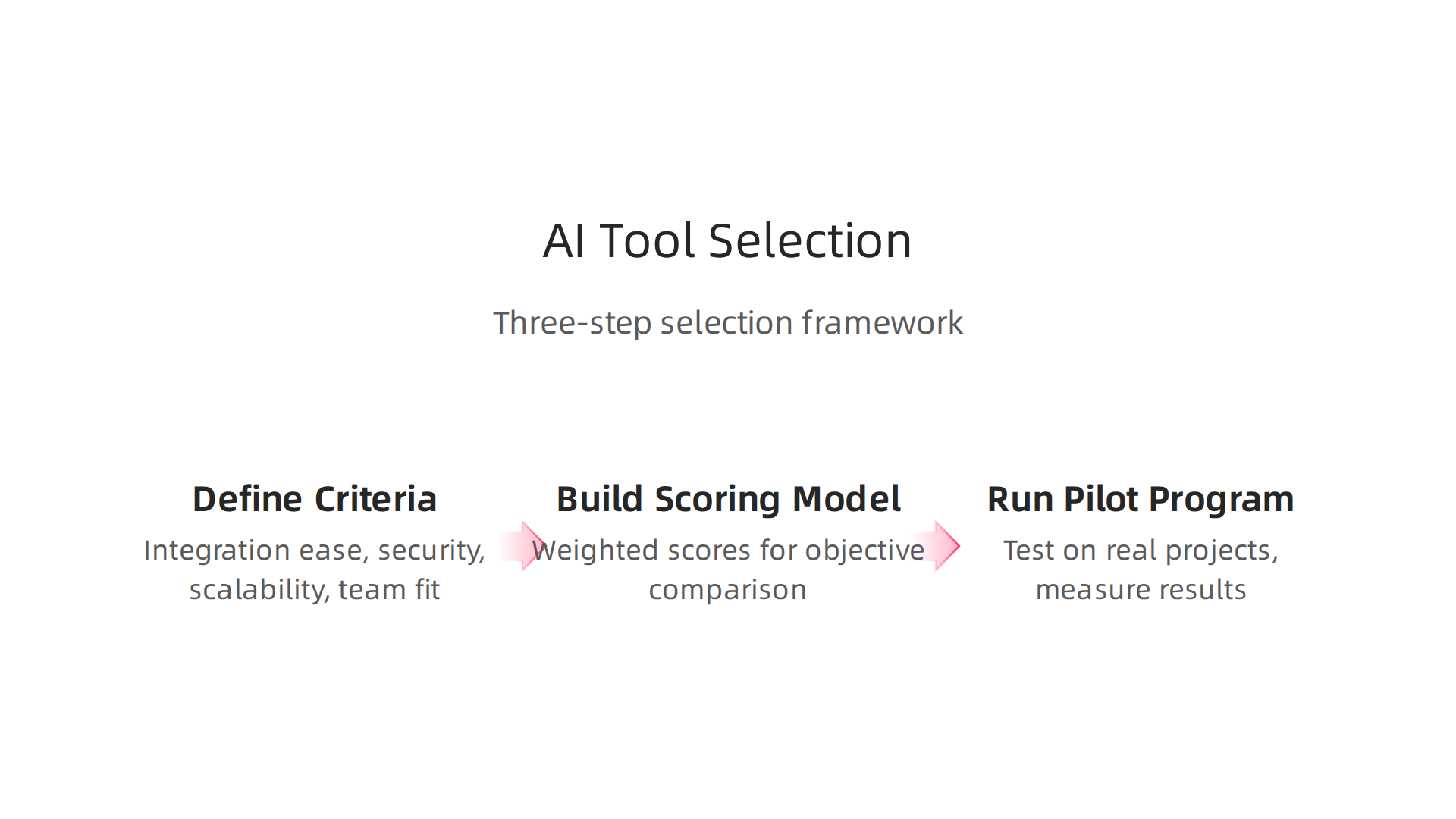
Step 1: Define your evaluation criteria upfront.
Do not jump into demos without knowing what matters. The best teams focus on four areas:
- Integration ease. Does the tool fit into your existing stack without breaking everything? You want something that plugs in, not something that forces a rewrite. The Cortex Engineering Leader’s Guide to AI Tools for Developers in 2026 breaks down top categories to watch and how they fit into real workflows.
- Security. This is huge. Tools that handle your code or data need strong security practices. The Checkmarx analysis of top AI developer tools in 2026 shows enterprise criteria like data privacy and compliance are non negotiable.
- Scalability. Will the tool still work when your team doubles or triples? Avoid tools that only perform well in small pilots.
- Team fit. Does your team actually want to use it? If the interface is confusing or the learning curve is steep, adoption will flop.
Step 2: Build a weighted scoring model.
Here is the practical part. Create a simple spreadsheet with your criteria and give each one a score out of ten. Weight security at 30%, ease of use at 25%, and so on. This turns a gut feeling into an objective comparison. It helps you avoid picking the flashiest tool over the most reliable one.
Step 3: Run a pilot program with clear metrics.
Do not sign a contract after one demo. Pick one or two tools, test them on a real project, and measure the results. Track things like time saved, code quality improvements, and developer satisfaction. Only move to full adoption when the data says yes.
For a deeper dive on keeping your team aligned, read our guide on how to set clear rules for AI implementation in 2026.
When you approach ai solution development this way, you avoid the trap of tool fatigue. You build a stack that actually serves your people and your goals.
Want to stay ahead of the curve without the noise? Subscribe to the The Deep View Newsletter for clear daily insights that help you make smarter tool choices.
Integrating AI into Your Development Pipeline: Best Practices
Once you have picked the right AI tools for your team, the real work begins. You need to weave them into your existing development pipeline without causing chaos. The goal is to augment your current workflow, not replace it completely.
Think of AI as a helper that plugs into your CI/CD pipeline. It can review code in pull requests, suggest automated test cases, or help with documentation. But your pipeline’s core structure should stay the same. As the Cortex guide to AI tools for developers points out, the best tools fit seamlessly into the workflows your team already knows.
But integration isn’t just about plugging in and hoping for the best. You need three things to keep things safe and repeatable:
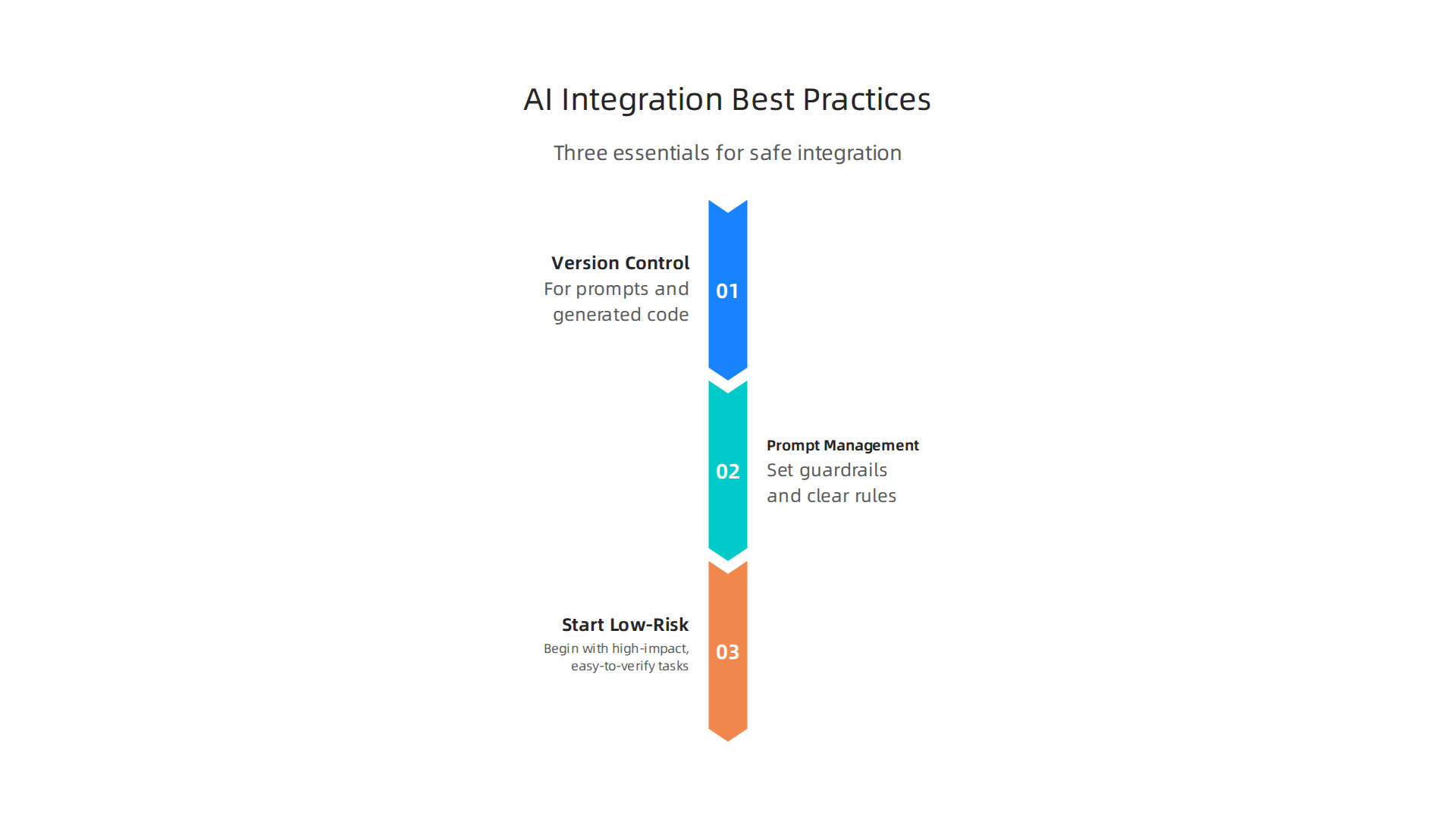
- Version control for prompts and generated code. Treat AI prompts like code. Store them in your repository so your team can track changes and revert if something goes wrong. This prevents the “it worked yesterday, now it doesn’t” problem.
- Prompt management and guardrails. Set clear rules for what the AI can and cannot do. For example, restrict it from touching production database credentials or changing core security logic. The Axify guide on using AI for developer productivity emphasizes that guardrails are essential for keeping AI outputs aligned with your standards.
- Start with low-risk, high-impact tasks. Do not let the AI rewrite your entire authentication system on day one. Begin with tasks like generating unit tests, formatting code, or writing documentation. These tasks are easy to verify and give your team quick wins. That builds confidence before you move to higher-stakes work.
Research from JetBrains in 2026 shows that AI reshapes developers’ workflows in ways they don’t always notice. By starting small and adding guardrails, you control that reshaping instead of letting it control you.
For a deeper look at how to set these rules for your team, check out our guide on setting clear AI implementation standards.
Want to stay informed about the best integration practices and new tools every day? Subscribe to the The Deep View Newsletter for clear daily updates that help you make smarter choices for your pipeline.
Measuring the Impact of AI on Developer Productivity
Integrating AI into your pipeline is only half the battle. The other half is knowing whether it actually helps.

You need to measure the impact of AI on developer productivity, or you are just guessing. And guessing can lead to wasted time and bad decisions.
So what should you actually track? The most useful metrics fall into three buckets: velocity, quality, and developer satisfaction.
Velocity means how fast your team ships work. Look at cycle time, the time from a developer starting a task to deploying it. Quality means how many bugs or errors slip through. Track defect rates in production. Developer satisfaction is about how your team feels. Are they less burned out? Do they enjoy their work more? These three together give you a real picture.
The DX measurement hub explains that the best frameworks for measuring AI impact include both objective data and human feedback. You can’t rely on a single number.
The experts agree that controlled studies are the gold standard. The METR team conducted a randomized controlled trial with experienced open source developers. They found that before starting tasks, developers expected AI to save them about 24% of time. But after actually using the tools, their estimates changed. This shows how important it is to measure real outcomes, not just expectations.
Avoid vanity metrics like "number of code completions" or "hours spent in the IDE". Those numbers look good on a dashboard but don’t tell you if you are actually shipping better software faster. Instead, focus on cycle time reduction and defect rates.
For example, teams using AI for code review might see pull requests merge 20% faster. Teams using AI for testing might catch 15% more bugs before release. Those are the numbers that matter.
If you want to go deeper on how to build the right measurement framework for your team, check out our guide on AI model comparison 2026 to see which tools actually deliver on their promises.
And if you want daily clarity on which AI tools actually move the needle on productivity, subscribe to the The Deep View Newsletter. It cuts through the noise so you can focus on what works.
Overcoming Skill Gaps: Training and Upskilling for AI-Driven Development
Measuring productivity ai is one thing. Getting your team ready to actually use those tools is another. And this is where most teams get stuck. The reality is that handing an AI coding assistant to a developer without proper training often backfires. You end up with messy code, security risks, and frustrated people.
So what is the fix? You need structured, ongoing training. According to Leanware’s best practices guide, you should align AI tools with your organization’s coding standards from day one. That means teaching your team how to configure tools to match your existing style and rules.
Internal knowledge sharing also matters a lot. Cortext notes that the best AI tools fit into your existing workflow. And the fastest way to learn that fit is by pairing developers together. Have one experienced engineer pair program with a junior using an AI tool. That real time coaching sticks way better than any online course.
You also need to train your team on three specific skills: prompt engineering, critical evaluation of AI output, and ethical use. Prompt engineering means learning how to ask the AI for exactly what you need. Critical evaluation means never trusting the AI blindly. Always review, test, and refactor the code it generates. Ethical use means understanding data privacy, bias, and licensing.
Research from JetBrains shows that AI reshapes developer workflows in ways that often go unnoticed. That is why you need deliberate training. If you want a clear path to build these skills, check out our guide on the software developer roadmap 2026. It maps out exactly what to learn next.
And if staying current on AI trends feels overwhelming, let the The Deep View Newsletter do the heavy lifting for you. It delivers clear daily updates so you can focus on building skills, not chasing news.
Security, Compliance, and Ethical Considerations
You might think focusing on productivity ai is all about speed and code output. But here is the hard truth. Without proper safeguards, AI tools can introduce serious risks that erase any productivity gain.
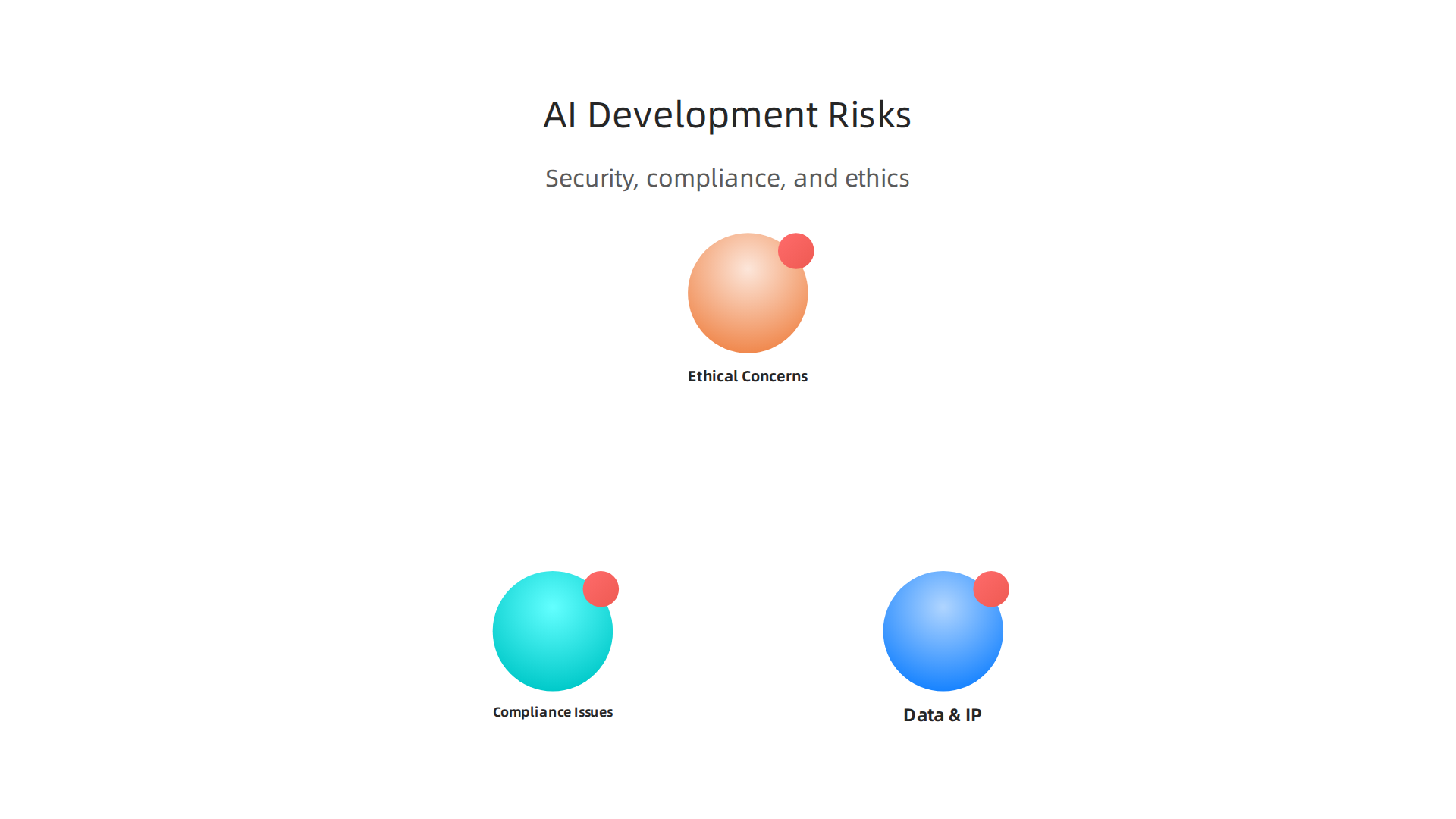
First up is data leakage and IP risk. When you paste proprietary code or sensitive business logic into a public AI tool, that data can be used for training or exposed to third parties. According to Black Duck’s 2026 AI security predictions, AI is now both a tool for attackers and defenders, meaning your internal data is more vulnerable than ever. You need to check how each AI solution handles your input. Does it store prompts? Does it train on your code? Many enterprise AI platforms now offer data isolation options, but not all do. Before rolling out any AI tool, verify its data handling policies.
Compliance is another big piece. If your organization must follow regulations like GDPR, SOC 2, or the new EU AI Act, you cannot just hand developers any AI assistant. The 2026 landscape is shifting from guidance to enforcement, as noted by Elevate’s guide to AI governance tools. You need to confirm that the AI tools you choose meet those compliance requirements. That means reviewing vendor security certifications, encryption standards, and where your data is stored.
Ethical concerns are real too. AI models can generate biased code because they are trained on biased datasets. Over-reliance on AI is also dangerous. Developers who stop reviewing AI output lose critical thinking skills and often introduce subtle bugs. As you continue your ai solution development journey, build a culture of questioning AI suggestions. Never accept code without human review.
To avoid these pitfalls, your team needs clear rules. Check out our guide on the future standard for AI implementation to learn how to set those guardrails.
And if staying on top of fast changing AI regulations and security threats feels overwhelming, let The Deep View Newsletter deliver the daily updates you need. It cuts through the noise so you can focus on building securely.
Future Trends: What’s Next for AI in Developer Tools
Security is a must, but what about the future? The pace of change in productivity ai is only speeding up. Here are three major trends you need to watch in 2026.
AI agents are taking over routine tasks. Instead of just suggesting code, new tools can autonomously manage entire workflows. They can write tests, fix bugs, and even deploy updates without you clicking every button. The Checkmarx list of top 12 AI developer tools for 2026 highlights agentic tools as a growing category. These agents free you up for harder problems, but you still need to review their work. Think of them as a junior teammate who never sleeps.
Multimodal AI will change how you work with code. Tools that understand text, images, and voice together will become common. Imagine describing a bug in plain English, showing a screenshot, and having the AI fix the code. This blends the best of elevenlabs ai speech tools with visual understanding. According to SentinelOne’s 2026 AI cybersecurity trends, AI is now processing more types of data than ever, which makes these multimodal tools possible. This means your next coding assistant might understand a whiteboard sketch just as well as a line of Python.
Open-source models are catching up fast. For a while, proprietary models like GPT‑4o and Claude led the pack. But in 2026, open-source alternatives are matching their performance, especially for specialized tasks. This is great news for ai solution development because you can run these models on your own infrastructure, keeping data private and costs low. To see how the top models stack up, check our AI model comparison 2026. Open source also means more community innovation, so the gap keeps shrinking.
These trends are already changing how developers build software. The key is to stay informed without getting overwhelmed.
If you want to keep up with daily shifts in AI tools, security, and best practices, let The Deep View Newsletter deliver the essential updates straight to your inbox. It saves you hours of research so you can focus on building with confidence.
Summary
This guide breaks through the noise around developer AI tools and shows how to turn hype into measurable results. It explains the productivity paradox—why widespread AI adoption hasn’t automatically produced big gains—and maps the major tool categories from code completion and testing to observability and DevOps. You’ll get a practical three-step evaluation framework (criteria, weighted scoring, pilot) and concrete integration best practices like prompt versioning, guardrails, and starting with low-risk tasks. The article also covers how to measure real impact (cycle time, defect rates, developer satisfaction), how to train teams in prompt engineering and critical review, and what security and compliance checks to require before rollout. Finally, it highlights near-term trends—agentic workflows, multimodal interfaces, and rising open-source models—so you can plan your AI tooling strategy with confidence.