

Web Developer Interview Questions 2026 Covering JavaScript AI and System Design
Overview
Introduction
Let’s be honest. Preparing for a web developer interview in 2026 feels completely different than it did just a few years ago. The ground has shifted beneath our feet.
Why? Because everything has changed. Big time.
We are living in a world with over 28.7 million developers worldwide. And according to the latest surveys, 77% of developers now use AI coding tools as part of their daily workflow. This single stat has completely reshaped what hiring managers expect from you. It is no longer enough to just write code that works.
As the CoderPad State of Tech Hiring 2026 report shows, companies are hunting for a new kind of engineer. They want someone who understands the fundamentals cold but can also leverage modern tools to ship faster and smarter. The Karat Engineering Interview Trends data backs this up. AI fluency is now officially part of the evaluation.
So, how do you prepare for this new reality?
You need a clear roadmap. You need to know the exact web developer interview questions that test this modern blend of skills. You need to master the basics using trusted resources like MDN Web Docs. Maybe you are taking a structured web development class online to fill in the gaps. Or maybe you are a seasoned full stack software developer looking to level up.
The point is, you need a strategy that covers the old fundamentals and the brand new expectations.
That is exactly what this guide is for.
We have curated the most important questions you’ll face in 2026, grouped by topic. We cover core technical chops, system design, and the new AI-focused questions that trip up most candidates. Each section comes with honest advice on how to approach your answers.
If you want to stay ahead of these rapid changes, getting a daily dose of curated insight can make a real difference. You can start your mornings with The Deep View Newsletter, a trusted source for clear AI updates.
Ready to crush your next interview? Let’s dive into the questions that matter most right now.

1. Classic JavaScript Questions Every Developer Should Know
You might think AI tools make classic JavaScript questions obsolete. That is not true at all. Hiring managers still lean heavily on your understanding of core JavaScript to see if you really know what you are doing. Concepts like closures, prototypes, and promises are just as important as ever.
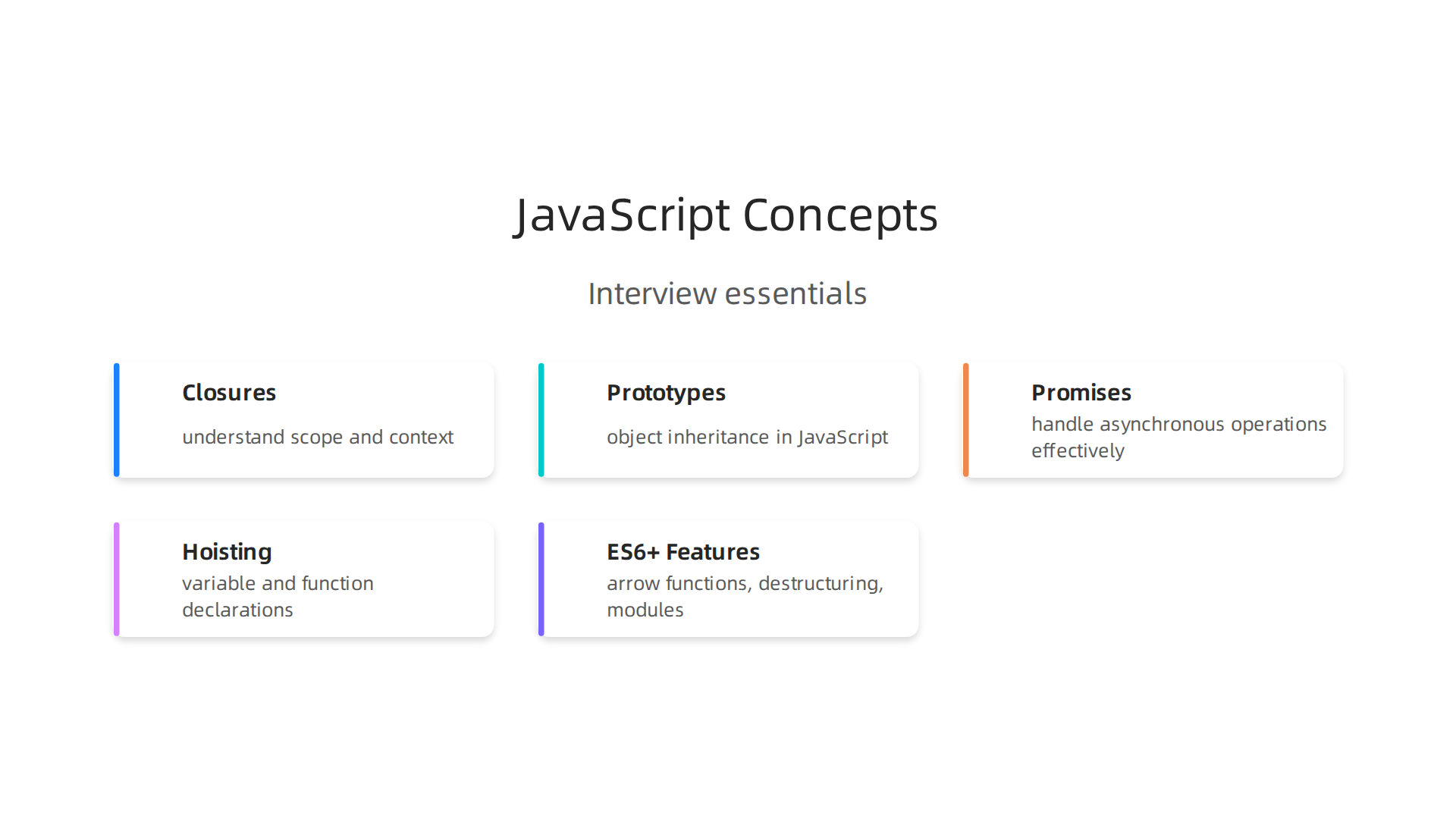
Expect to get asked about the this keyword and variable hoisting. You should be able to explain what this refers to in a regular function versus an arrow function. You should also know the difference between var, let, and const and how hoisting works with each. These common front-end interview questions come up time and again for a reason. They test your depth.
Promises and async/await are must-know topics too. Be ready to walk through an example of handling multiple API calls and talk about the event loop. A lot of real-world code relies on these patterns.
ES6+ features are now standard expectations. Arrow functions, destructuring, template literals, and modules are not nice-to-haves anymore. You should use them naturally in your code and explain why they improve readability.
How do you prepare? Dig into reliable resources like MDN Web Docs to fill any gaps. Practice explaining each concept out loud. If you want a structured way to keep your skills sharp, check out this software developer roadmap for 2026 that maps out both the classics and new AI-era skills.
As you practice these fundamentals, stay curious about how AI is changing the way developers write JavaScript. To stay informed without the noise, consider subscribing to The Deep View Newsletter for clear daily updates.
2. Understanding the Event Loop and Asynchronous Patterns
Here is something you can count on. Every interviewer will ask about the event loop. They want to see if you really understand how JavaScript handles multiple tasks at once. You need to explain how async/await, callbacks, and Promises work together.
This is not just theory. Real apps depend on these patterns.
One of the trickiest parts is knowing the difference between microtasks and macrotasks. Interviewers love to ask about the order of execution. They might give you a small code snippet and ask what gets logged first. The answer depends on how the event loop queues tasks. For example, a Promise .then is a microtask and runs before a setTimeout which is a macrotask. To practice with actual code, check out this collection of curated real-world interview questions with answers on GitHub. It will help you see these patterns in action.
How do you prepare? Start with MDN Web Docs for a clear explanation of the loop. Then write small examples yourself. If you prefer structured learning, an online school for developers can guide you through these concepts step by step. As a full stack software developer, knowing async patterns is non-negotiable.
By the way, AI tools are changing how we debug async code too. To stay on top of the latest AI trends that can help you write better code, subscribe to The Deep View Newsletter for clear daily updates.
3. Mastering CSS Layouts and Preprocessors
Now that you understand how JavaScript handles multiple tasks, let’s move to the visual side. CSS is just as important in web developer interview questions. In 2026, Flexbox and Grid are considered baseline skills, not advanced ones. Interviewers expect you to do practical layout tasks, like centering an element, building a card grid, or creating a full page layout without hacks.
You should also know the difference between older methods and modern tools. Preprocessors like SASS and SCSS still show up in interviews, but so do native CSS features like custom properties (CSS variables) and nesting. If you can explain when to use a mixin versus a custom property, that shows real depth.
Responsive design and accessibility are what make you stand out as a full stack software developer. Can you write a layout that works on all screen sizes and works with screen readers? That kind of maturity is what senior teams look for. For a deep dive into CSS best practices, start with the mdn web docs and practice building small components.
To see how real companies test CSS knowledge, check out this list of 43 front-end developer interview questions (2026) from Mimo. It breaks down the exact layout tasks you might face.
If you prefer guided learning, a web development class online can help you master both CSS and the rest of the stack. And to stay sharp on all the latest tools and AI trends that affect front-end work, subscribe to The Deep View Newsletter for clear daily updates.
4. React vs. Vue vs. Angular: What Interviewers Are Asking in 2026
You might think the framework debate never ends. But in 2026, the picture is clearer than ever. React still leads the pack. According to ex-FAANG interviewers who track over 100 common React questions, the focus is on hooks, state management, and performance tuning. If you claim React, you need to know useState, useEffect, and useMemo inside and out. You should also explain how to handle side effects and optimize re-renders.
Vue and Angular have their own strong spots. Vue is loved for its gentle learning curve and template syntax. Angular shines in enterprise apps with built-in dependency injection and strong typing with TypeScript. Interviewers will ask you to compare them. For example, a common question is: when would you choose Vue over React?

The answer comes down to team experience, project size, and need for structure. The 2026 Front-End Developer Interview Preparation Guide from Coursera highlights that interviewers want to see you make a clear, honest choice based on trade-offs.
So how do you prepare? First, pick one framework and go deep. Don’t spread yourself thin across all three. Second, practice explaining the strengths and weaknesses of each. Third, focus on real-world problems like state management, routing, and API calls.
To build a complete learning plan, check out our software developer roadmap for 2026. It covers which frameworks matter most and how to grow your skills step by step.
And if you want to keep up with the latest framework updates and job market trends, subscribe to The Deep View Newsletter for clear daily insights that help you stay ahead.
5. Backend Fundamentals: Node.js, APIs, and Databases
You might know React inside out, but can you build a solid backend? In 2026, web developer interview questions go beyond the frontend. Interviewers want to see you handle data, design APIs, and understand how servers actually work.
Let’s break down what matters.
First up: API design. You need to know RESTful APIs like the back of your hand. That means understanding endpoints, HTTP methods, status codes, and versioning. GraphQL is also common now. Interviewers might ask when to use GraphQL over REST. A good answer covers flexibility for frontend teams and reducing over-fetching. And don’t forget authentication. Schemes like JWT and OAuth 2.0 come up a lot. According to the Back End Developer Interview Questions & Prep Guide 2026, hiring managers test your ability to secure endpoints and handle tokens.
Next: databases. You should feel comfortable with both SQL and NoSQL. For SQL, know how to write joins, use indexes, and think about normalization. For NoSQL (like MongoDB), understand document structure and denormalization. A common question: when would you pick a relational database over a document store? Your answer should mention data consistency, relationships, and scale. This is a core skill for any full stack software developer.
Finally: Node.js. It runs the show on the backend. You need to get its event-driven architecture. Why is Node single-threaded? That question tests your knowledge of the event loop and non-blocking I/O. 125 Node.js Interview Questions and Answers explains that Node’s design lets it handle many connections with fewer resources. You also need middleware patterns. Express.js middleware runs in a chain. Know why order matters and how to build custom middleware.
To build these skills step by step, check out our software developer roadmap for 2026. It covers backend fundamentals and helps you plan your learning path.
And if you want fresh daily insights on tech topics like backend development and AI tools, subscribe to The Deep View Newsletter. It helps you stay sharp without the noise.
6. System Design for Web Developers: From Simple to Scalable
You got the backend fundamentals down. Now let’s talk about the bigger picture. In 2026, web developer interview questions often include system design, even for junior roles. Interviewers want to see how you think about building things that work for many users, not just one. This is where you move from being a coder to a full stack software developer.
System design covers concepts like caching, CDNs, and load balancing. You might get a whiteboard style problem. "Design a URL shortener" or "design a chat app" are classics.

The key is to talk through your choices. Don’t just jump to code. Explain trade offs. For example, when should you use a cache versus a database? When does a CDN help? According to the Back End Developer Interview Questions & Prep Guide 2026, interviewers test your ability to reason about data flow and scale.
The best answers focus on handling growth. Start simple. A single server can work at first. Then add a cache layer. Then add load balancers. Then maybe shard your database. Show that you understand how each choice affects performance and cost. You can check mdn web docs for solid refreshers on things like HTTP caching headers and CDN basics.
To build these skills, consider a structured web development class online. A good course walks you through common system design patterns step by step. For more on where to learn these skills, check out our article on finding an online school for developers that keeps you relevant in 2026.
System design is a muscle you grow over time. Practice explaining your decisions out loud. And if you want daily insights on tech trends like system design and AI tools, subscribe to The Deep View Newsletter. It helps you stay sharp without the noise.
7. Behavioral Questions: How to Frame Your Experience with AI-Powered Projects
You handled the system design whiteboard. Great. But now the interviewer asks something different. "Tell me about a time you faced a tough problem." This is the behavioral round. And in 2026, these questions are a big part of most web developer interview questions.

The STAR method is still your best friend. Situation, Task, Action, Result.
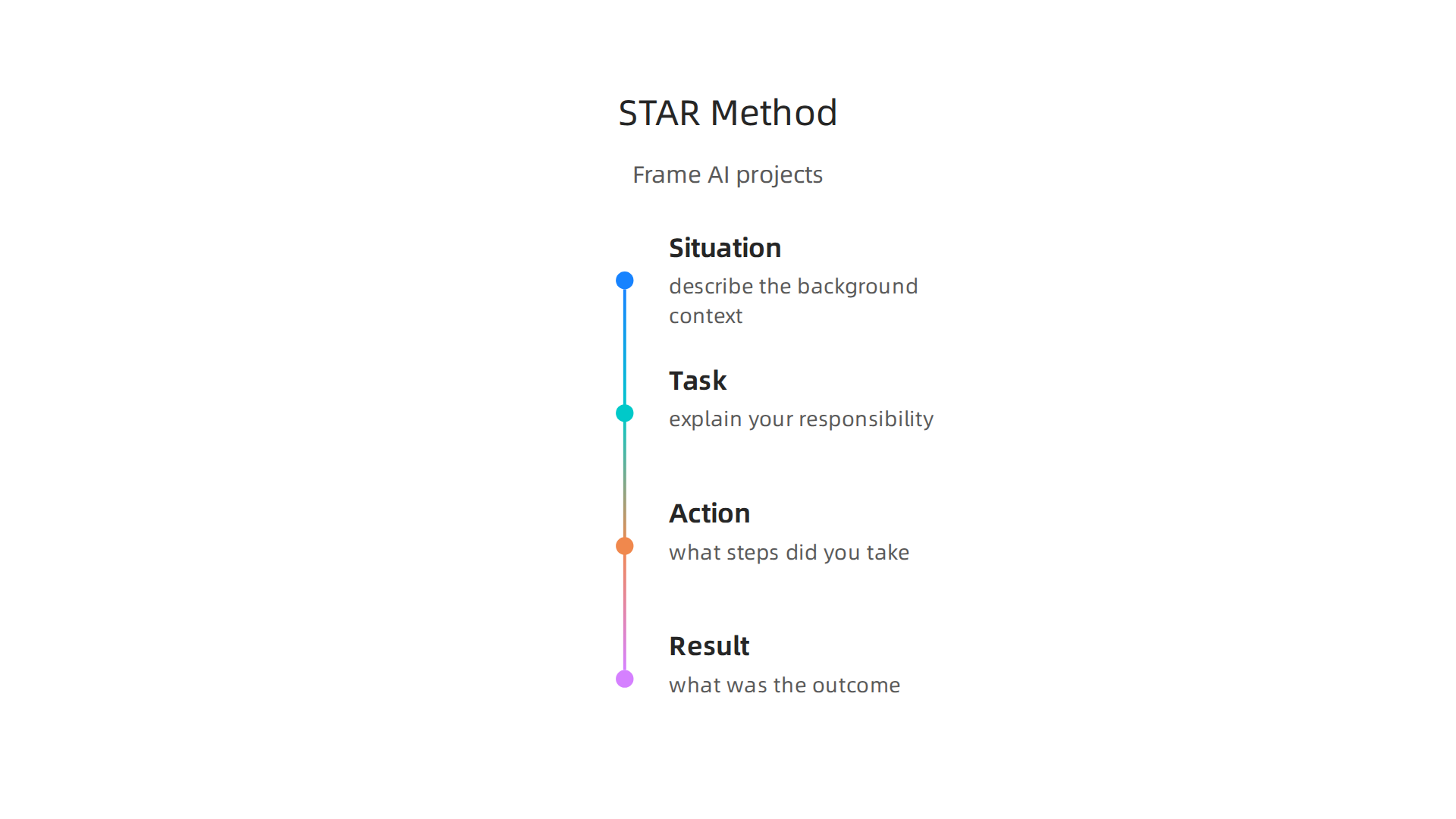
Use it to structure every story. For example, if an interviewer asks about a conflict with a teammate, pick a real example. Follow the STAR format. The Tech Interview Handbook lists common prompts like "What is the hardest technical problem you have run into?" Prepare your stories ahead of time.
Here is the twist. In 2026, you also need to talk about AI tools. Many companies now ask how you use tools like Copilot or ChatGPT. Do not say "I never use them." That sounds out of touch. Instead, share a specific lesson. Maybe you used an AI coding assistant to debug a stubborn bug faster. Or you learned to double check its output for accuracy. Show that you use AI as a helper, not a crutch. For more on picking the right assistants, read our guide on how to choose the right AI tools for developers to boost productivity.
The goal is to prove you can collaborate, solve problems, and keep learning. Those soft skills matter just as much as your coding ability. And if you want to stay sharp on the latest AI trends and interview prep, get the The Deep View Newsletter. It delivers clear daily insights straight to your inbox.
8. The Role of AI Tools (Copilot, ChatGPT) in the Interview Process
Picture this. You are in the middle of a coding challenge and the interviewer says, "Feel free to use Copilot or ChatGPT." In 2026, this is becoming normal for many web developer interview questions. Companies want to see how you work with AI, not how well you avoid it.
But here is the catch. If you use the tool, you must explain your reasoning. Interviewers will ask follow-ups. "Why did you accept that suggestion?" "What did the AI miss?" They are testing your depth of understanding. You need to show you can critique the output, not just copy it.
So treat the AI as a coding assistant, not a crutch. Use it to speed up repetitive tasks or suggest syntax you are unsure about. But always double check its work. AI can make confident mistakes. You are still the responsible developer.
Some interviewers will go a step further. They might show you AI-generated code and ask you to find the bugs or point out ethical problems. This tests your critical thinking. Practice by reviewing code from tools like Copilot with a careful eye.
For a deeper look at how to use these assistants wisely, read our guide on how to choose the right AI tools for developers to boost productivity. It covers the strengths and limits of popular options.
The key is balance. Prove you can use AI to move faster and still own every line of code. To keep your skills sharp on what companies expect in 2026, get the The Deep View Newsletter. It delivers clear, daily insights on AI and tech hiring trends straight to your inbox.
9. Technical Screen Prep: Coding Challenges and Best Practices
So you have a handle on using AI in interviews. Now let’s talk about the part that still scares most developers: the live coding challenge. In 2026, platforms like LeetCode, HackerRank, and CodeSignal are still the go‑to tools for technical screens. Companies use them to see how you solve problems, not just whether you can write perfect code.
Here is the truth. You do not need to grind 500 hard problems. Focus on medium difficulty questions. That is where most real interview questions land. The Coursera Web Developer Interview Prep Guide recommends practicing on these platforms with a timer to build speed and accuracy. You want to be comfortable solving a medium problem in 20 to 30 minutes.
But speed is only half the game. Interviewers care more about how you think. Talk through your reasoning out loud. Say things like, “I’ll start with a brute force solution, then optimize.” Explain why you choose one data structure over another. If you get stuck, ask a clarifying question. That shows you can collaborate, not just code alone. The Complete 2026 Guide on dev.to calls this the “problem solving framework” and says it is one of the four pillars of interview prep.
Time management matters too. Many candidates waste the first five minutes on confusion. Instead, read the problem twice, write down your inputs and outputs, then start with a simple example. If you are unsure about an edge case, ask. The MentorCruise web development interview questions page highlights that clarifying questions are often what separate great candidates from good ones.
If you are aiming for a full stack software developer role, expect questions that mix frontend and backend logic. Use resources like MDN Web Docs for quick reference during practice. And if you feel rusty, consider taking a web development class online to refresh the fundamentals. To see how the whole interview landscape fits together, check out our software developer roadmap for 2026. It maps out the skills and study paths that hiring managers look for this year.
The bottom line: prepare consistently, communicate clearly, and treat the coding screen as a conversation. To stay up to date on what tech interviews look like in 2026 and beyond, get the The Deep View Newsletter. It delivers daily, digestible insights on AI hiring trends and developer best practices.
10. Resources for Continuous Learning: Courses, Books, and Newsletters
Once you have the technical screen nailed, the real work begins. The best developers keep learning long after they land the job. In fact, with 27.7 million developers worldwide and 77% now using AI coding tools, staying sharp is how you stay relevant.
Structured courses help you fill gaps fast. Platforms like Frontend Masters, Egghead, and Udemy offer deep dives on everything from JavaScript fundamentals to full‑stack architecture. If you want a guided path, consider a web development class online that walks you through the skills hiring managers look for. Many courses now include AI integration, which is a must for any full stack software developer in 2026. Need help choosing? Check out our guide on online school for developers to see which program fits your goals.
Old school books still earn their spot on your desk. Cracking the Coding Interview remains the best resource for practicing web developer interview questions, while Designing Data‑Intensive Applications teaches you the backend thinking that separates senior engineers from junior ones. Use them alongside platforms like MDN Web Docs for quick syntax refreshers.
Finally, stay plugged into the industry. The CoderPad State of Tech Hiring 2026 report shows that hiring trends shift fast. Subscribing to a daily newsletter saves you hours of scrolling. Get the The Deep View Newsletter delivered every morning with clear AI updates, hiring insights, and tool recommendations. It’s the easy way to keep learning without the noise.
Summary
This guide explains how web developer interviews have changed in 2026 and gives a practical roadmap to prepare for them. It covers the enduring technical fundamentals—JavaScript core concepts, async/event-loop behavior, CSS layouts, and framework trade-offs—alongside backend skills like Node.js, API design, and databases. The article also walks through system design thinking for scalability, how to frame behavioral stories (including AI-assisted work), and how to use tools like Copilot or ChatGPT responsibly during interviews. You’ll find concrete prep strategies for live coding screens, advice on what to practice and how to communicate, and a set of resources and learning paths to keep your skills current in an AI-enabled development environment. Read it to build a balanced study plan that proves both deep knowledge and modern tooling fluency.