

Computer Science and Engineering Degree: Decoding the Combined Tech Program
Overview
If you’re a developer planning your career, a product team building new tech, or a hiring manager looking for the best talent in 2026, you’ve likely faced a common puzzle. What’s the real difference between a computer science degree, a computer engineering degree, and a combined computer science and engineering degree? It can be tricky to tell them apart, especially with how fast technology changes.
This confusion often leads to questions. Students might wonder which path is best for them. Employers might struggle to know which degree truly prepares someone for a specific role, like working with new AI technologies. For example, a Computer Engineering program at UT Dallas is taught by both Computer Science and Electrical Engineering departments, showing how these fields often mix together Computer Engineering (BS) – UT Dallas 2026 Undergraduate Catalog. This guide is here to help clear up that confusion. We want to make it easier for everyone to understand these important educational paths.
In this guide, we will give you clear and practical information. We’ll look closely at what you learn in the classrooms, how these programs get approved to ensure good quality, and what kinds of jobs you can expect to get after graduating. Most importantly, we’ll explore how different programs prepare graduates for the exciting and fast-moving world of artificial intelligence. You will discover the different options available to you, and you can even find your path in computer science and engineering with this discipline map. Whether you are a student choosing your future or a manager building a strong team, this guide will help you make smart choices in the world of computer science and engineering.

Stay informed about the rapid changes in the AI world that affect these career paths.
The AI Newsletter Worth Reading
When we talk about a combined computer science and engineering degree, we’re looking at a special program. It brings together the best parts of two big fields: computer science and computer engineering. Think of it like learning how to both design a house (engineering) and also how to make all the smart systems inside it work (computer science).
This kind of degree is made for students who like working with both computer software and computer hardware. It’s often called a Bachelor of Science in Computer Engineering and Computer Science (BSCmpE) or a Bachelor of Science in Computer Science and Engineering. These programs usually take about four years, just like most bachelor’s degrees. However, some schools offer special "3+2" dual degree programs, where you might study for three years at one school and then two years at another to get two degrees, like the Computer Science – Computer Engineering Track offered by King’s College in a collaboration with other universities Computer Science – Computer Engineering Track.
The main goal of a combined computer science and engineering degree is to give students a strong, all-around education in computing.
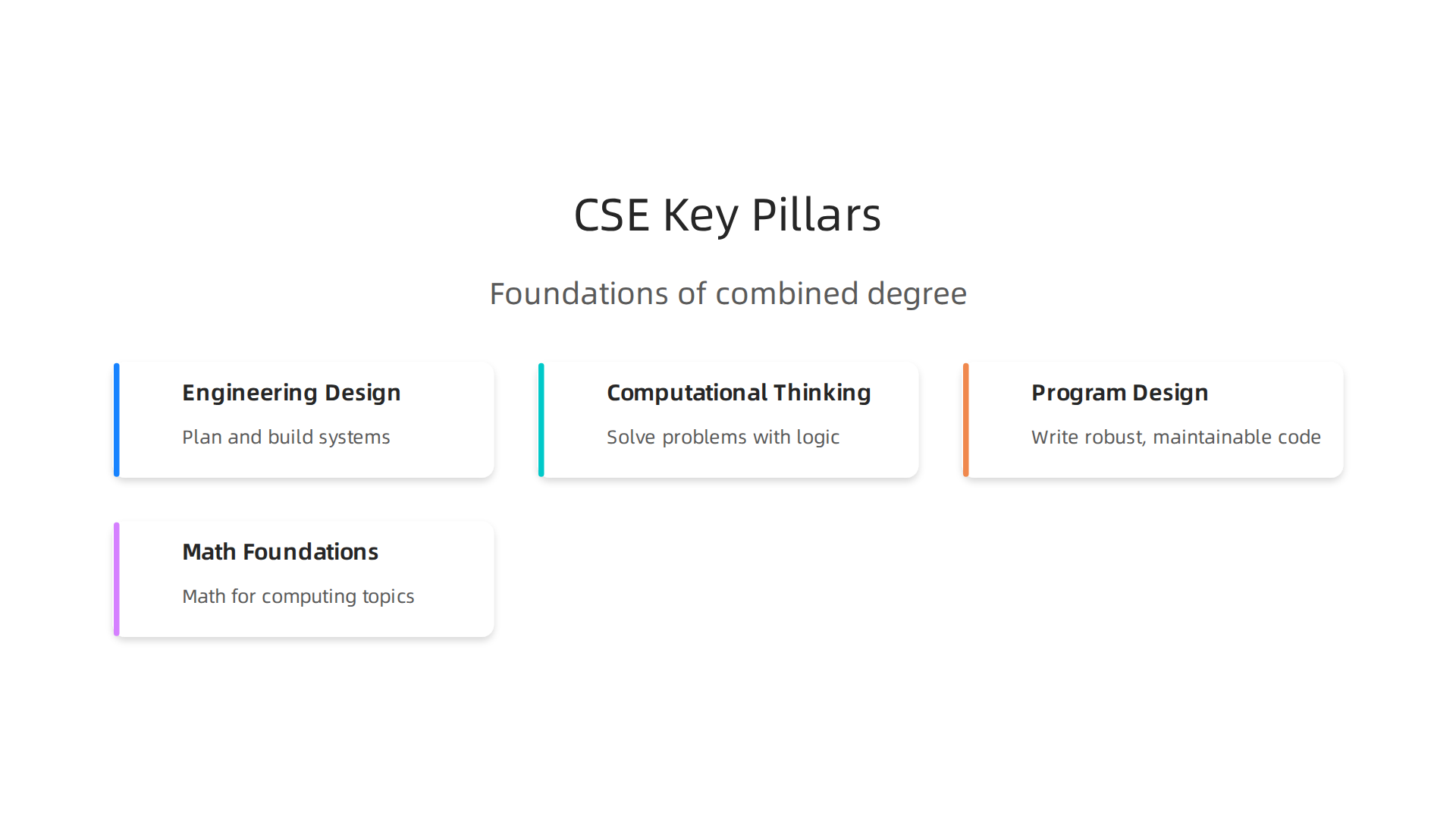
This means you will learn many things:
- Engineering design principles: How to plan and build things in a smart way.
- Computational thinking: How to solve problems using computer logic.
- Proper program design: How to write computer code that works well and is easy to understand.
- A strong math background: Math is the basic language for these subjects.
Many programs are set up by both the Computer Science and Electrical Engineering departments, showing how closely these areas work together TABLE OF CONTENTS – bulletin.columbia.edu. For example, coursework might include classes like an "Intro to Computing for Engineers" and "Data Structures & O.O. Design," along with math courses like Calculus I and II Computer Science (BS) Catalog Year 2025-2026. You also learn about electrical systems and how to build different computer components. It’s a truly interdisciplinary path, meaning it pulls knowledge from many different areas of study.
The coursework in a combined program balances both theory and practical, hands-on engineering topics. You’ll dive deep into the ideas behind how computers work, like algorithms and data structures, which is more on the computer science side. But you’ll also get your hands dirty with hardware, learning how to design and build computer parts and entire systems, which is the engineering side. This balanced learning is perfect for creating engineers who understand the whole picture, from the tiniest circuit to the biggest software program.

Schools like Hennepin Tech or Aiken Tech, while perhaps not offering a full combined computer science and engineering degree, are great examples of places that focus on giving students strong technical skills that would fit well into either side of this combined field. For those looking to continue learning, many free online resources exist, like Coursera Free Online Courses to Close the AI Skills Gap in 2026 or even MIT Free Online Courses Dev Upskilling for a Thriving Tech Career which can help you explore specific topics, even if Yale free online courses are not explicitly listed in the search results.
This approach gives graduates a big advantage. They can work in many different parts of the tech world, from making new software to designing smart devices, because they understand both worlds well. If you’re looking into these paths, it’s a good idea to chart computer science branches for engineering team success to see where your interests fit best.
While a combined computer science and engineering degree gives you a broad view, it’s helpful to know how this path is different from pure computer science, computer engineering, and software engineering. Each one has its own special focus in the big world of computers.
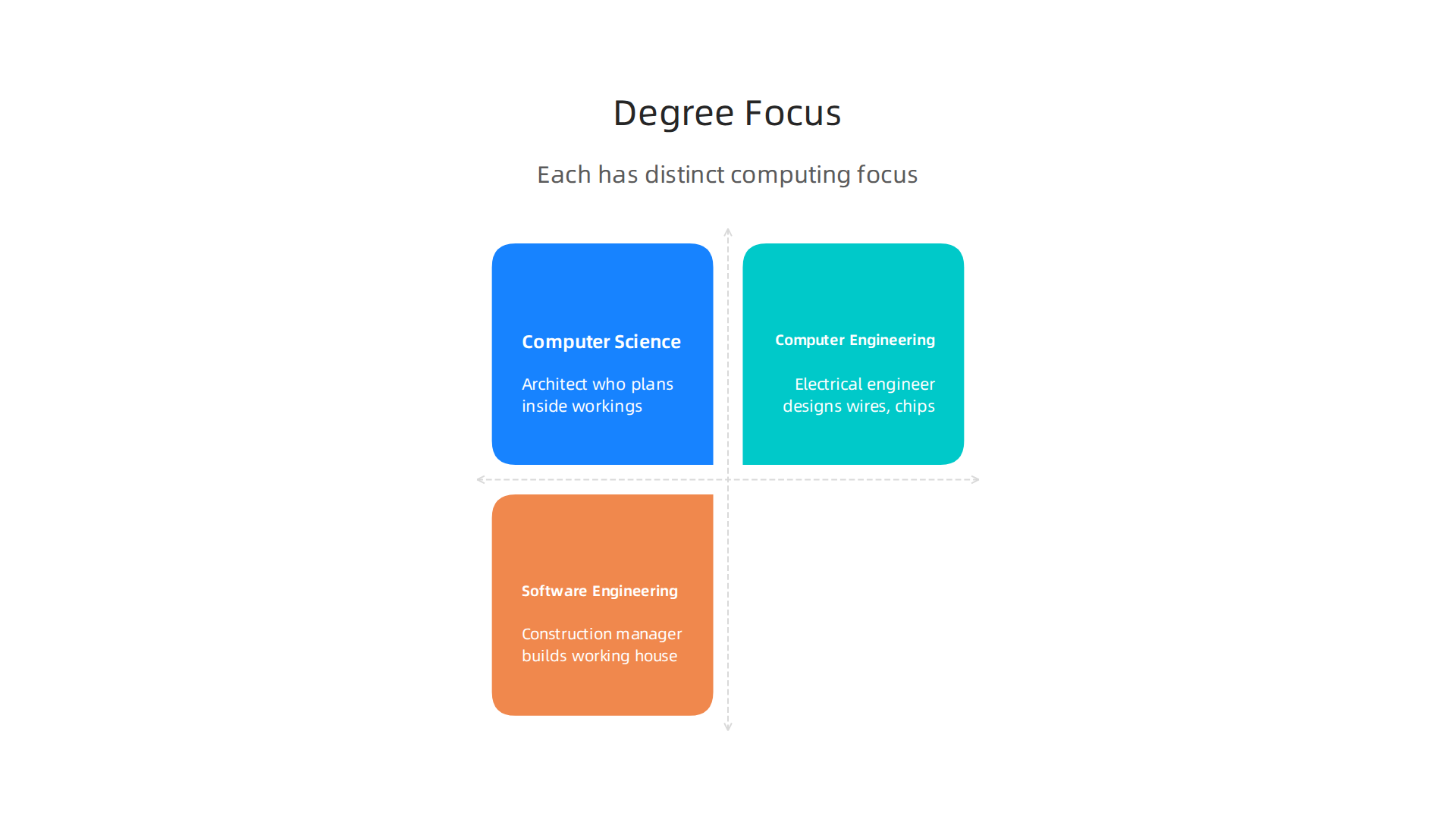
What Each Degree Focuses On
Think of it like building a house.
- Computer Science (CS) is like the architect who plans the inside workings. They figure out how the smart systems should think, what rules they follow, and how they solve problems. This field looks at the "brains" of the computer, focusing on how programs work, not just building the computer parts themselves. Students learn about things like algorithms, which are like recipes for computers, and data structures, which are ways to organize information. The Association for Computing Machinery (ACM) gives guidelines for what should be in a Computer Science Curricula 2023.
- Computer Engineering (CE) is like the electrical engineer. They design the actual wires, chips, and circuits that make the house stand and the lights turn on. This field focuses on how hardware and software work together. You learn to build parts of a computer system and make sure they can talk to each other. This includes making embedded systems, which are tiny computers inside other devices, like in a smart watch or a car. Guidelines for this field were updated in 2016, as noted in the 08April2021-Report by the ACM.
- Software Engineering (SE) is like the construction manager and builder. They take the architect’s plans and the electrical engineer’s designs and turn them into a real, working house. They make sure the software is built well, tested properly, and works for many people. This involves big projects, teamwork, and making sure the software is reliable and easy to fix later. The ACM/IEEE Software Engineering Curriculum Guidelines help schools plan these programs.
To put it simply, computer science is about the ideas and problem-solving. Computer engineering is about the physical parts and how they connect. Software engineering is about making big, good software projects. You can learn more about these different paths with an online computer science degree program or by comparing computer science vs software engineering.
How Courses Change Between Fields
Each of these fields has different kinds of classes, lab work, and big final projects (capstones).
| Feature | Computer Science | Computer Engineering | Software Engineering |
|---|---|---|---|
| Core Courses | Math, algorithms, data structures, theory of computing, programming languages | Circuit design, digital systems, microprocessors, embedded systems, networking | Software design, testing, project management, databases, user experience |
| Electives | Artificial intelligence, cybersecurity, graphics, computational theory | Robotics, internet of things (IoT), signal processing, power electronics | Web development, mobile app development, cloud computing, quality assurance |
| Lab Work | Programming labs, algorithm implementation, data analysis | Building circuits, hardware testing, robotics projects, chip design | Group projects, coding sprints, system testing, software deployment |
| Capstone Project | A complex software program, a new algorithm, or a research paper | Designing and building a new device, an embedded system, or a hardware upgrade | Creating a large-scale software application, a robust system, or a business solution |
Schools like Hennepin Tech or Aiken Tech, for example, offer strong technical training that gives students useful skills in computing. While they might not offer a full computer science and engineering degree, the skills learned are important for understanding how different parts of computing work. For those who want to explore these subjects more, there are many free learning options, though specific yale free online courses in these combined fields might not be as common as general computing courses.
Understanding these differences helps students pick the right path for them.

Knowing what each field focuses on makes it easier to choose a program that fits your interests, whether it’s pure theory, hands-on hardware, or building amazing software.
To stay on top of the fast-changing world of AI and technology, consider subscribing to The AI Newsletter Worth Reading for clear daily updates.
Now that you know the big differences between computer science, computer engineering, and software engineering, you’re ready for the next important step. Choosing the right program is not just about what sounds good. It’s about looking closely at a few key things to make sure you pick a good path. This is especially true if you are looking for a special kind of program, like a computer science and engineering degree.
What to check: accreditation, learning outcomes, and measurable program quality
When picking a college program, you should look at more than just the name of the degree. You need to check for things that show the program is strong and will help you in your career.
Why Accreditation Matters
Accreditation is like a stamp of approval for a college program. It means that an outside group has looked at the program and said it meets high standards for quality. For engineering and computing programs, the most recognized accrediting body in the US is ABET.
Why is this important?
- For Employers: Many companies prefer to hire graduates from accredited programs because they know these students have received a good education.
- For Licenses: In some engineering fields, you might need a special license to work. Having a degree from an accredited program is often a first step to getting that license.
- For Further Study: If you want to go to grad school later, many higher-level programs will only accept students from accredited undergraduate programs.
When a program has ABET accreditation, it means it has been reviewed and found to meet important standards. For example, the Criteria for Accrediting Computing Programs, 2026 – 2027 outline what students in these programs should be able to do.
Looking at Learning Outcomes
Learning outcomes are like a promise from the school about what you will know and be able to do when you finish the program.
For a computer science and engineering degree, you want to see clear goals. ABET’s criteria for computing programs, for instance, say that students should be able to "analyze a complex computing problem and apply principles of computing and other relevant disciplines to identify solutions." They also expect students to "design, implement, and evaluate a computing-based solution" to meet certain needs, as detailed in the 2025-2026 Criteria for Accrediting Computing Programs.
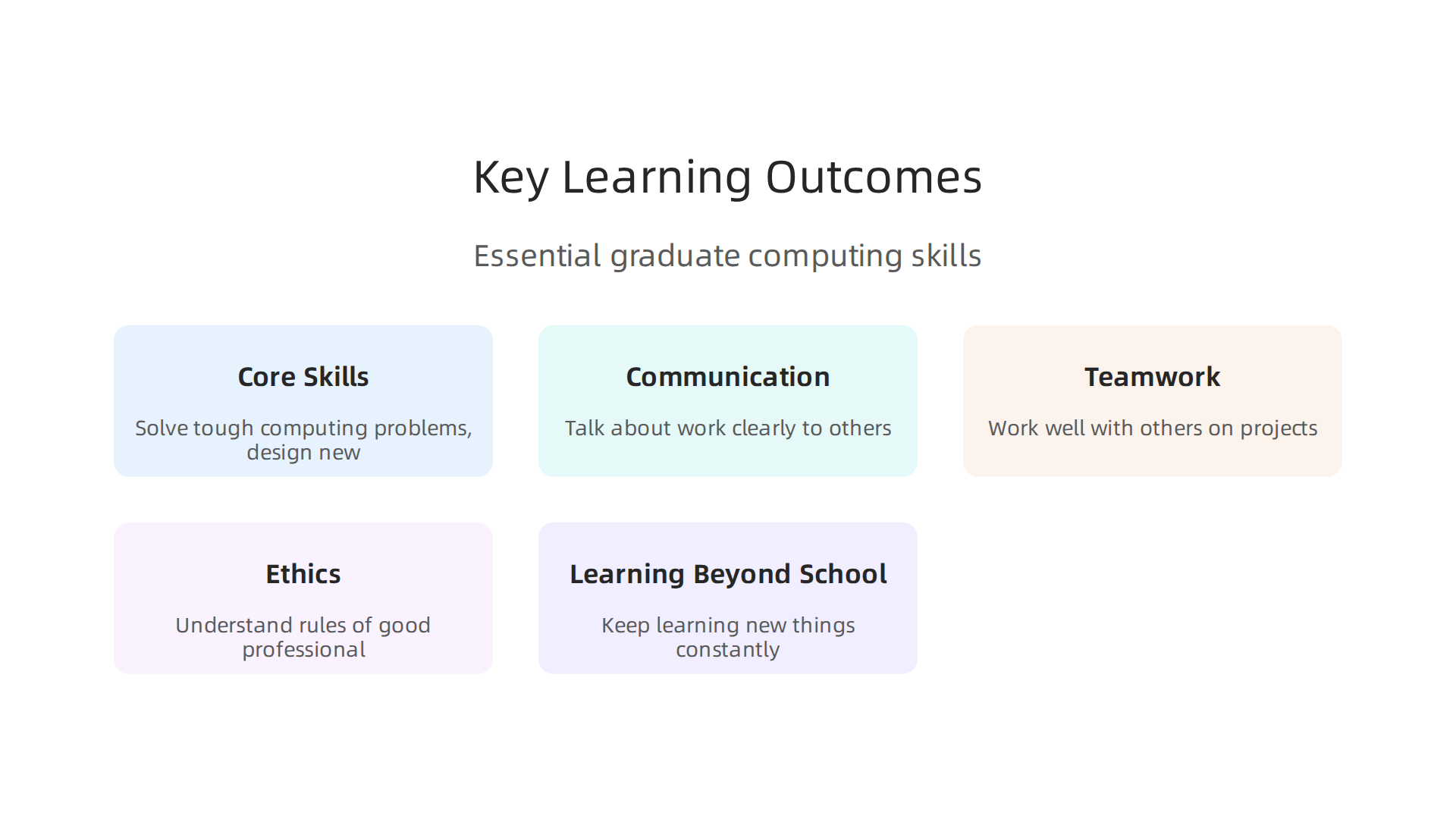
Here are some measurable outcomes to look for:
- Core Skills: Can graduates solve tough computing problems? Can they design new software or hardware?
- Communication: Can they talk about their work clearly to others, even those who don’t know much about computers?
- Teamwork: Can they work well with others on big projects?
- Ethics: Do they understand the rules of being a good professional in the tech world?
- Learning Beyond School: Do they know how to keep learning new things in a field that changes all the time?
Checking Program Quality
Beyond accreditation and learning outcomes, you can look at other things to tell if a program is good:
- Graduation Rates: How many students actually finish the program? A high rate often means students are supported well.
- Job Placement: Where do graduates go to work? Do they get good jobs in their field?
- Research Chances: Does the school offer ways for students to do research, especially in a combined computer science and engineering degree? This can be a huge plus for learning new things and getting experience.
- Faculty Experience: Do the teachers have real-world experience or do they do their own research?
Smaller schools like Hennepin Tech or Aiken Tech might focus on hands-on skills that are very helpful, even if they don’t offer a full combined degree program. These types of schools often prepare students for specific jobs directly.
If you are looking at different ways to boost your skills, you might also explore how to choose online bachelor degree programs for engineers in 2026. And for extra learning, remember that while specific combined degree programs aren’t common, there are many general computing options if you are searching for things like free online courses.
After you have thought about what makes a program good, like its accreditation and what you will learn, the next big question is what kind of job you can get. For someone with a strong computer science and engineering degree, the job market in 2026 is full of chances. Companies really want people with these skills.
In fact, computer science graduates are very much in demand. Studies show that employers plan to hire many of them. For instance, in the US, computer science bachelor’s degrees are among the most sought-after majors, with many companies planning to hire graduates from the Class of 2026, often with good starting salaries. Some reports even tie computer science majors for the top spot in employer demand for bachelor’s degrees, with over 67% of companies looking to hire them in 2026. This is a good sign for anyone studying this field Class of 2026 Salary Projections Are Promising.
Let’s look at some common jobs you might find.
Common Early-Career Roles for Graduates
A computer science and engineering degree prepares you for many different roles because you learn about both the "brains" (software) and the "body" (hardware) of technology.
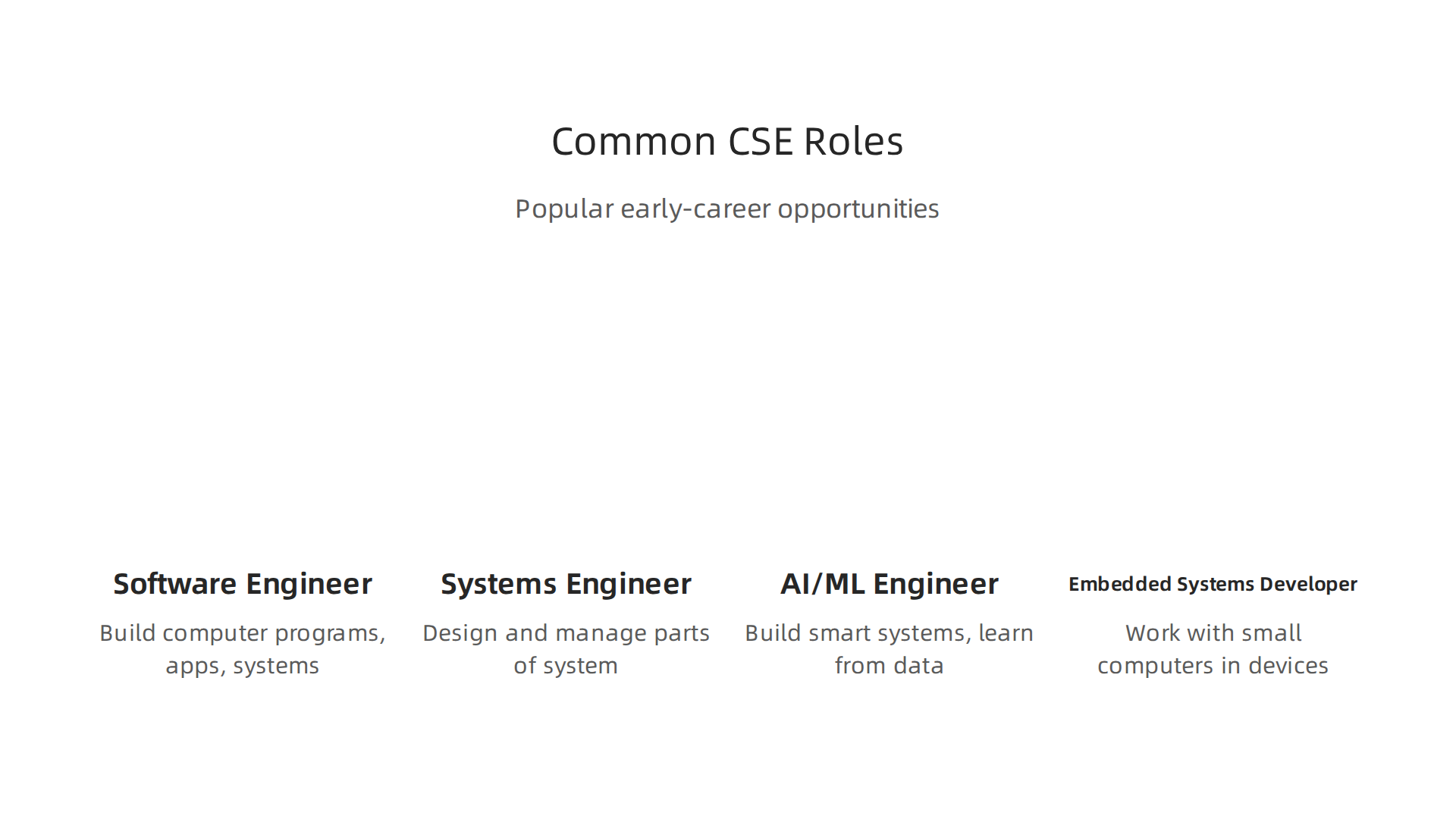
- Software Engineer: This is one of the most popular jobs. Software engineers build computer programs, apps for phones, or systems that run websites. They write code and make sure software works well. The job market for software engineers continues to be strong in 2026, showing many job openings Software engineering job market 2026: what the data says. If you’re looking to start your career, learning how to land a software engineer entry-level job in 2026 is a smart step.
- Systems Engineer: These engineers look at the bigger picture. They design and manage how different parts of a computer system or network work together. They make sure everything runs smoothly and efficiently.
- AI/ML Engineer: This role is very exciting right now. AI stands for Artificial Intelligence and ML for Machine Learning. These engineers build smart systems that can learn from data and make decisions, like the ones that power self-driving cars or recommend movies to you. Knowing the Most In-Demand AI Skills in 2026 can really help you here.
- Embedded Systems Developer: These engineers work with small computers that are inside other devices. Think of the software in your smart fridge, your car, or even your smartwatch. They make these devices function.
How Employer Expectations Vary
What companies look for can change a lot depending on the job and the industry.
- By Role:
- For Software Engineers, companies want to see strong coding skills, problem-solving abilities, and how well you work in a team.
- Systems Engineers need to be good at understanding complex systems and thinking about how to make them better.
- AI/ML Engineers need to understand math, statistics, and how to work with lots of data. They also need to be able to build and test their learning models.
- Embedded Systems Developers need a good understanding of both hardware and software, and how they connect.
- By Industry:
- Big Tech Companies (like Google or Microsoft) might look for people who can work on very large, complex projects and invent new things. They often want advanced skills and a clear understanding of the latest technologies.
- Manufacturing Companies might need engineers to work on robots or automated factory systems. They might value practical experience and problem-solving skills for physical machines.
- Healthcare often needs engineers to create medical devices or manage patient data systems, which requires a strong focus on safety and data privacy.
- Even smaller, specialized schools, like Hennepin Tech or Aiken Tech, prepare students for jobs in specific areas, contributing to the demand for skilled workers across various industries.
No matter the path you choose, staying updated on the latest tech news and insights is key.
The AI Newsletter Worth Reading
Want to get clear daily AI updates? The AI Newsletter Worth Reading from The Deep View Newsletter can keep you in the know.
The skills you learn in a computer science and engineering degree are valuable everywhere. Many different industries, from technology to finance, are looking for these bright minds. Staying curious and continuing to learn, even from resources like Yale free online courses or other general computing options, will help you go far in your career.
A strong computer science and engineering degree does more than just teach you things in a classroom. It also gives you real-world chances to use what you learn. This happens through special programs like industry partnerships, internships, and capstone projects. These experiences make a big difference in how ready you are for a job and how well you know the tools used in the real world.
How Industry Partnerships Boost Your Skills
When a university partners with companies, it means they work together to help students learn better. These partnerships make sure that what you learn in your classes is exactly what companies are looking for. For example, some partnerships let students work on actual problems that companies face, helping them get skills that are needed in today’s fast-changing tech world University-industry collaboration for academic success. This also lets students get comfortable with tools and methods used every day in the workplace.
A good sign of a strong program is when schools like Hennepin Tech or Aiken Tech have these kinds of connections. They often help students gain practical skills for specific jobs.
The Power of Internships
Internships are like temporary jobs you do while you are still studying. They are very important because they give you hands-on experience before you even graduate. During an internship, you get to work alongside experienced professionals, learn about how a company runs, and see how your computer science and engineering degree can be put to good use. Studies show that internships are very helpful for students to gain important skills for industry jobs University-industry partnerships in work-integrated learning.
For instance, an internship can help you:
- Understand real work: You learn how projects are done in a real company, not just from a textbook.
- Use industry tools: You get to work with the same software and equipment that companies use every day. This makes you more valuable to future employers.
- Build your network: You meet people who work in the field. These connections can help you find jobs later.
- Figure out what you like: You can try different kinds of work to see what fits you best.
Many schools also use internships to check how well their programs prepare students for jobs, seeing what works and what can be made better One-year internship program on software engineering.
Capstone Projects: Your Grand Finale
Capstone projects are often the final big project you do in your degree program. They bring together everything you have learned. Many of these projects are sponsored by companies. This means a real company gives the students a problem to solve or a product to build.
Working on an industry-sponsored capstone project helps you:
- Solve real problems: You tackle challenges that companies actually face.
- Work in a team: You learn to work with others, just like you would in a job.
- Show off your skills: You create something real that you can show to future employers.
- Gain experience with complex systems: These projects can be very detailed, helping you learn to manage big tasks Examining the Effectiveness of Industrial Partnerships in Capstone Courses.
These partnerships and projects help connect what you learn in school with the skills you need for a successful career in engineering. This hands-on approach is very valuable when you are looking for your first job in 2026. If you want to dive deeper into how different parts of computer science work together, exploring computer science branches for engineering team success can give you a better overview.
Signs of Strong Industry Engagement
When looking at a computer science and engineering degree program, here are some things that show strong ties to industry:
- Sponsored Labs: Companies might fund labs at the school, providing students with access to the latest equipment and tools.
- Co-op Programs: These are like longer internships, where students alternate between studying and working full-time for a company.
- Capstone Sponsors: As mentioned, if companies are lining up to sponsor student capstone projects, it is a great sign.
- Advisory Boards: Programs that have industry leaders on their advisory boards are often more in tune with what employers want.
- Job Placement Rates: A high percentage of graduates getting jobs quickly after finishing their program points to good industry connections.
Choosing a program with these strong links will greatly improve your chances of getting a great job after graduation.
After learning about how industry partnerships and hands-on projects prepare you for jobs, let’s look at the specific skills you’ll need for today’s AI-focused roles. To get a great job in 2026 with a computer science and engineering degree, especially in fields that use Artificial Intelligence (AI), you need to focus on certain key abilities and learning experiences.
Essential Technical Skills for AI-Era Jobs
Employers in 2026 are looking for graduates who can do more than just code. They want people who understand how AI works and how to build things with it. This means you should aim to learn:
- Machine Learning (ML) Fundamentals: This is about understanding how computers learn from data. It means knowing how to make predictions or spot patterns. Think of it as teaching a computer to see a cat in a picture.
- Data Engineering: AI systems need good data to learn from. Data engineering is all about getting, cleaning, and organizing that data so it’s ready for AI. It’s like preparing the ingredients before you cook.
- Software Engineering Best Practices: You’ll need to write clear, reliable code and know how to work well with a team. This includes understanding how to test your code and make sure it’s safe and secure. Programs are expected to teach students how to analyze complex computer problems and come up with solutions Criteria for Accrediting Computing Programs, 2026 – 2027 – ABET.
Actually, in 2026, some of the most desired AI skills also include things like understanding how to talk to AI (prompt engineering), working with large AI models, and keeping AI systems safe Most In-Demand AI Skills in 2026: What Employers Want Most.
Key Soft Skills Employers Seek
It’s not all about technical know-how. Companies also want people who are good at:
- Problem-Solving: Being able to look at a hard problem and figure out the best way to solve it using your computer science skills.
- Teamwork: Working well with other engineers, designers, and project managers.
- Communication: Explaining complex technical ideas in a simple way so everyone can understand.
Recommended Coursework and Experiences
To hit the ground running, your computer science and engineering degree program should include:
- AI and Machine Learning Courses: Look for classes that dive deep into these topics.
- Data Science Classes: These teach you how to collect, manage, and use large amounts of information.
- Hands-on Projects: Doing projects that let you build real AI systems or solve real-world data problems.
- Ethics in AI: Understanding the right and wrong ways to use AI is super important.
Schools like Hennepin Tech or Aiken Tech might offer programs that focus on very specific job skills, which can be a good path. Don’t forget that you can also boost your skills with extra learning outside of your main degree. Many online platforms offer valuable courses. For example, you can find many helpful options through [Coursera free online courses to close the AI skills gap in 2026](https://aidevelopertoolsnews.com/coursera-free-online-courses-to-close-the-ai-skills-gap-in 2026).
Learning to use the latest AI Developer Tools in 2026 Mastering Emerging Technologies will also make you a more attractive job candidate. By focusing on these skills and experiences, you’ll be well-prepared for the exciting opportunities in the AI-driven tech world of 2026.
Staying up-to-date with the latest AI trends and tools is crucial.
Get clear daily AI updates from The AI Newsletter Worth Reading.
Summary
This guide clears up the differences between computer science, computer engineering, and combined computer science-and-engineering degrees so students, hiring managers, and product teams can choose wisely. It walks through what you study in each program—core courses, labs, and capstones—how accreditation and measurable learning outcomes signal program quality, and which industry ties (internships, sponsored labs, co‑ops) improve job readiness. The article explains how combined degrees blend software and hardware training, why that matters for AI-era roles, and which technical and soft skills employers want in 2026. You’ll also find practical hiring and career expectations, common early-career roles, and steps to evaluate programs so you can pick a path that fits your interests and the job market.