

Chart Computer Science Branches for Engineering Team Success
Overview
Why understanding computer science branches matters for engineering teams
In 2026, the world of technology changes super fast. New tools and ways of building things pop up every day. For teams that build software and other tech, this can feel like a maze.

It’s hard to know which skills are most important or what kind of engineers you truly need. You might wonder, for example, what the real difference is between a system engineer vs software engineer. Even common roles like a computer engineer need a clear definition these days.
Actually, many jobs in tech seem to blend together, making it tough to pick the right people for your team or even decide what new skills your current team should learn. New and exciting fields, like becoming an AI engineer, are growing quickly. But with so many options, how do you make good choices? How do you make sure your team has the right people and skills?
This is where understanding the different computer science branches becomes very important. Computer science itself is the study of how computers work, from their basic parts to complex programs, and the ideas behind them. It’s a foundational field, with many specific areas or branches, sometimes called a taxonomy, that help organize this vast knowledge The Computer Science Ontology: A Comprehensive Automatically-Generated Taxonomy of Research Areas.
If you want to build a strong engineering team, you need a clear map of these different computer science fields. In this guide, we will give you a simple way to look at the main computer science branches. We will show you what kind of jobs fit into each branch and give you helpful tips for hiring new talent or helping your team learn new skills. This will help you find your way through the fast-paced tech world.
Want to keep up with the latest in AI and technology?
Get clear daily AI updates from The AI Newsletter Worth Reading.
High-level taxonomy: major branches and how to think about them
To really get a grip on computer science branches, it helps to group them into a few big areas. Think of it like a map that shows the main roads before you look at all the small paths. This way of organizing things is called a taxonomy. It helps us see how different parts of computer science fit together and what makes them special.

In fact, major groups like the ACM and IEEE have set standards for how computer science is taught, which helps define these areas Curricular Standards | ACM/IEEE Curricular Mapping Project ….
Here are some of the main computer science areas:
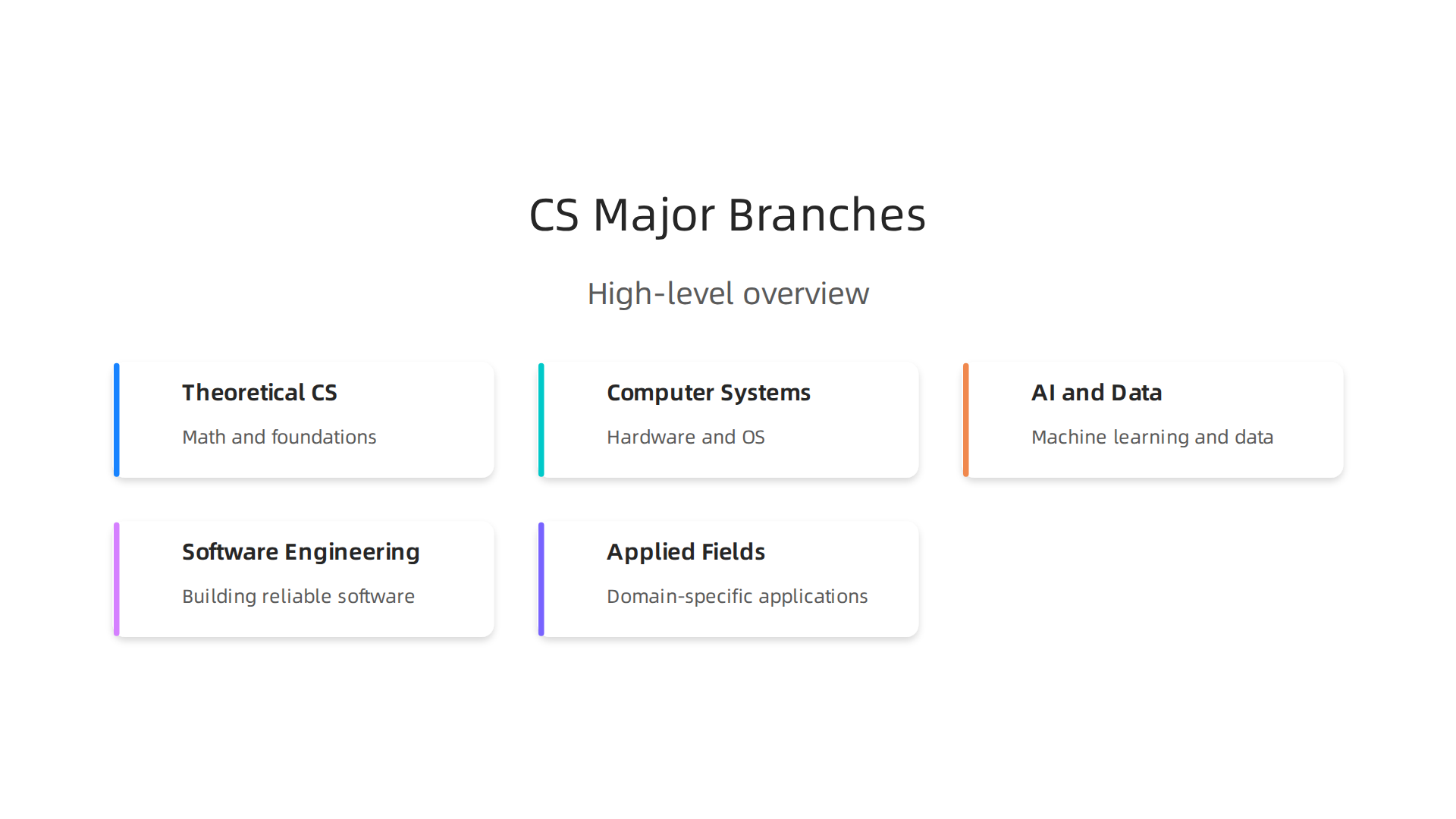
- Theoretical Computer Science: This branch is all about the big ideas and math behind computing. It asks questions like, "What can computers actually do?" and "How fast can they do it?" People in this area study things like algorithms and how complex problems are. They figure out the limits and possibilities of computers. This area dives into the basic building blocks of computation, including formal languages and how computers process information Theoretical Computer Science – an overview | ScienceDirect Topics.
- Computer Systems: This is about how computers work on the inside. It covers the actual hardware, like chips and circuits, and the software that makes them run, like operating systems and networks. A
computer engineeroften works in this space, building the physical parts of computers or making sure they talk to each other correctly. This helps understand thecomputer engineering definition. - Artificial Intelligence (AI) and Data: This field is all about making computers smart and helping them learn from information. It includes things like machine learning, where computers get better at tasks with more data, and big data analysis, which means making sense of huge amounts of information. An
AI engineerwould work heavily in this exciting area. - Software Engineering: This branch focuses on building useful, reliable, and well-made software. It’s about taking the ideas from theoretical computer science and the power of computer systems to create programs people use every day, like apps or websites. It’s a very practical field, different from the more foundational
computer sciencestudies. If you want to dive deeper into how these two fields compare, you can learn more about the computer science vs software engineering the key differences you need to know in 2026. - Applied Fields: These are areas where computer science is used in specific ways. Think about computer graphics for movies, cybersecurity to protect information, or how computers are used in robots and games.
You might notice that these areas often overlap. For example, a system engineer vs software engineer can sometimes be hard to tell apart because many jobs blend skills from different branches. A good system engineer needs to understand how software interacts with hardware. This is why having a clear map of these computer science branches is so useful. It helps engineering teams know exactly what kind of skills they need when hiring new people. It also helps them decide what new skills their current team members should learn to stay updated in 2026. Thinking about these branches helps you pick the right tools and makes sure your team has all the right puzzle pieces to build amazing things. For a general overview of paths within computing, you might want to find your path in computer science and engineering with this discipline map.
Now, let’s take a closer look at Theoretical Computer Science. This branch is like the bedrock or the deep roots of all the other computer science branches. It helps us understand the basic rules and limits of what computers can do. Think of it as the study of what’s possible in computing, not just how to build something.
Core Topics in Theoretical Computer Science
This area focuses on big ideas and uses a lot of math to explore them. Here are some of the main things people study in Theoretical Computer Science:
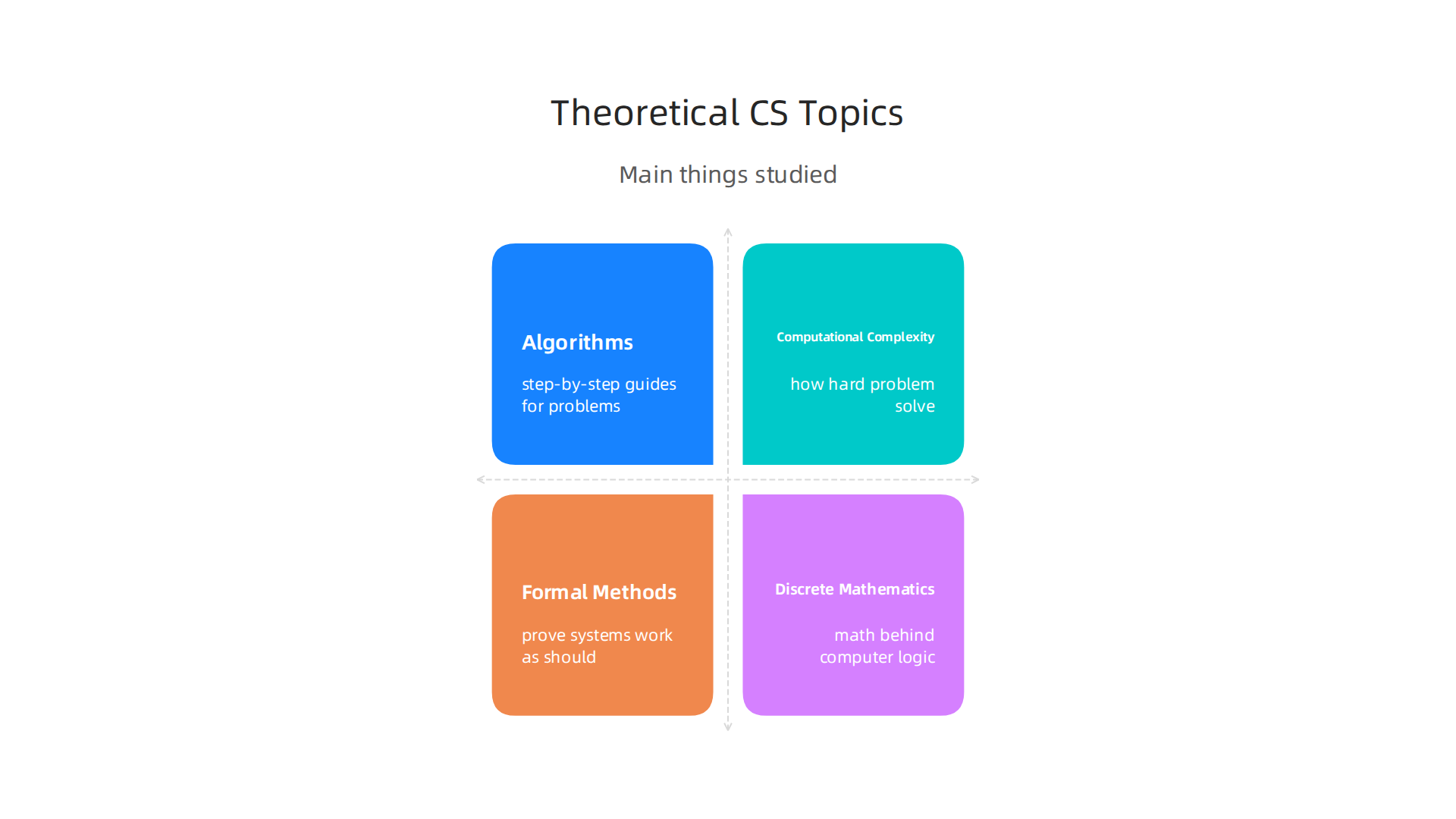
- Algorithms: These are like recipes or step-by-step guides for solving problems. In this field, people don’t just write algorithms; they study how to make the best possible ones. They look at things like how fast an algorithm will run or how much memory it will need. This helps make sure that computer programs are as efficient as possible Theoretical computer science.
- Computational Complexity: This topic asks how hard a problem really is to solve. Some problems are easy for a computer, while others might take too much time or power, even for the fastest machines in 2026. This helps us know when a problem is too big or when we need a clever new way to solve it. Understanding complexity is key for developing new technologies like AI without wasting resources. You can find more details on topics like this in a journal devoted to such studies, like Theoretical Computer Science | Journal.
- Formal Methods: These are ways to use math and logic to prove that computer systems and software work exactly as they should. It’s like doing a very strict check to make sure there are no mistakes. This is super important for things where errors could be dangerous, like software for airplanes or medical devices. It also plays a big part in the education of future computer scientists, covering key tasks like how to figure out what a system needs to do The Role of Formal Methods in Computer Science Education.
- Discrete Mathematics: This is the kind of math that deals with things that can be counted, like numbers, sets, and graphs, rather than smooth, continuous things. It’s the language behind computer logic, data structures, and algorithms. If you want to understand how a computer thinks, you need to understand discrete mathematics. These ideas are often taught in courses on formal languages and theory Teaching.
Who Needs Theoretical Expertise?
Theoretical computer science might sound very academic, but its ideas are crucial in many real-world jobs. People with a strong background in this area often work in roles like:
- Algorithm Designers: They create the core methods that power everything from search engines to financial trading systems. Their work makes sure these systems run quickly and correctly.
- Cryptographers: These experts design secure ways to protect information. They use complex math to create unbreakable codes for online banking, private messages, and secure communications.
- Research Teams: In places like universities or big tech companies, researchers in this field push the boundaries of what computers can do. They explore new types of computing, like quantum computing, or figure out the fundamental limits of artificial intelligence. An
AI engineermight work closely with these researchers to apply new theoretical findings. - Software Verification Specialists: These individuals use formal methods to ensure that critical software is bug-free and completely reliable. This is very different from a
system engineer vs software engineerwho might focus more on practical building; these specialists focus on proving correctness.
Knowing these deep concepts helps every computer engineer or developer build stronger, more reliable, and more efficient systems. It underpins much of what we define in a computer engineering definition. These theoretical foundations mean that when we create software or design hardware, we’re building on solid, proven principles.
For those interested in the future of AI and how these deep concepts are applied, staying updated is key. Get clear daily AI updates by subscribing to The AI Newsletter Worth Reading. It can help you connect the dots between theoretical advancements and practical tools.
Moving from the big, brainy ideas of theoretical computer science, we now look at how those ideas turn into real, working systems. This is where the branch of computer science branches called "Systems, networking, and infrastructure" comes in. It’s all about building the actual machines and connections that make our digital world work every day. Think of it as the people who make sure the lights stay on and the internet keeps flowing smoothly.
This area focuses on how to build computer systems that are strong, fast, and always available. It’s like building the roads, bridges, and power plants for the digital city.
Key Areas in Building Reliable Platforms
Here are some important topics people study in this field:
- Operating Systems: These are the main programs that manage all the computer hardware and software. Windows, macOS, and Linux are examples. They make sure different programs can run at the same time without crashing, and they help you interact with your computer.
- Distributed Systems: Imagine many computers working together as one big system. That’s a distributed system. They are used for things like big websites or online services that need to handle a lot of users. This makes sure that if one part fails, the whole system doesn’t stop working.
- Networking: This is how computers talk to each other. It covers everything from how your phone connects to Wi-Fi to how huge data centers share information across the world. Good networking makes sure data travels fast and safely.
- Storage: This is where all the data lives. It’s about designing systems that can save huge amounts of information and get it back quickly when needed. This includes things like cloud storage and the hard drives in your computer.
All these parts work together to create strong and scalable platforms. This means systems can grow bigger and handle more users without breaking down. This kind of knowledge is super important for making sure products like online stores, social media, or even AI tools can reach millions of people without a hitch.
Who Uses This Systems Knowledge?
Many different roles depend on understanding these systems well. If you’re looking at a computer engineering definition, you’ll find these skills are often at its heart.
- Site Reliability Engineers (SREs): These experts make sure websites and online services are always up and running, and that they perform well. They use skills like automation and monitoring to prevent problems before they happen. In 2026, skills like knowing Kubernetes, Python, and Go are vital for SREs to manage complex systems efficiently SRE 2026: salary, stack, demand.
- Platform Engineers: These people build the tools and platforms that other developers use. They create the "roads" and "buildings" within a company’s software setup, making it easier for
ai engineerand others to build new features. - Backend Systems Engineers: They design and build the parts of a website or app that users don’t see. This includes databases, servers, and logic that make everything work behind the scenes.
Understanding these foundational computer science branches helps you see the difference between a system engineer vs software engineer. A system engineer often focuses on the big picture of how all the parts of a computer system fit together and perform, while a software engineer might focus more on writing the code for a specific program. If you are exploring various computer science fields, you might want to find your path in computer science and engineering with this discipline map. This deep understanding of how things work at a fundamental level ensures that whatever is built, from a simple app to a complex AI platform, is reliable and ready for the future.
Now, let’s look at another exciting part of computer science: the world of smart machines and understanding data. This area includes artificial intelligence (AI), machine learning (ML), and data science. These are key computer science branches that build on the strong systems we just talked about, bringing new possibilities like self-driving cars and helpful chat programs.
What are AI, Machine Learning, and Data Science?
These fields often work together, but they each have their own special focus:
- Artificial Intelligence (AI): This is the big goal of making computers smart enough to think and learn like humans. It covers everything from simple programs that can make choices to very complex systems that can understand and create.
- Machine Learning (ML): This is a part of AI where computers learn from data without being told exactly what to do. Think of it like teaching a child by showing them many examples. The computer finds patterns and uses them to make predictions or decisions.
- Data Science: This field uses science and math to get useful insights from large amounts of data. Data scientists clean, organize, and study data to find hidden trends, which helps businesses and people make better choices.
Within these big areas, there are even more specialized parts:
- Natural Language Processing (NLP): This is about teaching computers to understand, interpret, and make sense of human language. This is what lets your phone respond when you talk to it or helps translation apps work.
- Computer Vision: This part teaches computers to "see" and understand images and videos, just like human eyes do. It’s used in things like facial recognition or sorting objects on a factory line.
Different Jobs in AI, ML, and Data Science
The world of AI, machine learning, and data science has many different job roles, each with a special set of tasks.
It’s helpful to know how they differ, especially when thinking about a computer engineering definition today.
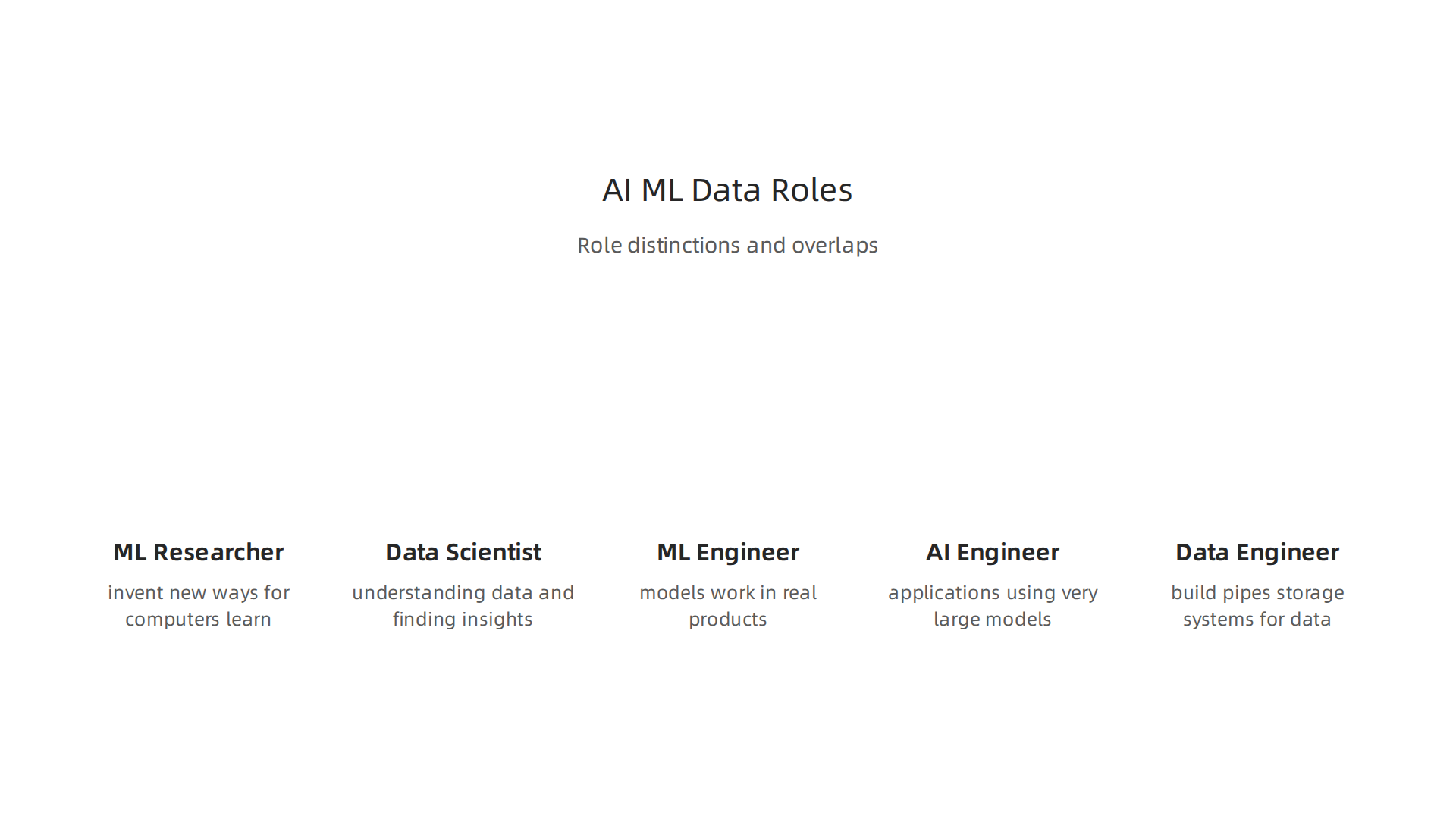
- Machine Learning Researcher: These are the people who invent new ways for computers to learn. They develop new algorithms or make existing ones much better. They often do deep math analysis to figure out how these learning methods work.
- Data Scientist: A data scientist focuses on understanding data and finding insights. They often build early versions of machine learning models to answer questions about the world. For example, they might look at customer data to predict buying habits. They are on the "data research end," focusing on analysis and building model prototypes to find insights from data Data Scientist vs ML Engineer vs AI Engineer: 2026 Career Gu.
- Machine Learning Engineer: An ML engineer takes the models built by data scientists and makes them work in real products. They build, train, and deploy these models so they can make predictions or decisions for many users. They bridge the gap between pure data science and getting the software to actually run well. Many companies in 2026 expect ML engineers to handle the entire journey of a machine learning system, from raw data to working predictions The Technical Gaps That….
- AI Engineer: This role is newer and often focuses on developing applications that use very large language models (LLMs). An
ai engineercreates products powered by these advanced AI systems. They ship products that are powered by things like ChatGPT. - Data Engineer: Before any smart model can work, it needs good data. Data engineers are the ones who build the "pipes" and "storage systems" for data. They design and maintain the infrastructure that collects, stores, and processes data, making sure it’s clean and ready for data scientists and ML engineers to use Data Engineer vs ML Engineer: Career Path Comparison ….
In short, data scientists figure out what data means, ML engineers make those findings work in real systems, and data engineers make sure the data is available and clean in the first place. AI engineers then use the most advanced AI models to build new kinds of smart applications.
If you’re eager to keep up with how AI is changing these roles and tools, consider staying informed.
Get clear daily AI updates from The AI Newsletter Worth Reading.
Now that we have explored the different roles in AI, machine learning, and data science, let’s look at how traditional software engineering is changing. These new smart systems need special care to work well all the time. This is where software engineering practices like DevOps, Site Reliability Engineering (SRE), MLOps, and platform engineering come into play.
These are important computer science branches that make sure AI and machine learning projects run smoothly.
How Software Engineering Works with AI
Software engineering is all about building and keeping software running. With AI becoming a big part of many products, these engineering jobs have new tasks. They focus on making sure the AI models are not just built but also work reliably and efficiently in the real world.
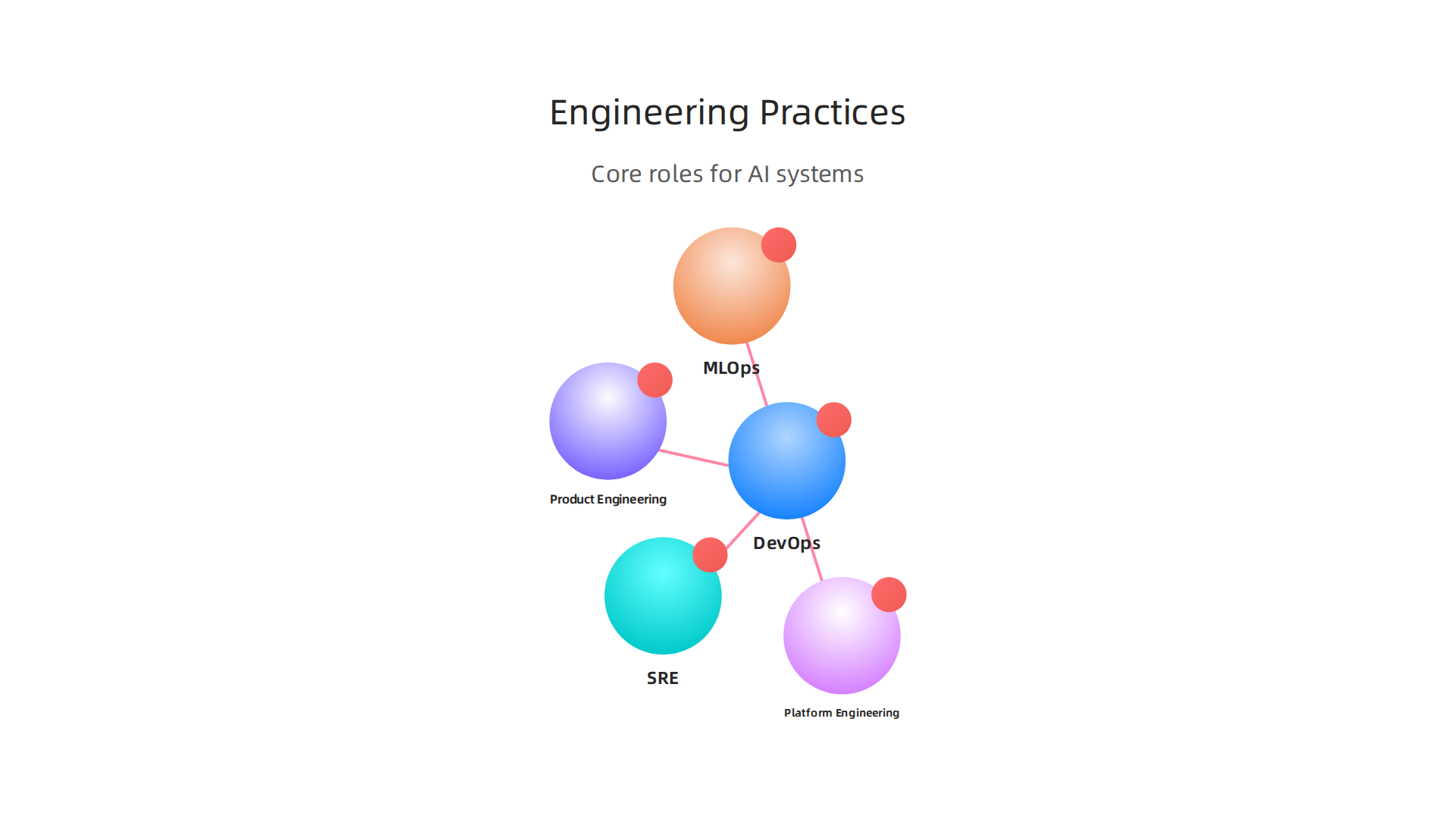
- DevOps: This way of working helps software teams build, test, and release software faster and more often. It helps different teams like developers and operations work together. When AI models are part of the software, DevOps helps bring them into the main system. This ensures that new features with AI can be added without problems. In 2026, companies want DevOps engineers to understand entire systems and also have deep skills in key areas like CI/CD pipelines DevOps Engineering in 2026: Top Trends, In-Demand ….
- Site Reliability Engineering (SRE): SRE is like a special kind of DevOps that focuses a lot on how reliable a system is. SRE engineers make sure software systems stay up and running and perform well. They use tools and automation to stop problems before they happen. For example, in 2026, SREs use skills like automation, monitoring, and programming languages like Python and Go Site Reliability Engineer Skills in 2026: ‘SRE’ Isn’t One of …. They also need to be masters of systems like Kubernetes, which helps manage many parts of a software application SRE 2026: salary, stack, demand — CIS and Europe.
- MLOps: This is like DevOps, but specifically for machine learning models. MLOps helps teams manage the whole life of an ML model, from when it is first built to when it is used by customers. It makes sure models are trained correctly, checked often, and updated when needed. An
ai engineeroften works closely with MLOps teams to bring their smart applications to life. - Platform Engineering: This is a newer role that has grown in importance. Platform engineers build tools and systems that other developers use. They create easy-to-use platforms that hide the complex details of the infrastructure. This helps developers focus on writing code for new features, including AI features, instead of worrying about how things run. This role is about making it easier for all types of engineers to do their jobs, helping them use powerful AI developer tools in 2026.
- Product Engineering: This involves building the actual products that users interact with. In an AI-driven world, product engineers work to make sure AI features are part of the user experience in a helpful and smooth way. They bridge the gap between complex AI models and a simple, enjoyable user interface.
What This Means for Companies and Careers
The rise of these specialized roles changes how companies think about hiring and training. For a modern computer engineering definition, it’s not just about writing code. It’s also about understanding how to build reliable, smart systems that use data and AI effectively.
Companies need to:
- Upskill their teams: Teach their current engineers new skills in areas like MLOps and cloud platforms.
- Hire new talent: Look for people with strong backgrounds in both software engineering and AI.
- Integrate AI Developer Tools: Use the right tools to help teams work faster and better with AI. For example, using tools that help with generative AI tools for developers in 2026 can speed up development.
These practices and roles show how much computer science has grown. They highlight the need for engineers who can not only create smart software but also ensure it runs perfectly, every single time. It’s a blend of old school engineering and cutting-edge AI.
The world of computer science is vast, like a big tree with many computer science branches. While some engineers focus on making core software or improving how it runs with AI, others dive into more special areas. These areas combine computer knowledge with other fields, creating exciting new jobs. This is where a real computer engineering definition grows to include more than just making chips or writing simple code.
Let’s look at some of these special fields:
Security (Cybersecurity)
Imagine your computer or phone as a house. Cybersecurity is like having the best locks, alarms, and guards to protect it from bad people. Cybersecurity experts work to keep our digital information safe. They stop hackers, prevent data from being stolen, and make sure systems work correctly without being harmed. These jobs need people who understand networks, software, and even how people might try to break in. It’s a very important field in 2026, as more of our lives happen online. People in this field might be called cybersecurity analysts or ethical hackers.
Human-Computer Interaction (HCI)
This field is all about making computers and other tech easy and enjoyable for people to use. Think about how simple your favorite app is, or how comfortable a mouse feels in your hand. That’s HCI at work. Engineers in this area think about how people think and act. They design interfaces, buttons, and experiences that are simple, clear, and fun. It’s a mix of computer science, design, and even a bit of psychology.
Graphics and Gaming
If you love video games, animated movies, or cool visual effects, you can thank graphics engineers. This field is about making digital pictures and worlds look real and move smoothly. It uses a lot of math and smart computer tricks to create everything you see on a screen. Game developers are a big part of this, building entire virtual worlds for players to explore. Careers in this area are considered promising, and include game development and robotics according to some experts What are some careers in Computer Science that are promising?.
Robotics and Embedded Systems
These fields are all about building smart machines and putting tiny computers into everyday items.
- Robotics: This is where engineers build robots that can do tasks, like assembling cars or even exploring other planets. It takes knowledge from many areas: how machines move (mechanical), how electricity works (electrical), and, of course, how to program them to be smart (computer science, often with AI). A robotics engineer really embodies a deep understanding of combining different types of engineering.
- Embedded Systems: These are small computers that are part of bigger devices. Think of the computer inside your car, washing machine, or smart doorbell. They are designed to do very specific tasks and often need to work perfectly without you even noticing them. People who work with these might be called IoT Developers (Internet of Things Developers) Exploring the Top 10 In-Demand Fields in Computer Science. This area often requires a good blend of hardware and software skills, sometimes blurring the lines between a
system engineer vs software engineer.
These specialized computer science branches show that many careers in computer science now need skills from different areas. Whether it is understanding human behavior for HCI, or knowing about mechanics for robotics, cross-discipline knowledge is key to making great products. To explore more about the various paths you can take, consider checking out this Find Your Path in Computer Science and Engineering with this Discipline Map.
Staying updated on all these fast-changing fields, especially with AI, can be tough.
Get clear daily AI updates from The AI Newsletter Worth Reading.
Career paths and role mapping: translating branches into hiring and upskilling plans
Knowing about the different computer science branches is useful, but how do these special areas turn into real jobs? For people looking for work and for companies looking to hire, it helps to map out these paths.

Understanding what skills are needed for different roles makes it easier to find the right fit or to plan for training.
Here are some common career paths and what they usually involve:
Software Developer/Engineer
This is a wide field. Software developers build computer programs, apps, and systems. They might focus on things you see (front-end), things that work behind the scenes (back-end), or both (full-stack). A software engineer takes these ideas and makes them into working products.
- Typical Progression: Junior Developer → Mid-Level Developer → Senior Developer → Lead Engineer or Architect.
- Skills Needed: Strong coding in languages like Python, Java, or C++, understanding of data structures and algorithms, problem-solving. Knowing about different kinds of software designs helps a lot. If you are starting out, here is a helpful Software developer roadmap 2026.
Data Engineer, Machine Learning Engineer, and AI Engineer
These roles are all about data and smart computer programs. They often get mixed up, but they do different jobs.
- Data Engineer: These people build the systems that collect, clean, and store large amounts of data. Think of them as building the pipes and storage tanks for information. They make sure the data is ready for others to use.
- Machine Learning (ML) Engineer: An ML engineer takes the smart models made by data scientists and puts them into real products. They make sure these models work well and can learn over time. This role bridges the gap between data science and general software work.
- AI Engineer: In 2026,
ai engineerroles often focus on building products that use very advanced AI, like large language models. They make sure these AI tools can be used by people easily and safely.
The main difference is that data engineers set up the data foundation, ML engineers deploy learning models, and AI engineers focus on shipping AI-powered products, especially those with large language models Data Scientist vs ML Engineer vs AI Engineer: 2026 Career Gu. It is an important distinction to make when thinking about a true computer engineering definition.
Cybersecurity Specialist
These experts protect computer systems and networks from attacks. They watch for threats, fix problems, and set up defenses. Many companies need these skills to keep their information safe Computer Science Careers – What You Can Do with a CS Degree.
- Typical Progression: Cybersecurity Analyst → Security Engineer → Security Architect → Chief Information Security Officer (CISO).
- Skills Needed: Knowledge of networks, operating systems, security tools, and how hackers think.
For Engineering Managers: Crafting Job Descriptions and Training
When writing job descriptions, managers should be very clear about which computer science branches the role falls into. Instead of just saying "engineer," state if it’s an ai engineer, a system engineer vs software engineer, or something else specific. This helps attract the right talent.
For training, focusing on cross-discipline skills is key. For example, a software developer might benefit from understanding basic AI concepts, or a data engineer could learn more about cloud security. The ACM/IEEE has standards that map out core knowledge areas for computer science education, which can guide internal training programs Curricular Standards | ACM/IEEE Curricular Mapping Project …. Knowing the differences between fields like computer science vs software engineering can also help structure clearer learning paths.
Summary
This article explains why engineering teams should understand the main branches of computer science to hire smarter and train for the future. It lays out a simple taxonomy—covering theoretical CS, computer systems, AI and data, software engineering practices, and applied areas like security, HCI and robotics—and explains the core topics and real jobs tied to each area. You’ll learn what theoretical topics (algorithms, complexity, formal methods) underpin practical work, how systems knowledge (OS, distributed systems, networking, storage) supports reliable platforms, and how AI roles (data engineer, data scientist, ML engineer, AI engineer) differ in focus. The guide also shows how modern software practices (DevOps, SRE, MLOps, platform engineering) keep AI and ML products running in production, and it maps branches to career paths so managers can write better job descriptions and training plans. By reading this you’ll be able to match roles to project needs, choose where to upskill existing staff, and pick relevant tools and courses to close skill gaps in 2026’s fast-moving tech landscape.