
Boost Website Traffic with AI: Proven Strategies for Measurable Growth
Overview
Why AI-driven insights matter for website traffic in 2026
In 2026, we see amazing AI tools everywhere. They help with many tasks, like writing code faster or making new designs. But here’s the thing: many smart teams still find it hard to use these powerful AI tools to get more people to visit their websites. They have all this amazing AI tech, yet their website traffic doesn’t grow as much as they want. It’s like having a super-fast race car but not knowing the best way to get to the finish line to actually win the race.

The real challenge is taking what these technical AI tools can do and turning it into more visitors on your site. This often means teams struggle to convert powerful AI capabilities into measurable website traffic growth. For example, knowing you have a great AI model is one thing, but figuring out how that model can help you attract more users through search engines or social media is another. You need to understand how visitors find your site, how they act when they get there, and what makes them stay or leave. Tools like Google Analytics 4 (GA4) are essential for this, helping you track how people use your site in a privacy-first way Website Traffic Analytics 2026: GA4, Privacy-First Tools & AI.
This guide is here to help fix that. We will show you how to use AI-driven insights to really boost your website traffic. We’ll give you clear steps that developers can use, backed by real facts. You’ll learn how to turn all that smart AI power into more visitors for your site. We will dive into special workflows and important numbers you need to track. When we talk about using AI to augment AI insights, we mean using smart computer programs to help you understand your website data better. Imagine having virtual assistant companies that can look at thousands of visitor actions and tell you exactly what people like. Companies like Deepbrain AI and Otherhalf AI offer solutions that can help analyze this data, making it easier to find hidden clues.
By the end of this guide, you will have a clear path to use AI not just for cool tech projects, but to directly improve your website traffic and reach more people. It is all about making your AI efforts truly count for your online presence. To keep up with the fast-changing world of AI developer tools and stay ahead, it is important to continuously learn and explore new technologies that can help Unlock Peak Productivity with AI Developer Tools in 2026.
Want to stay informed on the latest AI advancements that can impact your website strategy and development?
The AI Newsletter Worth Reading
Start with the right metrics: what to track when using AI for traffic
To truly make AI work for your website traffic, you need to know what to measure. It’s not enough to just use AI; you must track the right numbers. Imagine you’re driving a car. You don’t just push the gas; you also look at the speedometer and fuel gauge. Website traffic is similar. You need to look at the right meters to know if you’re going in the right direction.
Many people get caught up in "vanity metrics." These are numbers that look good but don’t tell you much about real progress. For example, knowing your website had a billion page views might sound great, but if those visitors left after one second, those views don’t help your business. Instead, we need to focus on Key Performance Indicators (KPIs) that truly show how people are engaging with your site and whether your AI efforts are working.
Here are some important metrics to track:
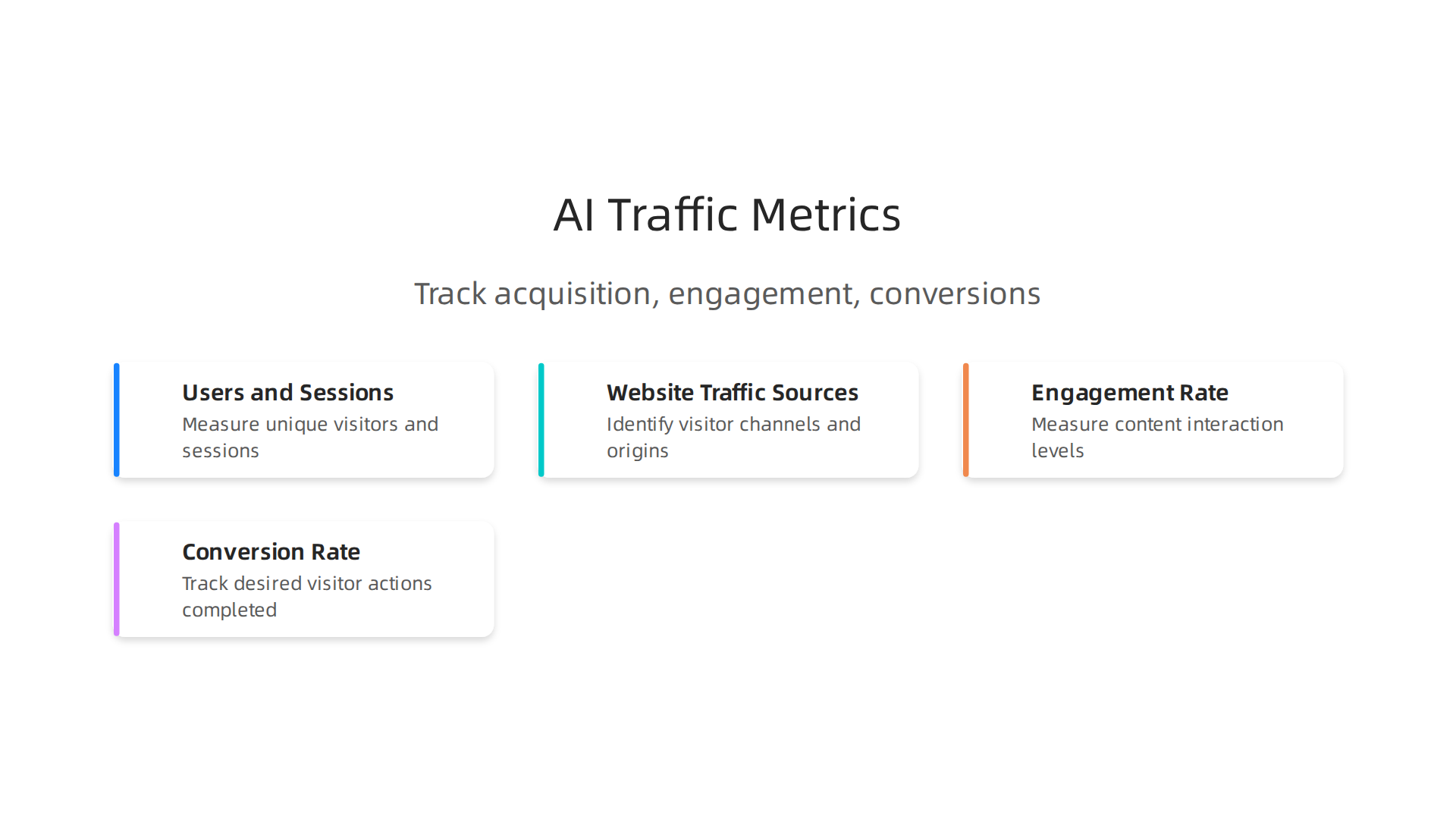
- Users and Sessions: "Users" tell you how many different people visit your site. "Sessions" count how many times people visit. One user can have many sessions. These help you see if more unique people are finding you.
- Website Traffic Sources: Where are your visitors coming from? Is it Google search, social media, or other websites? Knowing this helps you understand which parts of your AI strategy (like AI for SEO or AI for social media content) are bringing in the most valuable visitors. For example, AI can help suggest content that performs well on certain social platforms.
- Engagement Rate and Time on Page: These show how much people like your content. If visitors spend a long time on your pages or look at many pages, they are likely finding value. This is a key metric that many modern AI tools, like those offered by virtual assistant companies, aim to boost through better content recommendations or personalized experiences.
- Conversion Rate: This is super important. It tells you how many visitors do what you want them to do, like signing up for a newsletter or buying something. AI can help here by making product suggestions or improving how your website guides users to these actions.
To get trustworthy signals from your AI experiments, you need to set up your data tracking correctly. This is called "instrumentation basics." It means making sure that every important part of your website has tracking tools installed. Google Analytics 4 (GA4) is a popular tool for this, allowing you to track how users act on your site in a way that respects their privacy. By linking it with tools like Google Search Console, you can get a full picture of both how people find your site and what they do once they arrive. Properly setting up these tools is the first step to knowing what works and what doesn’t. Many expert guides recommend focusing on acquisition, engagement, and conversion metrics to get a full view of your online success 10 Web Analytics Metrics and KPIs To Track in 2026.

AI can then take these raw numbers and give you deeper insights. Companies like Deepbrain AI and Otherhalf AI can use their smart programs to augment AI insights, looking for patterns that a human might miss. This helps you understand, for example, which AI-generated headlines lead to more clicks or which AI-powered chatbots keep visitors on your site longer. Choosing the right AI tools for developers can significantly boost productivity by streamlining data analysis and helping you act on these insights faster AI Productivity Tools for Developers. This way, your AI isn’t just a cool feature; it’s a direct helper for growing your website traffic.
Use AI to generate traffic-ready content: workflows and guardrails
We just talked about how AI helps you understand your website traffic numbers. Now, let’s look at how AI can actually help you make the content that brings people to your site. Creating good content that helps your website traffic grow can take a lot of time. This is where AI comes in handy. It can help you make content faster and smarter, but you still need to guide it and check its work.
Think of AI as a very fast assistant. It can help write ideas, outlines, or even first drafts for your blog posts, articles, or social media updates. Many people in 2026 use AI for these tasks. However, it’s very important to remember that AI is a tool, not a full replacement for a human writer or expert. You need to make sure the content is good, correct, and truly helpful to your readers.
Here’s how you can make a good workflow using AI for content:
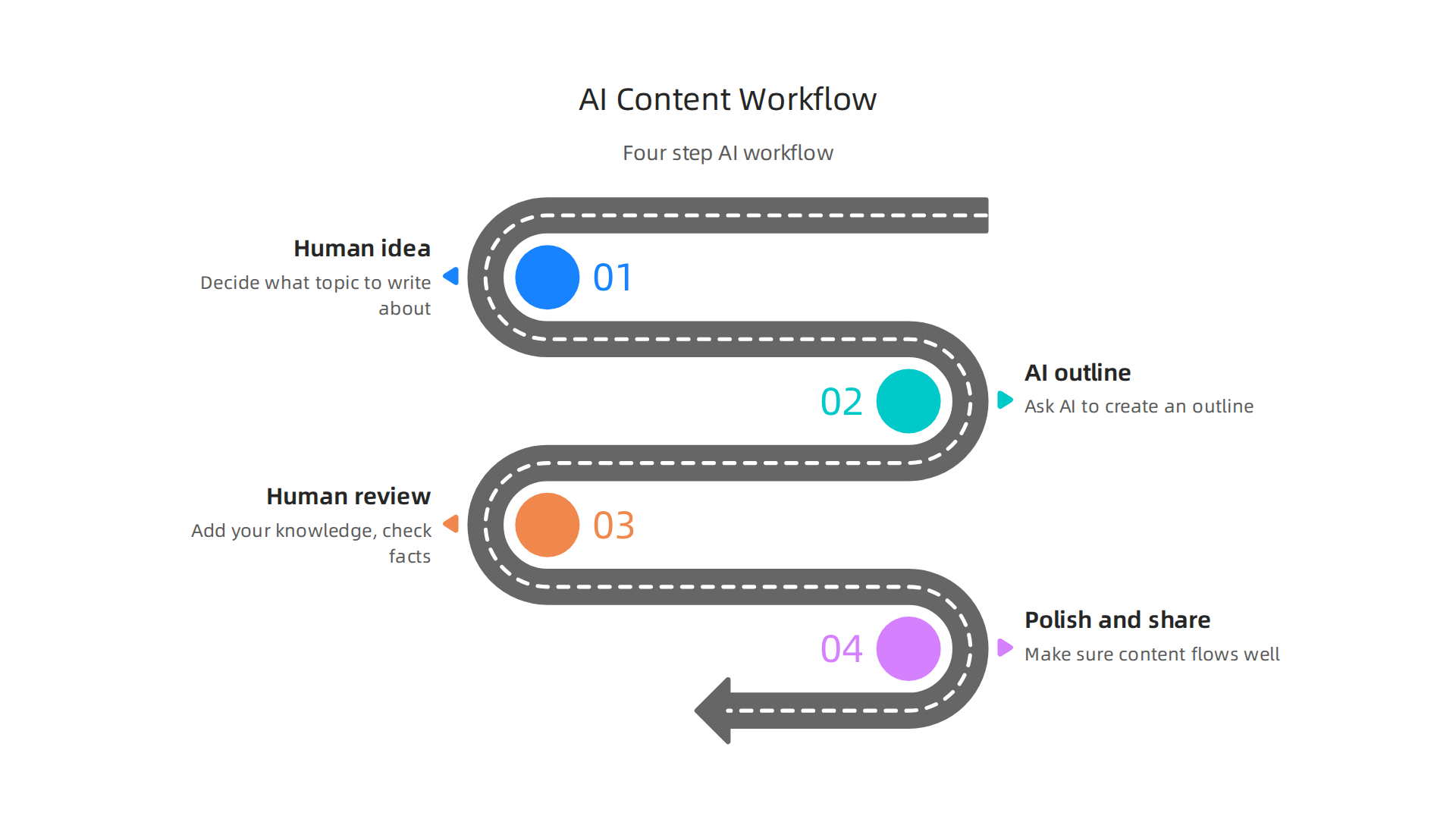
- Start with a human idea: You, the human, should decide what topic to write about and what your readers need to know. What questions do they ask? What problems do they have?
- AI helps with the first steps: You can ask AI to create an outline or a first draft. This saves a lot of time. For example, AI can help with keyword research and suggest ideas for blog posts that could bring in a lot of website traffic. Tools that use generative AI are great for getting these initial ideas out quickly generative ai tools for developers in 2026.
- Human experts make it great: After AI gives you a draft, a human needs to review it. This is super important. You should add your own knowledge, real-life examples, and check all the facts. In 2026, experts say the safest way to use AI for content is to use it for research and first drafts, then add human expertise before publishing AI-Generated Content and SEO in 2026: Updated Rules.
This ensures your content is original and truly valuable.
4. Polish and share: Make sure the content flows well, sounds natural, and is easy to read. Add pictures or videos if needed. Then, share it where your audience hangs out to get that website traffic flowing.
To make sure your AI-powered content helps your website traffic and doesn’t hurt your standing with search engines like Google, you need "guardrails."
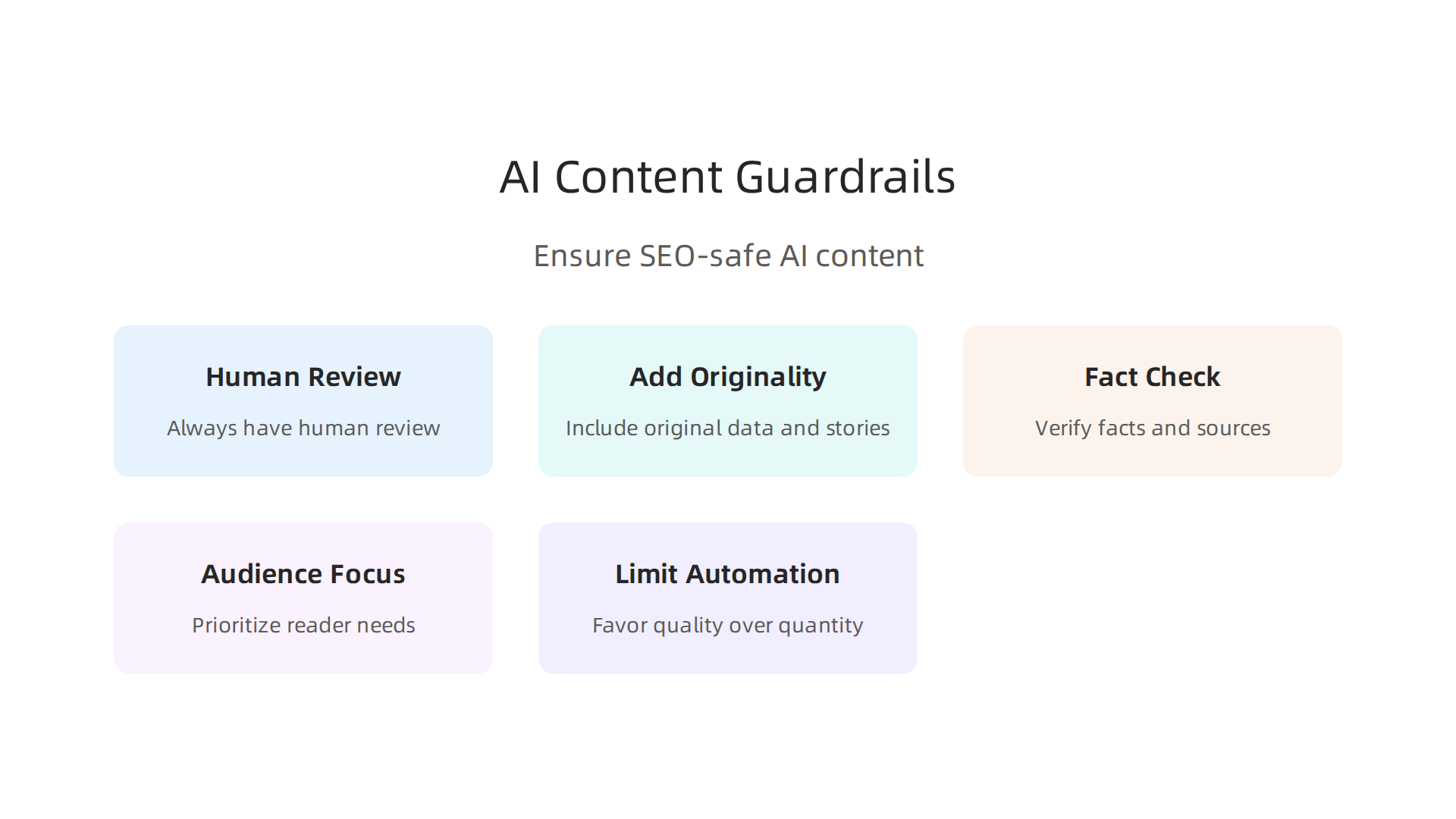
These are rules to keep things safe and high-quality. Google’s rules in 2026 reward content that shows real experience, expertise, authority, and trustworthiness.
- Human Touch is Key: Always have a human look at and improve what the AI makes. This means checking for mistakes, making sure facts are correct, and adding a unique human touch AI Content and SEO: Will It Hurt Your Rankings in 2026?.
- Add Original Stuff: AI might give you common information. Your job is to add something new. This could be your own data, personal stories, or special photos. This makes your content stand out and truly helpful. This is what Google likes to see, according to new rules in 2026 AI-Generated Content & SEO: What Google Actually Thinks in 2026.
- Fact-Check Everything: AI can sometimes make up facts. So, always double-check any numbers, names, or claims. It’s like having a virtual assistant who needs careful guidance.
- Focus on the Reader: Make sure the content answers your reader’s questions and gives them what they are looking for. Don’t just make content to make content. High-quality content helps you build trust and brings more website traffic.
- Avoid Over-Automation: While AI can do a lot, don’t just put out tons of AI-generated content without careful review. Quality over quantity is still the rule for getting good website traffic.
By using AI wisely, with a clear human hand in the process, you can create great content that brings more people to your site and helps your business grow. Staying up-to-date on the latest AI practices helps you work smarter.
Get clear daily AI updates from The AI Newsletter Worth Reading.
Now that you know how AI helps create great content, let’s talk about what happens when people actually visit your site. Getting people to your website is one thing. Getting them to stay, explore, and come back again is another. This is where AI-driven search and discovery can really boost your website traffic by making their visit more personal and helpful.
Think about your favorite online store or streaming service. How do they know what you might like next? It’s often AI at work. On your own website, AI can make your search bar much smarter. Instead of just matching exact words, AI can understand what a user really means or wants. This means when someone searches, they get much better, more useful results, even if they don’t use the perfect keywords. This helps people find what they need faster, leading to deeper visits and more pages viewed. Companies often use advanced AI like DeepBrain AI solutions to augment AI capabilities in their on-site search functions, helping to convert a simple visit into a richer experience.
AI also shines with personalized discovery. This means showing visitors content or products they might like, even if they haven’t searched for them. AI looks at what a person has clicked on before, what other similar visitors looked at, and what’s popular right now. Then, it offers suggestions.

This kind of smart recommendation keeps people engaged and makes them more likely to explore more of your site. When people have a good experience and find things they like easily, they are much more likely to return, building loyal website traffic. Some newer tools like Otherhalf AI focus on helping businesses create these tailored user experiences.
So, how do you know if these AI tools are actually working to bring more website traffic and repeat visits? It’s all about looking at the numbers and doing smart tests. You can measure things like:
- Time on site: Are people spending more time on your pages after you improve search and recommendations?
- Pages per visit: Are they looking at more pages in one go?
- Return visits: Are the same people coming back to your site more often?
- Conversions: Are more visitors signing up for your newsletter, buying a product, or reaching out to you?
You can also use A/B testing. This means showing half your visitors one version of your search or recommendation system and the other half a different version. Then, you see which one works better. For example, a 2026 analysis showed that AI-driven SEO campaigns could lead to a 45% increase in organic traffic and a 38% rise in e-commerce conversions when done right Ai Content Failure Modes To…. This kind of careful testing helps you refine your AI settings to get the best results.
By using AI to make your website’s search and discovery truly helpful and personal, you’re not just getting visitors. You’re turning them into regular users who enjoy their time on your site and keep coming back for more. This kind of thoughtful design helps your website traffic grow in a sustainable way, putting people first. For more on designing systems with people in mind, you can learn about AI for Humans: How to Design Systems That Put People First.
Making your website easy to use is great, but it also needs to be healthy behind the scenes. This is where technical SEO comes in. Technical SEO means making sure your website is set up correctly for search engines to find, read, and understand. Things like how fast your pages load, if all your links work, and if your site is easy to use on phones are all part of technical SEO. In 2026, AI is changing how we handle these important tasks, making them much faster and easier.
AI can automate many big jobs in technical SEO. Think about auditing your website. An audit checks everything to find problems. Doing this by hand can take ages for a large website. But AI tools can crawl your entire site quickly, like a super-fast spider. They find broken links, pages that load too slowly, and other issues that might hurt your website traffic and search rankings. For example, tools like DeepCrawl have become AI-driven platforms that automate these checks, making the process much more efficient Technical SEO Automation: 6 AI Tools Fixing Site Issues Automatically. AI makes these technical SEO audits much more efficient by automating complex tasks Top AI SEO Optimization Tools You Need to Try in 2025.
Not only can AI find problems, but it can also tell you which ones are most important to fix. It helps prioritize issues based on how much they impact your site’s performance and website traffic. This means your team can focus on the fixes that will make the biggest difference first. Some advanced AI agents can even go beyond just recommending fixes. They can actually deploy code-level changes directly to your website’s system in real time, like a super-smart helper that doesn’t just point out a leaky faucet but also tightens it for you 6 Best AI Agents for Technical SEO in 2026: Ranked & Reviewed.
Another helpful AI use is content pruning. Over time, websites can gather a lot of old, outdated, or low-quality content. This "extra" content can actually drag your site down in search results. AI can analyze all your pages and recommend which ones to update, combine, or even remove because they aren’t helping your website traffic anymore. This keeps your site lean, fresh, and focused on high-quality information.
Integrating these AI outputs into your engineering workflows means you can fix problems faster. When AI spots an issue, it can send alerts directly to the right developers. This helps augment AI capabilities with human expertise. Developers can then quickly address the problems, leading to measurable gains in site speed, user experience, and ultimately, more website traffic. Many tools are designed to help with this, from platforms for content operations to those for automated on-page fixes. To truly get the most out of these AI tools, it’s important for developers to understand how to choose the right ones for their needs. If you’re looking to boost your team’s output, consider learning more about choose the right AI tools for developers.
This blend of AI automation and human action ensures that your website stays in top shape, ready to welcome visitors and keep them coming back.
Want to stay on top of the latest AI trends for developers?
Get clear daily AI updates from The Deep View Newsletter.
After making sure your website is healthy and easy for search engines to find, the next step is bringing visitors to it. This is where paid advertising comes in, and AI is changing how we manage these campaigns to get more website traffic.
AI helps a lot in paid advertising, like when you pay to show ads on Google or social media. It adds value across the whole campaign process.
Smart Bidding for Better Ads
One big way AI helps is with bidding. When you run ads, you bid money to show your ad to people. AI can look at huge amounts of data. It learns what times are best to show an ad, which people are most likely to click, and even what price makes the most sense to bid. This is called predictive bidding. For example, in 2026, many experts say that most paid media budgets should go towards AI-driven bidding on platforms like Google Ads Performance Max and Meta Advantage+ because manual bidding is just not as good anymore 2026 Paid Media: AI, First-Party Data & ROI.
By doing this, AI makes sure your money is spent wisely to bring in more website traffic and better results. It means your ads get seen by the right people at the right time.
Creating and Testing Ads with AI
AI also helps with the ads themselves, called creatives. Imagine you have a few ideas for an ad image or text. AI can quickly make many different versions of these ads. Then, it tests them all at once to see which ones people like best and click on most often. This is creative A/B testing. Actually, AI-generated creative can often get about 12% more clicks than ads made by only humans How AI Is Changing Paid Advertising in 2026. This saves a lot of time and helps you quickly find the ads that bring in the most website traffic. With AI, the quality of your ad designs becomes super important for how well your campaigns do.
Personalizing Landing Pages
After someone clicks your ad, they land on a page on your website. AI can make these landing pages smarter. It can change parts of the page to match what the person was looking for in the ad or who that person is. This is called dynamic landing page tailoring. For example, if someone clicked an ad about "red shoes," the landing page could automatically show more red shoes, making it feel more personal. This makes visitors more likely to stay on your site or buy something, which boosts your overall website traffic and sales. Businesses need to improve how relevant their landing pages are to compete well today Paid Media in 2026 | Why Automation Works Only With Strategy.
Connecting AI to Your Ad Systems
For all these AI helpers to work well, they need to be connected to your ad platforms and your tools that measure success. This means the smart guesses AI makes about bids, the best-performing ads it finds, and the changes it suggests for landing pages are all sent directly to places like Google Ads or Meta. It also connects to your tracking tools so you can see exactly how well your ads are doing. This setup helps augment AI with your team’s knowledge. It’s important to have good systems in place to make sure the AI’s ideas flow smoothly into your actual ad campaigns, letting you track things like website traffic and other important metrics. To make your workflow even smoother, you might want to learn about generative AI tools for developers in 2026 boost productivity with real results. This teamwork between AI and humans helps you get the most out of every ad dollar.
Once you have AI helping with your ads and connected to your systems, the next big step is to make sure it’s working well and can grow with your business. This means running tests carefully, setting up clear rules, and building strong systems to manage everything.
Trying Out AI: Trustworthy Experiments
Before letting AI take over all your ad campaigns, it’s smart to test it out in small ways, like a pilot program. Think of it like a scientist trying a new idea. You need to plan your test, decide what you want to measure, and have ways to check if the AI is doing what you expect. For example, you should have rules about how well an AI model must perform before it can be used widely. It’s also wise to test new AI tools side-by-side with older methods to see which works better, often called "shadow deployment" MLOps in 2026: Best Practices for Scalable ML Deployment. This helps you confirm that the AI actually improves your website traffic and other goals without causing problems. It’s also important to consider if the AI has any unfair biases before using it.
Making Rules for AI: Governance
As AI becomes a bigger part of how you get website traffic, you need clear rules. This is called AI governance. It’s about setting up who is in charge of the AI models, how they are checked, and what steps are needed before they go live. In 2026, many companies are creating special committees and clear approval processes for AI projects AI Governance: 10 Best Practices for 2026.
Good governance also means:
- Clear Ownership: Knowing who is responsible for each AI model, from building it to watching it work.
- Documentation: Keeping good notes on what each AI model does, where its information comes from, and what its limits are. This is often done using "model cards" AI Governance Best Practices: Frameworks & Principles.
- Checking for Fairness: Making sure the AI doesn’t unfairly target or exclude certain groups of people, which could hurt your brand and
website traffic. - Monitoring: Continuously watching how the AI performs after it’s launched to make sure it keeps working correctly.
This helps you augment AI with human oversight, ensuring it’s used safely and ethically. It also helps avoid common issues that stop AI projects from succeeding, like not having enough buy-in from different teams Best practices for AI rollout blockers in 2026.
Growing Your AI Use: From Pilot to Platform
Once you’ve run successful experiments and have governance in place, you can start to expand. This means taking those successful small AI projects and turning them into bigger systems or "platforms" that everyone in the company can use. For example, if a specific AI tool greatly improved one ad campaign’s website traffic, you might then make that tool available for all ad teams to use. This often involves:
- Standardizing Tools: Using the same tools and processes across different teams.
- Automating Tasks: Setting up automatic ways for AI models to update and improve themselves.
- Shared Knowledge: Creating ways for teams to learn from each other’s AI successes and challenges.
This scaling process can involve using powerful systems like those offered by Vast AI GPU power and R technology for AI projects 2026 to handle the increased demand.
Who Does What: The Organizational Playbook
For AI to work well across a company, everyone needs to know their role. In engineering and marketing teams, this might look like:
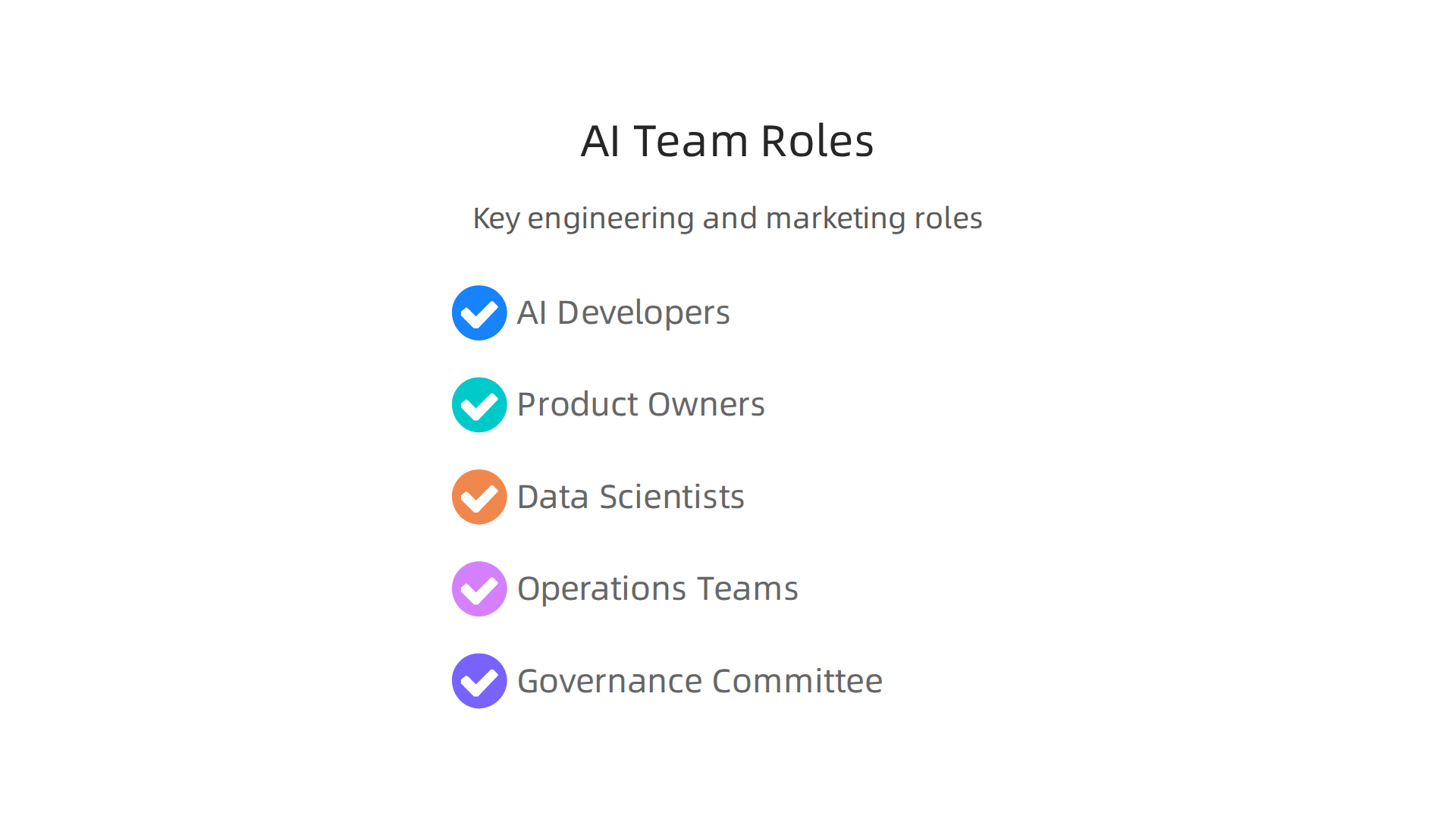
- AI Developers/Engineers: They build and fine-tune the AI models. They make sure the models are efficient and work correctly.
- Product Owners/Managers: They decide what problems the AI should solve and how it fits into the business goals, such as increasing
website traffic. - Data Scientists: They prepare the data for the AI, analyze its performance, and help ensure fairness.
- Operations Teams (MLOps): They are responsible for getting the AI models ready for use and keeping them running smoothly once they are live. This means setting up automated systems for deployment and monitoring.
- Governance Committee: A group of people who make sure all AI projects follow company rules and ethics.
Working together, these teams ensure that AI helps the business grow responsibly. For more insights on how to stay updated in the fast-paced world of AI, you might find The AI Newsletter Worth Reading very helpful.
Summary
This article explains how teams can turn modern AI capabilities into measurable website traffic growth by focusing on the right metrics, workflows, and governance. It covers which KPIs to track (users, traffic sources, engagement, conversions), how to instrument analytics like GA4 properly, and how AI can speed up content creation while requiring human review and guardrails. You’ll learn practical workflows to generate traffic-ready content, improve on-site search and personalized discovery, and automate technical SEO audits and priority fixes. The guide also shows how AI transforms paid advertising—smart bidding, creative testing, and dynamic landing pages—and explains how to run trustworthy experiments, build governance, and scale AI across teams. By following these steps you’ll be able to choose appropriate tools, measure impact, avoid common failure modes, and make AI a reliable driver of sustained website traffic.