
AI-Powered Learning Platform Elevates Developer Skills for 2026
Overview
The world of technology moves super fast, especially with all the new AI tools coming out in 2026. For people who build software, known as developers, it feels like there’s always something new to learn. Staying good at their job means always adding new skills.

In fact, more than 75% of developers are already using AI tools to help them code in 2026, and many companies have a median AI adoption rate of 71% across their engineering teams. This quick change means developers need to learn new things all the time to keep up.
This is where an AI-powered learning platform becomes really important. Imagine a school that knows exactly what you need to learn next. That is what an AI powered learning platform does for developers. It uses smart computer programs to offer lessons that are just right for each person. This means developers get training that fits their exact needs and learning style. They can learn when it works best for them, whether it’s quickly brushing up on a skill or diving deep into advanced topics.
These platforms help developer teams in big ways. They make sure everyone on the team has the right skills for today’s AI world. You can find everything from quick, free AI certification courses to help you get a new badge, to more in-depth learning paths that might be like getting online master’s programs for new skills. Such learning tools allow engineers to gain skills on demand, making them more productive and ready for future challenges. This personalized learning approach is key to keeping developers at the top of their game. To keep up with all the daily AI changes, consider a reliable source for updates.
Get clear daily AI updates from The AI Newsletter Worth Reading.
What is an AI-Powered Learning Platform?
An AI-powered learning platform is much more than a regular online course website. Think of it like a smart teacher that knows exactly what you need to learn and how you learn best. It uses artificial intelligence to make your learning journey truly personal. This means it’s not a one-size-fits-all approach; it changes to fit you.
Here’s how an AI-powered learning platform works:
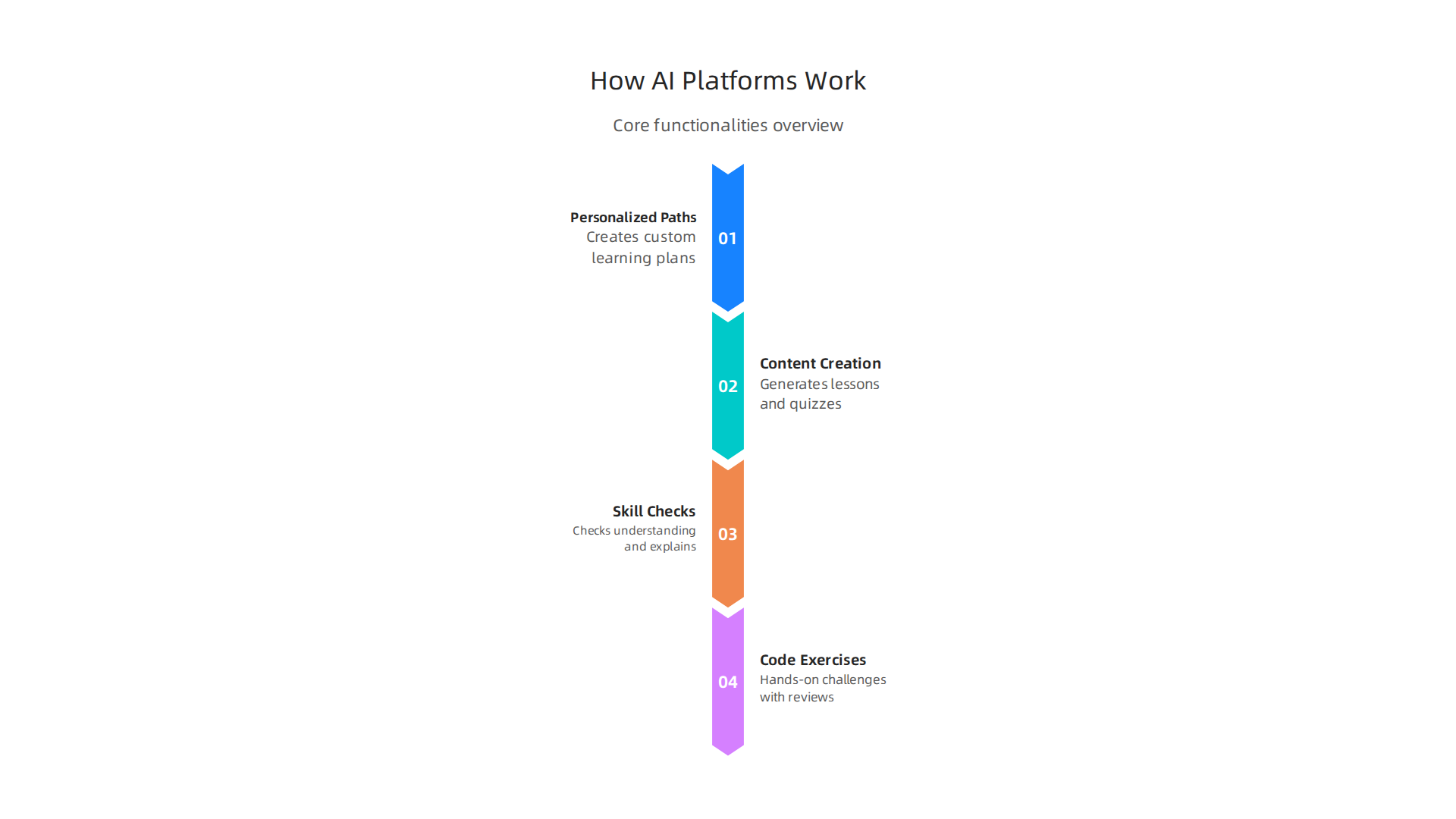
- Personalized Learning Paths: First, the AI looks at what you already know and what you’re good at. It also finds out where you need to improve. Then, it creates a special learning plan just for you. It’s like having a custom map to guide you through new skills, making sure you learn in the most effective way possible.
- Smart Content Creation: These platforms can even make new lessons, quizzes, and practice problems on their own. For example, if you’re struggling with a certain coding concept, the AI can generate extra exercises or explanations. Actually, in 2026, many learning and development teams are using AI for things like voice generation and drafting content and quizzes for their programs, showing how useful this is for creating new materials quickly

AI in Learning & Development Report 2026.
- Skill Checks and Feedback: As you learn, the platform constantly checks your understanding. It can tell you not just if an answer is right or wrong, but also why. This instant feedback helps you fix mistakes right away and understand topics better.
- Code-Focused Exercises: For developers, this is super important. An AI-powered learning platform offers hands-on coding challenges. It can review your code, point out errors, and even suggest better ways to write it. This means you get real practice with the tools and languages you use every day.
So, how is this different from old ways of learning? Traditional learning systems (LMS) and vendor training usually give everyone the same set of videos, documents, or tests. They don’t adapt. They’re like a general textbook for everyone in the class.
But an AI-powered learning platform is different. It’s an active coach that listens, watches, and guides you. It doesn’t just show you information; it helps you interact with it and makes sure you really get it. This kind of platform helps you quickly choose the right computer technology courses to build your skills and stay ahead in the fast-changing world of tech. It’s all about making sure developers have the right skills for today’s jobs and for what’s coming next.
Key features and capabilities to evaluate
To pick the best AI-powered learning platform that truly helps developers grow, you need to know what features are most important. It’s not enough for a platform to just say it uses AI; it needs to have specific tools that make learning better and faster. Here are the key things to look for when evaluating an AI-powered learning platform:
-
Smart Personalization Algorithms
This is about how well the platform learns about you. A top ai-powered learning platform uses smart rules to figure out your strengths, weaknesses, and even your learning style. It then changes the lessons, tasks, and quizzes just for you. This means you don’t waste time on things you already know or struggle too long with topics you don’t. For developers, this leads to faster skill building and more enjoyable learning. -
Hands-on Code Sandboxing
Developers learn by doing.

A great platform must offer a safe place to write and test code without messing up real projects. This is called a code sandbox. It lets you practice new coding concepts, solve problems, and experiment freely. This hands-on practice is key for turning knowledge into real skills, especially when learning new AI developer tools or taking free AI certification courses. Actually, integrating AI tools directly into workflows, like using GitHub Copilot, is a big part of how developers stay productive in 2026
How to Keep Up with AI as a Developer in 2026.
-
Quality of Feedback and Review
When you make a mistake, you need to know why. A strong platform gives you clear, helpful feedback right away. It should not just say "wrong answer" but explain what went wrong and how to fix it. For code, this means the AI can review your work, suggest better ways to write code, and point out possible errors. This kind of detailed feedback helps developers learn more effectively and debug faster AI-Powered Dev Workflows: How SWEs Are Shipping Faster in 2026. -
Smooth Integrations (SSO, SCORM, LTI)
For companies, it’s important that a new learning platform works well with existing systems. Look for platforms that can easily connect with your company’s login system (SSO), so employees don’t need new passwords. Also, check for SCORM or LTI support. These are like universal plugs that let learning content and data be shared between different systems. This makes the platform easy to adopt and manage within a larger organization. -
Observability and Analytics
How do you know if the learning is actually working? Good platforms offer ways to see progress. This includes dashboards and reports that show how much someone has learned, how long they spent, and what skills they’ve gained. For managers, this "observability" helps track team development and shows the value of the platform. Tracking productivity is also a key practice when using AI in software development workflows in 2026 AI-Driven Development Workflows: Complete 2026 Guide.
Choosing an ai powered learning platform with these features ensures that you or your team get the most out of AI-driven education. It helps build the right skills efficiently.
To stay on top of the rapidly changing world of AI and technology, consider subscribing to our recommended newsletter.
The AI Newsletter Worth Reading
How AI platforms improve developer skill development (learning science + personalization)
Now, let’s look at how AI makes learning better for developers. It’s like having a very smart tutor who knows exactly what you need. This is all thanks to special ways AI personalizes learning, which means it makes the learning path fit just for you.
Smart Ways AI Personalizes Learning
An effective ai-powered learning platform uses a few clever tricks to help developers grow their skills faster:
- Finding Out What You Know (Diagnostic Assessments): First, the platform might give you a quick test to see what you already know and what you don’t. Think of it as a helpful check-up. This helps the AI understand your starting point.
- Tracking Your Skills (Skill Modeling): As you learn, the AI platform keeps a close eye on your progress. It learns what topics you pick up quickly and where you might need more help. This creates a "skill model" of you, showing your strengths and weaknesses in different coding or AI areas.
- Changing Lessons Just for You (Adaptive Learning Paths): Based on what it learns about you, the AI changes the lessons. If you’re really good at Python, it might give you harder Python challenges. If you’re new to machine learning, it will offer easier steps and more practice. This way, you always get content that’s just right for your level.
This kind of personalized teaching is a big deal. It means less time spent on things you already understand and more focus on what will help you grow. It’s why many developers looking for online master’s programs or free AI certification courses are turning to AI tools.
Why Personalized Learning Works So Well
When learning is personalized, it’s simply more efficient. Here’s why:
- Faster Skill Building: Developers learn best by doing. With personalized practice, you get to work on problems that challenge you just enough, not too little and not too much. This helps you gain new skills much quicker. In fact, reports show that 86% of students used AI during the 2024-2025 school year, showing how widely it is helping people learn 25 AI in Education Statistics to Guide Your Learning.
- Better Understanding: When an ai powered learning platform gives you feedback that’s tailored to your mistakes, you learn deeply. You understand why something was wrong and how to fix it, rather than just knowing that it was wrong. This detailed feedback makes sure your understanding sticks.
- Staying Motivated: It’s easier to stay focused when you’re not bored or frustrated. A personalized path keeps you engaged because the content is always relevant and at the right difficulty level.
By using these smart, personalized methods, an AI-powered learning platform can really boost a developer’s learning journey in 2026. It helps them master new technologies and keep their skills sharp in the fast-changing world of AI.
Bringing AI-powered learning into a developer’s daily work means making it super easy to use. It’s not just about having smart lessons, but about making those lessons fit right into the tools and steps developers already use. This way, learning feels like a natural part of working, not an extra chore.
How AI Learning Platforms Fit into Daily Work
An effective ai-powered learning platform can be woven into many parts of a developer’s routine. Here’s how it can happen in 2026:
- Plugins for Your Code Editor (IDE Plugins): Imagine writing code and getting helpful tips or short lessons right inside your code editor. AI tools can be added as plugins to popular Integrated Development Environments (IDEs). These plugins can offer suggestions or explain new code patterns as you type, acting like a smart assistant that helps you learn on the go. This means developers can learn new things and fix issues faster, which helps them ship code quicker and improves workflows AI-Powered Dev Workflows: How SWEs Are Shipping Faster in 2026.
- Automated Code Checks (CI/CD Integrations): When developers make changes to code, these changes often go through automated checks. An AI learning platform can be part of this process, known as Continuous Integration/Continuous Deployment (CI/CD). It can give feedback not just on if the code works, but also on how to write better, more modern code, turning every code review into a learning chance. For example, AI can perform checks before code is even committed to the main project AI Developer Tools 2026: Complete Guide to Workflow.
- Helping New Team Members (Onboarding Flows): When a new developer joins a team, an AI learning platform can make their start much smoother. It can offer personalized lessons on the company’s specific tools, code, and ways of working. This helps new team members get up to speed much faster without needing constant help from other busy developers.
- Connecting with Company Systems (LMS/HRIS Connectors): Many companies use systems to manage learning (LMS) or human resources (HRIS). An ai powered learning platform can link up with these. This allows the company to see what skills its developers are gaining and to plan training better.
Making AI Learning Easy to Use
Getting developers to actually use new tools is key. Here are some smart ways to help them use an AI-powered learning platform:
- Small, Quick Lessons (Microlearning): Developers are busy. They don’t always have hours for training. An AI platform can offer short, focused lessons that take just a few minutes. These "micro-lessons" can teach a specific trick or solve a small problem, making learning easy to fit into a busy day.
- Learning Just When You Need It (Just-in-Time Training): Why learn about something you won’t use for months? AI can deliver training right when a developer needs it. For instance, if a developer is stuck on a certain coding challenge, the AI can pop up with a relevant lesson or solution right then and there. This makes learning much more useful and memorable.
- Start Small, Grow Big: It’s often best to try new tools with a small group first. Let a few developers test the AI learning platform, get their feedback, and make changes. This way, the platform can be made better before everyone starts using it, leading to happier users and better results. Starting with a single, clear use case that solves a real problem developers face is a good approach AI in Software Development in 2026: Data, Tools & Risks.
By carefully bringing an AI learning platform into a developer’s world, companies can help their teams stay sharp, learn new things, and build amazing software more efficiently.
For more daily updates and insights on the fast-changing world of AI and technology, make sure to read The AI Newsletter Worth Reading.
To know if an ai-powered learning platform is truly helping teams, we need to look at how it changes things. It’s about seeing real results. This means we must measure the impact, find the return on investment (ROI), and even try out small experiments.
Measuring impact: metrics, ROI, and experiments
To see if an AI learning tool is working well, companies keep an eye on certain numbers. These numbers are called Key Performance Indicators, or KPIs. They help show if developers are learning faster and working better.
Here are some important numbers to watch:
- Time-to-Productivity: This looks at how quickly new developers can start doing useful work. If an AI-powered learning platform helps them learn faster, they will become productive sooner.
- Defect Rates: This measures how many bugs or errors are found in the code. If developers are learning better practices through AI, there should be fewer mistakes.
- Pull Request (PR) Review Times: When developers finish a piece of code, others review it. AI can help here too. Faster review times mean teams are working together more smoothly and quality might be going up.
- Retention of Skills: This checks if developers remember and use the new skills they learned over time. The goal is for the learning to stick.
- Usage Metrics: It’s simple: are developers actually using the learning platform? How often? What lessons do they take? More use usually means more learning.
When we talk about how much money a company gets back for what it spends on a learning platform, we call that Return on Investment (ROI). Reports from 2026 show that companies can see a good return on investment from AI tools. Some companies using enterprise AI coding tools have reported over 300% ROI in three years Enterprise AI Coding Tools ROI: 2026 Case Studies & Metrics. Other studies in 2026 suggest that disciplined teams can see their investment grow by 2.5 to 3.5 times if they use AI wisely AI-native engineering ROI: 2026 numbers. For learning platforms specifically, organizations that use AI can see a higher ROI because training becomes more efficient Top 10 AI-Powered Learning Experience Platforms in 2026. However, it’s also worth noting that some real-world reports suggest that actual productivity gains might be a bit lower than what tool makers claim, sometimes around 0.3 to 1 times the improvement The Real ROI of AI Tools for Engineering Teams (50+ Stats).
To truly link the ai powered learning platform to these results, companies can do simple experiments. For example, they can compare a group of developers using the AI platform with a group not using it. This helps see if the platform is the real reason for better numbers.

Tracking progress over time, before and after using the platform, also shows how things change. By carefully looking at these numbers and running tests, companies can make sure their investment in an AI learning platform is really paying off and helping their teams grow.
While looking at the money side of things is important, there’s another very big topic that companies must think about when using an ai-powered learning platform: security, privacy, and following the rules. It’s about keeping company secrets safe, protecting employee information, and making sure everything is done by the book.
Security, privacy, and compliance considerations
Using AI tools, especially for learning and training, comes with its own set of risks. Companies need to be careful with how data is used and stored. If they don’t, it can lead to big problems.
Here are some key risks:
- Sensitive Code Exposure: When developers use an AI learning tool, they might put their company’s secret code or private information into it. This code could then be seen by the AI model or, worse, by others. This is a real risk in 2026, and companies need to be careful with their "high-risk" AI systems AI Risk & Compliance in 2026.
- Personal Information (PII) in Training Data: Sometimes, learning platforms might use personal details from employees to train the AI. This could include names, email addresses, or other private data. Laws like California’s Delete Act in 2026 say people have the right to ask for their data to be removed, so companies need a plan for this Top 10 AI Security Platforms In 2026.
- Telemetry Collection: AI platforms often collect information about how users interact with them. This is called telemetry. While it helps improve the platform, companies must know what data is being collected and how it’s used.
- Third-Party Model Usage: Many AI learning platforms use AI models made by other companies. When you use these, you’re trusting another company with your data. This means understanding their security and privacy rules is very important.
Luckily, there are good ways to keep things safe:
- Data Minimization and Access Controls: Companies should only let the AI see the smallest amount of data needed. Also, only certain people should be able to look at or change sensitive information. Tools like authenticated access and strict control policies are key AI Regulation 2026.
- Model Vetting and Auditability: It’s smart to check AI models to make sure they are fair, accurate, and secure. Companies also need to know where all the learning content comes from and who approved it. This helps with showing that rules are being followed AI course creation platforms in 2026.
- Contractual Protections: When working with other companies for AI tools, make sure your contracts clearly state how your data will be protected.
- Following the Rules: There are many rules and laws about AI and data privacy. In 2026, these include big ones like the EU AI Act, which means companies must be clear when users are interacting with AI systems and ensure accuracy EU AI Act And Corporate Learning. Other important rules like SOC 2, HIPAA, GDPR, and ISO 27001 also apply to how learning platforms handle data Choosing AI-Powered Security Awareness Training in 2026. Ensuring your chosen ai powered learning platform meets these standards is a must for 2026.
Staying informed about the fast-changing world of AI is crucial.
Keep up with the latest in AI and technology by subscribing to The AI Newsletter Worth Reading for clear daily updates from The Deep View Newsletter.
Choosing an ai-powered learning platform for your team is a big decision. After thinking about how to keep your data safe, the next step is to pick the tool that best fits your team’s needs. It’s like finding the right puzzle piece for your company.
To make a smart choice, you need a clear plan.

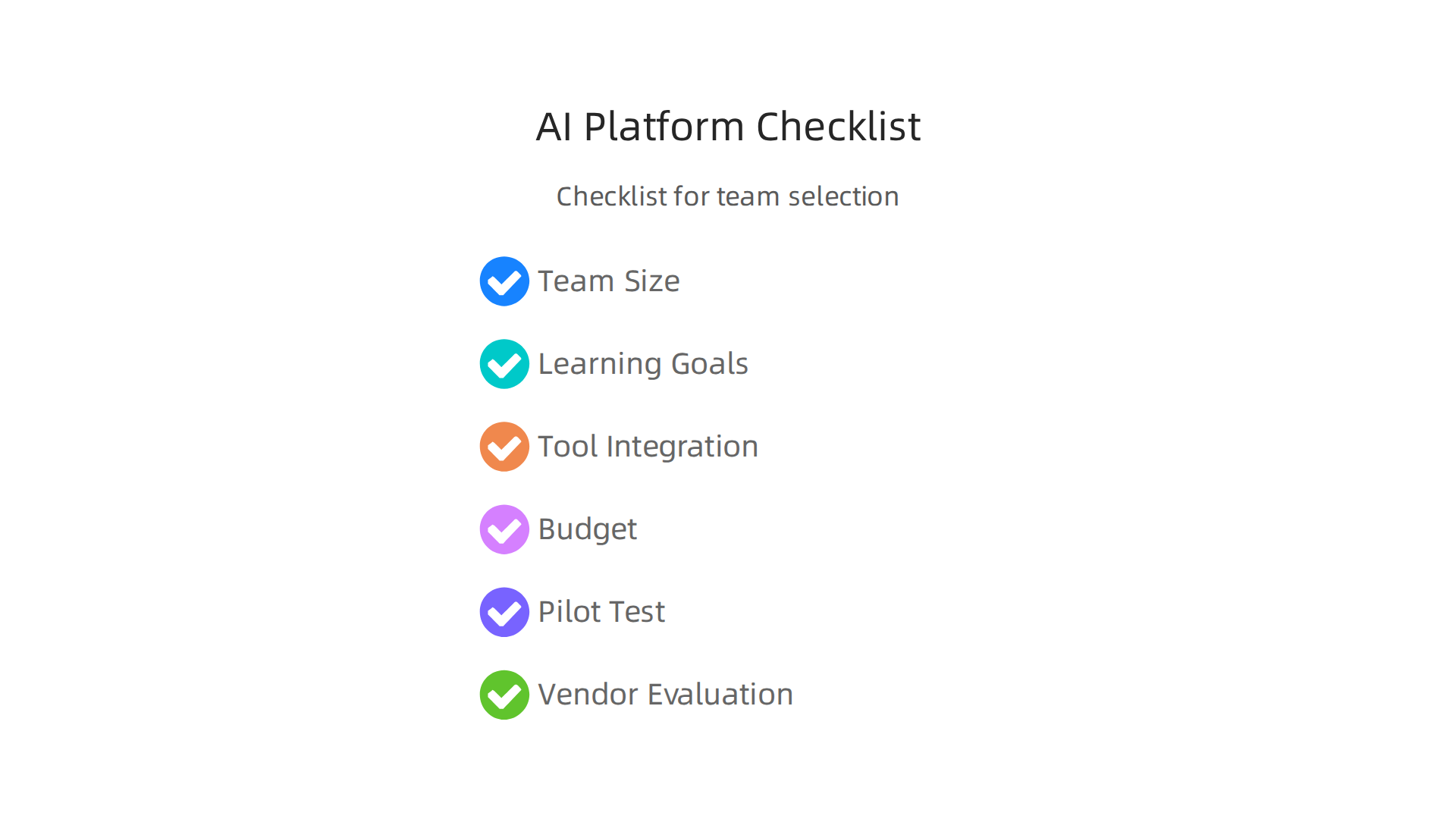
Here’s a simple checklist to help you decide:
Your Team’s Needs
- Team Size: How many people will use the platform?
- Small teams might do well with simpler, ready-to-use platforms.
- Big teams need platforms that can grow with them and handle many users at once.
- What You Want to Learn: What are your main goals?
- Do you need quick lessons for new skills?
- Are you looking for deep learning like online master’s programs or ways to get free ai certification courses?
- The best ai powered learning platform will help you reach these goals.
How it Fits with Other Tools
- Easy to Use: Can the new platform work well with the tools you already have? This is called "integration." You want it to be smooth, not a hassle.
- Where Your Data Lives: Make sure it can connect to your company’s data in a safe way.
Your Budget
- Cost vs. Value: How much can you spend? Remember, a good AI learning platform can save money in the long run by making your team more productive. Studies show that focusing on certain activities with AI can bring a good return on investment (ROI) within a year How to maximize AI ROI in 2026.
- Hidden Costs: Look for any extra costs for support, updates, or more users.
Trying Before You Buy: A Pilot Plan
Before you commit to a platform, it’s a great idea to test it out. This is called a "pilot plan."
- Pick a Small Group: Choose a few team members to try the platform first.
- Set Clear Goals: What do you want this small group to achieve with the platform? For example, faster coding or better problem-solving skills.
- Collect Feedback: Ask the pilot group what they liked, what was hard, and what could be better.
Evaluating Vendors
When you’re looking at different companies that offer AI learning platforms, it’s helpful to have a "rubric" or checklist. This helps you compare them fairly. Many helpful guides exist, covering things like how the vendor handles your data, their security, and how their AI models actually work AI Vendor Evaluation Checklist & Comparison Criteria.
Here are some key things to check, as suggested by experts in 2026:
- Does it solve your specific problem? Make sure the platform truly helps with the tasks you need done.
- How does it compare to others? See how it measures up against other choices in key areas.
- Can it handle your data types and languages? It needs to work with what your team uses every day.
- Is there a free trial? This lets you test it without spending money.
By following these steps and checking each box, you can pick an ai-powered learning platform that truly helps your team grow and succeed. Remember, the goal is to find a tool that brings real value and fits smoothly into how your team works.
Summary
AI-powered learning platforms give developers a personalized, hands-on way to keep skills current in the fast-moving 2026 tech landscape. This article explains what these platforms are, how they use diagnostics, skill models, and adaptive content to create individualized learning paths, and why code sandboxes and quality feedback matter for practical skill building. It outlines the key features to evaluate — from personalization algorithms and IDE or CI/CD integrations to observability and SSO — so teams can pick tools that actually improve productivity. The piece also covers how to embed learning into daily work with microlearning, just-in-time lessons, and editor plugins, and it shows how to measure success through metrics like time-to-productivity, defect rates, and PR review times. Security, privacy, and regulatory requirements receive practical attention, including data minimization, model vetting, and contractual protections. Finally, readers get a step-by-step approach to piloting platforms, evaluating vendors, and estimating ROI so they can choose a solution that scales safely and delivers real value.