
Find the Best Free Courses for Developers in 2026
Overview
Why free courses still matter for developers in 2026
The world of technology changes very fast. For software developers and engineering teams, keeping up with new skills is a must.

Think about artificial intelligence (AI), cloud computing, and all the new tools that come out every day. It’s like trying to hit a moving target, and it can cost a lot of money and time to train everyone.
Many companies and developers look for ways to learn new things without spending a fortune. This is where online courses free options become super important. In 2026, these free options are not just a nice-to-have. They are key for continuous online learning and for closing skill gaps.

For example, to become a better software engineer, you might need new AI skills.
This guide will help you find proven free learning choices. We will also explain how to look at these courses to make sure they are good for you and your team. We will even show you how to make a learning plan you can use. Looking at things like Course assessment for skill transfer: A framework for evaluating skill transfer in online courses can help you choose wisely.
Picking the right free course means knowing what skills it truly teaches. It’s not just about getting an online certificate program, but about gaining real abilities that you can use on the job. You can also learn How to evaluate online learning platforms in 2026 to make sure they offer deep content and practical lessons. This is especially helpful when dealing with the fast growth of AI tools. For more ways to bridge the AI skills gap, check out resources on Coursera free online courses to close the AI skills gap in 2026.
To stay truly current with all the AI advancements impacting developers, you might want to consider The AI Newsletter Worth Reading. It provides clear daily AI updates to keep you in the know.
Now that we know free courses are important, how do we tell the good ones from the not-so-good ones?

It’s like picking out good fruit at the store; you need to know what to look for. When searching for online courses free, especially for software engineer training, you want to make sure you’re getting real value.
Key Quality Signals to Look For
To make sure an online course is worth your time, check for these good signs:
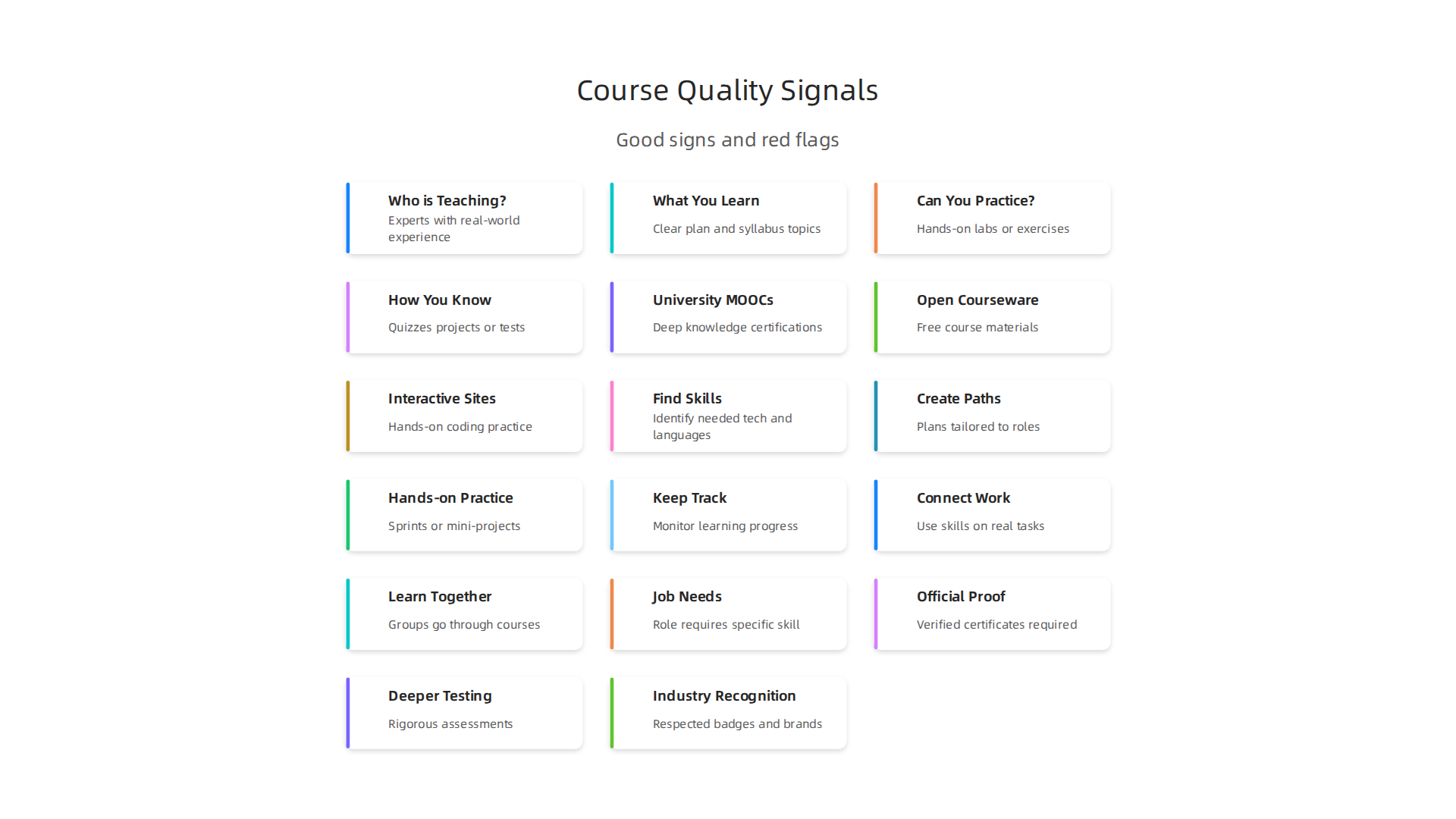
- Who is Teaching? Look at the teacher’s background. Are they experts in the field? Do they have real-world experience? A teacher who truly knows their stuff makes a big difference.
- What Will You Learn? A good course has a clear plan, called a syllabus. It tells you exactly what topics will be covered and what skills you should gain. If the syllabus is too vague, that’s a warning sign.
- Can You Practice? The best online learning includes "hands-on labs" or exercises. This means you get to try out what you learn, not just listen to someone talk about it. Practical experience is key for developers.
- How Do You Know You’ve Learned? Good courses have ways to check your understanding. This could be quizzes, small projects, or tests. Also, look for courses that ask you to build something real at the end. These "project-based deliverables" show you can use your new skills. For more help, you can use a Checklist for Evaluating Online Courses.
Red Flags to Watch Out For
Just as there are good signs, there are also things that tell you to be careful:
- Old Information: Technology changes fast. If a course uses old tools or talks about ideas from years ago, it might not be helpful in 2026. Look for courses that are updated often.
- Too Simple Content: Some courses just touch on topics without going deep. If the lessons feel too short or don’t give you enough detail, you might not learn what you need.
- No Practice: A big red flag is a lack of practical exercises. Just watching videos isn’t enough for software engineer training. You need to code, build, and fix things yourself.
- No Help or Community: What if you get stuck? Good online certificate programs often have forums or ways to ask questions and get help from teachers or other students. If there’s no way to get support, you might feel lost.
Finding quality online courses free is a great first step, but knowing where to look for them is just as important. Different platforms are good for different learning styles and goals. Let’s explore the top free options available in 2026 and what they are best suited for, whether you’re aiming for a strong understanding of big ideas, hands-on coding practice, or quick skill updates.
University MOOCs: Deep Learning and Certifications
Massive Open Online Courses, or MOOCs, are a popular way to get university-level education for free. Platforms like Coursera and edX partner with top schools to offer courses that cover subjects in great detail. Many of these allow you to "audit" the course for free, meaning you can access all the learning materials like videos and readings without paying. If you want a certificate to prove your learning, you might need to pay a small fee. These platforms are excellent for getting deep conceptual knowledge and can often lead to valuable online certificate programs if you decide to pay for verification. For example, many of the best free AI courses for 2026 are found on Coursera, helping to close the AI skills gap. You can find a wide selection of free online courses and MOOCs through lists like MOOC List. For developers looking to skill up in AI, there are many Coursera Free Online Courses to Close the AI Skills Gap in 2026.
Open Courseware: Pure Knowledge, No Strings Attached
Then there’s Open Courseware (OCW), like what you find at MIT OpenCourseWare. These platforms offer course materials directly from universities, often without any sign-up or tracking. You get access to lectures, notes, and assignments, but there are usually no tests, grades, or certificates. This is perfect if your goal is to understand complex topics deeply, like those in computer science or engineering, purely for the joy of learning. It’s fantastic for self-starters who want to learn at their own pace without the pressure of deadlines. MIT, for example, provides MIT OpenCourseWare | Free Online Course Materials to the public. If you are a developer looking to upskill, explore MIT Free Online Courses Dev Upskilling for a Thriving Tech Career.
Interactive Coding Sites and Vendor Trainings: Hands-On Skills
For hands-on software engineer training, interactive coding sites are your best friend. Platforms like freeCodeCamp and The Odin Project focus on teaching you to code by doing. They provide lessons, challenges, and projects where you build real applications. This type of online learning is great for building a portfolio and getting practical experience. Many tech companies like Google, Microsoft, and IBM also offer their own free training and certifications focused on their specific tools and technologies. These are excellent for rapid upskilling and learning industry-specific skills needed in 2026. If you’re looking for practical coding skills, check out the Best Free Coding Courses and Resources in 2026. You can also find great options like the 10 Free Coding Courses That Teach Job-Ready Skills in 2026 on various platforms, or explore the 10 Best Free AI and Machine Learning Courses in 2026.
To help you navigate this fast-changing world of AI developer tools and stay informed daily, consider reading The AI Newsletter Worth Reading for clear, daily AI updates from The Deep View Newsletter.
Now that you know the different types of learning platforms, let’s see how they fit into major developer areas like AI, cloud, web, and infrastructure. Finding the right online courses free for your specific career path is key in 2026.
Free learning paths for core developer domains (AI/ML, cloud, web, infra)
For each major tech area, you can put together a smart learning plan using the free options we talked about.

This helps you get job-ready skills without spending money.
AI and Machine Learning (AI/ML)
This is a hot area, and there are many excellent online courses free for AI and machine learning.
- Deep Learning: Start with MOOCs. Andrew Ng’s Machine Learning Specialization on Coursera (you can audit it for free) is a great place for serious beginners to learn the basics of supervised, advanced, and unsupervised learning, which can take about three months to complete according to Misar.Blog. For a hands-on approach to building real models fast, consider fast.ai’s Practical Deep Learning course, as noted by CoffeeandStudy.
- Specific AI Tools: Many top tech companies offer free training. Google, Microsoft, Meta, NVIDIA, and IBM all have free AI learning resources to help you understand their tools and platforms. For example, you can find free courses from industry leaders on topics like generative AI and prompt engineering. If you’re looking for verified free courses in 2026, sources like AIWeekly.co list options like Elements of AI for beginners and the Hugging Face LLM Course for generative AI. You can also watch helpful videos like "Top 6 Free AI Courses Every Student Must Learn in 2026" on YouTube for more ideas.
To really get good at AI, you should mix these courses with practical projects. Build things, even small ones. This kind of online learning is how you turn knowledge into real skills. Consider looking into generative AI tools for developers in 2026 for hands-on experience.
Cloud Computing (AWS, Azure, Google Cloud)
Cloud skills are super important. The best way to learn these for free is through the companies themselves:
- Vendor Training: Amazon Web Services (AWS), Microsoft Azure, and Google Cloud Platform (GCP) all offer free learning paths and introductory courses on their own sites. These often include virtual labs where you can practice setting up cloud services.
- Certification Prep: Many of these free courses can help you get ready for online certificate programs in cloud computing, even if you pay a fee for the actual exam later.
Web Development (Frontend, Backend)
For web development, hands-on practice is king.
- Interactive Platforms: Websites like freeCodeCamp and The Odin Project are fantastic. They walk you through building real websites and applications step by step. This is great for practical software engineer training and for building a portfolio that shows off your work. You can also explore specific topics like web developer interview questions 2026 to prepare for job searching.
Infrastructure (DevOps, SRE)
Learning about how systems run and stay reliable often involves a mix of theory and tools.
- Foundational Knowledge: Look for MOOCs on topics like operating systems, networking, and system design.
- Tool-Specific Training: Many companies that make infrastructure tools (like Docker, Kubernetes, Ansible) offer free introductory courses and documentation. Practicing with these tools in a virtual environment is crucial.
Mix-and-Match for Job-Ready Skills
The best approach is to combine these free resources. Start with a MOOC for a strong understanding of big ideas, then move to interactive coding sites or vendor trainings for practical skills. Finish by building your own projects. This mix of theory, guided practice, and independent work creates strong, job-ready skill sets that can help you land a junior software developer job in 2026.
Learning paths and understanding theory are a good start, but getting your hands dirty is where real skills come from. Just watching videos or reading about coding won’t make you a great developer. You need to actually do it. This is why hands-on practice, like using sandboxes, labs, and building real projects, matters so much for online learning.
When you try things out, you learn how to solve problems that pop up in the real world. This practical experience helps you remember what you learned and build confidence. It also shows future employers that you can apply your knowledge, not just talk about it. Many online courses free in 2026 understand this and offer great ways to practice.
What are sandboxes and labs?
Think of a sandbox as a safe play area for your code. It’s a special setup where you can try out new tools or commands without breaking anything important. Labs are similar, but they often have guided steps for you to follow to complete a specific task. They often give you temporary access to tools and environments, especially for things like cloud computing or AI development.
When you’re choosing online courses free that offer hands-on practice, it’s smart to look at the quality of their labs:
- Repeatability: Can you do the lab again if you make a mistake or want to practice more? Good labs let you reset and restart.
- Cloud Credits: For cloud courses, do they give you free credits or access to cloud services? This means you won’t have to pay for your practice time.
- Automation: Do the labs set up the complex parts for you? This lets you focus on the learning task instead of getting stuck on setup steps.
- Real-World Datasets: Especially for AI and machine learning, good labs use data that looks like what you’d find in real jobs. This prepares you for actual challenges.
Many free learning platforms now include great ways to practice. Websites like freeCodeCamp, The Odin Project, and even official training from companies like Google or Microsoft offer interactive coding challenges and projects. Some of the best free coding courses and resources in 2026 focus on helping you build a strong portfolio. This kind of practical work is key to getting real value from your online learning and boosting your skills.
To really get ahead with your software engineer training, make sure hands-on coding and project building are a big part of your plan. This is how you move from just knowing things to being able to do them.
Stay updated on the newest tools and insights that can boost your development skills and productivity.
Get clear daily AI updates from The AI Newsletter Worth Reading.
Learning to do things, not just know about them, is key for individuals. Guess what? It’s just as important for whole teams too. Companies in 2026 are finding smart ways to use free training for their staff.

This helps everyone learn new skills and keeps the business strong. It’s all about how companies plan and manage their training, often called Learning and Development (L&D) workflows.
How teams can adopt free training at scale (learning plans and L&D workflows)
For teams, adopting online courses free means more than just telling everyone to take a class. It needs a good plan. Here are some simple steps for managers to help their teams get the most out of free online learning:
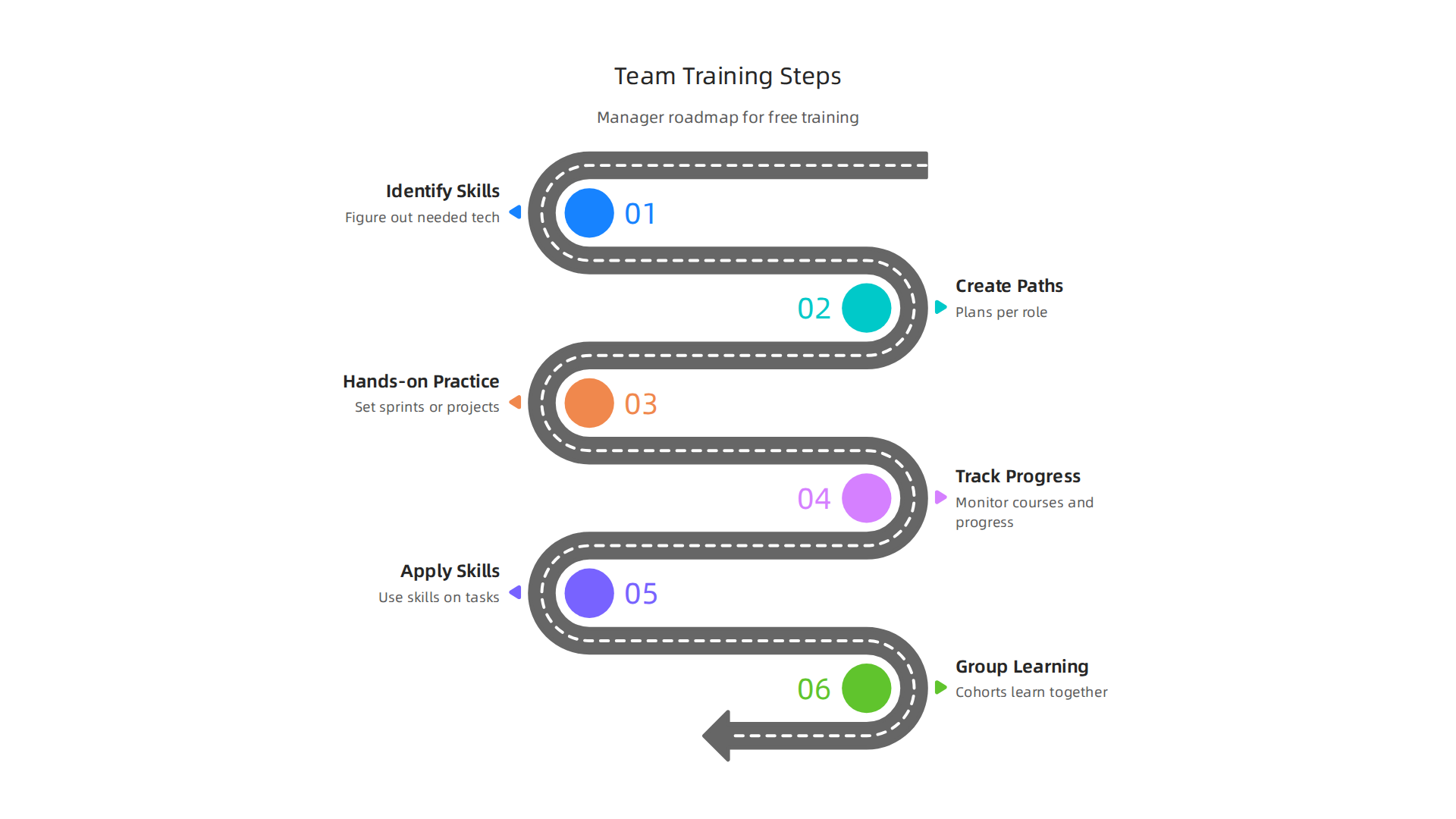
- Find Out What Skills are Needed: First, managers should figure out what new skills their team needs. What new tech or coding languages will help the business grow in 2026? This is like doing a "skill check" to see where everyone stands.
- Create Clear Learning Paths: Don’t just point to a list of courses. Make specific learning plans for different roles. For example, if your team needs to learn about AI, you could set up a path using various AI courses online free for developers. This structured way of learning is a big part of how companies manage training, as explained in an Enterprise Learning Adoption Kit.
- Hands-on Practice and Help: Just like individuals, teams need to practice what they learn. Set up short "sprints" or mini-projects where team members can try out their new skills from [online learning]. It’s also a good idea to pair newer learners with experienced team members who can act as mentors. This helps build confidence and makes the learning stick.
- Keep Track of Progress: How do you know if the training is actually working? Managers should keep an eye on who is taking which courses and what they are learning. This helps track if the team is really getting better. This kind of tracking is a key step in Building an L&D Workflow: Steps, Best Practices & Tools.
- Connect Learning to Real Work: The best way to learn is to use new skills on real tasks. After someone finishes an [online certificate programs] course, give them a small, real-world project where they can use their new knowledge right away. This makes the learning more meaningful.
- Learn Together as a Group: Teams often learn better when they do it together. Try having groups of people go through the same [online courses free] at the same time. They can help each other, talk about what they’re learning, and solve problems as a team. This "cohort model" can make online learning more fun and effective.
There are many 40 Free L&D Resources: Your Toolkit for Professional Growth available to help L&D leaders. By taking these steps, companies can make sure their [software engineer training] helps everyone on the team grow and succeed. It’s a smart way to keep skills sharp without spending a lot of money.
Even with many great free options, sometimes you need something more. Think of free online courses as a big, helpful library. You can learn so much there! But for certain skills, a paid micro-certification acts like a special stamp of approval. It shows you really mastered a specific area.
In 2026, companies often mix free training with targeted paid programs. Here’s how to decide when to spend a little extra money on learning:
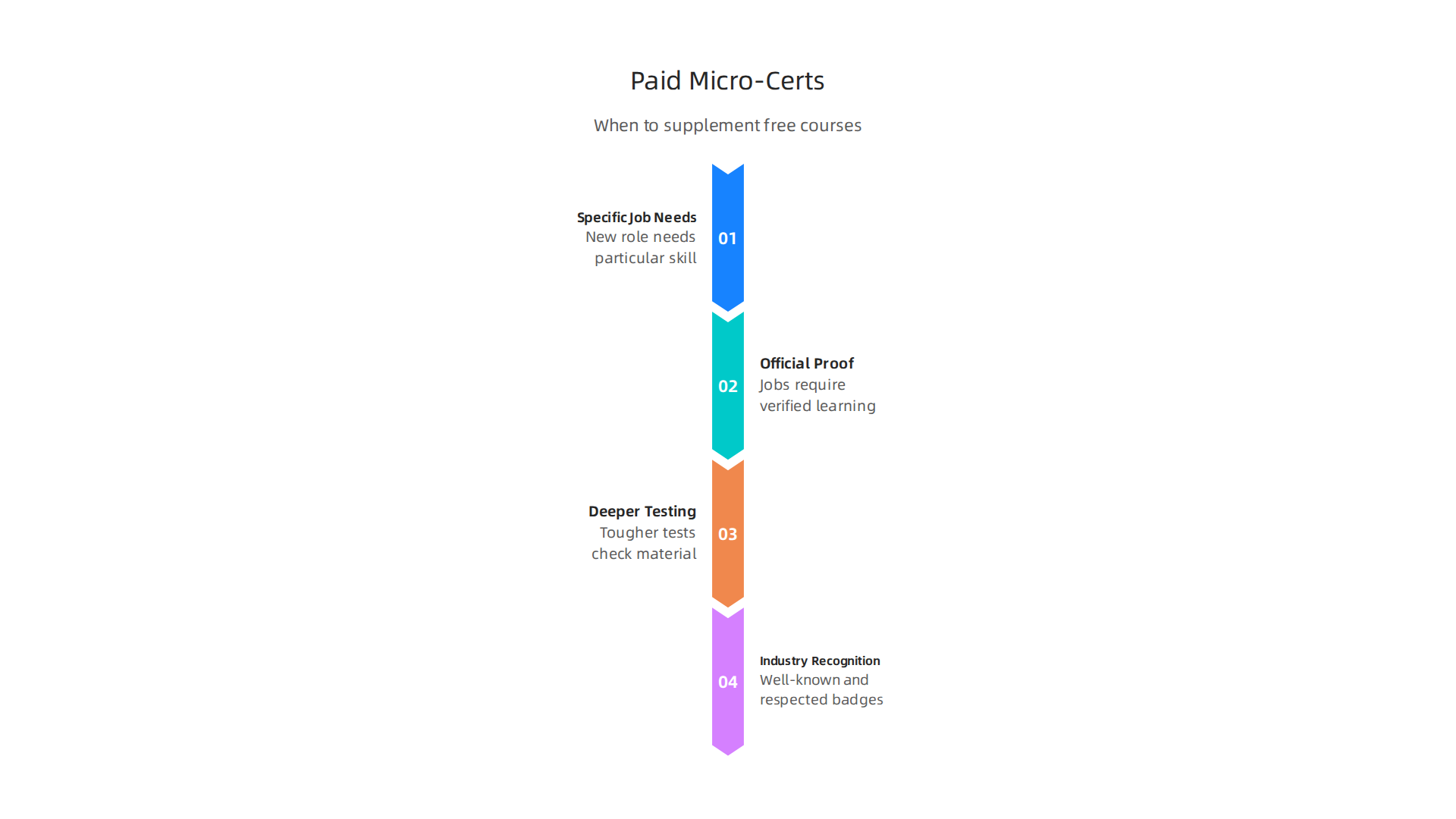
When to Think About Paid Micro-Certifications
- For Specific Job Needs: If a new role needs a very particular skill, or if there’s a big promotion coming, a paid certificate can show you have that exact skill. This is often true for certain types of
software engineer training. - Official Proof is Needed: Some jobs or tasks require official proof that you’ve learned something. This might be for safety rules, or for skills where an industry organization offers a recognized badge. Free
online learningusually doesn’t come with this kind of official proof. - Deeper Testing: Paid
online certificate programsoften have tougher tests. These tests really check if you know the material well, not just a little bit. This gives more trust to your skills. - Industry Recognition: Some paid certifications are well-known and respected in the business world. Employers see them as a sign of quality and strong skills. You can find out more about various options in a guide to best computer science certifications 2026.
Mixing Free and Paid for the Best Results
The smartest way to learn is to use both kinds of training. Start with online courses free to explore new ideas or get a basic understanding of a topic. Websites like MOOC List | Find Free Online Courses & MOOCs offer tons of options. If you want to dive deeper into AI or become an expert in a certain tool, then look into a paid micro-certification.
For example, a developer might take a few free courses to learn about how AI works in general. Then, they might choose a paid micro-certification to become an expert in using a specific AI tool that their company needs. This way, they get broad knowledge for free and deep, proven skills from the paid course. Combining these methods helps you keep learning and growing in your career, which is vital in 2026. If you’re looking for more ways to keep your skills sharp, an online school for developers can be a great resource.
Staying updated on the fast-changing world of AI and development is super important for everyone in tech.
Get clear daily AI updates from The AI Newsletter Worth Reading.
Staying updated on the fast-changing world of AI and development is super important for everyone in tech. Beyond formal courses, there are many ways to keep your learning fresh and current. Think of it like keeping up with the news, but for your specific job skills.
Keeping learning up-to-date: subscriptions, newsletters, and community signals
In 2026, the world of tech changes fast. To keep up, it is smart to use different ways to learn. This means looking at newsletters, joining online groups, and checking what new tools are coming out. These "signals" help you see what’s important.
One great way to stay informed is through special newsletters. These emails come to your inbox and share the latest news and best tips. Many are free! Some of the best newsletters for developers in 2026 include The Pragmatic Engineer, TLDR, and JavaScript Weekly. Together, these newsletters reach millions of readers, making sure you don’t miss out on important updates 12 Best Developer Newsletters to Subscribe to in 2026 | Blog. For example, TLDR Web Dev Newsletter: Daily Web Development Guide gives you a quick five-minute summary each morning. You can also find a wider list of useful emails in the Best Tech Newsletters 2026: Top 15 for Developers & …. These free resources are a good start for any kind of software engineer training.
It’s not just about reading, though. Online communities and forums are also very helpful. Here, people talk about new tools and share their experiences. Following the updates from big tech platforms can also tell you about new features and important changes that affect online learning and development.
The trick is to use these many sources wisely. There is a lot of information out there, so you need to pick what really helps you. Turn passive reading into active learning. If a newsletter mentions a new AI tool, for example, you might look for online courses free about it, or even full online certificate programs if it looks very important for your job. This way, you take what you learn from these daily signals and decide what next steps to take for deeper learning. If you’re looking for more free options, consider exploring AI Courses Online Free for Developers in 2026. By doing this, you keep your skills sharp and are always ready for what’s next in the tech world. Staying on top of the latest AI Developer Tools 2026 is key to your career success.
Summary
Free online courses remain a practical, high-value way for developers and engineering teams to close skill gaps in 2026 without large budgets. This article explains why free options still matter, how to spot quality courses (teacher background, clear syllabus, hands-on labs, and assessment), and which red flags to avoid like outdated content or no community support. It compares major free learning types—MOOCs, open courseware, interactive coding sites, and vendor training—and shows how to mix them across AI, cloud, web, and infrastructure domains. You’ll learn how to evaluate labs and sandboxes, create learning paths that combine theory and practice, and when a paid micro‑certification makes sense. The guide also gives managers practical steps to deploy free training at scale and pointers for staying current via newsletters and community signals. After reading, you’ll be able to choose better free courses, structure hands‑on practice, and build a plan that leads to real, job‑ready skills.