
From Experiments to Production Impact: Build Your AI Roadmap
Overview
Why a focused AI roadmap is the difference between experiments and production impact
It’s 2026, and everyone is talking about Artificial Intelligence. You might see many companies excitedly trying out new AI tools or running small AI tests. These small projects, called pilots, often seem promising at first. They can show cool new things AI might be able to do. But here’s the thing: many of these exciting AI experiments never make a real difference to the company’s products or how it works. They just stay as experiments.
Why does this happen? Often, it’s because there’s no clear plan for how to use AI for bigger goals. Without a solid ai roadmap, these smart projects don’t grow into something useful for everyone.

Think of it like trying to drive across the country without a map. You might explore some interesting local roads, but you won’t get to your main destination. For AI success, you need a clear ai roadmap that ties back to your business goals, not just cool tech, as experts explain in AI Roadmap 2026: Trends & Best Practices.
A strong ai roadmap is what turns small tests into big wins. It helps tech driven companies move past simple experiments to actually changing how they do business. It gives ai driven leaders a clear vision ai for the future of ai within their company. This kind of roadmap is important for making sure AI tools really boost how much work your team can get done. It’s also key to setting up future standard for AI implementation so everyone knows the rules.
In this article, we’ll walk you through how to build an ai roadmap that works. We’ll give you simple, step-by-step actions that technical leaders can use. This way, your AI efforts won’t just be neat experiments; they will make a true impact on your products and business.
Stay ahead with smart insights into the fast-changing world of AI. Get clear daily AI updates when you subscribe to The AI Newsletter Worth Reading.
Why an AI roadmap matters: aligning product, engineering, and data
Moving from small AI tests to making a real difference needs more than just cool technology. It needs everyone in the company to work together.

Imagine your company is building a new AI helper. The product team wants it to do one thing, the engineering team might focus on how it’s built, and the data team collects all the information it needs. If these teams don’t talk much, they might end up working on different ideas. This can lead to big problems.
An ai roadmap acts like a clear game plan for everyone. It brings together all the important teams:
- Product teams understand what customers truly need and how AI can help.
- Engineering teams know exactly what tools to build and how to make them work well.
- Data teams collect and prepare the right information for the AI to learn from.
- And
tech drivencompanies also care about compliance, which means making sure the AI follows all the rules and is safe to use.
Experts say a good ai roadmap covers areas like data, how well models work, and how to build trust and ensure compliance 2026 Roadmap on Artificial Intelligence and Machine …. When these teams work from the same ai roadmap, everyone shares the same vision ai for the future of ai within the company. This helps an ai driven leader guide their teams toward common goals.
Without a shared ai roadmap, things can get messy. Teams might spend time and money building similar things without knowing it. This is like two groups making the same kind of cookie when they could be making different ones for a bigger dessert tray. This wasted effort means money goes out the window. It also slows everything down, meaning it takes much longer to get new AI products or features into the hands of customers. When this happens, the company doesn’t see the full value of its AI efforts quickly.
A clear ai roadmap makes sure everyone understands their part and how it fits into the bigger picture. It helps teams choose the right tools and strategies, like when selecting AI software development tools for your 2026 team. This way, all the energy and smart ideas go into useful projects that truly help the business grow.
Before you can even draw up a good AI roadmap, your company needs to know if it’s ready.

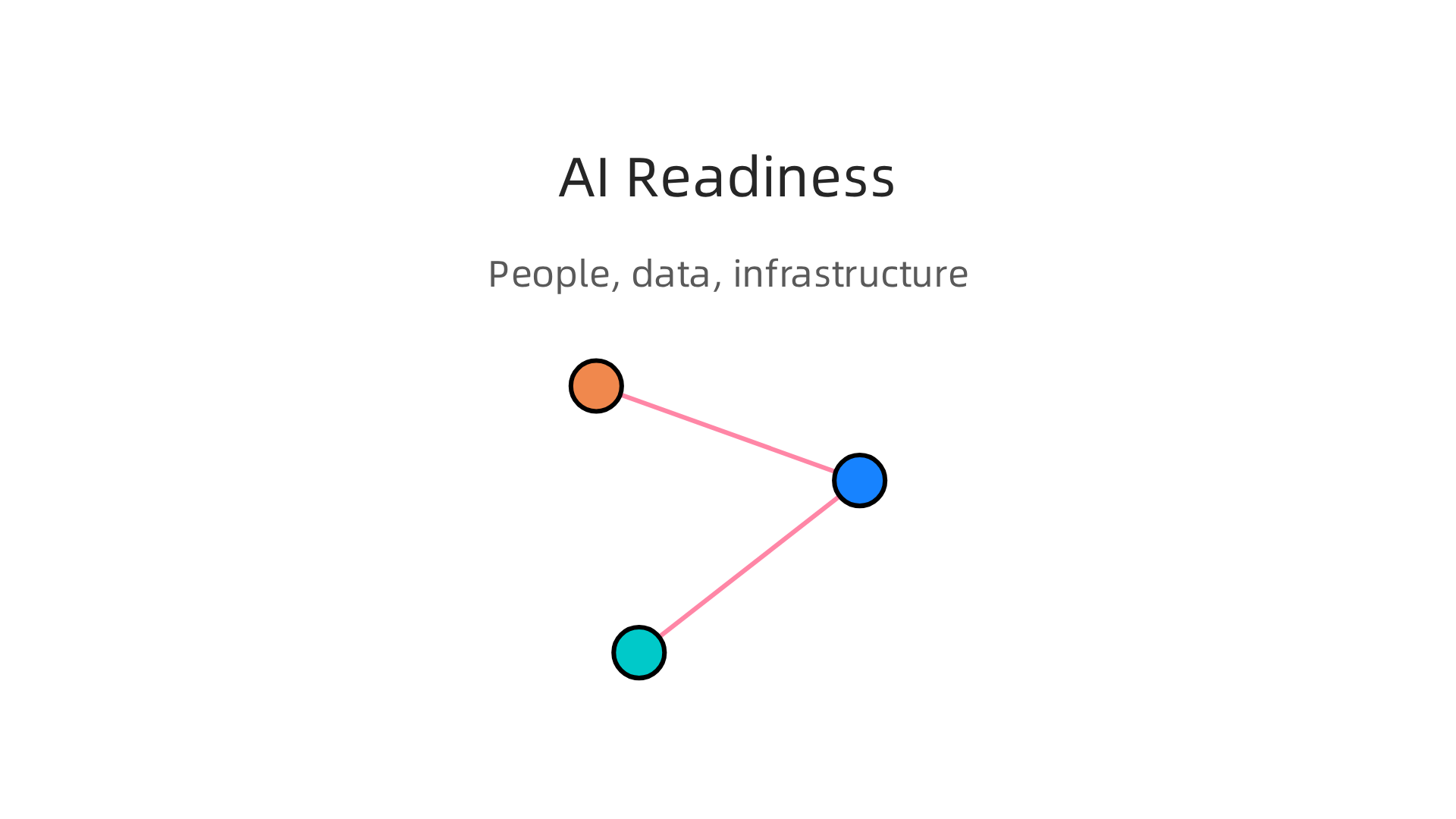
Think of it like planning a big trip: you first check if your car is in good shape, if you have enough gas, and if everyone has their bags packed. For tech driven companies, assessing AI readiness means looking at three main areas: your people, your data, and your computer systems.
This helps an ai driven leader guide their teams more effectively.
Your Team: People and Skills
Do your teams have the right knowledge and skills to work with AI? This includes having people who can:
- Understand business problems and see how AI can help.
- Build and train AI models (AI engineers, data scientists).
- Manage AI projects and make sure they run smoothly.
Many companies in 2026 find that they need to grow their teams or help their current staff learn new AI skills. As one expert checklist suggests, a key question is if you have the "in-house talent and technical skills necessary for our AI projects" AI readiness assessment: are you prepared for AI …. Training existing staff can be a smart move, helping them become familiar with new technologies. You can also explore how to improve team skills through resources like AI Powered Learning Platform Elevates Developer Skills For 2026.
Your Data: Quality and Access
AI models learn from data, so the quality of your data is super important. If your data is messy, incomplete, or hard to get to, your AI projects will struggle. You need to ask:
- Is our data clean and accurate?
- Can our AI teams easily find and use the data they need?
- Do we have clear rules (data governance) about how data is used and kept safe?
Having good data foundations is key. A lot of companies in 2026 focus on things like "data quality and trust" to make sure their AI efforts are built on solid ground AI readiness: How to assess and improve.
Your Computer Systems: Infrastructure and Tools
AI needs powerful computer systems to work. This means having the right technology in place, often called infrastructure. Consider these points:
- Do you have enough computing power, like cloud services, to run complex AI models?
- Do you have the right tools to build, test, and manage your AI models (often called MLOps)?
- Can your systems handle more AI projects as your company grows (scalability)?
A strong "Technology Infrastructure" that includes cloud, compute, and AI platforms is a big part of being ready for AI AI Readiness Assessment: 8-Dimension Framework [2026]. Exploring new AI developer tools in 2026 can also help make sure your infrastructure is up to date and ready for the future.
Doing a Quick Readiness Check
To quickly see where you stand, you can do a simple readiness check. This usually involves looking at these different areas and giving yourself a score for each. For example, some approaches evaluate an organization across "6 critical dimensions using a 5-level maturity model" AI Readiness Assessment Framework – AI Architecture Audit.
By doing this, you can quickly find any weak spots. Maybe your team needs more training, or your data needs to be cleaned up. Knowing these gaps helps you create a much stronger ai roadmap and a clearer vision ai for the future of ai within your company.
Staying informed about the fast-moving world of AI is crucial.
Get clear daily AI updates from The AI Newsletter Worth Reading.
After understanding your company’s AI readiness, the next important step is to set clear goals for what you want AI to achieve. This is like deciding your travel destination before you start driving. Without a clear destination, your ai roadmap will be fuzzy, and you might get lost.
Setting Strategic AI Objectives: OKRs, Use-Case Selection, and Value Mapping
For a tech driven company, turning big business ideas into measurable AI goals helps make sure everyone is working towards the same thing. This is where tools like OKRs (Objectives and Key Results) and KPIs (Key Performance Indicators) come in handy.
Making AI Goals Clear with OKRs and KPIs
An objective is what you want to achieve, like "make customers happier" or "cut down on costs." Key results are how you measure if you reached that objective. For example, if your objective is to "make customers happier," a key result might be "increase customer satisfaction scores by 10% using AI chatbots." Or if you want to "cut down on costs," a key result could be "reduce manual data entry time by 20% with AI automation."
These goals must connect directly to your main business aims. A strong ai roadmap for 2026 should start with a clear AI strategy that is tied to specific business goals, whether it’s saving money, making customers happier, or coming up with new ideas. This helps a good ai driven leader guide their teams.
Choosing the Best AI Projects: Use-Case Selection
Not every problem needs an AI solution. It’s important to pick the right projects, also known as "use cases," where AI can make a real difference. You want to focus on areas where AI can bring big improvements, not just small changes. When planning your ai roadmap for 2026, it’s wise to identify a few key challenges where AI can really help and where you already have good data and support from your team leaders.
Showing the Value: Value Mapping
Once you have a few ideas for AI projects, you need to figure out how they will bring value to your company. This is called "value mapping." It means showing how an AI project will either:
- Bring in more money: For example, an AI system that suggests products customers might like could lead to more sales.
- Save money: An AI tool that automates a task, like sorting emails or checking documents, can save your team many hours and thus money.
- Keep customers happy: An AI chatbot that quickly answers customer questions can make customers feel more satisfied.
When thinking about new AI features, it’s a good idea to consider how they will create value that is at least three times more than what they cost to build and run. By clearly mapping out the value of each potential AI project, you build a stronger ai roadmap and a clearer vision ai for the future of ai in your company. This step helps ensure that every AI effort truly helps your business grow and succeed. Looking for ways to make your software development more effective? Learn how to Apply AI to Build Software for Peak Productivity. This focus on value makes sure your AI efforts are not just cool, but also smart business moves.
Now that you know how much value an AI project can bring, the next step is to figure out which ones to do first. Not all good ideas are equally easy or quick to make happen. This is where prioritizing comes in.
Prioritizing use cases & building a realistic roadmap
For a tech driven company, it’s key to pick the best AI projects to work on. You want to focus your time and money where they will make the biggest difference. A good ai driven leader knows that even the most exciting AI ideas need a smart plan.
Using Simple Tools to Prioritize AI Projects
To choose which AI projects to start, many companies use a simple tool called a "prioritization matrix." Think of it as a chart that helps you compare ideas.
One popular way is the Impact vs. Effort Matrix. This chart looks at two main things for each AI project:
- Impact: How much good will this project do for your business? Will it bring in lots of money, save a lot of money, or make customers much happier? This is its value.
- Effort: How much work, time, and money will it take to build this AI project? Is it super hard or fairly easy?
When you put your ideas on this chart, you find out which ones are:
- Quick Wins: These are projects with high impact but low effort. You should try to do these first because they bring good results without too much trouble. These help build excitement and trust in your
ai roadmap2026 efforts. - Big Bets: These projects have high impact but also need a lot of effort. They can be very rewarding, but they take more planning and resources.
- Fill-Ins: These might have medium impact and medium effort. They’re good to do if you have extra time or resources.
- Avoid: Projects with low impact and high effort are usually not worth doing.
Many experts agree that rating projects based on their business value and how much effort they need is a smart way to choose for AI initiatives. You can also get more detailed by using things like a confidence score or looking at the return on investment (ROI) adjusted for how sure you are about the outcomes, which helps in creating an AI Use Case Prioritization Framework for your company. This helps you select the best path forward for your ai roadmap.
Building a Step-by-Step AI Roadmap
Once you know which AI projects are most important, you need a plan for how to build them. This is your ai roadmap. It’s like planning a trip with different stops along the way. A good ai roadmap often has these phases:
- Discovery: This is where you learn more. You research, talk to people, and do small experiments. The goal is to deeply understand the problem and if AI can really help solve it. This stage often involves checking if you have the right data.
- Pilot: In this phase, you build a small test version of your AI project. You try it out with a small group or in a controlled setting. It’s like a practice run to see if your idea works.
- Validation: Here, you check if the pilot project truly brings the value you expected. You measure its impact and make sure it solves the problem well. You also gather feedback and make changes.
- Scale: If the project passed validation, it’s time to make it bigger. You roll it out to more users or parts of your company. This means fully integrating the AI into your systems.
Each phase should have "gating criteria," which are like checkpoints. Before moving to the next phase, you must meet certain goals. This stops you from spending too much time and money on ideas that aren’t working. This careful, step-by-step approach ensures your ai roadmap for 2026 is realistic and leads to real success, shaping a strong vision ai for the future of ai in your company.
To help your team stay productive, learning about the latest AI developer tools in 2026 can make a big difference. Staying informed about the rapidly changing world of AI is vital for any tech driven organization.
Want to keep up with the fast-paced world of AI and technology? Get clear daily AI updates that help you make sense of it all.
The AI Newsletter Worth Reading
After you know which AI projects are most important, the next step for a tech driven company is picking the right tools, platforms, and vendors. It’s like choosing the best equipment for a big trip. Your engineering team needs tools that not only work well but also fit into your bigger ai roadmap for 2026.
Key Things Engineering Teams Look For in AI Tools
When your developers look at different AI tools, they think about several important things. These help make sure the tools they pick will lead to a smooth future of ai for your company.
- How Easy It Is to Connect (Integration Surface & APIs): Can the new AI tool easily talk to the systems you already have? This means looking at its APIs (Application Programming Interfaces). Good APIs make it simple for your tools to share information and work together. Without this, your team might spend a lot of time trying to force tools to connect.
- Seeing How It Works (Observability): Developers need to see inside the AI to understand if it’s doing its job correctly. Can they track its performance, spot problems, and understand why it made certain decisions? Good observability helps your team fix issues fast and improve the AI over time.
- Keeping Things Safe (Security): This is super important. Any AI tool must protect your company’s data and keep it private. Your team will check if the tool has strong security features and follows the best practices to keep everything secure.
- Knowing the Cost (Cost Predictability): How much will the tool cost, not just to buy, but to run every day? This includes costs for computing power, storage, and any special features. Understanding the full cost helps your
ai driven leadermake smart budget plans and avoid surprises. Experts suggest using a scorecard to rate tools on things like fit, risk, support, security, and total cost, instead of just a list of features MLOps Platforms Vendors Compared (2026).
When choosing, it’s about more than just features; it’s about how the tool fits your team’s way of working and your company’s vision ai. You can learn more about picking the right solutions for your developers by reading about selecting AI software development tools for your 2026 team.
Choosing Between Different Kinds of AI Tools
There are mainly three types of AI tools and platforms you can choose from, and each has its ups and downs:
- Managed Platforms (like cloud services): These are often offered by big cloud companies. They are easy to set up and use because the provider handles most of the technical work. You just pay to use them. The downside is you might have less control over how things work behind the scenes.
- Open-Source Tools: These tools are often free to use, and your team can see and change the code. This gives your developers a lot of control and flexibility. However, your team will have to do more work to set them up, maintain them, and fix any problems.
- Specialist Vendor Tools: These are tools made by companies that focus on doing one specific AI task really well. They can be very powerful for that one thing. The challenge is making sure they can easily connect and work with all your other systems.
Each choice has its own set of trade-offs. The best pick depends on your team’s skills, your company’s needs, and how much control you want over the AI project.
Want to keep up with the fast-paced world of AI and technology? Get clear daily AI updates that help you make sense of it all. The AI Newsletter Worth Reading
Once you’ve picked the best AI tools for your company, the next big step is putting your ai roadmap into action. This means looking at how your teams are set up, how you manage your AI projects day-to-day, and how you keep everything safe and fair. For any tech driven company, getting these pieces right is key to seeing the future of ai become a reality.
Setting Up Your AI Teams
How your company organizes its AI talent greatly affects how well your AI projects will run. There are a few main ways to set up teams:
- Centralized AI Team: Imagine one main team of AI experts who handle all AI projects for the whole company. This team sets the rules and builds the AI for everyone. This way, all AI efforts are consistent and high-quality. But sometimes, this team might not fully understand the daily needs of other departments.
- Embedded Model: Here, AI experts are placed directly into different departments, like marketing or sales. They work closely with those teams to solve their specific problems using AI. This helps make sure the AI solutions are very useful for each department. However, it can sometimes be hard to keep all the AI projects across the company working in the same way.
- Hybrid Model: This model tries to get the best of both worlds. You have a main AI team that sets the overall strategy and shares knowledge, but also smaller groups of AI experts who work inside other departments. This helps keep things organized while still making sure the AI solves real-world problems for each part of the business. An
ai driven leaderneeds to think carefully about which model best fits their company’s culture and goals. Knowing about decoding IT engineer roles definitions skills and career paths can help you set up these teams effectively.
Running AI Projects with MLOps Practices
Building an AI model is just the start. To make sure it works well all the time, companies need to use something called MLOps, which stands for Machine Learning Operations. It’s like DevOps for AI. MLOps helps teams deliver AI models smoothly and keep them updated.
Key MLOps practices include:
- Continuous Integration and Continuous Delivery (CI/CD) for Models: This means making sure new AI models or changes to old ones are tested and released quickly and safely. It’s about automating the steps from code to a working AI tool.
- Monitoring: Once an AI model is live, you need to watch it closely. Is it making good predictions? Is it slowing down? Monitoring helps catch problems fast so they can be fixed. Some platforms now measure value by how well they can govern autonomous actions and self-correct.
- Retraining Workflows: AI models learn from data. Over time, the world changes, and so does the data. MLOps includes ways to automatically give AI models new data so they can learn and stay accurate. This is crucial for keeping your AI tools useful in the long run. Good MLOps automation practices help ensure reproducibility, meaning you can recreate any past AI training run exactly as it happened MLOps Pipeline Automation Best Practices in 2026.
Governance and Security in Your AI Roadmap
For any vision ai your company has, keeping things safe and following the rules is super important. AI governance is about setting clear rules for how AI is used, who is responsible for it, and what to do if things go wrong. Security, of course, means protecting your data and your AI systems from harm.
Before diving deep into AI, many companies do an AI readiness assessment. This helps them check if they have the right data, technology, and skills. It also checks if they have good plans for leadership, strategy, and governance AI Readiness Assessment: 8-Dimension Framework [2026]. It also includes looking at data quality, accessibility, and putting rules in place for how data is used AI readiness assessment.
Key checkpoints for governance and security involve:
- Data Protection: Making sure that sensitive information used by AI is always kept private and safe.
- Fairness and Ethics: Ensuring your AI systems are fair and don’t make biased decisions.
- Compliance: Following all relevant laws and industry standards, especially in areas like data privacy.
- Audit Trails: Keeping clear records of how AI models are built, changed, and used, so you can always go back and understand their history.
Having a strong foundation in these areas helps you build a trustworthy and effective ai roadmap that aligns with your company’s values. It also sets the future standard for AI implementation why your team needs clear rules now. This holistic approach helps ensure that your company’s software developer roadmap 2026 career paths and skills for the AI era are well supported for success.
Once your company has a clear AI roadmap and its AI teams are set up, the next big question is: How do you know if your AI efforts are truly making a difference? Measuring success, scaling up, and always making things better are vital for any tech driven company looking to make the most of its AI investments.

Key Ways to Measure Success in AI
To really understand if your AI projects are working, you need to look at different kinds of measurements. Think of these as a scorecard for your AI initiatives.
- Business KPIs (Key Performance Indicators): These show how AI helps your company’s main goals. Are you making more money? Are you saving money? Is customer satisfaction going up? For example, an AI tool for customer service might be measured by how many customer questions it solves without needing a human, or how much faster it handles requests KPIs for gen AI: Measuring your AI success.
- AI Model Performance: This looks at how well the AI itself is doing its job. Numbers like accuracy (how often it’s right), precision, and recall tell you if the AI is making good decisions. You also check its F1 score, which balances precision and recall to give a clearer picture Model Monitoring KPIs & Dashboard Guide.
- Technical Health Signals: These are like checking the AI’s pulse. Is it running fast enough? Is it available all the time? Is the data it’s using still good? Things like latency (how long it takes to respond), uptime (how often it’s working), and data drift (if the data changes unexpectedly) are important to monitor. These help you catch problems before they become big issues What metrics should you monitor for a production ML model, and at what layer?.
- Cost Metrics: AI can be expensive to build and run. Keeping track of how much you’re spending on servers, software, and staff helps ensure your AI projects are worth the investment.
Scaling Up and Always Getting Better
A good ai roadmap is not a one-and-done thing. It needs to grow and change. This means having ways to learn from your AI, try new things, and make sure everything stays safe as you expand.
- Feedback Loops: Setting up ways for people to tell you how the AI is working helps improve it. This could be from users, customers, or even other AI systems.
- Post-Deployment Experimentation: Once an AI is live, you can try small changes to see if they make it better. This is like doing tiny tests to find the best way forward. An AI driven leader understands the value of this constant learning.
- Governance for Safe Scaling: As you use AI more, you need clear rules to keep it safe and fair. This includes making sure AI follows laws, protects privacy, and doesn’t create unfair outcomes. This ensures your vision ai grows responsibly.
When deciding which AI projects to scale or start next, many companies use a "value versus effort" matrix. This helps you pick projects that offer a lot of business value for a reasonable amount of work How to Prioritize AI Use Cases for Maximum Business Impact. Projects with high value and low effort are often called "quick wins."
By keeping an eye on these metrics and having good plans for growing and improving, your company can make sure its AI initiatives truly shape the future of ai and bring real benefits. Knowing how to maximize software development efficiency with AI tools is also key to this ongoing improvement.
To stay current on the latest AI trends and how to best use them in your company, you need reliable information.
The AI Newsletter Worth Reading
Summary
This article explains why a focused AI roadmap turns promising pilots into production impact and real business value. It walks technical leaders through assessing readiness across people, data, and infrastructure, then setting measurable AI objectives using OKRs and value mapping. You’ll learn how to prioritize use cases with impact-vs-effort matrices, design a phased roadmap (discovery, pilot, validation, scale) with gating criteria, and pick the right tools and team structure (centralized, embedded, or hybrid). The guide also covers MLOps practices, governance and security checkpoints, and the KPIs to track model performance, cost, and business outcomes. By following these steps you can avoid wasted experiments, align teams, and scale AI projects that reliably improve products and operations.