

Software Quality Assurance Jobs 2026: Automation, AI & High-Paying Tech Careers
Overview
The world of software is always changing, and so are the jobs that make sure software works well. If you’re wondering about a career in this field, especially with all the talk about AI, you’re in the right place.

Software quality assurance jobs are still very important in 2026, but they look a little different than before.
Why Software Quality Assurance Jobs Matter Now (and Where the Opportunities Are)
In 2026, many companies are using more AI and smart tools to help build and test software. This means that some older types of software quality assurance jobs, like just manually checking every part of a program, are not as common. In fact, job postings for manual-only QA roles are much lower compared to a few years ago in many tech markets [^1^]. But don’t worry! This doesn’t mean the work is going away. Instead, it’s changing and growing in new ways.
The focus is now on roles that blend engineering skills with quality checks. Think of jobs like an automation engineer or a Quality Engineer. These roles use special tools to test software automatically. More than three out of ten job postings for quality assurance jobs now mention AI [^2^]. This big change means that people who work in software quality assurance jobs need new skills to keep up.
This guide is for anyone who wants to understand these changes. Maybe you’re already a QA engineer, a developer who also checks quality (often called an SDET), or a leader in a tech team. If you’re looking for entry tech jobs or trying to grow your career, this information will help. You’ll learn what skills are hot right now, what kinds of quality assurance jobs are out there, and how to get ready for the future. By the end, you’ll have a clear idea of what it takes to succeed in these new and exciting roles.
For daily updates on how AI is changing tech, including developer tools and engineering, consider reading The AI Newsletter Worth Reading.
[^1^]: Is QA a Dying Career? What 2026 Job Market Data Actually …
[^2^]: QA Job Market Report 2026
1) The 2026 job market for software quality assurance jobs: demand, sectors, and hiring signals
Now that you know these jobs are changing, let’s look at where the opportunities are and who is hiring. The job market for software quality assurance jobs in 2026 is buzzing with new needs. While some old ways of testing are less common, the demand for skilled people who can work with new technologies like AI is very high. Companies still need top-notch quality, maybe even more so with complex AI systems.
Overall, the tech job market is strong. Employers across the US posted nearly 1.1 million technology and IT jobs last year. Roles that need AI skills showed the biggest growth [^1^]. This means if you have skills in AI or are ready to learn them, you’re in a good spot.
Where Are the Software Quality Assurance Jobs?
Different types of companies are looking for different kinds of quality assurance experts. Here are some of the key areas:
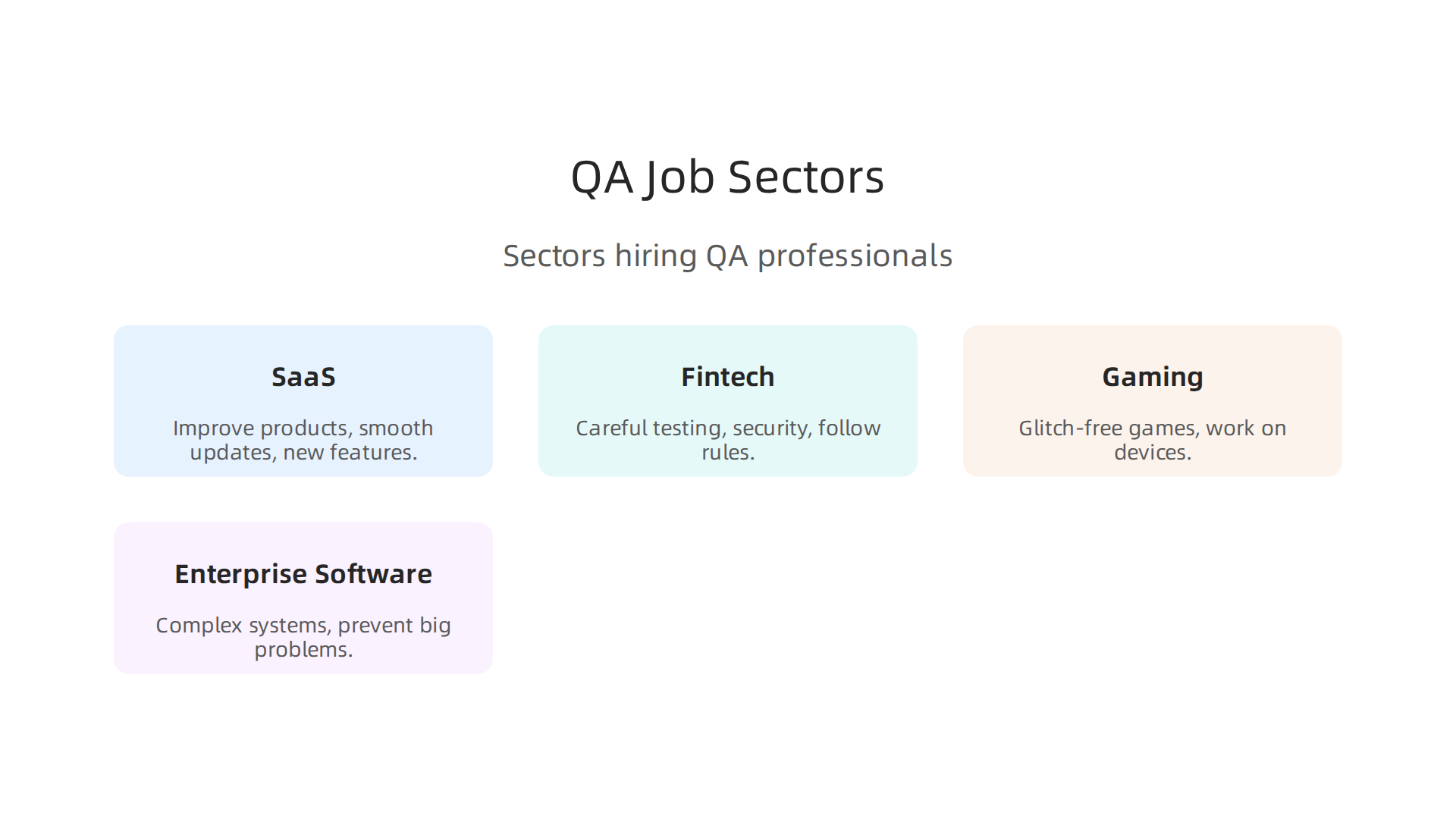
- Software as a Service (SaaS): Companies that offer software over the internet, like popular apps you use every day, are always improving their products. They need quality engineers to make sure updates are smooth and new features work perfectly. Automation is key here, as these companies release updates often.
- Fintech: This includes companies in finance and technology, like mobile banking apps or online payment systems. They need very careful testing because money is involved, and mistakes can be costly. Quality assurance in fintech often involves strong security testing and making sure things follow rules.
- Gaming: Video game companies hire many quality assurance testers. They need to make sure games are fun, glitch-free, and work on many devices. This sector might still have some manual testing roles, but it’s quickly moving toward automated testing for game features and performance.
- Enterprise Software: These are big software programs used by large businesses. Think of tools for managing customer relationships or company resources. These systems are complex and need thorough testing to prevent big problems for businesses.
The market for software quality assurance jobs is really picking up in some countries. North America leads the way, making up 47% of the global market for software quality automation jobs [^2^]. Europe is also a big player, especially in countries like Germany. India is another important hub, with many jobs in banking and healthcare.
Who’s Hiring Most Aggressively?
Companies that are quickly adopting AI and automation are often the most eager to hire.

They aren’t just looking for "testers" anymore. They want people who can build and manage testing tools, work closely with developers, and understand the bigger picture of how software is made. These roles are often called Quality Engineers, SDETs (Software Development Engineers in Test), or even AI test engineers. About 46% of organizations have added AI-focused quality engineering roles in the past year [^3^].
These companies are looking for people who can:
- Work with tools for continuous integration and continuous delivery (CI/CD) to test software as it’s being built [^4^].
- Test how different software parts talk to each other (API testing).
- Code in popular languages like Java, Python, or JavaScript.
- Understand how to use AI tools for testing.
This means if you’re looking for software quality assurance jobs, focusing on learning these modern skills will make you much more attractive to employers. Being able to blend engineering skills with quality checks is the new standard. If you want to dive deeper into what skills are most sought after, check out how to master developer jobs 2026 locations AI skills pay expectations.
2) Top technical skills, tools, and certifications that move the needle
To truly stand out in the world of software quality assurance jobs in 2026, you need to have the right skills. It’s not just about finding problems anymore. It’s about being an automation engineer and a problem-solver who can help build great software from the start.
Key Automation Frameworks
The most important tools for quality assurance today are automation frameworks. These are programs that help you write tests that run by themselves.
They save a lot of time and help find bugs faster.
Here are some top ones:
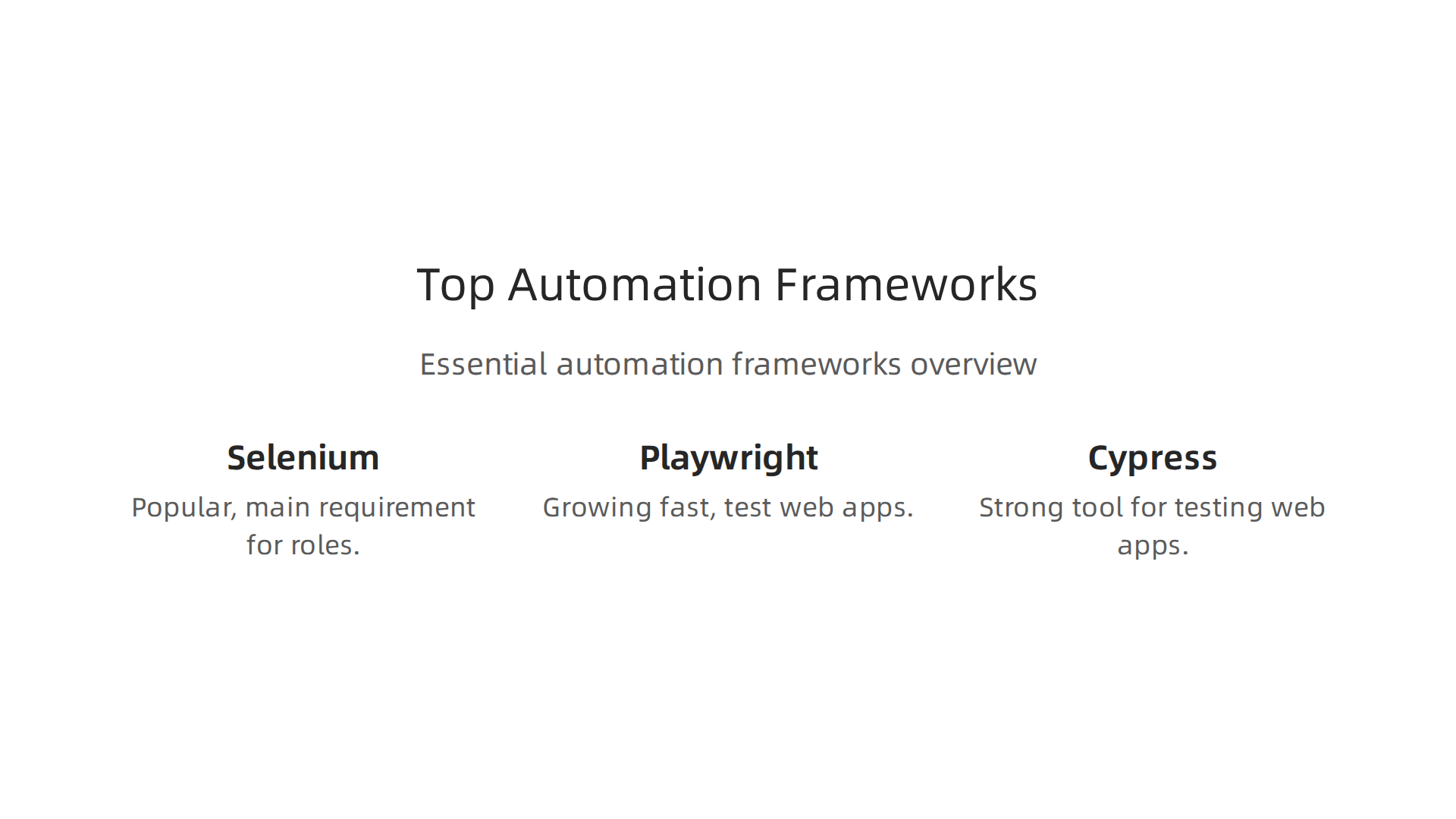
- Selenium: This has been a popular tool for a long time and is still very much in use. Many companies still list it as a main requirement for automation roles in 2026 [^1^]. You’ll find many jobs asking for Selenium skills [^2^].
- Playwright: This tool is growing super fast. It lets you test web apps in a new, simpler way. Many senior QA jobs are now looking for people who know Playwright, often with TypeScript [^3^]. It’s one of the fastest-growing skills in the QA job market this year [^4^].
- Cypress: Another strong tool for testing web apps, Cypress is also widely used, though not as often as Selenium or Playwright in current job postings [^5^].
It’s clear that knowing at least one of these automation frameworks is a must. About 78% of quality assurance roles now need you to know an automation framework like Playwright, Selenium, or Cypress [^6^].
Scripting and Programming Languages
Knowing how to code is no longer just for software developers. If you want to be a top quality assurance expert, you need to know programming languages. They help you write those automation scripts and create more complex tests.
Employers often expect you to know languages like:
- Java
- Python
- JavaScript (or TypeScript)
These are listed as "must-have" skills in many job postings [^7^]. For example, having Python skills can even help you earn more money as a quality assurance engineer [^8^]. These coding skills are what set apart modern quality engineers from traditional testers.
Other Important Technical Skills
Beyond frameworks and languages, other technical abilities are crucial:
- API Testing: This means testing how different parts of software talk to each other. It’s a key skill for quality assurance roles [^9^].
- Continuous Integration/Continuous Delivery (CI/CD): This refers to tools like Jenkins or GitHub Actions that help test software automatically as it’s being built. Familiarity with CI/CD is a common expectation [^10^].
- Version Control (Git): Knowing how to use Git to manage code changes is essential when working with development teams.
- AI Test Tools: With AI changing everything, knowing how to use AI tools for testing is becoming super important. About 34% of jobs mention AI skills, and AI test tools are among the fastest-growing skills [^11^]. Many organizations have even added special AI-focused quality engineering roles recently [^12^].
To keep up with all these changes and stay ahead, it’s a great idea to keep learning. Get clear daily AI updates from The AI Newsletter Worth Reading.
Value of Certifications and Hands-On Experience
While certifications can be helpful, especially for entry tech jobs or when switching careers, practical experience often matters most. Employers want to see that you can actually do the job.
- Formal Training: Taking online courses or specialized programs can give you a strong base. There are many options to find the best free courses for developers in 2026 that teach valuable skills.
- Demonstrable Hands-On Experience: This means having real projects you can show. Building your own test automation scripts, contributing to open-source projects, or doing internships can prove you have the skills.
Getting certifications in specific tools or areas like cloud platforms (AWS) can also make you more appealing to employers [^13^]. The best way to show your skills is to build things and share your work.
To grow in software quality assurance jobs, understanding the different career paths is just as important as having the right skills.
The skills we talked about before, like automation and coding, can lead you down many exciting roads. Let’s look at the main roles and how they fit into the bigger picture.
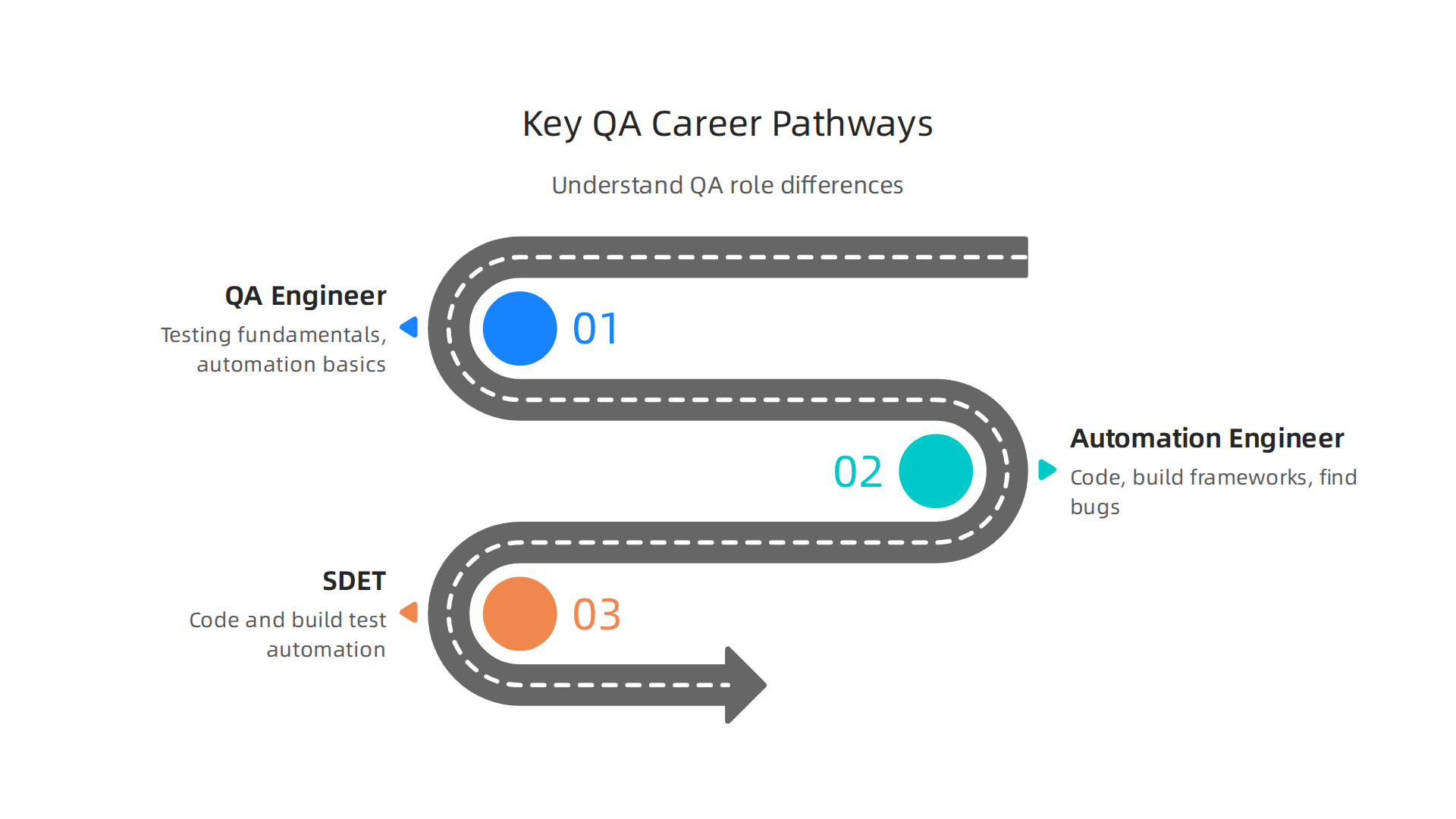
QA Engineer: The Foundation
A Quality Assurance (QA) Engineer is often where many people start their journey in quality assurance. In the past, this role mostly involved manual testing. This means clicking through software, trying to break it, and writing down any problems found.
Today, the role has changed a lot. A modern QA engineer still understands how to test things well, but they also know a lot about automation. They might help write simple automated tests or work closely with others who do. Their main goal is to make sure the software works as it should and that customers will be happy with it. The rise of AI tools, for example, changes the focus for QA professionals from just manual testing to more big-picture thinking about strategy [^1^].
Automation Engineer: Building Smart Tests
An automation engineer takes testing to the next level. Instead of just clicking, they write code to make tests run by themselves. They build the frameworks and scripts that find bugs quickly and often. This role is all about speed and making sure new changes don’t break old features. Automation is key in modern software testing to run tests and check results without a person doing it by hand [^2^].
This role needs strong coding skills, often in languages like Python or JavaScript, and deep knowledge of automation tools like Selenium or Playwright. They are crucial for improving how fast software can be released.
SDET: The Developer Who Tests
SDET stands for Software Development Engineer in Test. This is a special kind of role that combines the skills of a software developer with the mindset of a tester. An SDET is a type of software engineer who can do both: write strong production code and build advanced test automation tools and systems.
SDETs are deeply involved in how software is built from the very beginning. They work with developers to design tests that fit perfectly with the code. They can write complex testing tools and sometimes even fix small bugs in the main software. This role requires excellent coding abilities and a very good understanding of how software systems work. If you’re looking to understand the different technical roles, exploring how IT engineer roles are defined can be very helpful Decoding IT Engineer Roles.
Pathways to Leadership and Architecture
No matter which path you start on, there are many ways to grow your career in software quality assurance jobs.
- Senior Roles: As you gain more experience, you can become a Senior QA Engineer, Senior Automation Engineer, or Senior SDET. These roles involve tackling harder problems, mentoring newer team members, and leading projects.
- Leadership: If you enjoy guiding people and setting strategies, you can move into leadership roles like QA Lead, Test Manager, or Director of Quality. These roles focus on building strong testing teams, planning testing efforts for big projects, and making sure the overall quality strategy is effective. Learning how to build and lead high-performing teams, especially with AI, is a valuable skill for this path How to Build and Lead High-Performing AI Teams in 2026.
- Architecture: For those who love technical challenges, roles like QA Architect or Test Automation Architect focus on designing the testing systems and strategies for entire companies. They choose the tools and frameworks and decide how testing should be done across many different projects.
It’s important to remember that job titles can be different from one company to another. What one company calls an automation engineer, another might call an SDET. Always look at the job description to understand the actual duties. The overall impact of AI on the job market means that software engineers, including those in quality assurance, need to adapt and embrace new tools and ways of working Impact of AI on the Software Engineering Job Market in 2026. Staying current with new skills will help you move forward in your career.
Speaking of new skills, the rise of Artificial Intelligence (AI) and modern test automation tools is rapidly changing what companies look for in software quality assurance jobs. In 2026, AI is not just a helper but is becoming an agent that takes on more tasks by itself.
Which Tasks AI Automates and What Skills Matter More
AI tools are getting very good at doing the same tasks over and over. They can now create test cases, make up test data, find and sum up problems, and help make sure new changes don’t break old features. This means a big part of the work that used to be done by people is now handled by machines AI Can Generate Test Cases. In fact, 61% of companies are already using AI in most of their testing work today AI in Testing Is Here.
Because of this, the focus for QA professionals is moving from simple manual testing to more strategic roles.

Now, skills that bring higher value are:
- Observability: This means understanding how software systems work and behave from the inside out, not just testing what you see.
- Test Design: Thinking up smart ways to test very complex systems, especially those that use AI themselves.
- Data Management: Handling and making sense of the large amounts of data used in testing.
Even with AI doing more, human thinking is still very important. AI-made tests still need people to check them and make sure they are accurate and stable AI in Testing Still Depends on Reliability. This shift means QA roles are becoming more about strategy and oversight Shift in QA Roles and Responsibilities.
How AI Changes Day-to-Day Work for Automation Engineers and SDETs
For automation engineer roles and SDETs (Software Development Engineers in Test), AI changes their daily work quite a bit. Instead of writing every line of test code by hand, they now work with AI-powered tools that can write code or even fix it. These types of software engineers might use AI to speed up making test scripts or to look at test results more deeply.
The role becomes less about manual coding of tests and more about:
- Managing AI Tools: Choosing the right AI tools for testing and making sure they work well with other systems.
- Guiding AI Agents: Telling AI tools what to do, often using special instructions called "prompts."
- High-Level Problem-Solving: Focusing on the bigger picture, like how to make the entire testing process faster and better with AI.
About 16% of software quality assurance jobs for automation engineers today require these new AI skills AI Agents Top Test Automation Engineer Skill Demands. This shows how important it is to learn about AI and how to use its tools. If you’re looking to understand how AI is changing many tech jobs, it’s helpful to explore how AI affects other software engineer roles as well AI Replacing Jobs: How It Redefines Software Engineer Roles.
To stay on top of these changes, understanding and choosing the best AI developer tools is key. Learning how to pick and use these tools wisely will help you succeed in software quality assurance jobs that are always changing AI Developer Tools 2026: Choose and Optimize for Engineering Success. Staying informed about the latest AI advancements is crucial for anyone in tech.
Get clear daily AI updates from The AI Newsletter Worth Reading.
As the world of software quality assurance jobs changes with AI, so does how much people get paid. Learning new skills, especially in AI, can lead to better pay. It’s not just about doing the work anymore; it’s about doing the right work.
How Pay Varies by Role and Location
The money you make in a software quality assurance job can be very different based on what kind of QA work you do and where you live.
By Role:
If you’re a basic QA tester who mainly does manual checks, your pay will likely be lower. But if you’re an automation engineer or an SDET (Software Development Engineer in Test), you can expect to earn much more. These types of software engineers are paid more because they have specialized skills, often involving coding and AI tools.
- In 2026, automation and SDET roles typically pay 18% to 32% more than manual-only QA roles for people with similar experience QA Salary Survey 2026: 1200+ Testers.
- For example, an Automation QA Engineer might make between $75,000 and $95,000 per year when starting out, while an SDET could make $90,000 to $115,000 with similar experience in the US QA Engineer Salary Guide 2026: Worldwide Comparison by Role. The median pay for a US QA/SDET engineer is around $130,000 in 2026 QA Engineer Salary Guide 2026: By Experience, City.
By Location:
Where you work makes a big difference in your pay.
- United States: In tech-heavy areas, salaries are usually higher. For example, a mid-level SDET might earn between $100,000 and $140,000 QA Engineer Salary 2026: Levels, Regions & SDET Bands.
- India: Salaries are often shown in Lakhs Per Annum (LPA). A mid-level automation QA engineer might earn around 9 LPA, while an SDET can reach a median of 16 LPA. Senior SDETs (with 5-8 years of experience) could earn 20-28 LPA QA Salaries 2026: Software Tester & SDET Pay ($ US, UK, India). This is roughly $140,000 to $180,000 for mobile automation SDETs, for example QA Job Market Report 2026.
If you’re an entry tech jobs seeker or looking to grow your pay, understanding these differences is key. You can find more details on how pay expectations vary for other developer jobs, too, by checking out guides like Master Developer Jobs 2026: Locations, AI Skills, Pay Expectations.
Smart Ways to Ask for More Money
When it’s time to talk about your salary, being prepared helps a lot. Here are some simple tips:
- Do Your Homework: Look up what other people with your skills and experience are making in your city and for your job title. Websites that show salary data can be very helpful for this QA & SDET Salary Guides 2026.
- Show Your Value: Point out how your skills, especially new ones like working with AI, make you a valuable part of the team. If you’ve saved the company money or made things faster, mention that.
- Be Confident: Know what you’re worth. If you have the skills companies are looking for, especially in a changing field like QA with AI, you have a strong position to ask for better pay.
- Consider the Whole Package: Sometimes, a higher salary isn’t the only way to get more. Think about other benefits like health insurance, paid time off, bonuses, or options to work from home.
By knowing your market value and showing your unique skills, you can make a strong case for higher compensation in your software quality assurance jobs today. If you’re generally interested in salary trends for software engineers, an internal resource can help you understand Software Engineering Average Salary in 2026: How Much Developers Actually Make.
When you think about earning more in software quality assurance jobs, moving into automation engineering is a great path. This shift is especially smart if you’re coming from a software development background or doing manual QA work. It can open doors to better pay and more exciting projects, as these types of software engineers are in high demand.
Here’s a simple roadmap to help you make that move:
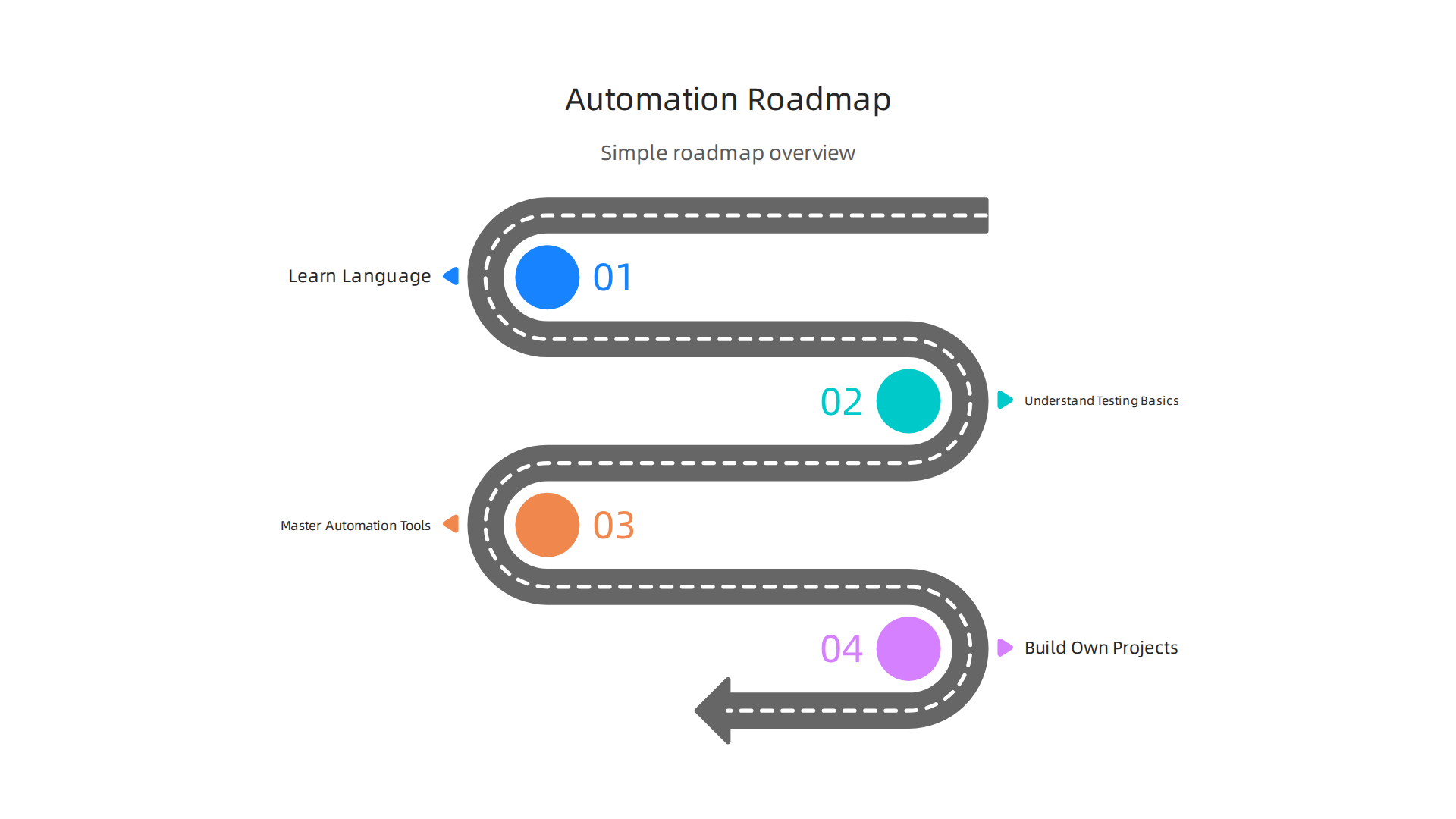
1. Learn a Programming Language
To become an automation engineer, you need to know how to code. Think of it like learning a new language for computers. Python and Java are two very popular choices because many automation tools use them.
- What to learn:
- Basic coding rules: variables, loops, if-else statements.
- How to write functions and classes.
- How to find and fix small errors in your code.
- How to learn:
- Take online courses. Many websites offer free and paid lessons.
- Read beginner books on Python or Java.
- Practice every day by solving small coding puzzles.
- You might find helpful resources like 10 Free Coding Courses That Teach Job-Ready Skills in 2026 to get started.
2. Understand Testing Basics for Automation
Even if you’re a manual QA tester, learning how to automate those tests is different. You’ll want to grasp key concepts specific to automation.
- Key ideas:
- What are different types of tests you can automate (like unit tests, integration tests, end-to-end tests)?
- How do you write tests that run by themselves?
- What makes a good automated test? (It should be fast, reliable, and easy to understand.)
3. Master Automation Tools
Once you know a programming language, you’ll need to learn tools that help you write automated tests.
- Popular tools to look into:
- Selenium or Playwright: These are for testing websites. They help your code "click" buttons and "type" into forms just like a real person would.
- Postman or Rest Assured: These are for testing how different parts of software "talk" to each other (APIs).
- Git: This tool helps you keep track of your code changes and work with other people on projects.
- Basic CI/CD tools: Learning about tools like Jenkins or GitLab can help you understand how automated tests fit into the larger process of building and releasing software.
4. Build Your Own Projects
The best way to learn is by doing. Try to create small projects where you build automated tests.
- Project ideas:
- Automate logging into a website and checking if your profile name is correct.
- Write tests for a simple calculator app.
- If you have a manual QA background, pick a feature you’ve tested manually and try to automate a few steps.
- Why projects help: They show future employers that you can actually do the work. This is super important, especially for
entry tech jobs.
Sample Timeline and Milestones (3-12 Months)
Changing careers takes time, but it’s totally doable.
- Months 1-3: Focus on learning a programming language (like Python). Practice coding every day.
- Months 4-6: Start learning an automation tool like Selenium or Playwright. Work on small practice projects. Automate a few simple tasks on a public website.
- Months 7-9: Build more complex projects. Work on different
types of software engineerstasks, like testing APIs. Learn to use Git to manage your code. - Months 10-12: Improve your project portfolio. Start applying for
automation engineerjobs. Practice interview questions, especially coding and problem-solving ones.
Becoming an automation engineer can be a rewarding step for your career in software quality assurance jobs. It often leads to higher pay, with junior automation QA roles typically paying around $65,000 to $85,000 per year in 2026, and mid-level roles reaching $90,000 to $120,000 QA Automation Engineer Salary & Total Cost (2026). Staying updated on new tools and methods, especially those powered by AI, is key to success.
Want to stay informed about the latest trends in AI and technology that are shaping roles like automation engineering?
The AI Newsletter Worth Reading delivers clear daily updates.
After you’ve learned the skills and understand the good pay that an automation engineer can earn, the next important step is showing what you can do and getting that job.

This means building a strong portfolio, knowing how to interview, and standing out from other people looking for software quality assurance jobs.
Building a Strong Portfolio
Your portfolio is like a show-and-tell for your skills. It gives companies real proof of your abilities, not just words on a resume. For software quality assurance jobs, especially automation roles, employers want to see that you can actually build and run tests.
Here is what makes a good portfolio project:
- Real, Working Projects: Show off at least three or four projects that actually run. These should show how you think about testing, how you write automated tests, and how well you solve problems. Companies want to see that you can make things work and debug them too, as shown in guides like QA Engineer Portfolio Guide: Projects That Get Interviews (2026).
- Different Types of Tests:
- Website Tests: Have a project that uses tools like Playwright to test websites. This could be automating logging in or checking if a form works right. Make sure these tests can be run as part of a continuous process, which is called CI.
- API Tests: Include tests for how different parts of software talk to each other (APIs).
- Test Plans and Bugs: Don’t just show code. Also, include how you planned your tests and any bug reports you wrote. This shows you understand the whole process of quality assurance.
- Clear Explanations: For each project, explain the problem you were trying to solve, your testing plan, and the automated tests you built. Employers want to see how you think about risk and quality, not just that you know how to use tools, according to experts in How to Build a QA Automation Portfolio That Supports Your Job ….
- Show Your Code: Put your code on platforms like GitHub. This lets hiring managers see your actual work and how you manage code changes. Check out tips on creating a portfolio that gets you noticed in articles like How to create a QA portfolio: hiring guide.
A good portfolio shows your ability to improve quality with code and think carefully about possible problems. This is especially true for entry tech jobs in quality assurance. To learn more about getting your application materials ready, consider reading tips on how to Craft Your Software Engineer Resume Template For Tech Career Growth.
Acing Your Interviews
Once your portfolio grabs attention, you’ll get interviews. Interviews for automation engineer roles usually have two parts:
- Technical Questions: These check your skills. You might be asked to write code, solve a testing problem, or talk about how you’d automate a certain task. They want to see if you understand test strategies and how to build reliable automated checks.
- Behavioral Questions: These are about how you work with others and handle situations. They want to know how you deal with challenges, communicate with your team, and make decisions about what to test. For example, they might ask how you would explain a bug to a developer. Hiring managers are looking for proof that you can think about tricky risks and talk about quality under pressure, as noted in a 2026 guide about QA Interview Questions 2026: The 40 Questions Hiring ….
Practice is key for both types of questions. Think about your projects and be ready to talk about them in detail, explaining your choices and what you learned. This helps you show that you are one of the best types of software engineers for the job. If you are looking for advice on getting your first role, you might find useful tips in a guide on How To Land A Software Engineer Entry Level Job In 2026.
Summary
This article explains how software quality assurance jobs have shifted in 2026 from manual testing toward engineering-focused roles that use automation and AI. It covers where demand is strongest (SaaS, fintech, gaming, enterprise), which companies are hiring, and the modern job titles you’ll see—QA Engineer, Automation Engineer, SDET, and AI-focused quality roles. You’ll learn the specific tools and skills that matter now (Playwright, Selenium, Cypress, Java/Python/TypeScript, API testing, CI/CD, observability, and AI test tooling), how pay varies by role and location, and practical steps to move from manual QA into automation in 3–12 months. The guide also explains how to build a portfolio, prepare for interviews, and negotiate salary, helping readers make concrete career decisions in an AI-driven testing landscape.