
Choose the Right Computer Technology Courses for AI & Developer Growth
Overview
Why finding the right computer technology course matters for developers and teams
The world of technology changes super fast, especially with new advances in AI, developer tools, and software engineering. What you learned yesterday might be old news tomorrow. Think about it: in 2026, new tools and ways of building software come out all the time. This rapid change means that developers and their teams need to keep learning to stay good at their jobs.

It’s not just about knowing the basics anymore; it’s about keeping up with the latest trends and tools.
Finding the right computer technology courses is key. If you pick the wrong course, you might waste time and money on skills that don’t help you much. It’s like trying to build a new house with old tools. You need the best and newest tools to do the job well. This holds true for your skills too. Whether you’re a developer looking to learn a new programming language, or a team leader trying to make sure your whole group has the best knowledge, targeted learning is super important. Getting skills in areas like AI development can make a big difference in your career path.
Many places offer education, from big universities with online IT degree programs to smaller schools and bootcamps. For instance, you can find many options for online information technology degrees from accredited schools that can prepare you for careers in cybersecurity and programming, among others [1]. Finding a program that is truly helpful means looking for those that are recognized for their quality. For example, some programs get special approval from groups like ABET (Accreditation Board for Engineering and Technology) for their IT and engineering studies [2].
This article is here to help you navigate this fast-changing world. We’ll give you simple ways to find the best accredited programs, special bootcamps, and even quick micro-courses. We will also look at training options for whole teams. Our goal is to help you pick learning options that truly make a difference in your skills and career, guiding you through the many facts about computer science. We want to make sure you get the computer science essentials you need to succeed. If you want to keep learning and stay sharp, exploring an online school for developers keeps you relevant in 2026.
Want to stay on top of the latest AI and tech insights? The AI Newsletter Worth Reading delivers clear daily updates to your inbox.

Do formal degrees still matter? When to choose a degree vs. other formats
After learning why keeping your tech skills sharp is so important, you might wonder about the best way to do it. Should you go for a long university degree or a quicker short course? Both have their good points, and the right choice depends on what you need for your career in 2026.
Formal degrees, like those from a university, often take a few years to complete. They give you a very deep and wide understanding of computer technology courses, including the core ideas and theories behind how things work. This kind of education provides a strong foundation, often called computer science essentials. You can find many options for online IT degrees from places like WGU and Purdue Global Online IT Degrees – Information Technology Degrees, Online Information Technology Degree Programs | Purdue Global.

Getting a degree can really help if you want to:
- Work in research or development, where deep knowledge is key.
- Aim for top leadership roles in big companies.
- Have a flexible career path, letting you change directions more easily over many years.
- Get a job that specifically asks for a degree as part of the hiring process.
This path helps you understand the bigger facts about computer science and gives you a thorough grounding. Many online colleges offer these kinds of accredited programs Discover 2026’s Top Online Accredited Colleges.
On the other hand, shorter programs, like bootcamps, workshops, or micro-courses, are designed to teach you very specific skills much faster. These types of computer technology courses are perfect if you:
- Need to learn a new programming language or tool quickly for your current job.
- Want to switch to a specific new job role that requires certain practical skills.
- Already have some experience and just need to update your knowledge without a long commitment.
- Are looking for affordable learning options found on an
online marketplace for educational resources.
So, the choice depends on your personal goals. If you’re looking for a broad, in-depth understanding and long-term career flexibility, a formal degree might be your best bet. If you need to gain specific skills fast to meet immediate job demands, a shorter program could be more suitable. It’s helpful to understand the differences between the academic side and the practical application, such as learning about computer science vs software engineering to guide your choice.
Now that you know how important it is to keep your tech skills fresh, let’s look closer at the different types of computer technology courses you can pick from in 2026. Each one helps you learn in a different way, fitting different goals and schedules.
Formal Degrees
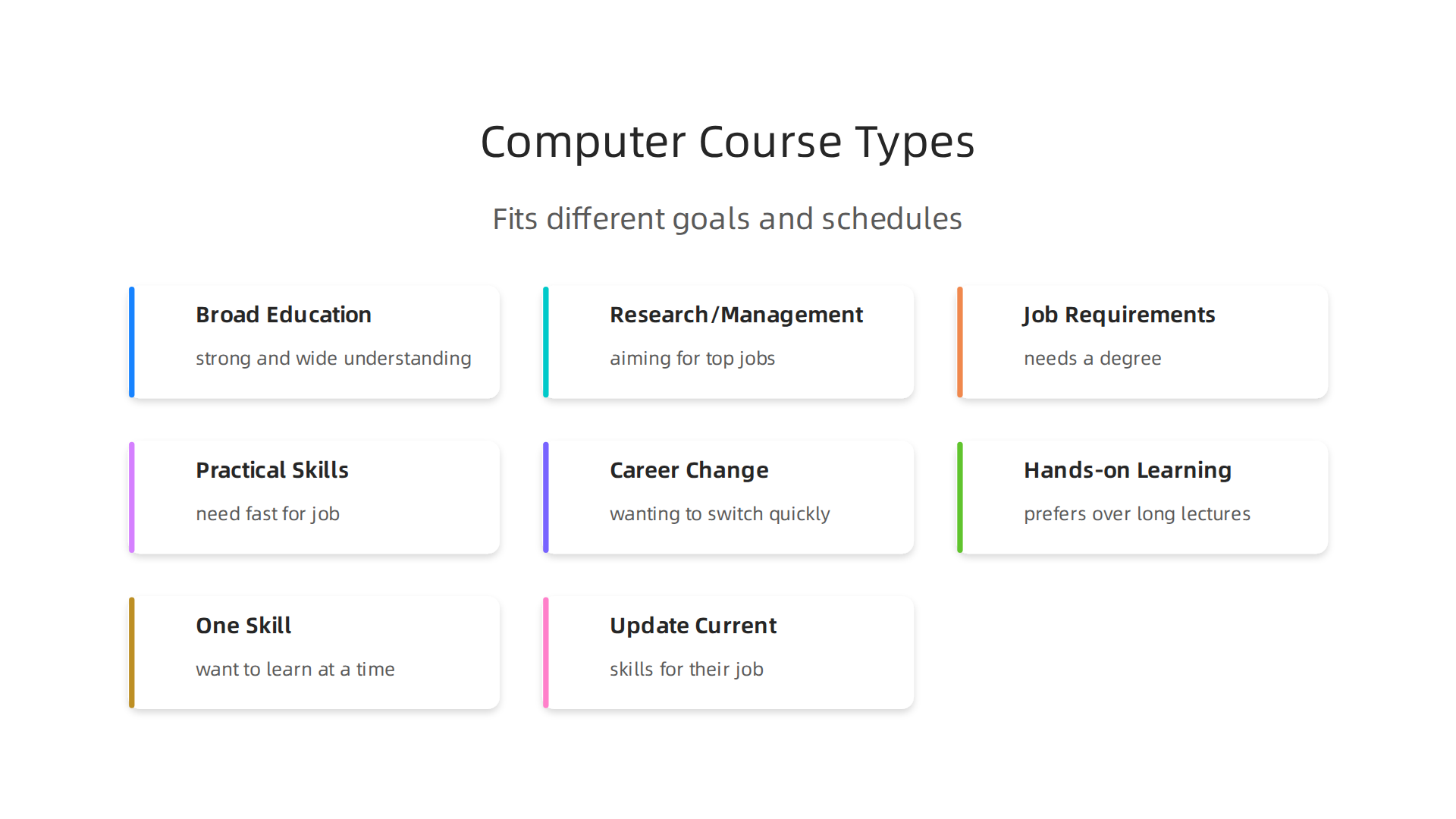
Formal degrees, like a Bachelor’s or Master’s in Information Technology or Computer Science, are offered by colleges and universities. These programs give you a very strong and wide understanding of subjects. You learn the deep computer science essentials and basic theories behind how computers work. This kind of education takes a few years but can open doors to many different jobs and help you grow into leadership roles over time. For example, many students choose from options like the Best Online Information Technology Degree Programs (2026).
Who it’s for:
- People who want a broad education.
- Those aiming for research or top management jobs.
- Anyone who needs a degree for specific job requirements.
Coding Bootcamps
Coding bootcamps are shorter, more intense programs. They focus on teaching you very specific, practical skills quickly, often in just a few months. These programs are great for learning how to code or use new software tools. They help you get ready for a specific job fast. Many employers in 2026 see bootcamp graduates as just as ready as those with degrees for certain jobs Coding Bootcamp in 2026: Real Statistics, What They Miss, and …. Bootcamp graduates often see a big jump in their salaries and find jobs quickly after finishing Best Coding Bootcamps in 2026: Costs, Job Rates, and How to …. You can find many choices, including 12+ Best Online Coding Bootcamps [2026] that fit different schedules.
Who it’s for:
- People who need practical skills fast.
- Those wanting to change careers quickly.
- Anyone who prefers hands-on learning over long lectures.
Certificates and Microcredentials
Certificates and microcredentials are like smaller learning badges. They prove you have a certain skill or knowledge in a very specific area. Think of them as building blocks. You can earn one certificate for, say, a certain programming language, and then another for cloud computing. These smaller pieces of learning can be "stacked" together to show a wider range of skills. You might find these on an online marketplace for educational resources. They are a flexible way to add to your skills without committing to a long program. Learning about Best Computer Science Certifications 2026 can help you explore these options.
Who it’s for:
- People who want to learn one skill at a time.
- Those who need to update their skills for their current job.
- Anyone building a unique
path computer sciencebased on their interests.
No matter which type of learning you choose, staying updated on new facts about computer science and technology is key. The tech world moves fast, especially with AI changing so much.
Keeping up with the latest in technology is crucial. Get clear daily AI updates from The AI Newsletter Worth Reading.
Keeping up with new computer technology courses is even more important when we talk about AI. The world of Artificial Intelligence is growing so fast. This means there are many new, special skills AI developers need to learn quickly. Luckily, short courses and microcredentials are perfect for picking up these very specific topics. These types of learning help you gain high-value technical skills that are in demand right now.
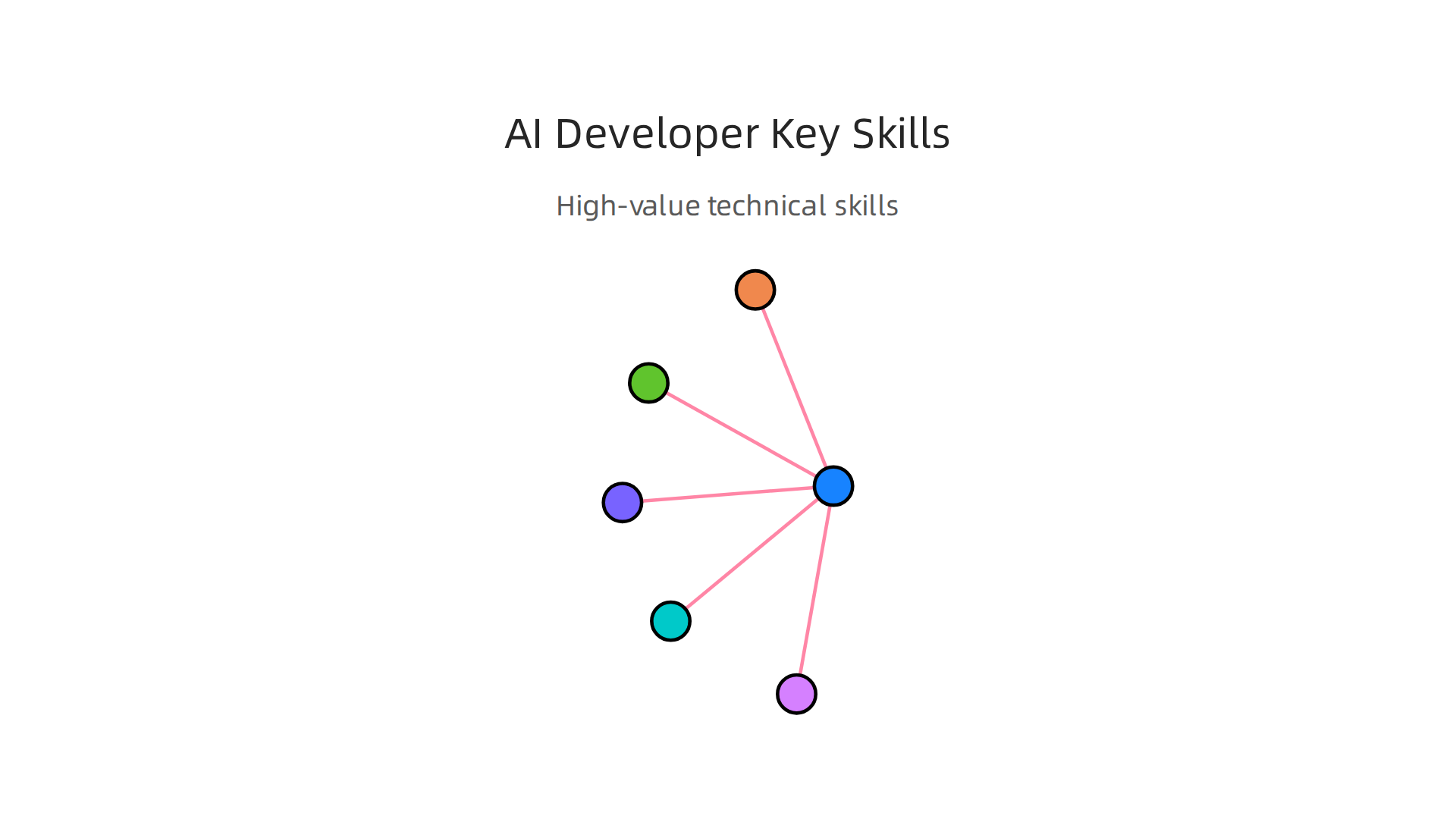
Think about these key areas:
MLOps
MLOps stands for Machine Learning Operations. It’s about how you take an AI model that works well in testing and get it to actually run in a real product for people to use. It makes sure AI systems work smoothly and reliably. Having a good grasp of computer science essentials really helps here. If you’re looking for a clear path computer science for AI, MLOps is a big part of it. You can explore a detailed MLOps Learning Road: Step by Step Guide (2026) to see all the steps.
There are also many free video courses that teach you how to deploy, manage, and monitor machine learning models in 2026.
Model Engineering
This skill involves making AI models better. It includes a few important parts:
- Prompt Engineering: This is all about writing the best questions or instructions for AI, especially for large language models, so they give you the answers you want.
- Model Evaluation: This means checking if your AI model is doing a good job. You learn how to test it and make sure it’s accurate and fair.
These are critical skills taught in specialized computer technology courses today. You can even find certifications that help you master operationalizing machine learning and generative AI solutions for modern AI projects.
Tooling and Secure Deployment
Knowing how to use the right AI tools is super important. This also means making sure AI systems are put into use safely and securely, protecting information and preventing problems. These specialized computer technology courses are often found on an online marketplace for educational resources.
It’s very important that these courses come from trusted sources. Look for content that has been reviewed by experts or comes from well-known companies. This makes sure you’re learning the best and most up-to-date facts about computer science in AI, giving you a solid foundation for your career. To build a strong path computer science in AI, exploring various Best Computer Science Courses For AI Development in 2026 can guide you.
Now that you know what kinds of computer technology courses are important for AI skills, how can you tell which ones are truly good? It’s like picking the best toy from a big store. You need to know what to look for so you get something valuable. Choosing the right learning path helps you understand the facts about computer science that matter most in AI.
Here’s a simple checklist to help you find top-notch computer technology courses:
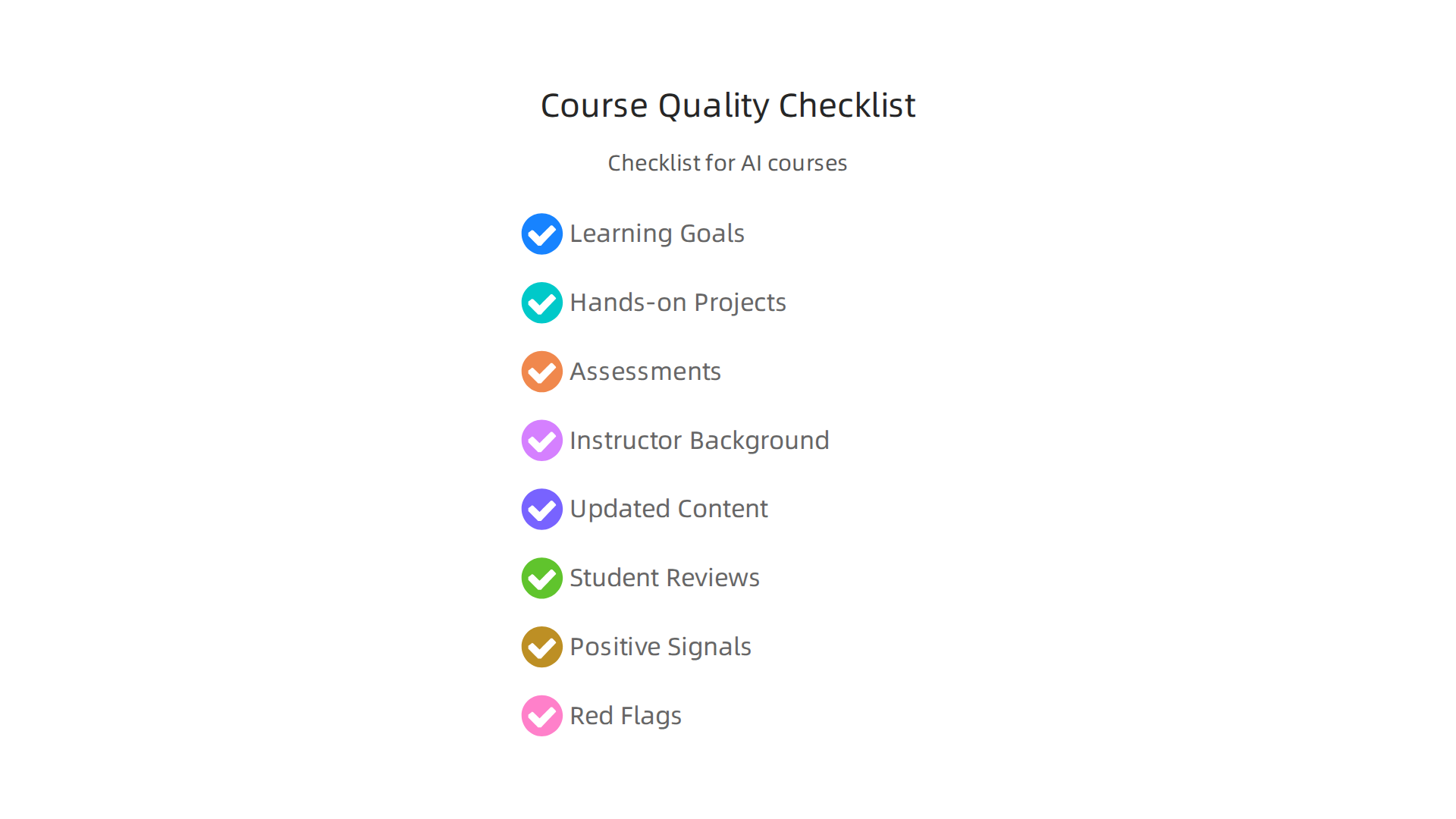
What to Look for in a Good AI Course
- Clear Learning Goals: Does the course clearly tell you what you will be able to do by the end? Good courses have simple goals, like "you will learn to build a basic AI chatbot" or "you will understand how to clean data for machine learning."
- Hands-on Projects: The best way to learn is by doing. Look for courses that have lots of projects, labs, or real-world problems to solve. This helps you actually use what you learn, building important
computer science essentialsskills. Many studies show that learning is better when you actively take part, not just listen A Meta-Analysis and Review of Online Learning Studies. - How You’re Tested: Do they have quizzes, bigger projects, or exams? A mix of these can be good. Projects are especially helpful because they let you show what you can build. Good assessments make sure you’re truly learning.
- Instructor’s Background: Who is teaching the course? Are they experts in AI, or do they have real-world experience? Knowing their background can tell you if they truly understand the
path computer sciencefor AI development in 2026. - Up-to-Date Info: AI changes fast. Does the course mention when it was last updated? You want a course that covers the newest tools and ideas, not old ones. An
online marketplace for educational resourcesshould show this info clearly. - Reviews from Other Students: What do other students say about the course? Look for feedback on how helpful the instructor was, how clear the lessons were, and if the projects made sense.
Red Flags and Good Signs
When you’re looking at computer technology courses, some things should make you pause, while others are great signs.
Red Flags:
- No clear syllabus or list of what you will learn.
- Promises of "getting rich quick" or "master AI in a weekend." Learning takes time and effort.
- Very old course materials or tools that are no longer used.
- Instructors with no listed experience or qualifications.
- Lots of bad reviews about unclear lessons or unhelpful support.
Positive Signals:
- Detailed descriptions of each lesson and project.
- Courses offered by well-known universities or tech companies.
- Instructors who have worked on big AI projects in real life.
- Testimonials from people who landed jobs after taking the course.
- Active student communities or forums where you can ask questions.
Choosing wisely for your learning can make a big difference in your career. Many developers find success by investing in high-quality training through an online school for developers that helps them stay relevant in 2026.
Staying updated with the latest in AI is key for any developer.
The AI Newsletter Worth Reading can help you get clear daily AI updates.
Now that you know how to pick the best computer technology courses, the next step is to put them together. Think of it like planning a trip. You pick the best roads, then you combine them to reach your goal. For learning AI, you need to combine courses, hands-on projects, and real work experience to build a strong learning path.

This helps you efficiently close any skill gaps you might have.
Here’s how you can design your learning path:
How to Combine Learning Steps
- Start with the Basics: Before diving into complex AI, make sure you understand the core
computer science essentials. This might mean learning about how computers think, basic programming, and how data is stored. These are thefacts about computer sciencethat all AI builders need. - Pick Your
Computer Technology Courses: Choose courses that teach you specific AI skills. For example, you might take a course on machine learning, another on deep learning, or one about natural language processing. - Do Capstone Projects: These are like big final projects where you use everything you’ve learned. You build something real, like an AI chatbot or a program that can sort pictures. This helps you practice and see how all the pieces fit together.
- Get Mentoring or On-the-Job Practice: Learning from someone who already knows a lot, or working on AI projects at a job, is super important. It helps you understand how things work in the real world and get better faster.
Learning Paths for Different AI Jobs
The path computer science takes can look different for various jobs in AI. Here are some examples:
- For Software Engineers: You might start with strong programming skills, then take
computer technology courseson how to use AI tools and libraries. After that, you’d work on projects that add AI features to apps or websites. If you’re looking for guidance, a Software Developer Roadmap 2026 Career Paths and Skills for the AI Era can show you the way. - For AI Engineers: Your path would focus heavily on understanding different AI models. You’d take courses on machine learning, deep learning, and special areas like computer vision. You’d also do many projects to build and train your own AI models. You can find many guides, like the Complete AI Engineer Roadmap in 2026 to help plan your learning.
- For DevOps/MLOps Specialists: This job is about getting AI models ready to be used by many people and making sure they keep working well. Your
computer technology courseswould include topics like cloud computing, setting up systems, and how to manage AI models. There are great resources like the MLOps Learning Road: Step by Step Guide (2026) by Coursera that can help you understand this important area.
No matter what path you choose, remember that learning is a journey. Combining structured computer technology courses with hands-on work and real-world advice is the best way to succeed in the AI world of 2026.
Just like individuals need a clear learning path, companies too need to think about how to upskill their whole team. In 2026, making sure your engineering team understands new computer technology courses in AI is key to staying ahead. This means planning out how to train many people at once and how to tell if that training is actually working.
Different Ways to Train Your Team
When you’re looking to train a whole group, you have a few good options.
- Vendor Training: Many tech companies offer specialized
computer technology coursesdirectly related to their tools or platforms. This is great for getting specific skills fast, like learning to use a particular AI software. It’s usually ready to go, which saves time, but it might not be tailored exactly to your unique projects. You can often find these types of courses through anonline marketplace for educational resources. - Cohort-Based Programs: These programs gather a group of people to learn together over a set time. They often involve deeper dives into topics and hands-on project work, like building a complex AI system as a team. This can be great for sharing ideas and building stronger teams, as everyone learns from each other. The
path computer sciencetakes in these programs can be very thorough, covering a lot of ground together. - Internal Academies: The third option is to build your own learning system inside your company. This means creating custom
computer technology coursesand training materials that fit your team’s exact needs and your company’s goals. It takes more time and money to set up, but it gives you full control and can build deep, long-lasting expertise within your organization. It ensures all thecomputer science essentialsand specific AI knowledge are passed down in a way that truly matches your company’s mission.
Measuring How Well Your Training Works
After all that effort, how do you know if the training actually helped? Measuring the return on investment (ROI) is crucial to see the real value.
One important thing to look at is how quickly team members start using their new skills in real projects.

Are they finishing tasks faster or more easily? Are their new AI skills leading to better products or more efficient ways of working? For example, companies that track training ROI are 52% more likely to boost their training budgets, showing they see real value from the programs Corporate Training Industry: 2026 Verified Stats.
You should also consider things like how much difficulty employees face in their work after training, and their overall readiness for new AI challenges. These are important measures of how well facts about computer science and new AI tools are being applied The New ROI of Employee Development in 2026. Looking at how well AI projects succeed, or how often developers choose to use the new AI tools they learned about, can also show skills adoption. Knowing how to Choose the Right AI Tools for Developers to Boost Productivity is a direct outcome of good training.
Want to stay updated on the latest AI advancements that can impact your team’s training? The AI Newsletter Worth Reading to get clear daily AI updates from The Deep View Newsletter.
After thinking about how to measure what we learn, a big question often comes up: should we pay for training or use free stuff? In 2026, there are tons of computer technology courses available, both free and paid. Deciding which one is best means looking at what you need to learn and what you hope to get out of it.
When Free Learning Makes Sense
Free online courses, like those from big open platforms (often called MOOCs), or even YouTube videos, are super helpful. They are great for getting a first look at new topics or for learning the basic computer science essentials. If you’re just exploring artificial intelligence (AI) or trying to see if a certain programming language is for you, free content is a smart start. You can learn many facts about computer science without spending a dime. It’s also good for quick refreshers or learning a specific small skill. However, you need to be good at teaching yourself and staying on track, as there’s often no one checking your progress.
When to Invest in Paid Resources
Sometimes, free just isn’t enough. If you want to get a new job, make a career change, or dive really deep into a complex topic, paid computer technology courses often make more sense. These can include coding bootcamps, official certifications, or even full degree programs. Paid options usually offer:
- Structured Learning: A clear
path computer sciencefrom beginning to end. - Expert Teachers: You get help from people who really know their stuff.
- Accountability: Due dates and tests help you stay focused.
- Credentials: You get a certificate or degree that can help with jobs.
- Career Support: Many paid programs, especially coding bootcamps, help you find a job after you finish. For example, many employers in 2026 see bootcamp graduates as just as ready as those with degrees for technical jobs Coding Bootcamp in 2026: Real Statistics, What They Miss, and ….
Choosing the right paid option is key. You can explore many great paid choices by checking out the Best Computer Science Certifications 2026.
How to Make Free Learning Better
Even if you choose mostly free resources, you can make your learning stronger. Try these ideas:
- Guided Projects: Work on projects that come with step-by-step instructions. This helps you use what you learn.
- Mentorship: Find someone more experienced who can guide you and answer your questions.
- Study Groups: Learn with other people. You can share ideas, solve problems together, and keep each other motivated. Look for these groups on an
online marketplace for educational resourcesor local tech meetups.
Summary
Tech moves fast and choosing the right computer technology courses matters for developers and teams who need practical, up-to-date skills. This article explains the main learning formats — formal degrees, coding bootcamps, certificates and microcredentials — and when each makes sense for career goals or immediate job needs. It highlights AI-specific tracks such as MLOps, model engineering (including prompt engineering and evaluation), and secure/tooling deployment, and gives a clear checklist to judge course quality. You’ll learn how to combine courses, hands-on projects, mentoring and on-the-job practice into a focused learning path for roles like software engineer, AI engineer, or MLOps specialist. The guide also covers options for training entire teams, vendor and cohort programs, and ways to measure training ROI. Finally, it helps you decide when free resources suffice and when paid programs or credentials are worth the investment.