
Software Developer Roadmap 2026 Career Paths and Skills for the AI Era
Overview
Introduction: Navigating the Evolving Software Developer Landscape
If you are a software developer right now, you probably feel it. The ground is shifting under your feet.

AI tools are changing how we write code, what tools we use, and even what jobs are called. One day you are a traditional coder, the next you are asked to be an it engineer who also knows how to talk to large language models. It is a lot to keep up with.
Here is the thing: the role of a software developer is not disappearing. It is transforming. In 2026, demand for developers is still strong. The Bureau of Labor Statistics projects 17% growth for software engineering roles, with specialties like machine learning seeing a 34% spike and DevOps growing 28% Boundev. But the skills you need are changing fast. Coding jobs now often require familiarity with AI agents, prompt engineering, and specialized tool ecosystems. And with mounting AI costs and uneven tool impacts, developers face new challenges Pragmatic Engineer.
So how do you stay relevant? This article offers a clear roadmap of career paths, must have skills, and trends that matter in 2026. Whether you are a seasoned product development engineer or just starting out, you will get practical guidance to navigate this new landscape.
If you want to stay ahead of the curve, start by getting daily AI insights that cut through the noise. Subscribe to The Deep View Newsletter for clear, actionable updates on AI and development news. And for a deeper look at how traditional coding roles compare to newer AI focused paths, check out our guide on computer science vs software engineering.
Traditional Software Developer Roles in the AI Era
Let’s clear something up right away. The classic software developer jobs are not going away. Far from it. The demand for frontend, backend, and full-stack developers is still strong in 2026. The Bureau of Labor Statistics projects 17% growth for software engineering roles overall
Boundev. But the way you work in these roles is changing fast. AI is not replacing you. It is becoming your new teammate.
Frontend developers: more design and logic
Frontend developers used to focus mostly on HTML, CSS, and JavaScript. Now you also need to work with AI tools that generate UI components, test accessibility, and even write styles. Your job is shifting from writing every line of code to guiding AI agents to produce what users need. You still need strong fundamentals in design thinking and user experience. But you also need to know how to feed the right prompts to get clean, responsive code.
Backend developers: data and system thinking
Backend developers are seeing AI handle boilerplate like API routes, database queries, and authentication flows. Companies still need you to understand system architecture, security, and performance. But now you also need to know how to integrate AI models into your backend, manage prompts at scale, and handle costs related to AI usage Pragmatic Engineer. The core skills of an it engineer or product development engineer now include AI fluency.
Full-stack developers: the glue gets stickier
Full-stack developers act as the bridge between frontend and backend. In 2026, you are also the bridge to AI tools. You need to pick the right AI code assistants, know when to trust AI output, and verify what the AI produces. Companies want developers who can combine strong fundamentals with the ability to prompt AI effectively. This is where prompt engineering becomes a critical skill for any software developer working with AI tools Promptitude.
What stays the same
The roles are evolving, but the foundation is the same. You still need problem solving, debugging, version control, and communication skills. AI can generate code, but it cannot understand your users, your business logic, or your system quirks. That is still your job.
If you want to stay relevant, shift your learning focus. Spend less time memorizing syntax and more time learning how to use AI tools well. Start with the best AI apps for developers in 2026 to see what tools your peers are using. Then practice using them daily.
The biggest career move you can make right now is staying informed. The tools change weekly. That is why you need a reliable source of daily AI insights. Subscribe to The Deep View Newsletter and get clear, practical updates on exactly what matters for your career. No fluff, just the signal.
The Enduring Value of Full-Stack Development
If you read the last section, you know full-stack developers are the glue in modern teams. But here is the thing. In 2026, being a full-stack developer is not just about knowing frontend and backend. It is about being the person who can make AI actually work inside a real product.
Companies prize full-stack developers because you understand the whole system. You can talk to the frontend team, the backend team, and the database team. That skill alone keeps you valuable. As one developer forum put it, knowing cloud computing, DevOps, and automation alongside core coding skills is what makes you stand out ServiceNow.
Now, AI tools help you move faster than ever. You can use AI to generate UI components, write API routes, and even spin up database schemas. But your core knowledge is still the foundation. You still need to debug, design good architecture, and keep things secure. AI cannot think through trade-offs. That is your job Jalasoft.
The biggest differentiator in 2026 is AI integration. Full-stack developers who know how to plug AI models into a product and build features around them are leading the market Crossover. You can start by trying the best AI apps for developers in 2026 and seeing how they fit into your workflow.
The key is to never stop learning. The tools change fast, but the value of a developer who can think across the whole stack stays the same. Keep building, keep experimenting, and keep growing.
To keep learning at the right pace, get clear, daily updates on what actually matters for your career. Sign up for The Deep View Newsletter and stay ahead of the curve.
Emerging Specializations: AI Engineer, ML Engineer, Prompt Engineer
So you are a full-stack developer who can handle the whole system. That is great. But let me ask you something. Have you noticed how many new job titles are popping up? In 2026, the hottest roles in technology are not just “software developer” anymore. You see job postings for AI Engineer, ML Engineer, and even Prompt Engineer.
These roles are growing fast. In fact, machine learning engineering roles are up 34 percent, and DevOps roles are up 28 percent Boundev. The median salary for a software engineer sits around $127,000, but specialized AI engineers often earn more. Companies are scrambling to hire people who can build and deploy AI systems Workforce Institute.
What do these roles actually involve? Let me break it down.
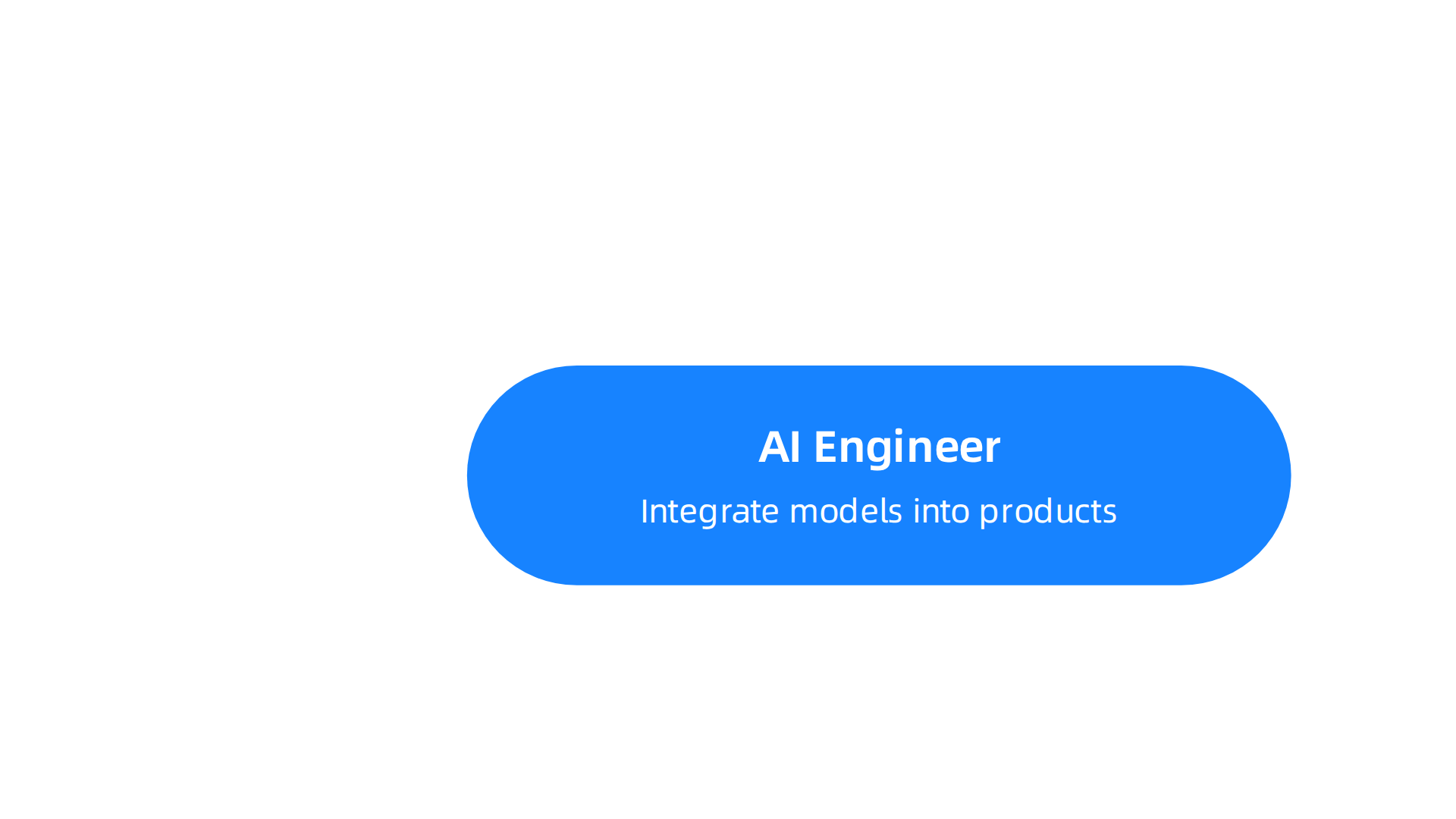
- AI Engineer: You take existing AI models and integrate them into real products. You build APIs, set up pipelines, and make sure the model runs fast in production. You need strong coding skills plus some understanding of machine learning.
- ML Engineer: This is a deeper role. You train custom models, fine-tune them, and manage the data and infrastructure. It is more research heavy, but still requires solid software engineering.
- Prompt Engineer: Yes, this is a real job. Prompt engineers act as translators between business needs and AI models.
They craft prompts that get useful, accurate outputs Promptitude. It is a skill that any information technology professional can pick up today.
The cool part? Many of these roles are not reserved for PhDs. Traditional software developers are upskilling into them every day. You can start by learning how to call an AI model from your code. Then move into prompt engineering. Then try training a small model.
If you want to future-proof your career, now is the time to explore these paths. Understanding the difference between computer science and software engineering can help you choose the right direction.
Want to keep learning about what these roles actually look like day to day? Get clear, daily updates on AI careers and tools. Sign up for The Deep View Newsletter so you never miss a trend.
AI Engineer: The New Full-Stack?
So is the AI Engineer the new full-stack developer? In many ways, yes. This role sits right at the crossroads of traditional software development and modern machine learning. An AI Engineer does not just write code. They take an AI model, build an API around it, set up the data pipelines, and deploy everything so it runs fast and reliably in production.
Think of it this way. A regular software developer might build a web app. An AI Engineer builds the system that powers the smart features inside that app. They need to understand backend APIs, cloud infrastructure, and database management, skills that every junior developer must have in 2026 Dev.to. But they also need to know how to work with model platforms and handle ML ops tasks.
Because of this blend, the AI Engineer role is expected to become the most sought-after coding job by 2027. Companies across every industry, from healthcare to finance, need people who can bridge the gap between research and real products. If you are an IT engineer or a product development engineer right now, you already have a strong foundation. You just need to layer on some AI skills.
Building this kind of career takes focus. You need to decide where to invest your learning time ServiceNow. Understanding the difference between computer science and software engineering can help you make that decision.
Want to stay ahead of this shift and see exactly what AI tools top engineers are using? Get clear, daily updates on AI careers and tools. Sign up for The Deep View Newsletter so you never miss a trend.
Prompt Engineering: Fad or Future-Proof?
You have probably seen job postings for "prompt engineers" and wondered if it is a real career or just a flash in the pan. The truth is, prompt engineering has become a real niche specialization in the AI world. It is not just about typing nice questions into ChatGPT. It requires understanding how different models think, behave, and respond to small changes in wording. That takes more than just coding skills. It takes a curious, experimental mindset.
So is it future-proof? The short answer is yes, for now. As models get smarter, the raw skill of writing prompts may become less valuable. But the deeper skill, understanding model behavior and troubleshooting AI outputs, will only grow in importance. Many experts predict that these abilities will simply merge into the everyday toolkit of every software developer. The same adaptability and desire to learn that make a good IT engineer will keep you relevant here.
Thinking about adding AI skills to your stack? Start by playing with different models and learning their quirks. Our comparison of the top models in 2026 can help you get started: AI Model Comparison 2026: GPT-4o, Claude 4, Gemini 2.0 and Open Source Models.
Want to stay ahead of every AI trend that matters for developers? Get daily clarity straight to your inbox. Sign up for The Deep View Newsletter so you never miss a shift in the landscape.
The Shift Towards Full-Stack AI Development
Here is the thing. The role of a software developer in 2026 looks nothing like it did five years ago. You cannot just focus on one layer anymore. The walls between frontend, backend, and AI have come down. Companies now expect developers to work across the entire stack, including the AI layer.
Think about it. In 2026, AI generates about 41% of all code globally, according to recent research. And 84% of developers already use or plan to use AI coding tools. This means a software developer must understand not just how to write code, but how to prompt models, integrate APIs, and review generated code. That is a much bigger job description.
This convergence is creating demand for T-shaped skill profiles. You need deep knowledge in one area, say back-end engineering, plus broad skills across frontend, infrastructure, and AI model behavior. The IT engineer who can handle the whole pipeline is becoming the most valuable team member.
For example, a product development engineer working on a new app might now handle the frontend interface, the backend logic, and the model integration that powers a recommendation feature. They need to know how to select the right model, prompt it effectively, and secure the output. That is a steep learning curve, but it is the new reality of coding jobs.
To succeed, you need practical tools that cover the full stack. Check out our list of best AI apps for developers in 2026 to find tools that help across all layers. And if you want to stay ahead of every shift in this landscape, get daily clarity from the newsletter that over 50,000 developers trust.
Sign up for The Deep View Newsletter to make sure you never miss a trend that could reshape your career.
Skills and Certifications for Career Advancement
So if you need to become that full stack software developer we just talked about, where do you start? The good news is you do not need a four year degree to get ahead. In 2026, employers care more about what you can actually do.
Hard Skills Still Rule
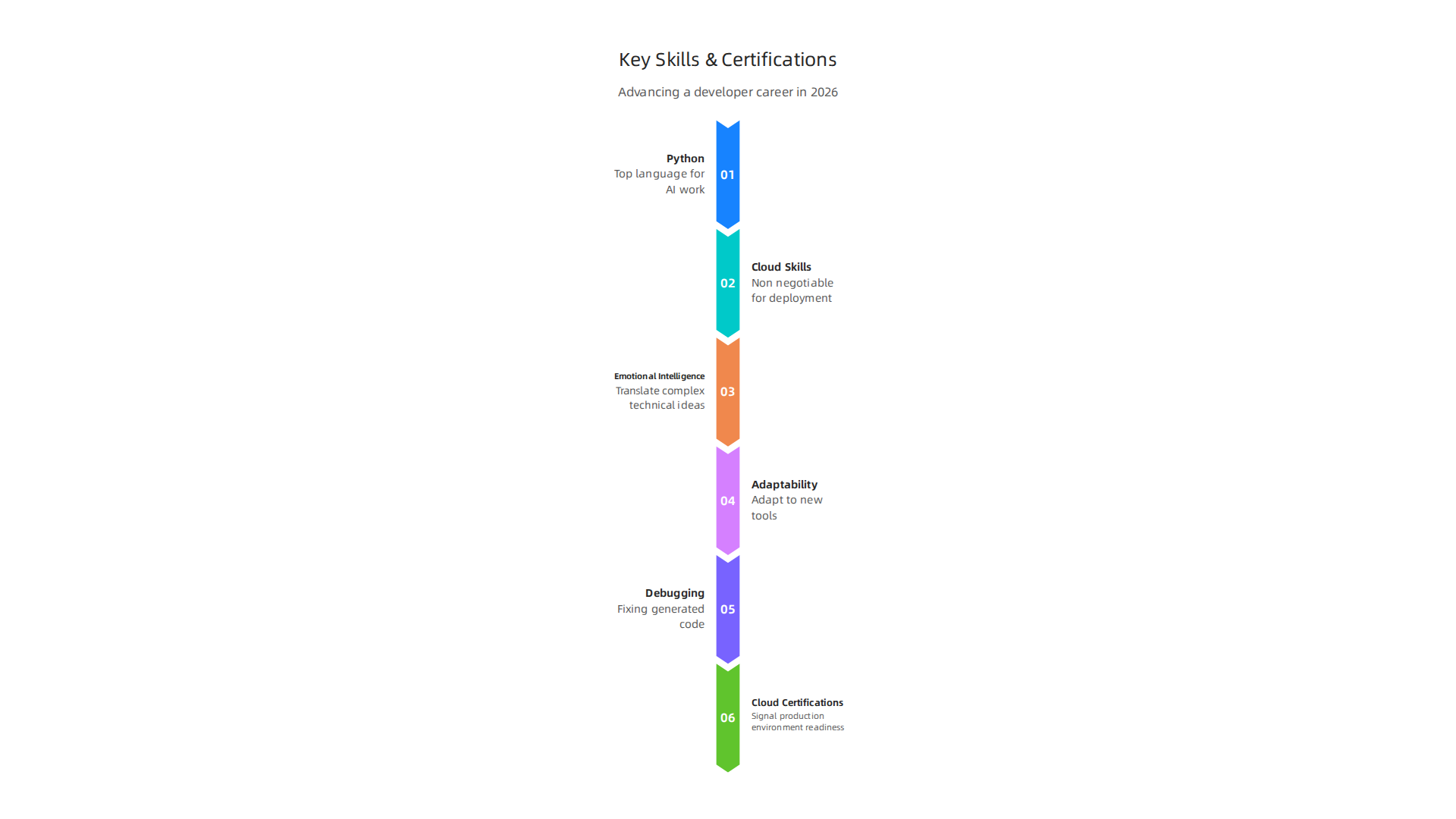
Python remains the top language for AI work. You also need to understand major AI frameworks like TensorFlow and PyTorch. On top of that, cloud skills are non negotiable. As one forum discussion notes, cloud computing, DevOps, and AI tools top the list of what employers want right now source: ServiceNow Community. Without experience deploying models on AWS or Azure, you will struggle to land advanced coding jobs.
Soft Skills Are the Secret Weapon
Here is something surprising. Emotional intelligence and adaptability are now just as important as your Python skills. According to Jalasoft, the ability to translate complex technical ideas to non technical stakeholders is a must have for any IT engineer in 2026 source: Jalasoft. And debugging, fixing generated code, and staying calm under pressure are the top skills that make junior developers truly valuable source: Dev.to. As a product development engineer, you will be expected to adapt to new tools every quarter.
Certifications That Open Doors
Cloud certifications are gaining real weight. AWS Certified Developer, Google Professional Cloud Developer, and Azure AI Engineer credentials signal to hiring managers that you can work in production environments. These are not just resume padding. They prove you can handle the infrastructure side of AI development. Pair a certification with a portfolio of real projects, and you will stand out.
Never Stop Learning
The landscape changes fast. Many software developer professionals now take bootcamps and nano degree programs to stay current.

Short courses on LLM integration, prompt engineering, and MLOps can fill skill gaps quickly. And if you want to know which tools to learn next, check out our curated list of best AI apps for developers in 2026 to see what the top teams use.
The bottom line: build a mix of hard technical skills, people skills, and verified credentials. That is the recipe for career growth in 2026.
Sign up for The Deep View Newsletter to get daily insights on the skills and tools that define your future.
The Impact of AI Tools on Day-to-Day Development
So you have the skills and certifications. But how do AI tools actually change your work as a software developer in 2026?
The short answer is: a lot.
Productivity Jumps (and Trust Drops)
AI coding assistants have become part of everyday life for most developers. Right now, AI generates about 41% of all code globally, and developers finish tasks 20% to 45% faster because of it source: Exceeds.ai. Over 80% of developers say their productivity has gone up since they started using these tools source: JetBrains Research. That sounds great, right?
Here is the catch. Only 29% of developers actually trust the code AI produces source: Uvik.net. That trust gap creates a new kind of work: reviewing and fixing AI-generated code. In fact, 81% of engineering leaders now say their teams spend more time on code review than they did before AI source: MIT Sloan. So the information technology skills you build must include the ability to spot bad AI output.
Teams Need Clear Rules
Companies are learning the hard way that you cannot just hand AI tools to every IT engineer and hope for the best. Security risks like prompt injection, data leakage, and shadow AI are growing fast source: DigitalOcean. That is why smart teams are putting guidelines in place. As one security expert put it, "AI coding tools are not risk-free for enterprise use, and the code output must be reviewed and implemented by a security-proficient human" source: Talkdev.
If your team does not have these rules yet, you need them. Check out our guide on the future standard for AI implementation and why your team needs clear rules now to get started.
Reviewing AI Code Is a Superpower
Here is the truth. The best software developer in 2026 is not the one who writes the most code. It is the one who can quickly review AI output, catch bugs, and improve it.

As a product development engineer, you will spend more time deciding what code to keep than writing from scratch. That takes critical thinking and a deep understanding of your project.
The data backs this up. Studies show that while satisfaction with tools like GitHub Copilot is high, the actual time savings are modest once you factor in review time source: Arxiv. The real win is doing better work, not just faster work.
So what does this mean for your day? You will open your editor, ask AI for a function, read it carefully, test it, and then fix the parts that look shaky. That is the new normal. And honestly, it makes you a sharper developer.
Want to see which tools the top coding jobs rely on? Check out our list of best AI apps for developers in 2026 to stay ahead of the curve.
Sign up for The Deep View Newsletter to get daily insights on how AI is reshaping development workflows and what it means for your career.
Where the Industry Is Headed: Career Outlook for 2026 and Beyond
Here is the good news for anyone wondering if coding jobs still have a future. The job market for software developer roles is not just stable. It is growing fast. The U.S. Bureau of Labor Statistics projects employment of software developers, quality assurance analysts, and testers will grow 15% to 17% from 2024 to 2034.
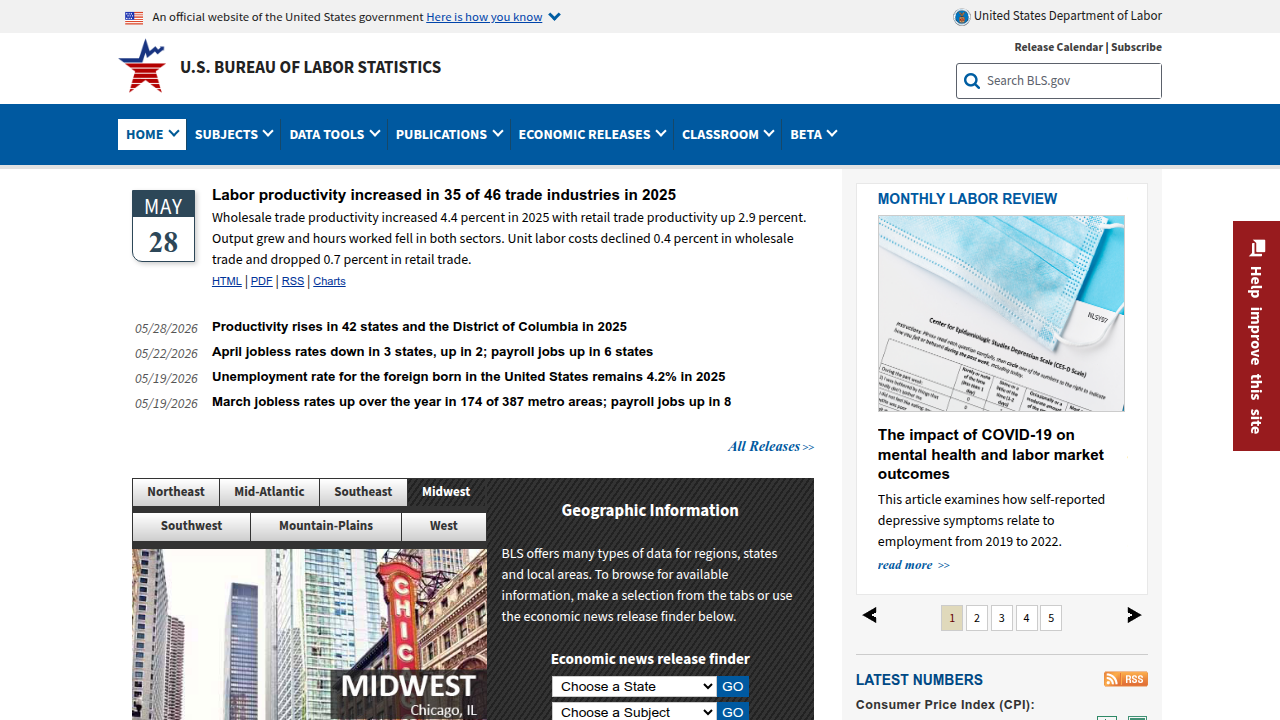
That is much faster than the average for all jobs source: BLS. Other reports show 297% growth in postings for software developers and engineers as of 2025 source: TechTarget. If you are an IT engineer or thinking about becoming one, the demand is clearly there.
AI Expertise Pays a Premium
But here is the part that matters most for your paycheck. Software developer roles that require AI skills now come with a serious salary boost. The median salary for a software engineer in 2026 sits around $127,000 source: Boundev. Yet AI-specific roles like machine learning engineer (+34%) and DevOps engineer (+28%) are growing even faster and paying more. Companies are hunting for product development engineer talent that can work with AI models. As one industry report says, AI software engineer jobs are exploding in demand because every company needs someone who can build and maintain AI-powered features source: Workforce Institute. If you want to earn more, learning how to use and review AI tools is the clearest path.
Where the Opportunities Are
Geographic hotspots for 2026 include the usual US tech hubs like San Francisco, Seattle, and New York. But don’t overlook growing Asian markets. Cities in India, Singapore, and Japan are seeing surging demand for information technology professionals with AI skills. Remote work also remains strong, so you can live where you want and still land a top job.
The takeaway? The industry is not shrinking. It is shifting. The best software developer roles now go to people who combine solid fundamentals, AI expertise, and the ability to review and improve machine-generated code.
Want to stay ahead of where the market is going? The tools you use today shape the career you have tomorrow. Check out our list of best AI apps for developers in 2026 to see what top engineers are using.
Sign up for The Deep View Newsletter to get daily insights on AI career trends, salary data, and which skills will keep you in demand.
Conclusion: Building a Resilient Career in the Age of AI
So what does all this mean for you, whether you are a seasoned IT engineer or someone just starting to explore coding jobs? The answer is clear. You do not have to fear AI. You just have to learn how to work with it.
The data backs this up. Over 80% of developers in a 2026 JetBrains survey said AI tools boosted their productivity source: JetBrains Research. But here is the catch. 81% of engineering leaders now say their teams spend more time reviewing AI generated code source: MIT Sloan. That means strong fundamentals are more important than ever. The best software developer roles now go to people who can both write solid code and smartly review what AI creates.
Your best move is to build a routine of continuous learning. Take a course. Experiment with new tools. And stay informed through trusted sources. If you want to level up your skills, check out our guide to the best computer science courses for AI development.
The future of information technology is bright. The product development engineer and the coding professional who will thrive are the ones who embrace change, keep learning, and combine their human judgment with machine speed. You can be one of them.
Sign up for The Deep View Newsletter to get daily AI career insights and practical tips delivered to your inbox.
Summary
This article explains how the software developer role is transforming in 2026 rather than disappearing, driven by widespread AI tooling and new job titles like AI Engineer, ML Engineer, and Prompt Engineer. It covers how frontend, backend, and full‑stack work now requires AI integration skills, what day‑to‑day development looks like with AI (including the need to review and fix generated code), and which hard and soft skills employers value most. You’ll learn which specializations are growing fastest, which certifications and cloud skills open doors, and practical steps to shift from traditional coding to full‑stack AI development. The piece also outlines career outlook and salary trends, security and governance concerns teams must address, and concrete actions—tool practice, focused learning, and portfolio projects—to stay relevant in a market that rewards AI fluency and strong fundamentals.