

Master the Information Technology Definition for IT Roles Skills and Career Paths 2026
Overview
The world of technology in 2026 is always changing very fast. It can be hard to keep up with all the new tools and jobs. One big problem is that many job titles in the Information Technology (IT) world sound very similar or even mean slightly different things at different companies. This can make it confusing if you are looking for a job or trying to plan your career path in IT.
For example, what is the exact information technology definition for common roles like a computer systems analyst? How is that different from what a software engineer does? And where do business management technology jobs fit into this ever-growing field? The truth is, the meaning of many job titles can vary greatly.
New tools and skills appear almost daily, especially in busy tech hubs. This means what an employer is looking for in software engineer roles or other IT positions might be different from one company to the next. Official reports from sources like the U.S. Bureau of Labor Statistics show a wide variety of computer and IT occupations, each with its own job summary and education needs Computer and Information Technology Occupations. Yet, even these can be general and leave many questions unanswered. This fast pace makes it tough to know which skills you need, what training is best, or how to move from one IT job to another. You might feel lost trying to figure out the right path in this exciting but complex field.

This guide is here to help make things clear. We will look closely at many common IT roles. We’ll give you a clear information technology definition for each, explaining what those roles actually involve. You will learn about different career pathways and the skills that employers are looking for right now. If you are wondering how to plan your next steps, we will also share tips on how to make smart career moves and smooth transitions. You can also dive deeper into Decoding IT Engineer Roles: Definitions, Skills, and Career Paths for more detailed information.
Our goal is to give you a clear picture of the IT landscape in 2026, so you can make informed choices for your future. To get a comprehensive overview of different career options and the skills needed, explore the Software Developer Roadmap 2026: Career Paths and Skills for the AI Era.
Want to stay updated on the latest trends and changes in AI and technology? The AI Newsletter Worth Reading delivers clear daily insights directly to your inbox.
It is true that different jobs in IT can sound alike. But each one has its own main focus and duties. Let’s look at some common information technology definition examples for key roles you will find in 2026.
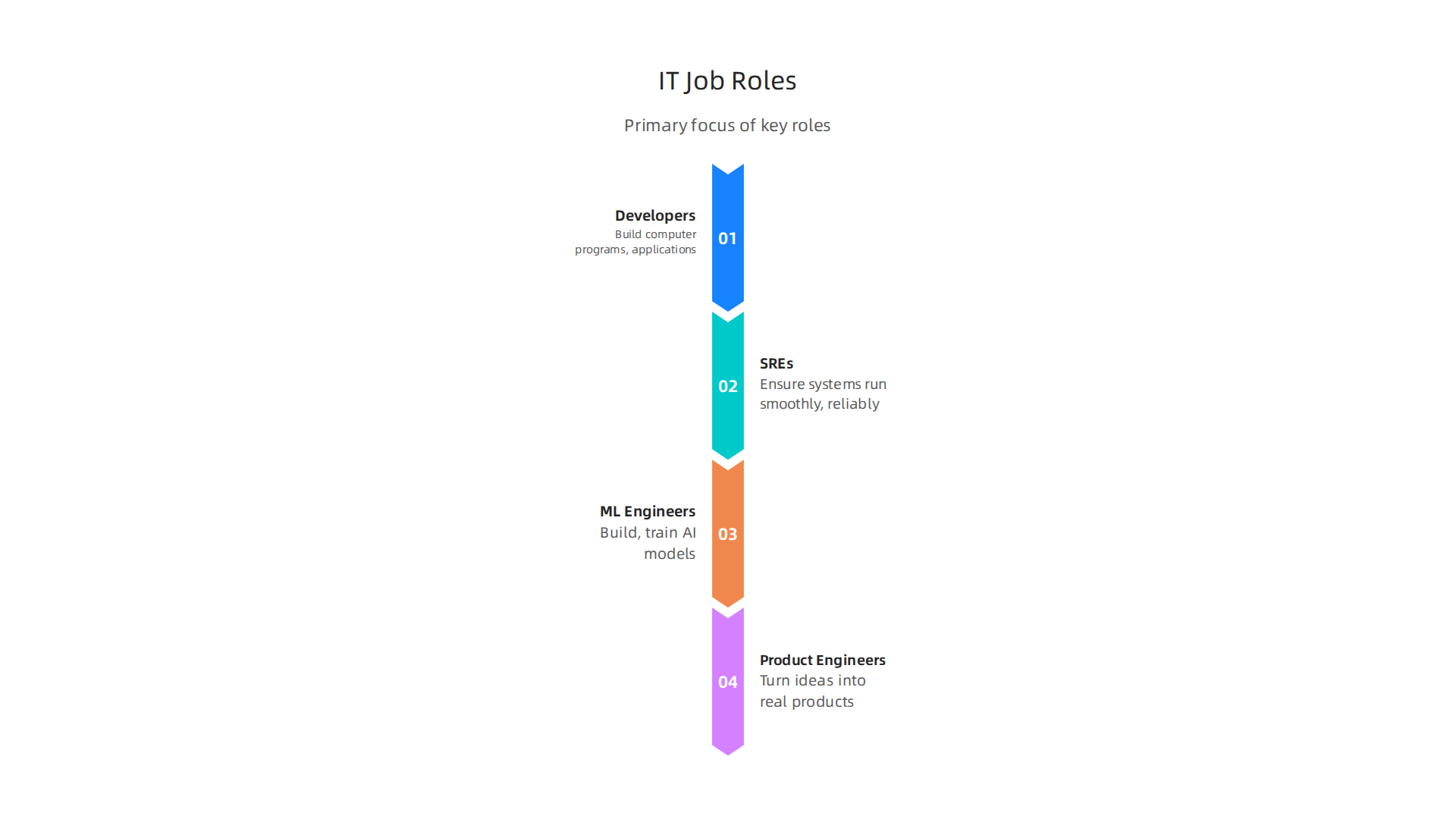
Developers and Software Engineers
A developer or software engineer builds computer programs and applications. Think about the apps on your phone or the websites you visit; software engineers create these. They use coding languages to write instructions that tell computers what to do. Their main job is to design, make, and test software. They also fix any problems that come up. These software engineer roles are very important because they bring new ideas to life through code. If you are looking to start your career in this field, it is good to know how to land a software engineer entry-level job in 2026.
Site Reliability Engineers (SREs)
A Site Reliability Engineer, or SRE, makes sure that computer systems and software run smoothly all the time. Imagine a website that never crashes and always loads fast; that’s an SRE’s goal. They work to prevent problems, fix them quickly when they happen, and automate tasks so things stay steady. SREs often use a mix of software engineering and operations skills to keep online services reliable for everyone. Understanding the bigger picture of how different parts of a system work together is key for them. You can learn more about this in Computer Systems Technology Explained: A Modern Guide for 2026.
Machine Learning (ML) Engineers
Machine Learning Engineers are focused on Artificial Intelligence (AI). They build and train computer models that can learn from data. For example, they might create systems that can recognize faces, understand speech, or make predictions. These engineers need to be good at both coding and understanding how data works. Their work helps make smart tools that are changing many industries. The demand for roles like AI/ML engineers is very high in 2026, showing a big increase in hiring across the tech market 2026 Technology job market: In-demand roles and hiring …. If you are looking to get into this field, knowing how to choose the right AI tools for developers to boost productivity is a great skill to have.
Product Engineers
A Product Engineer works to turn ideas for new products into real things. They often sit between the technical team and the business side. They make sure the product meets the needs of users and the goals of the company. This role involves understanding how the product is built, how it works, and how it will be used by customers. They often work closely with business management technology jobs to guide the product’s success from start to finish.
These roles can sometimes feel like they overlap, especially in smaller companies or fast-moving tech hubs. For example, a computer systems analyst might sometimes do tasks that feel like a product engineer or even a software engineer, helping to bridge the gap between business needs and technical solutions. Many companies use different titles for similar jobs, but the core work often stays true to these general descriptions.
To keep up with the fast changes in AI and technology, you need good information.
The AI Newsletter Worth Reading gives you clear daily insights right in your inbox.
Core technical skills and toolchains by role
The various jobs in IT need different tools and knowledge. Let’s dig deeper into the core skills and toolchains that are key for these roles in 2026. This will help you understand the true information technology definition for today’s jobs.
No matter what specific role you choose in IT, some skills are always important. These are like building blocks for any tech job.
Foundational Skills for All Tech Roles
Every person working in tech needs a basic set of skills. These include:
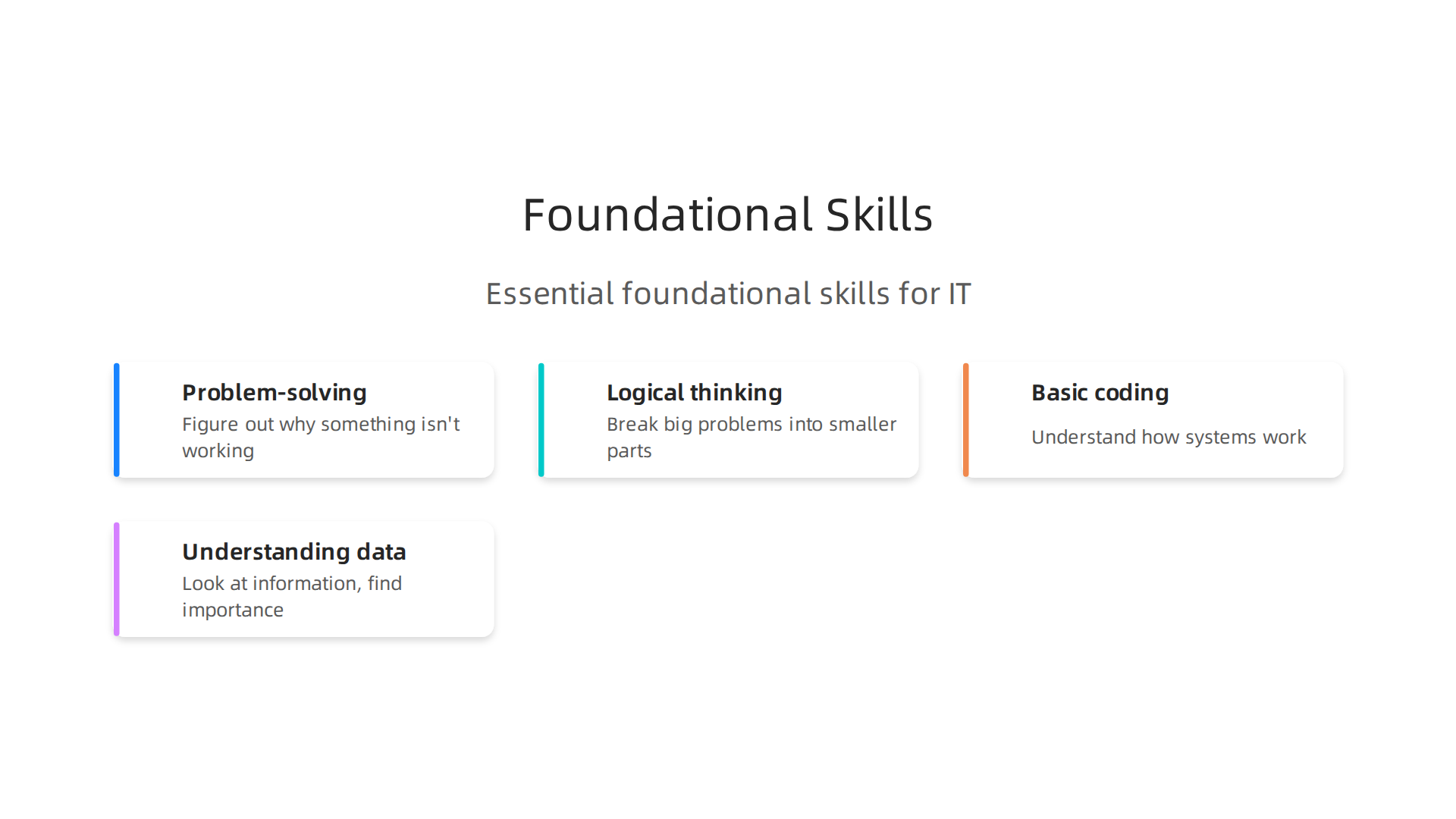
- Problem-solving: Being able to figure out why something isn’t working and find a way to fix it. This is key for all
software engineer rolesand beyond. - Logical thinking: Breaking down big problems into smaller, easier parts.
- Basic coding: Even if you aren’t a developer, knowing a little code can help you understand how systems work. Languages like Python and SQL are very popular for this reason Most In-Demand IT Skills Employers Want in 2026.
- Understanding data: Knowing how to look at information and find what’s important.
Role-Specific Skills and Tools
Now, let’s look at the special skills and tools for each job:
- Developers and Software Engineers: These folks need to know specific coding languages very well, like Python, Java, or JavaScript. They also use tools for testing their code and managing projects. Modern developers often work with cloud platforms like AWS or Azure, and they might use tools like Git for teamwork. To grow in these roles, it’s good to keep learning and follow tailored learning paths for software developers.
- Site Reliability Engineers (SREs): SREs are masters of keeping things running. They use tools for watching how systems perform, called monitoring tools. They also work a lot with automation tools to make sure tasks are done correctly every time. Knowledge of operating systems like Linux and cloud services is a must for them.
- Machine Learning (ML) Engineers: For ML engineers, Python is often the main language. They use special libraries and frameworks like TensorFlow or PyTorch to build their AI models. Data analysis tools are also very important for them to prepare and understand the data their models learn from. These engineers need a good grasp of how
AI developer tools in 2026are used. - Product Engineers: These roles need a mix of tech and business smarts. Product engineers use project management tools to keep things on track. They also need to understand user research tools to find out what customers really want. Their skills bridge the gap between technical teams and
business management technology jobs, ensuring the product meets market needs.
Common Toolchains and Software
In 2026, many tech companies use certain tools that are popular across different roles. For example, cloud platforms and tools for continuous integration are very important What Nearly 1 Million Job Postings Reveal About the Tech Tools U.S. Employers Want Most. Some commonly seen software names include Apache Kafka, Databricks, and Microsoft Azure, as reported in the 2026 job market.
Soft Skills and Domain Knowledge
Beyond technical skills, soft skills are very important. These are abilities that help you work well with others.
- Communication: Being able to explain complex tech ideas simply to non-tech people.
- Teamwork: Working well with your team members is key, especially in busy
tech hubs.

- Adaptability: The tech world changes fast, so being able to learn new things quickly is a huge plus.
- Critical thinking: Thinking deeply about problems and solutions.
Also, having good domain knowledge means you understand the business or industry you are working in. For example, a software engineer building a banking app should understand a bit about banking. This makes you more valuable, helps you suggest better solutions, and can even lead to higher-level computer systems analyst jobs or management roles. These skills often mark the difference between a junior and a senior position. If you want to dive deeper into how different roles work together, check out Decoding IT Engineer Roles Definitions Skills And Career Paths.
Common career pathways and promotion ladders
After learning about all the skills you need, you might wonder how you can move up in your tech career. In 2026, the world of information technology offers many ways to grow, not just one straight line. Understanding these paths is a big part of the information technology definition for anyone looking to build a future in this field.
There are two main ways people move forward in their jobs: linear and lateral.
Linear Career Growth
A linear path means you get better at what you already do and take on more senior roles within the same job area. Think of it as climbing a ladder, step by step.
- Individual Contributor to Tech Lead: For example, a junior
software engineermight become a seniorsoftware engineer roles. From there, they could become a Tech Lead, guiding other engineers on projects. This path focuses on deep technical knowledge. - Management Track: Some senior engineers then move into management, becoming engineering managers or directors. This means they spend more time leading people and less time coding themselves. Roles like
computer systems analyst jobscan also follow a linear path, moving from analyzing systems to managing projects or teams that build them.
Companies often have clear "career ladders" that show you exactly what skills and experiences you need to reach the next level. Many IT career paths start with entry-level support and grow with experience, offering many ways to specialize 7 IT Career Paths and How to Get Started in 2026.
Lateral Career Moves
A lateral move means you change directions or switch to a different type of job within the tech world. This can be a great way to learn new things or find a role that fits you better.
- Changing Focus: A developer might move into a Quality Assurance (QA) role to focus on testing, or become a product engineer who works more closely with customers.
- Bridging Tech and Business: Someone with strong technical skills could move into
business management technology jobs. For example, an engineer might become a technical project manager, using their tech understanding to lead business-focused projects. This path helps you see the bigger picture of how technology helps a business.
These lateral moves are very common in today’s fast-changing tech hubs. They let you use your existing skills in new ways and pick up new ones along the way.
How to Choose Your Path
Choosing your career path is a personal journey. Here are some tips for 2026:
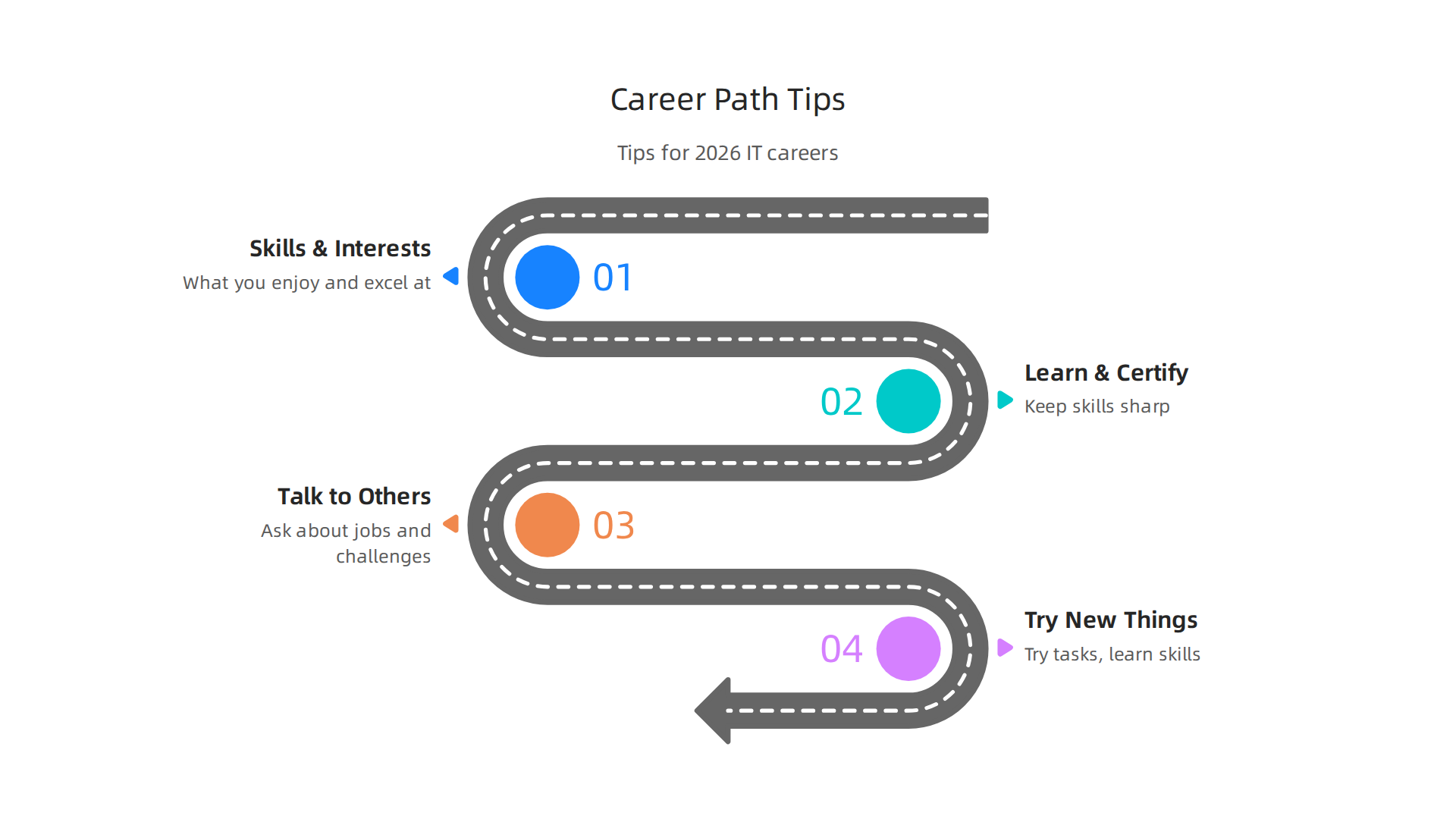
- Look at Your Skills and Interests: Think about what you enjoy doing and what you’re good at. Do you love solving technical puzzles, or do you prefer leading teams?
- Learn and Get Certified: Keeping your skills sharp is vital. Online courses and certifications can help you prepare for the next step, whether it’s linear or lateral. Many IT jobs need you to keep learning. If you are looking for a guide to grow in your current role, consider a software developer roadmap 2026.
- Talk to Others: Ask people in different roles about their jobs. What do they like? What are the challenges?

This can help you see what each path is really like.
4. Try New Things: Sometimes, the best way to find your path is to try something new. Take on different tasks at work or learn a new skill in your spare time.
Remember, your career journey might not be a straight line. It’s okay to change your mind and explore different directions. The most important thing is to keep learning and growing.
Want to stay informed about the rapidly changing world of AI and technology, which often influences career paths in IT? Get clear daily AI updates from The AI Newsletter Worth Reading.
Certifications, degrees, and signals employers value
After you’ve thought about different career paths, the next big question is often: what do employers look for? How do you show them you have the skills they need? In 2026, there are a few important ways to do this: getting a degree, earning certifications, and showing off your work with a strong portfolio. All these help define your place in the field, adding to your personal information technology definition.
Academic Degrees: A Strong Foundation
Many people start their journey in information technology by getting a college degree. This could be a bachelor’s or master’s degree in computer science, information systems, or a related field. A degree shows that you’ve studied deeply and have a wide understanding of tech ideas. For some roles, like certain software engineer roles or even high-level computer systems analyst jobs, a degree is often the first step. It shows you can learn complex topics and stick with them for a long time. For example, some career paths suggest that a four-year degree is often needed for entry into the IT field, though experience can sometimes take its place Information Technology Career Pathways. If you’re looking for guidance on choosing these programs, you might want to learn about how to choose online bachelor degree programs for engineers in 2026.
Certifications: Showing Specific Skills
Certifications are like special badges you earn for knowing how to do specific tasks or use certain tools. For example, you might get certified in a certain type of cloud computing or network security. These are great for showing employers you have the exact skills they need right now. In 2026, many companies value these. Some studies even show that people who get certified can see their pay go up in just a few months Pearson VUE 2025 Value of Certification Report – Candidate Report. This is especially true for roles in specific tech hubs that need a very particular skill set.
Are certifications always worth it? Well, yes, often. Companies see real financial benefits from having certified employees. The value can be quite high, with some estimating an average of about $17,500 more value per employee each year when they are fully skilled through certifications 2026 Value of IT Certification Employer Report – Pearson. However, it’s good to pick certifications that focus on specialized or advanced skills, like those related to AI-powered data analysis, rather than just very basic, general ones AI career paths and skills for Information Systems graduates.
You can explore options like best computer science certifications 2026 to find what fits your career goals.
Practical Experience and Portfolios: What You Can Do
Beyond degrees and certifications, what you’ve actually done is super important. This is where your portfolio comes in. A portfolio is a collection of your work, like projects you’ve built, code you’ve written, or solutions you’ve created. This hands-on experience shows employers you can apply your knowledge to real-world problems. For business management technology jobs, showing how you’ve solved business problems with tech is a huge plus. Sometimes, practical experience and a strong portfolio can even open doors if you don’t have a traditional degree. It’s all about proving you can deliver.
Which Signal Is Best?
Truthfully, there isn’t one "best" signal. Most employers in 2026 look for a mix. A degree gives you a broad base of knowledge. Certifications prove you have specific, in-demand skills. And a strong portfolio or work experience shows you can actually do the job. Many find that combining these different types of learning and showing your work is the most powerful way to grow in your information technology career. Keeping your skills fresh and showing what you can do is how you stay valuable in the fast-moving tech world.
What employers actually look for in hiring and interviewing
Beyond simply having a degree or certification, how do companies actually figure out if you’re the right fit? In 2026, employers don’t just look at your resume. They use different tests and exercises to see your skills in action. They want to know what you can do, not just what you know.
Showing Your Skills in Action
When you apply for a job in information technology, expect to go through a process that checks your practical abilities.

This often means more than just talking about your experience in an interview.
- Coding Tests and Take-Home Projects: For many
software engineer roles, you’ll get a coding test to solve a problem. Sometimes, it’s a small project to do at home. This lets you show your skills without the pressure of an in-person test. It helps employers see how you build things and solve problems, much like a real work task Best Interview Evaluation Methods for Technical Roles. - Pairing Sessions: Some companies have you work with one of their team members on a problem during the interview. This "pairing" session helps them see how you think, how you work with others, and how you approach challenges.
- System Design Interviews: For more senior roles, like some
computer systems analyst jobs, you might face a system design interview. Here, you’ll be asked to plan out a big software system. This shows if you can think about the big picture, how different parts of a system connect, and how to make it work well. This kind of interview helps evaluate your technical smarts and how you solve problems Best Practices for IT Interviewing and Candidate Evaluation – LinkedIn.
Employers are looking for specific skills. Many are in high demand, such as AI adoption, cloud computing, cybersecurity, and data analytics. Knowing programming languages like Python and SQL is also key, and good communication skills are always important too Most In-Demand IT Skills Employers Want in 2026.
Different Companies, Different Expectations
The way companies hire can change a lot depending on their size and what they do.
- Startups: Smaller, newer companies often need people who can do many different things. They might ask you to wear many hats. They value people who are quick learners, can adapt to changes, and are excited to help build something new from the ground up. You might work on a broad range of tasks, so showing a wide skill set is helpful. If you are interested in innovative projects, you might explore how to build your AI innovation lab from experiments to production impact.
- Larger Companies (Enterprises): Big companies usually have more structured roles. They might look for people who are very good at one specific thing. They often have clear processes and care a lot about following rules, especially in areas like security and how different systems work together. For
business management technology jobsin large organizations, showing how you can fit into existing structures and improve processes is a big plus. These companies also often look for skills in enterprise software applications and governance 2026 Technology job market: In-demand roles and hiring …. - Tech Hubs: In big
tech hubs, where many tech companies are located, there can be more competition for jobs. This means interview processes might be tougher, and employers might expect even more specialized skills. Staying updated on the latest trends and tools is extra important in these areas.
No matter the company size or location, most employers in 2026 are looking for people who can show they have the skills to solve real-world problems. That’s the real information technology definition for many hiring managers: a problem solver.
Get clear daily AI updates from The AI Newsletter Worth Reading.
The world of work is always changing, and in 2026, new tools like Artificial Intelligence (AI) and automation are making big changes to jobs in information technology. What companies look for in workers is also shifting. Some tasks that humans used to do are now being handled by smart computer programs.
Which IT Jobs Are Changing the Most?
Not all jobs are affected in the same way. Some parts of IT are feeling the changes more quickly.
- Routine and Entry-Level Work: Jobs that involve lots of repeated tasks or checking things manually are changing fast. For example, some entry-level testing or support roles might see fewer openings. Experts suggest that close to 1.8 million manual testing and support jobs could be affected worldwide by 2026 Impact of Artificial Intelligence on IT Industry Jobs and Emerging …. This includes some junior
software engineer roleswhere basic coding or troubleshooting can be automated. Even some simplercomputer systems analyst jobsthat deal with routine data checks could change. - Software Development and Tech Services: Research shows that areas like software development and tech services are directly impacted by AI. This means the way people build and fix software is getting new tools that can help them work faster.
New Skills for New IT Roles
While some jobs might change, AI is also creating many new opportunities. Over 2.3 million new jobs needing AI skills are expected to appear Impact of Artificial Intelligence on IT Industry Jobs and Emerging …. The information technology definition itself is expanding to include understanding and working with AI. This means the future of IT is not about being replaced by AI, but about working alongside it.
To do well in this new world, people in IT need to learn new skills:
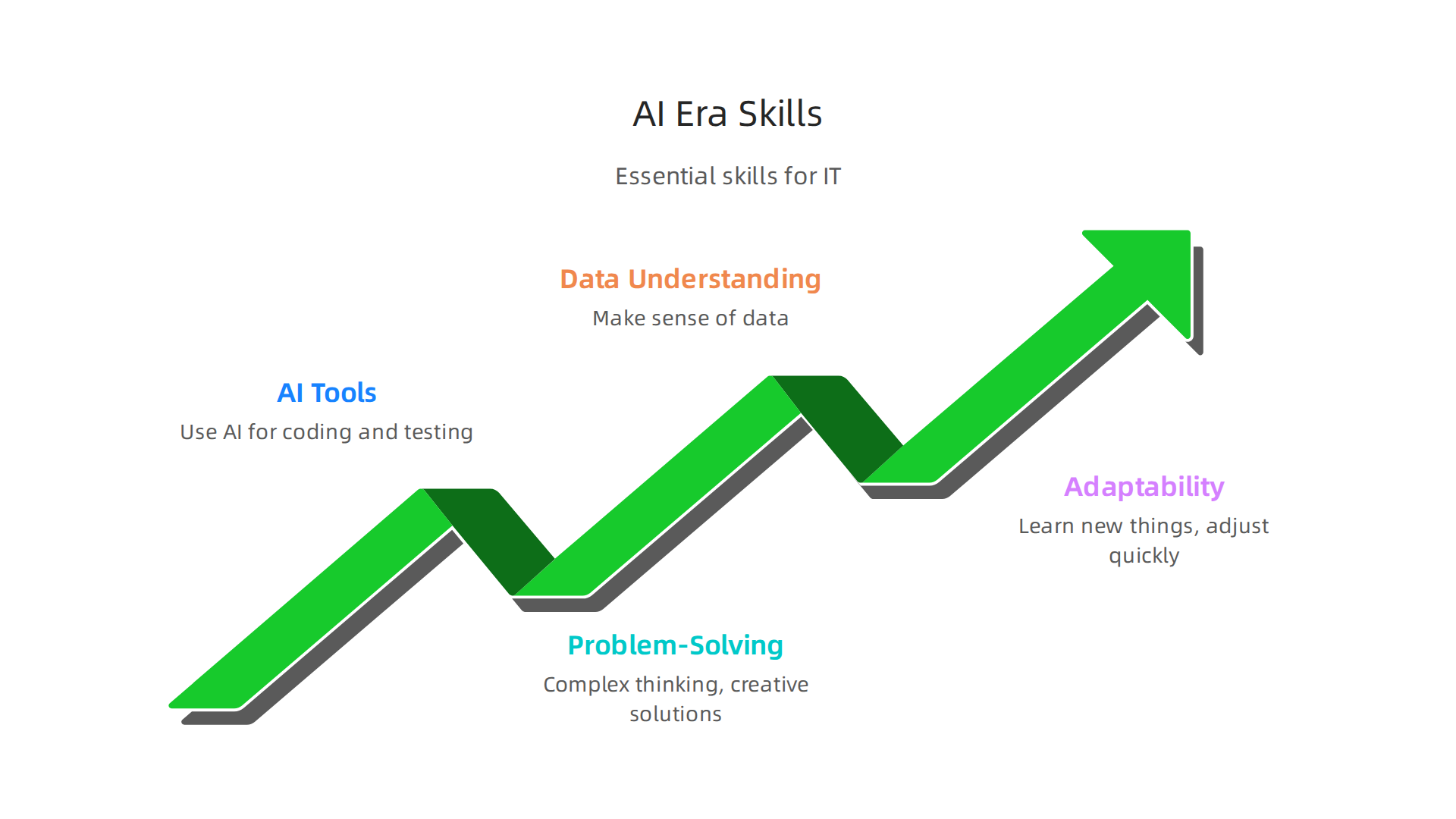
- Working with AI Tools: Learning how to use AI tools for coding, testing, and managing projects is key. This helps
software engineer rolesandcomputer systems analyst jobsbecome more powerful. You can explore how to maximize software development efficiency with AI tools. - Problem-Solving and Critical Thinking: AI can handle many simple problems. But humans are still needed for complex thinking, creative solutions, and understanding big-picture goals.
- Data Understanding: Knowing how to make sense of large amounts of data and use it to make smart choices is very important, especially in
business management technology jobs. - Adaptability: The tech world changes quickly. Being able to learn new things and adjust to new tools and ways of working will make you much stronger.
Actually, many jobs won’t disappear completely. Instead, about 50% to 55% of jobs in the U.S. will be reshaped by AI in the next few years. This means people will work differently, using AI to help them AI Will Reshape More Jobs Than It Replaces | BCG.
Steps for Teams to Stay Ahead
Companies and teams also need to take action to be ready for these changes:
- Upskilling Employees: Help your team learn new skills that are important for working with AI. There are many great online resources, including free online courses to close the AI skills gap.
- Smart Hiring: When hiring new people, look for those who are eager to learn about AI and can adapt to new technologies. Look for candidates who show strong critical thinking skills, not just rote knowledge.
- Embrace New Tools: Don’t be afraid to try new AI-powered tools that can make work easier and faster. This can help teams boost their productivity and stay competitive. Learning to choose the right AI tools for developers to boost productivity is a helpful first step.
- Plan for the Future: Think about how AI will change your business in the next few years. Create a plan for how your team will use AI to improve its work. For career paths, consider a software developer roadmap 2026 that includes AI skills.
By learning and adapting, individuals and teams can use AI and automation to make their work better and more exciting.
By learning and adapting, individuals and teams can use AI and automation to make their work better and more exciting. Now, let’s talk about how you, as an individual, can make smart moves in your IT career to keep up with these changes. This means knowing how to shift from one information technology definition of a job to another, like moving from a regular software developer to an expert in Machine Learning (ML).
How to Transition Between IT Roles (e.g., Developer to ML Engineer)
Changing your job role in IT can feel like a big step, but it’s very doable if you have a plan. With AI making new kinds of jobs, it’s a great time to learn new things and move into roles that are growing fast.
Here’s how you can make a smooth move:
1. Learn New Skills Step-by-Step
First, figure out what new job you want. Do you like the idea of working on software engineer roles that build smart AI systems? Or maybe you’re interested in computer systems analyst jobs that focus on how AI helps businesses? Once you know your goal, find out what skills you need.
- Online Courses and Training: Many websites offer great courses. Look for ones about AI, machine learning, data science, or prompt engineering. These courses can teach you the basics and more. You can even find platforms that offer tailored learning paths for software developers.
- Small Projects: Start building small projects that use AI. For example, if you want to be an ML engineer, try making a simple program that can tell the difference between cats and dogs in pictures. This helps you practice what you learn.
- Read and Follow Experts: Stay updated on new tools and ideas. Places like
tech hubsoften share new information. It’s important to keep learning because the world of AI moves fast. The 2026 IT Career Outlook Report notes that AI-related skills are now showing up in over 78% of IT job postings, meaning these skills are very much in demand AI Skills Drive Job Growth in Weak Hiring Market: How to Stay ….
2. Show What You Can Do
When you want to switch jobs, you need to show employers that you have the right skills.
- Build a Portfolio: This is like a collection of your work. Every small project you finish should go into your portfolio. It shows people what you can actually do, not just what you say you know. If you are aiming for
business management technology jobsthat use AI, show how you used AI to solve a business problem in your project. - Highlight Transferable Skills: Think about the skills you already have. For example, if you’re a good problem-solver or a good communicator, these skills are useful in almost any IT role, including new AI roles. Explain how your past experience, even in older
software engineer roles, has prepared you to learn and use new AI tools. - Network: Talk to people who are already in the jobs you want. They can give you advice and sometimes even help you find job openings.
Changing roles takes effort, but by learning new skills and showing off your work, you can open doors to exciting new career paths in 2026 and beyond.
Stay informed about the fast-moving world of AI with concise, relevant updates.
The AI Newsletter Worth Reading
Summary
This article clarifies what common information technology job titles mean in 2026 and explains how those roles differ across companies and tech hubs. It defines core roles — developers/software engineers, SREs, ML engineers, and product engineers — and lists the technical tools and soft skills each role needs. The guide covers career pathways (linear and lateral), promotion ladders, and practical signals employers value such as degrees, certifications, and portfolios. It also explains how modern hiring evaluates candidates through coding tests, take-home projects, pairing, and system-design interviews. You’ll learn how AI and automation are changing routine tasks, creating new roles, and reshaping up to half of IT work, plus concrete steps to transition between roles like developer to ML engineer. Overall, the piece gives actionable advice on skill priorities, learning paths, and how to present your experience so you can plan and advance your IT career in a fast-moving market.