
Future Standard for AI Implementation Why Your Team Needs Clear Rules Now
Overview
Introduction
AI tools have taken over software development faster than anyone expected. In 2025, 84% of developers said they use or plan to use AI tools in their work. By 2026, that number keeps climbing. But here is the problem: our rules and standards for using AI have not kept up.
You probably feel this tension every day. You want to use AI to ship code faster, but you also worry about code quality, security, and trust.

It turns out you are not alone. Recent surveys show that only 29% of developers say they trust AI tools, down from 40% the year before. That is a big drop. Many developers worry about undetected AI mistakes and can not tell if the code was written by AI or human.
The pressure to adopt AI while staying ethical and productive is real. We are stuck between wanting to use AI and not having clear rules for how to do it right. That is where the idea of a future standard comes in. We need shared guidelines that help us all use AI safely and effectively.
This article lays out what that future standard could look like. We will cover the key standards being discussed, the biggest challenges developers face, and the actionable steps you can take to get ready for a regulated AI future.
Want to stay ahead of these changes? Subscribe Free to The Deep View Newsletter for clear daily AI updates that cut through the noise.
The Urgency of Future Standards for AI Implementation
Here is the reality we face in 2026. AI adoption is moving faster than our ability to manage it. 72% of developers now use AI coding tools daily, generating nearly half of all new code in many organizations. But our trust in those tools keeps dropping. The Stack Overflow survey found that only 29% of developers trust AI, down from 40% just a year earlier.
That trust gap is dangerous. When we cannot tell if code came from an AI or human, we risk pushing undetected AI mistakes into production. These mistakes create real problems. Biased outputs can break user experiences. Security vulnerabilities can open doors for attackers. And without clear rules, your team could face regulatory penalties as governments start cracking down on irresponsible AI use.
The Cost of Doing Nothing
Without a future standard, every team makes up its own rules. Some teams block AI completely. Others let developers run wild with no guardrails. Both approaches cause pain.
The current mess is expensive. You waste time reviewing generated code you cannot trust. You use AI for speed but then spend hours fixing hidden bugs. And when different tools and platforms handle things differently, your workflows break.

52% of developers already avoid using AI agents or stick to very simple tools partly because the landscape is too chaotic.
Why Early Adopters Will Win
Here is the upside. Teams that start building around shared standards now will pull ahead. When clear guidelines arrive, those teams will already follow them. They will have safer code, fewer surprises, and customers who trust them more.
This is not about slowing down. It is about working smarter. A future standard gives you a playbook. You know what to check before merging AI-generated code. You know how to document whether a block of code was AI or human written. You stop guessing and start shipping with confidence.
Think of it this way. Standards let you focus on what matters: solving real problems with reliable code. For developers building the next big thing, that is a huge advantage. If you want to see how top teams are using AI to solve actual business problems, checking out those real world examples can spark your own approach.
The clock is ticking. The sooner we push for clear standards, the sooner everyone benefits. You can start preparing today by staying informed. Subscribe Free to The Deep View Newsletter for simple daily AI insights that help you stay ahead of these changes.
Key Challenges Driving the Call for Standards
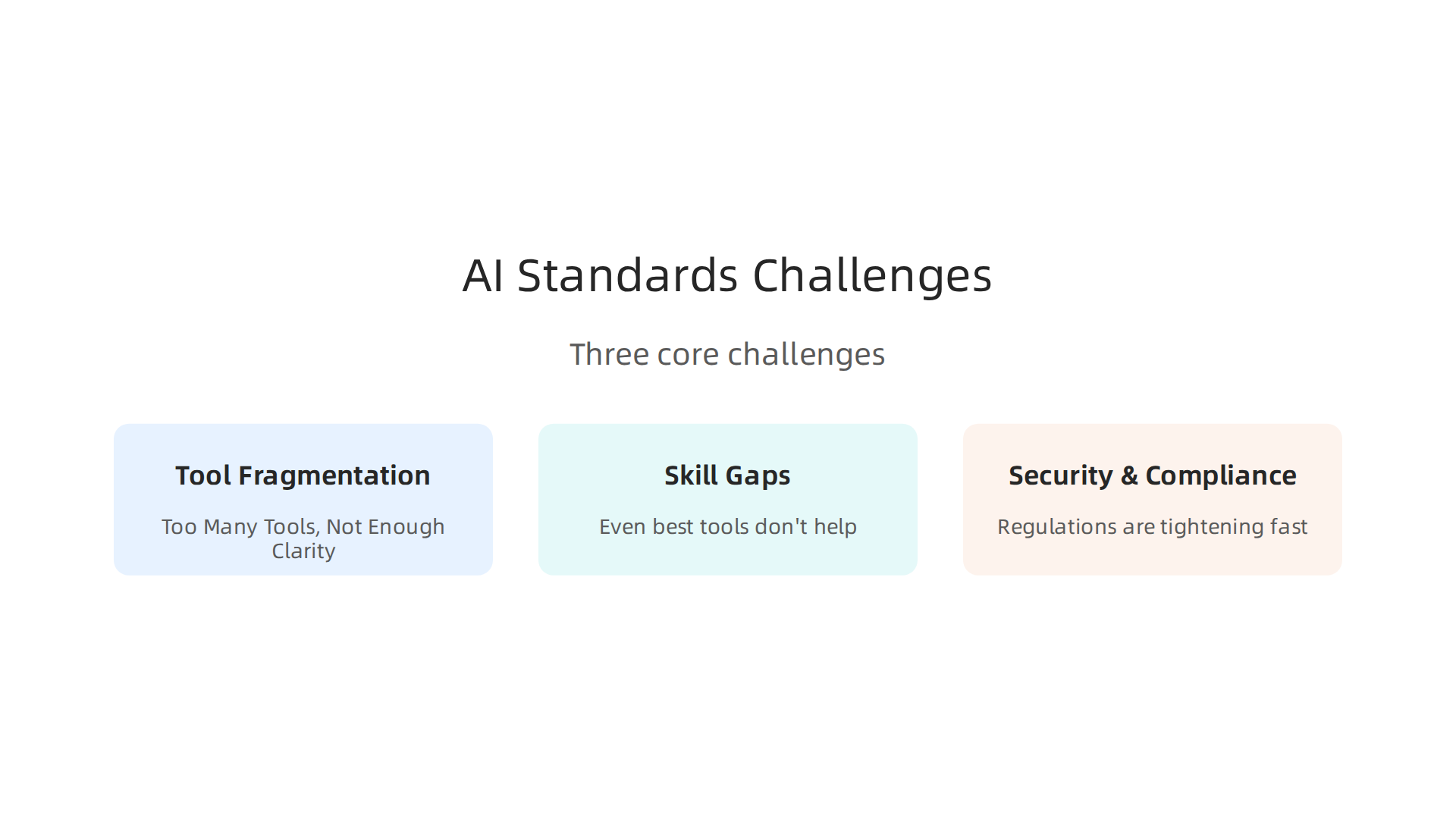
So why is a future standard so urgent in 2026? Because three big problems make it nearly impossible for teams to build AI software safely and confidently.
Let us walk through each one.
Too Many Tools, Not Enough Clarity
The AI tools market exploded. You have coding assistants, testing automation, security guardrails, monitoring agents, and compliance checkers. Picking the right one feels like a guessing game. And here is the thing: most of these tools do not talk to each other. They each handle things their own way.
That is called tool fragmentation. It means your team might use one tool for code generation, another for security scanning, and a third for compliance checks. But none of them share a common standard for labeling undetected AI output or tracking whether code came from an AI or human.
The top 12 AI developer tools in 2026 cover security, coding, and quality but they all work differently. That mismatch creates confusion. You end up with incomplete audit trails and gaps in your workflow. A future standard would give these tools a common language so they work together instead of against you.
Skill Gaps Slow Everyone Down
Even the best tools do not help if your team does not know how to use AI responsibly. The learning curve is steep. Developers need to understand prompts, model behavior, bias detection, and security risks. That is a lot to pick up while also shipping features.
Many teams lack training on ethical AI practices. They do not know how to spot biased outputs or why it matters. This skill gap leads to mistakes that slip into production. When you cannot tell if a recommendation came from undetected AI or a careful human, trust breaks down.
The good news? You can start closing that gap today. Our guide on best computer science courses for AI development in 2026 shows you practical ways to build those skills without overwhelming your team.
Security and Compliance Get Tougher by the Day
Regulations are tightening fast. The EU AI Act is coming into force, and high-risk AI rules may shift to December 2027 but the pressure is on right now. Governments want proof that your AI systems are safe, fair, and transparent.
That means you need clear records of how you use AI. You must show audit trails, human oversight, and risk assessments. Without a future standard, every team builds its own compliance process from scratch. That is slow, expensive, and easy to mess up.
AI compliance in 2026 requires collaboration across security, legal, governance, and engineering teams. That is a lot of coordination. A shared standard would simplify this. It would tell you exactly what to track and how to report it.
Also, security risks are growing. AI security tools protect data and prevent unauthorized access but without consistent rules, vulnerabilities slip through. Attackers can exploit gaps between different tools and systems.
What This Means for You
These three challenges all point to one solution: a clear, shared future standard for AI development. It would cut through the tool chaos, fill skill gaps with consistent guidance, and make compliance straightforward.
You do not have to wait for regulators to force your hand. You can start preparing now. Stay informed with simple, daily updates that help you understand these changes. Get Free Updates from The Deep View Newsletter and keep your team ahead of the curve.
Emerging Ethical Frameworks and Regulatory Landscapes
The biggest shift in 2026 is happening in government regulation. The rules that govern how you use AI are here. They are real. And they will affect every team building software with AI.
The EU AI Act Changes Everything
The European Union is leading the charge. The EU AI Act entered into force on August 1, 2024, and its core rules become fully enforceable on August 2, 2026. That date is right around the corner. If your company sells or uses AI in Europe, you must comply.
The Act uses a risk-based approach. Low-risk systems face light rules. High-risk systems must meet strict requirements for transparency, human oversight, and documentation. Most regulatory obligations kick in on August 2, 2026, including rules for general-purpose AI models. That means you need to show exactly how your AI works, what data it uses, and how you check for bias.
One key part is transparency. Under the Act, different transparency obligations apply to providers and deployers of AI systems. You must tell users when they are interacting with AI. You must explain how decisions are made. This is where a future standard would help. Without it, every team has to figure out what "transparent enough" looks like on its own.
Other Countries Are Moving Too
The US does not have a single AI law like the EU, but it has executive orders and agency rules. Many US states are drafting their own AI regulations. This creates a patchwork. If your team works globally, you have to follow multiple sets of rules at once.
International groups are stepping in to help. The ISO and IEEE are developing technical standards for the full AI lifecycle. These standards cover data quality, risk management, and monitoring. They give teams a blueprint to follow, no matter where they operate. But these standards are voluntary, and they do not always match regulation requirements.
What Regional Differences Mean for You
If your team is global, the complexity is real. The EU asks for explainability and audit trails. The US might focus on fairness and safety. Japan and Singapore have their own guidelines. Keeping up feels impossible.
That is why a shared future standard matters so much. It would create one common language for compliance across borders. It would tell you what to track, how to document it, and when you need to flag undetected AI output.
You also need to know if a recommendation came from an AI or human for transparency reasons. Without a standard, you build that logic yourself. With a standard, it is built into your tools.
Your Next Step
You do not have to wait for regulators to tell you what to do. You can start learning the rules today. Understanding the EU AI Act and other frameworks will help you prepare.
If you are building a new AI product, thinking about regulation early can save you headaches later. Our guide on 9 AI startup ideas for 2026 that solve real problems shows you how to pick ideas that are built to last through regulatory changes.
And for daily updates on AI regulation and tools, Get Free Updates from The Deep View Newsletter. It is a simple way to stay ahead of the curve.
Technical Standards: Interoperability, Safety, and Accountability
Regulations provide the destination, but technical standards build the road. While the last section covered the rules you have to follow, now we look at the practical tools and practices that make compliance possible. A lasting future standard will rest on three basic pillars: interoperability, safety, and accountability.
Interoperability: Breaking Down Walls Between Tools
Here is the thing about building with AI in 2026. You want freedom. You do not want to be stuck with one vendor forever. Switching costs are high, and team members have their own favorite frameworks.
That is why open standards like ONNX (Open Neural Network Exchange) are so important. ONNX gives you a common language for your AI models. You can train a model in PyTorch and run it in TensorFlow or another environment. This simple trick saves you from expensive rework later.
The same goes for MLOps pipelines. Tools like MLflow give your team a standard format for packaging and sharing models. Your data scientists can use what works best for them. Your production team gets reliable, portable models. A strong future standard will make this kind of interoperability the baseline. This is how you future proof your use AI strategy and keep your stack flexible.
Safety: Testing Before Trusting
Safety standards are quickly becoming a must have in 2026. You cannot just release an AI model and hope for the best anymore.
Two practices are leading the way. First, AI Red Teaming. This is where internal experts try to break your AI on purpose. They look for weak spots, hidden biases, and unexpected outputs.

Catching undetected AI failures here keeps you out of trouble later.
Second, Model Cards. Think of a model card as a nutrition label for your AI. It explains what data the model was trained on, what it is good at, and where it can fail. This kind of transparency is becoming a de facto requirement. A healthy future standard will bake these safety steps directly into the development cycle.
Accountability: Keeping a Record of Decisions
The regulations we talked about, like the EU AI Act, demand real accountability. You need to show what your AI did and why.
This means you need three things: logging, traceability, and audit trails. For every single output, you should know the input that triggered it. You should know the version of the model that made the call. And you should be able to explain if a recommendation came from an AI or human for your compliance reports.
This sounds like a lot of work. But when it is part of a future standard, it becomes automated. Your tools handle the tracking. You just focus on building.
Your Next Step
These three pillars (interoperability, safety, and accountability) give you a practical checklist for 2026. They turn vague rules into real actions you can take today.
If you are looking for product ideas where these standards matter most, take a look at our guide to 9 AI startup ideas for 2026 that solve real problems. It shows you how to build something that lasts through regulatory changes.
Keeping up with these standards is a full time job. For a simpler way to stay informed, Get Free Updates from The Deep View Newsletter. It makes tracking the standards that matter easy.
Building Trust Through Transparency and Explainability
We just covered the three pillars of a strong future standard: interoperability, safety, and accountability. Now let’s get more specific. In 2026, one of the most practical ways you can meet those pillars is through transparency and explainability. Think of it as showing your work.
Here’s the situation. Starting in 2026, the EU AI Act moves from planning to full enforcement. That means explainability is no longer just a nice to have. It is a binding legal requirement for high-risk AI systems. As one expert explains, the Act increases transparency requirements starting in 2026. Another analysis calls this "The XAI Reckoning" where explainability becomes a compliance requirement by 2026.
So what does this mean for you? You need to know how your AI makes decisions. And you need to be able to explain those decisions to users, regulators, and even your own team.
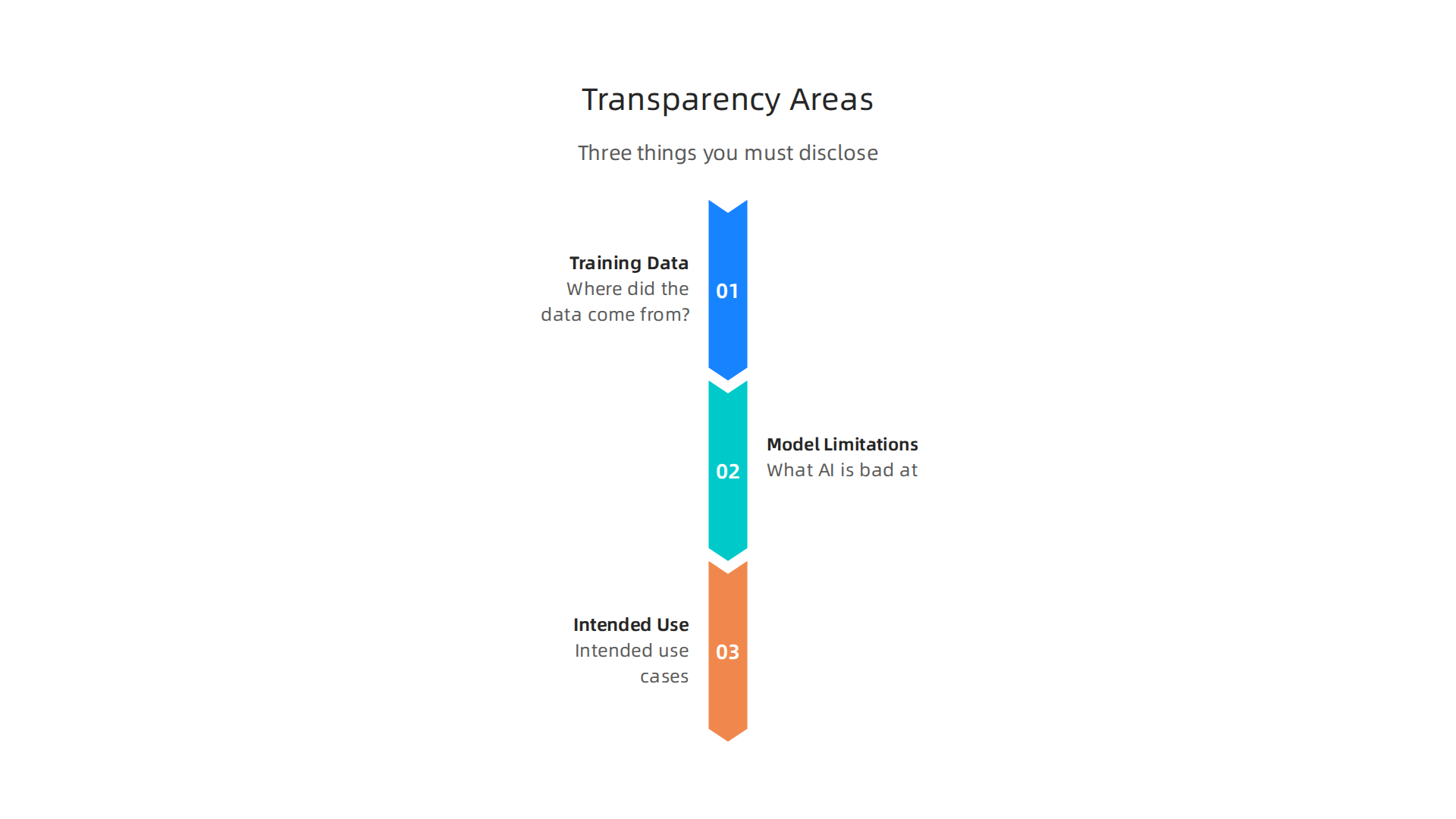
**Three Things You Must Be Transparent About
**
-
Training data. Where did the data come from? Was it biased? Being open about your data sources cuts down on liability. If your model picks up bad patterns, you can point to the training data as a known limitation.
-
Model limitations. Every model has blind spots. Tell users what your AI is bad at. This builds trust and protects you when someone expects too much from it.
-
Intended use. Be clear about what the AI should and should not be used for. Misuse happens when the boundaries are fuzzy. Clear boundaries reduce the chance of undetected AI failure turning into a crisis.
Tools That Make This Easy
Explainable AI (XAI) techniques are the practical way to meet these demands. Tools like MLflow (which we mentioned earlier) can log model versions and track which inputs led to which outputs. Other platforms generate AI transparency reports automatically. When you use tools that embed transparency features, you become the kind of enterprise that regulators and customers prefer.
And here is the bonus. When you are transparent, you also make it easier to tell if an output came from an AI or human. That is huge for compliance reports and user trust. People want to know who they are talking to.
Your Actionable Takeaway
Adopting explainability now is part of building a future standard for your team. It turns a regulatory burden into a competitive advantage. And it makes your use AI strategy safer and more reliable.
If you want product ideas that naturally include these transparency features, check out our list of 9 AI startup ideas for 2026 that solve real problems.
Keeping up with all these transparency rules takes effort. For a simpler way to stay on top of the changes, Get Free Updates from The Deep View Newsletter. It turns the noise into clear steps you can follow.
Future Standards and the Developer’s Role
Getting transparent and explainable is a great first step. But in 2026, the real challenge is making sure your whole development process follows a future standard that everyone can trust. And that is where you, the developer, come in.
Standards are not just documents written by a committee. They are practical guidelines that shape how you build, deploy, and retire AI systems. The good news is that you can start adopting them today.
Learn and Advocate for Standards Inside Your Team
Most developers feel overwhelmed by the rapid pace of change. But the ones who thrive are the ones who stay curious. You need to learn about emerging standards and then speak up inside your organization. That means attending webinars, reading about new tools, and understanding how rules like the EU AI Act will affect your work. When you advocate for standards early, you help your team avoid expensive rework later.
Lifecycle Governance: From Design to Decommissioning
Future standards will emphasize governance across the entire life of an AI system. Not just training and deployment, but also monitoring, updating, and eventually retiring it. This is where tools like ONNX shine. ONNX is an open standard for machine learning models that lets you move models between frameworks without losing your work. By using an open format, you make it easier to audit and trace your model’s behavior.
Another helpful tool is MLflow, which packages models in a standard format and logs every version. When you track changes across the lifecycle, you reduce the risk of undetected ai failures creeping into production. That kind of governance lets you confidently say whether an output came from an AI or human when regulators ask.
Shape the Standards Yourself
You do not have to wait for standards to come down from above. You can participate in bodies like ISO, IEEE, or MLCommons. These groups are actively writing the rules that will define how we use AI in 2026 and beyond. Your real-world experience is valuable. When you contribute, you help create a future standard that works for everyone, not just big tech companies.
If you want to learn more about the skills you need to build standards-compliant AI, check out our list of best computer science courses for AI development in 2026.
Standards are changing fast. To keep up with the latest rules and tools, Get Free Updates from The Deep View Newsletter. It breaks down complex regulations into simple, daily steps.
Summary
This article explains why a shared "future standard" for building with AI is urgent in 2026 and what it should include. It reviews the trust gap as AI writes more code, tool fragmentation, skill shortages, and rising security and compliance pressures—especially from the EU AI Act. The piece lays out three practical pillars for that standard—interoperability, safety, and accountability—and shows concrete practices like model cards, red teaming, logging, and explainability to meet regulatory and customer expectations. It also explains how transparency about training data, model limits, and whether output came from AI or a human builds trust. Finally, the article highlights steps developers and teams can take today—training, governance across the AI lifecycle, and participating in standards bodies—to stay ahead of rules and reduce costly rework.