
Best Computer Science Courses for AI Development in 2026
Overview
Introduction
You already know AI is reshaping our industry. But maybe you are not sure which computer science courses will actually help you keep up.
Here is the reality. Traditional computer science programs move slowly. They teach fundamentals like data structures and algorithms. Those still matter. But they often miss what employers need right now. For example, demand for skills like prompt engineering and AI agent development has exploded. One report shows ChatGPT specific skills grew more than 260% year over year. And AI agent skills jumped nearly 900%. These numbers are from 2026, and they are still climbing (Master of Code).
Another study found that 85% of developers now use AI tools regularly in their work (iTransitions). That is huge. If your computer science courses do not include hands on work with AI coding assistants, APIs, or model deployment, you are missing a key part of modern software development.
This creates two problems. First, you face information overload. There are hundreds of online courses for professional development. Some are great. Many are not.

Second, you need to pick a path that matches your goals, whether you are aiming to become an AI engineer, an AI research scientist, or just build AI powered products. The difference between computer engineering vs computer science matters here. One leans more into hardware and systems. The other focuses on algorithms and software. For AI development, you often need a blend of both.
This guide cuts through the noise. We have analyzed the most practical computer science courses available today. We focused on role relevant learning. That means courses that teach skills you can apply tomorrow, not just theory.
We also cover how to stay current as the field evolves. If you want daily updates on new tools and trends, you can subscribe to a free newsletter that delivers clear AI insights straight to your inbox.
Let us walk through the best computer science courses for 2026, starting with how to choose based on your specific career path.
Why AI Is Reshaping Computer Science Education (2026 Perspectives)
Think about how fast things move now. One month a new AI model drops. The next month an agentic framework changes how developers build software. This is not slowing down. In 2026 alone, demand for ChatGPT specific skills grew more than 260% year over year, and demand for AI agent skills jumped nearly 900% (Master of Code). That kind of acceleration creates a real problem for traditional computer science courses. By the time a university updates its curriculum, the tools have already changed again.
Employers are shifting what they value
Here is the thing. Companies do not hire based on a degree alone anymore. They want proof you can work with real AI tools. A 2026 survey found that 85% of developers now use AI tools regularly in their workflows, and 62% rely on at least one AI coding assistant (iTransitions). On top of that, 71% of AI engineer job postings list Python as a required skill (365 Data Science). Employers are looking for applied abilities.
If your computer science education only covers classical theory without hands on practice with APIs, model deployment, or prompt engineering, you will struggle to compete. The most in demand tech careers in 2026 all require AI skills (LSE). That is the new baseline.
The gap between academia and reality keeps widening
Traditional CS programs teach fundamentals like algorithms and data structures. Those are still important. But they rarely cover how to build a retrieval augmented generation pipeline, fine tune a model, or evaluate an AI agent’s performance. Meanwhile, the top AI skills employers want include machine learning, data analysis, and prompt engineering (Futurense). This gap means you cannot rely solely on a four year degree to stay current.
The best way to bridge that gap is through targeted online courses for professional development and real world projects. You need to learn by doing, not just by reading textbooks.
How to stay ahead in 2026
The pace of change makes continuous learning essential. One practical way to keep up is to follow resources that track the latest AI tools and trends. For example, you can explore AI startup ideas for 2026 to see how others are applying these skills in real businesses.
And if you want a simple way to get daily updates without the noise, get free updates from a newsletter that delivers clear AI insights straight to your inbox.
Now let us look at the specific computer science courses that can help you meet this moment.
Key Skill Areas for Modern AI Developers
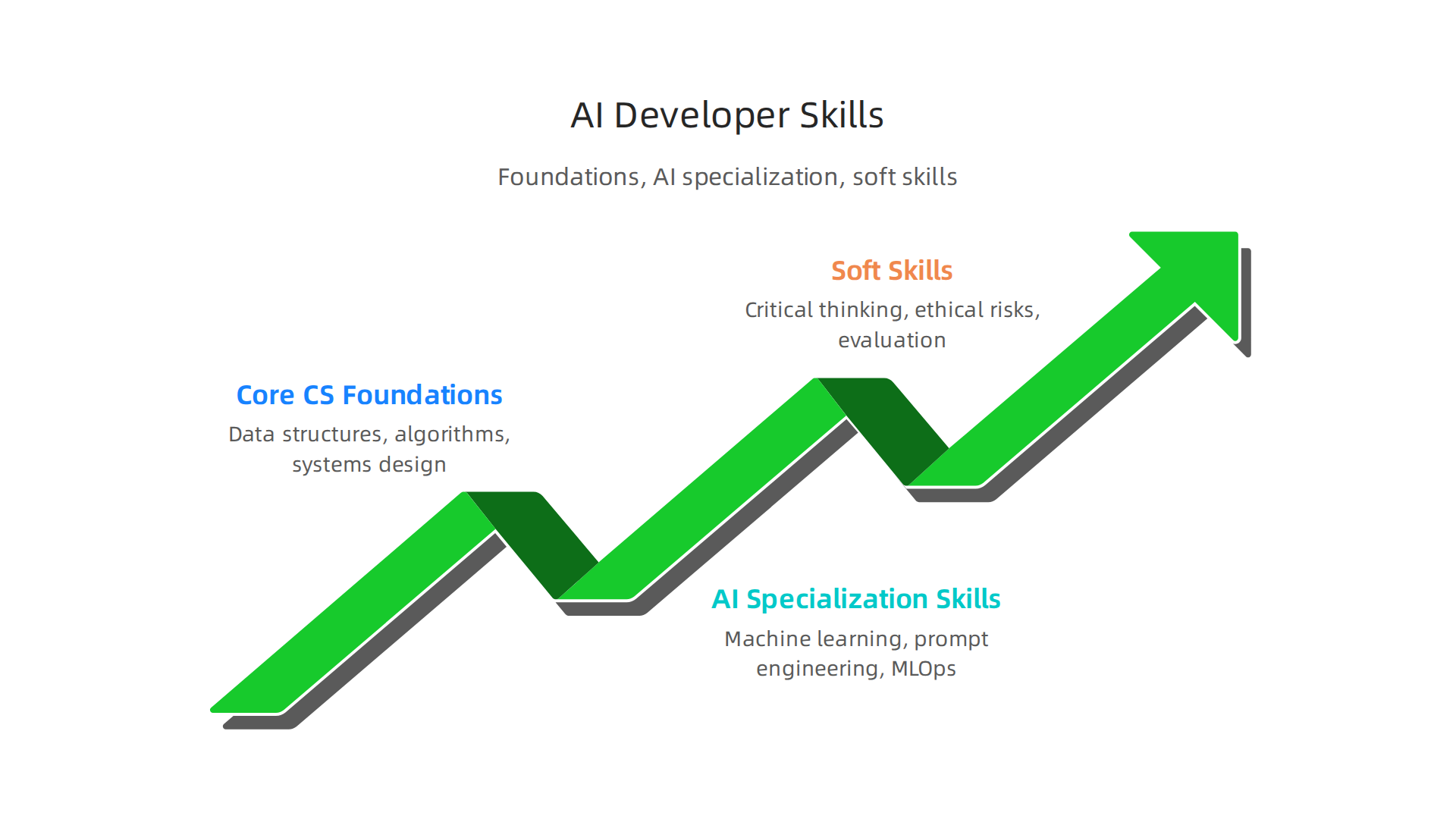
So what should you actually learn? The best computer science courses in 2026 blend timeless foundations with modern AI specialization. Let us break down the three skill buckets that matter most.
Core CS foundations are non-negotiable
Data structures, algorithms, and systems design still form the backbone of any strong developer. These concepts help you think logically, optimize performance, and build reliable software. Whether you are building a simple app or a complex AI pipeline, you need to understand how data is organized and how systems communicate.
But here is the catch. A traditional CS degree alone will not prepare you for the AI driven world. You need to layer AI specialization on top of those basics. This is where the debate between computer engineering vs computer science becomes less important. Both paths now require hands-on experience with AI tools and frameworks.
AI specialization skills are exploding in demand
Machine learning fundamentals are the starting point. You need to understand how models learn, how to train them, and how to evaluate their performance. From there, prompt engineering has become a core skill. As of 2026, demand for ChatGPT specific skills grew more than 260% year over year, and AI agent skills jumped nearly 900% (Master of Code).
Beyond prompting, you should learn retrieval augmented generation (RAG) architectures. These let you connect large language models to your own data, making AI outputs accurate and context-aware. MLOps is another must have skill. It covers how to deploy, monitor, and maintain models in production. The top AI skills employers want include machine learning, data analysis, and prompt engineering (Futurense). And Python dominates: 71% of AI engineer job postings require Python (365 Data Science).
If you are looking for online courses for professional development, focus on programs that cover these exact topics. Real projects where you build and deploy an AI system will teach you more than any textbook.
Soft skills are increasingly valued
Technical skills alone are not enough. Employers want developers who can think critically about AI outputs, catch biases, and evaluate ethical risks. As AI becomes more embedded in daily life, the ability to question results and design responsible systems sets great developers apart. An AI research scientist needs this mindset just as much as a hands-on engineer.
One practical way to see these skills in action is to explore real world applications. Check out some AI startup ideas for 2026 to understand how others combine technical and critical thinking.
The key is to keep learning. New tools and techniques appear constantly. To stay ahead without spending hours hunting for news, get free updates from a newsletter that delivers clear AI insights straight to your inbox.
Evaluating Computer Science Courses: What to Look For
With hundreds of options out there, choosing the right computer science courses can feel overwhelming. Not all programs are built the same, and the one that worked for someone else might not work for you. The trick is knowing what separates a great course from a waste of time.
Start with industry alignment
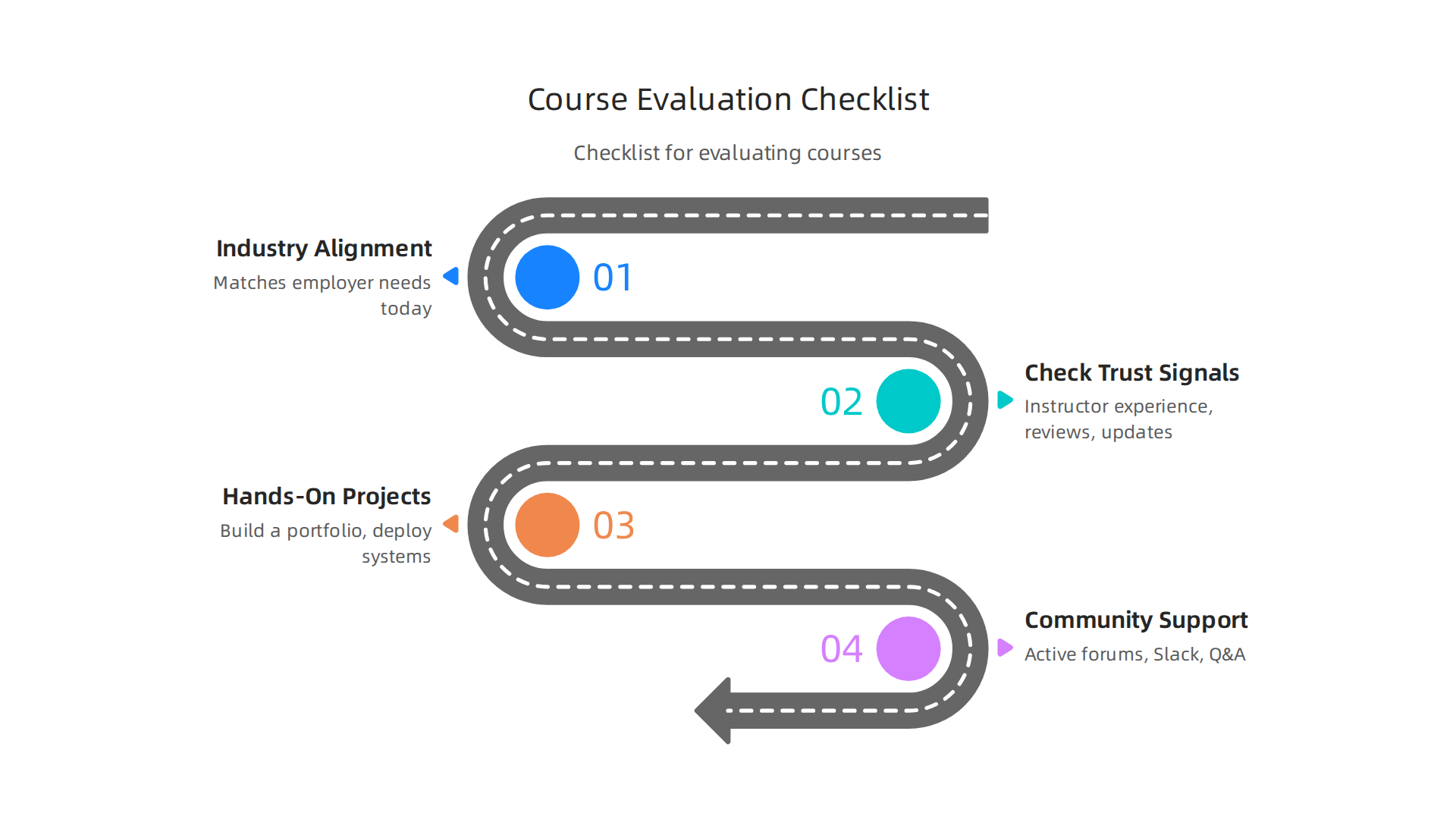
The best courses match what employers actually need today. Look at the curriculum closely. Does it cover machine learning, data pipelines, and prompt engineering? Does it include real tools like Python, TensorFlow, or LangChain? A course that teaches outdated frameworks won’t help you land a job in 2026.
One helpful checklist comes from the Top 10 Best AI Courses in the World review, which ranks programs based on practical skills and industry relevance after months of testing. Use that kind of evaluation as a starting point.
Check trust signals
Accreditation matters, but it is not the only thing. Look at the instructor’s background. Do they have real industry experience or just academic credentials? Read reviews from past students. See if the course is endorsed by tech companies or recognized by professional bodies. Also, check if the content is peer-reviewed or updated regularly. The International AI Safety Report 2026 showed that leading AI systems now match expert performance across many fields. That means course material can become outdated fast. A good course will show you its last update date.
Look for hands-on projects
Theory alone won’t get you hired. You need to build things. The best online courses for professional development include projects that let you create a portfolio. For example, ask if you will train a model, deploy an API, or build an AI agent. These projects show real skills and give you something to show during interviews.
A practical way to see what skills matter is to browse real-world applications. You can read about AI startup ideas for 2026 to understand what kind of projects employers value.
Evaluate community support and tools
A good course does not leave you alone. Look for active forums, Slack channels, or Q&A areas where you can ask questions and get help. Also check if the course integrates with modern AI tools like Jupyter, Google Colab, or cloud platforms. Courses that use real APIs and frameworks teach you faster. For example, a course that includes a project on retrieval augmented generation (RAG) will help you connect AI models to real data.
A final tip
The goal is to pick a course that balances quality, relevance, and support. You want something that challenges you but also gives you a clear path from learning to building.
Keeping up with the best courses and tools takes work. To save time and always find the top programs, subscribe free to The Deep View Newsletter for simple daily updates on AI education and developer news.
Top Online Platforms for AI-Focused CS Courses (2026)
Now that you know what to look for, let’s talk about where to actually find the best computer science courses with a strong AI focus. The good news is that in 2026, you have more quality options than ever. The trick is matching the platform to your learning style and career goals.
The big three: Coursera, edX, and Udacity
These established platforms have been around for years, but they have shifted hard into AI. Today, you can find full specializations and degrees from top universities and companies. Think machine learning from Stanford, deep learning from DeepLearning.AI, or AI engineering from IBM. These programs often include hands-on projects with real datasets.
Coursera and edX also offer professional certificates that stack toward full degrees. That is great if you want to build credentials over time. Udacity, meanwhile, focuses on nanodegrees that are built with industry partners like Google and AWS. These are designed to get you job-ready fast.
If you want a curated list of the very best options, the Top 10 Best AI Courses in the World review by LogicMojo ranks programs after months of testing. It is a solid place to start your search.
Newer specialists: DeepLearning.AI and Fast.ai
These providers do only AI. No general computer engineering vs computer science debates here. They focus purely on applied AI development.
DeepLearning.AI, founded by Andrew Ng, offers short, focused courses on topics like prompt engineering, retrieval augmented generation (RAG), and LangChain. The courses are bite-sized but packed with practical code.
Fast.ai takes a different approach. It teaches deep learning from the ground up, starting with working code and building up theory. It is great if you want to learn by doing.
Both platforms are excellent for online courses for professional development because they keep their content up to date. The field changes fast. As the International AI Safety Report 2026 noted, leading AI systems now match expert performance across many fields. That means old course material becomes useless quickly. These providers update their courses regularly.
University-led micro-credentials
More and more universities are offering micro-credentials and stackable certificates. These are short, focused programs that let you learn a specific skill without committing to a full degree. For example, you can earn a certificate in AI for healthcare or natural language processing from a top university in just a few months.
These credentials are gaining traction with employers. They show that you have learned from a trusted institution. And because they stack toward a full master’s degree, you can keep learning without losing progress.
A good way to see where this is heading is to look at what skills are in demand right now. You can check out these AI startup ideas for 2026 to get a sense of what real companies are building.
How to choose
Ask yourself: Do you want a structured university path or a hands-on bootcamp style? Do you prefer video lectures or reading and coding? Are you looking for a certificate or just skills? Answer these questions, then pick the platform that fits.
If you want to keep up with the best courses and tools without spending hours searching, let someone else do the work for you. Subscribe free to The Deep View Newsletter. Every day you get a quick summary of the most important AI education news and developer trends.
Integrating Courses into Your Learning Path as a Working Developer
You have a full time job. You have deadlines, meetings, and maybe a life outside of code. Staring at a long list of computer science courses can feel overwhelming.

Where do you even start?
The biggest mistake working developers make is treating online learning like a college semester. You cram on weekends, then forget everything a month later. It does not work. You need a strategy that respects your limited time and helps you actually retain what you learn.
1. Sequence Your Courses with Purpose
Time is your most valuable asset. So stop jumping between random topics. Pick a sequence and stick to it. And here is the most important rule: always prioritize project based learning over theory only courses.
You learn more by building one real feature than by watching ten hours of slides. There are plenty of online courses for professional development built completely around hands-on projects. The Top 10 Best AI Courses for Software Developers (2026) from LogicMojo is a solid place to find a curated list that matches your current skill level and learning style. The video guide on how to become an AI engineer fast also emphasizes learning fundamentals through practical application before jumping into advanced topics like AI agents.
2. Use Smart Learning Techniques
Your brain needs help retaining all this new information. That is where techniques like spaced repetition and interleaving come in.
The idea is simple. Review old concepts regularly. And mix up the topics you study. Do not spend a whole month on just neural networks. Spend a week on neural networks, then switch to natural language processing, then go back to neural networks. This forces your brain to build stronger connections between different ideas.
Google’s Machine Learning Crash Course is a great example of a structured resource that helps with this kind of knowledge building. It covers fundamental techniques and best practices in a logical, progressive order. Using this type of structured resource alongside your main course helps reinforce what you learn.
3. Align Your Roadmap with Your Role
Your learning path should match what you actually do at work right now. Do not try to learn everything at once.
- If you are a frontend developer, focus on ai development skills like prompt engineering and working with APIs.
- If you are a backend developer, focus on model deployment and MLOps.
- If your goal is to become an ai research scientist, your path will look very different. It will focus more on math, statistics, and deep learning theory.
The guide on How to Learn AI and Deep Learning in 2026 from iCert Global breaks down these different career paths clearly. It helps you understand which skills matter most for your specific goals.
If you need inspiration for real world projects that match your role, check out these AI startup ideas for 2026. They show you what actual companies are building right now.
Let Someone Else Help You Stay on Track
Building a personalized computer science courses roadmap takes real effort. Staying on top of the best new tools and resources is even harder when you are busy building products.
Instead of spending hours curating resources yourself, get clear daily AI updates delivered straight to your inbox. The Deep View Newsletter does the heavy lifting for you. Every day you get a quick summary of the most important AI education news and developer trends.
Subscribe Free to get started and keep your learning path on track.
The Role of Community and Hands-On Practice
Even the best computer science courses can only take you so far. At some point you have to stop watching and start doing. That is where community and real world practice come in.
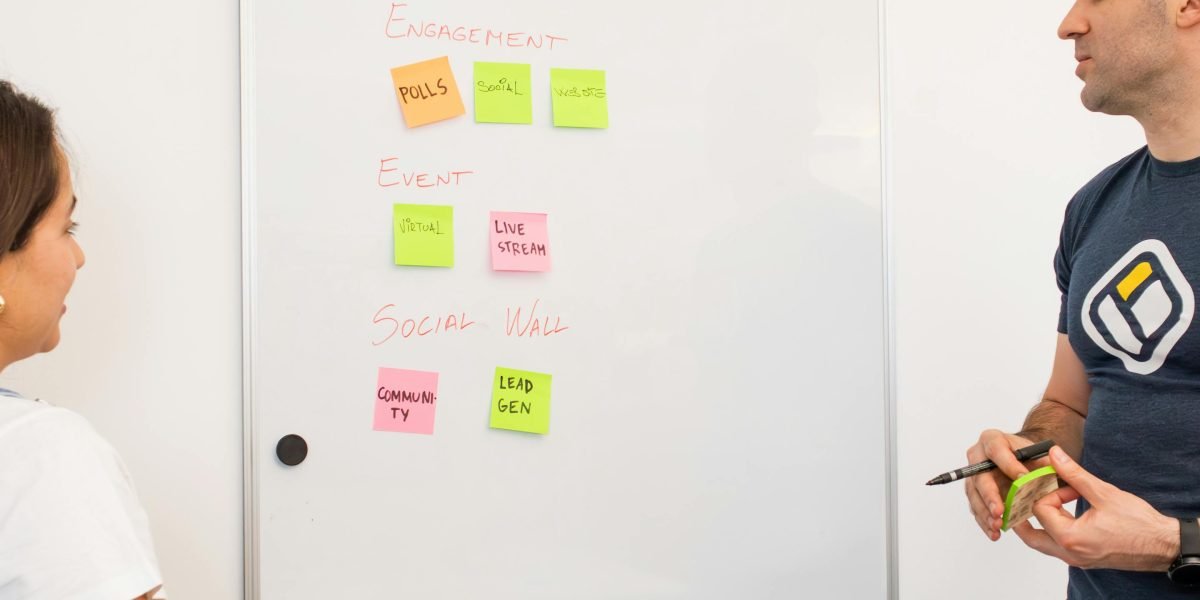
Think of it like learning to cook. You can watch all the YouTube tutorials in the world. But you will not really learn until you burn a few onions yourself. AI development works the same way.
Get Your Hands Dirty with Open-Source and Hackathons
Open-source contributions and AI hackathons give you project experience that no course can match. You get to work on real codebases, fix actual bugs, and collaborate with other developers. This is how you learn to handle messy, production level problems.
The YouTube guide on how to become an AI engineer fast shows that learning fundamentals through practical application is far more effective than jumping straight into advanced topics. A hackathon forces you to apply those fundamentals under time pressure. That is where the real learning happens.
Join a Study Group or Online Community
Learning alone is hard. But study groups and communities like Discord servers and Reddit forums make it easier. You can ask questions, share your progress, and get feedback from people who are at the same stage or ahead of you.
Networking in these groups also opens doors. You might find a mentor, a collaborator, or even your next job. Many developers land their first ai research scientist role because someone in their community recommended them.
Compete and Build Personal Projects
Platforms like Kaggle let you compete in AI challenges. You get a dataset, a problem, and a leaderboard. This is a great way to test your skills against others and see where you stand.
But do not stop there. Build your own projects too. Pick a problem you care about and solve it with AI. It could be a chatbot, a recommendation system, or something totally different. The point is to go through the full cycle of building, testing, and deploying something real.
If you need inspiration, these AI startup ideas for 2026 show what real companies are building right now. Use them as a spark for your own projects.
Stay Consistent, Stay Connected
Courses give you the map. But community and hands on practice are what actually get you to the destination. Make time for both.
Want to stay on top of the latest AI tools and trends while you build your skills? The Deep View Newsletter delivers a quick daily digest so you never miss what matters.
Get Free Updates and keep your learning path moving forward.
Future Trends: What’s Next for AI and CS Education?
You have been building real projects and learning with a community. But here is the thing: the way you take computer science courses is changing fast. AI is reshaping education itself.
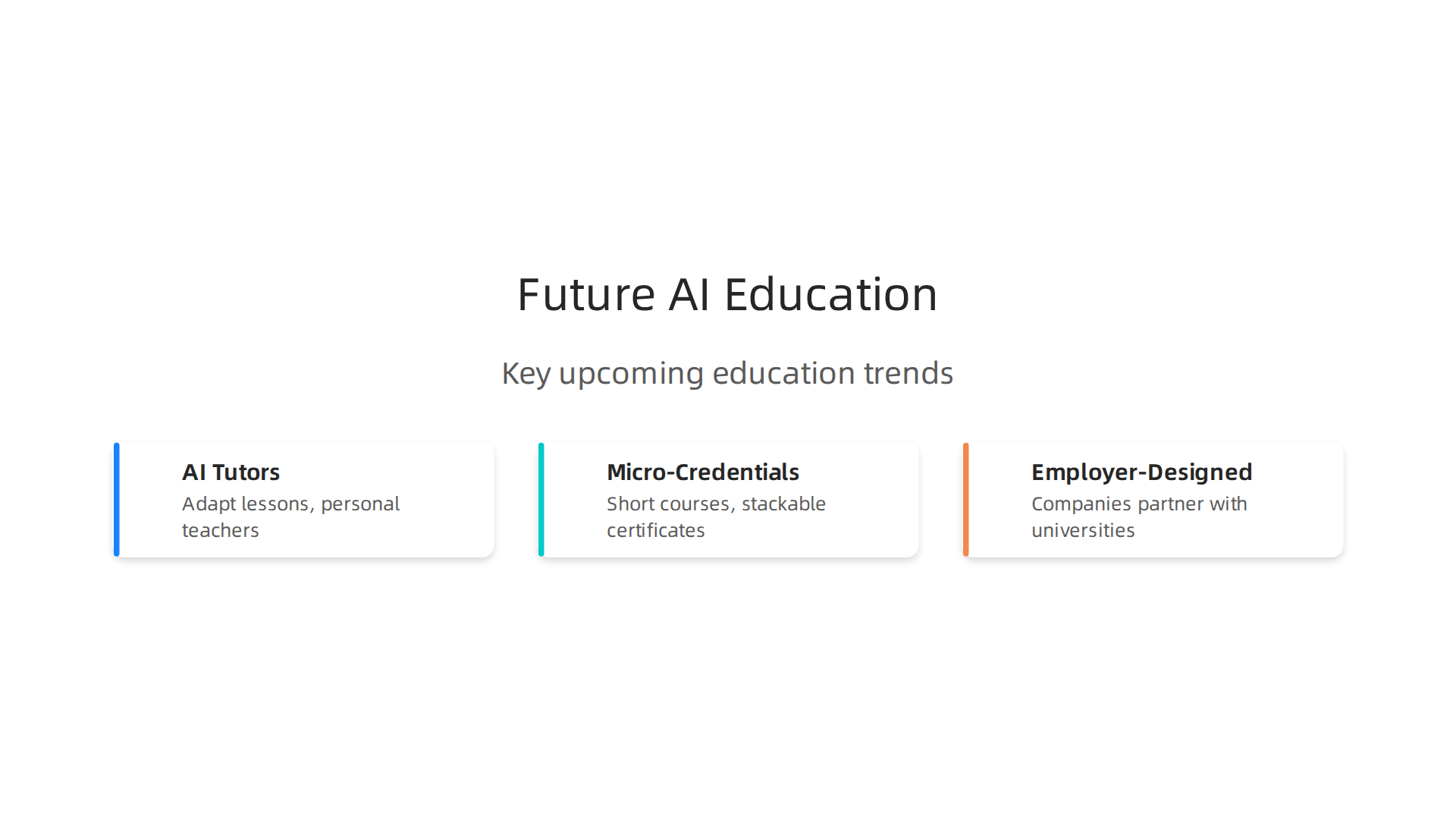
And that means big shifts in how you pick up new skills.
AI Tutors That Adapt to You
Imagine a tutor that knows exactly where you struggle and changes the lesson on the fly. That is what AI powered learning platforms do in 2026. They act like personal teachers. They watch how you solve problems and give you hints right when you need them.
Studies show that AI-powered personalized learning increases student engagement by up to 60%. Some platforms even adjust the difficulty based on your mood or the time of day. This matters because traditional computer science courses often move at one speed for everyone. AI tutors make sure you never get bored or left behind.
Skip the Degree, Grab a Micro-Credential
A full college degree used to be the only path. Not anymore. For niche AI skills, micro-credentials and stackable certificates are becoming the go to choice. You can take a short course on transformers, pass a test, and earn a badge. Stack a few together and you have a mini degree that employers trust.
This is huge if you are comparing computer engineering vs computer science as a career path. Instead of spending four years on a degree, you can learn exactly what you need for a specific AI role in months. Many workers are now using online courses for professional development to pivot into AI without going back to school full time.
Employers Help Design the Curriculum
Big tech companies are partnering with universities more than ever. They help build courses that teach the exact skills they need. This means what you learn in a class is the same stuff you will use on the job the next day.
These partnerships create employer-accredited pathways where you can get certified by both a school and a company. That is a powerful combo when you apply for roles like an ai research scientist or AI engineer.
The future of learning is faster, more personal, and more practical. You can even build real startup ideas like those in this list of AI startup ideas for 2026 to combine your new knowledge with hands on practice.
Want to stay on top of these changes as they happen? Subscribe Free to The Deep View Newsletter for daily, no fluff updates on AI education and tools.
Summary
This article helps developers and students choose the computer science courses that actually matter in 2026 by focusing on practical, job‑relevant skills rather than theory alone. It explains why rapid AI advances have widened the gap between traditional CS curricula and employer needs, then identifies the three critical skill buckets—core CS foundations, AI specializations (machine learning, prompt engineering, RAG, MLOps), and soft skills like critical thinking about bias. The guide gives concrete criteria for evaluating courses—industry alignment, hands‑on projects, instructor credibility, community support—and compares major platforms (Coursera, edX, Udacity, DeepLearning.AI, Fast.ai) and micro‑credentials. It also shows how to sequence learning as a busy professional, the value of open source and hackathons, and emerging trends such as personalized AI tutors and employer‑designed pathways. After reading, you’ll know which courses to prioritize, how to build a realistic roadmap, and where to look for up‑to‑date resources and daily AI education updates.