

Build Your AI Innovation Lab From Experiments to Production Impact
Overview
Why modern engineering teams need innovation labs (and what they actually do)
Today, technology changes faster than ever before. New ideas pop up all the time, especially with AI. For engineering teams, keeping up can be a real challenge. That’s why many smart companies are now using something called an innovation lab.
What is an innovation lab? Think of it as a special place inside a company, like a workshop just for new ideas. It’s where teams can try out fresh concepts and new ways of doing things, away from the everyday rush of work.

These labs are built to help companies explore new business ideas and find valuable chances, especially when it comes to "innovative technology" like AI. They are a dedicated space where people can be creative and develop new things without the usual rules holding them back, as described in one overview of Innovation Labs: Definition, Benefits, and How They Work.
These labs help solve big problems for engineering teams. In regular work, teams are busy fixing bugs and building things that are already planned. It’s hard to stop and think about totally new ideas or how to use "apex technology" that isn’t quite ready for customers yet. An innovation lab gives teams the freedom and time to experiment. It helps them avoid feeling overwhelmed by all the new AI tools out there and makes it easier to pick the best ones for their projects. If you’re wondering how to keep up, learning about AI Developer Tools 2026: how developers are adopting and choosing what works can be very helpful.
In the next parts of this article, we will look closer at how innovation labs work. We’ll explore the different kinds of labs companies use, what tools they need, who works in them, how they measure success, and smart ways to bring new ideas from the lab into the rest of the company.
Want to stay informed about the latest AI breakthroughs and tools every day?
The AI Newsletter Worth Reading delivers clear, daily updates right to your inbox.
Common innovation lab models and where they fit in the org
Just like there are many kinds of houses, there are many kinds of innovation labs. Each company picks the model that works best for its needs and goals. Understanding these different setups can help a company decide how to use an innovation lab to boost new ideas, especially with "innovative technology" like AI.
Let’s look at some common ways companies set up their innovation labs:
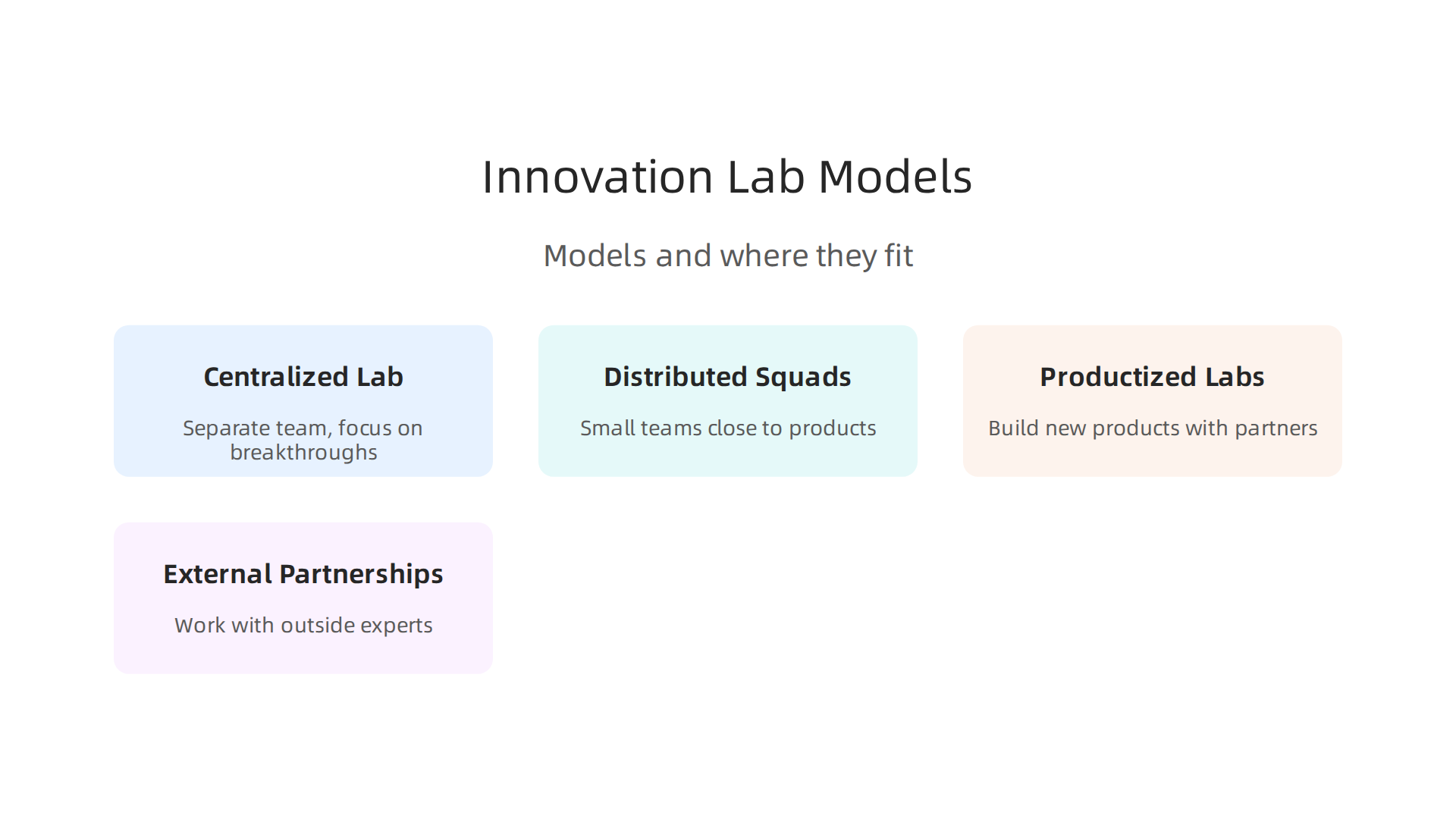
Centralized Innovation Lab
This is like having one big workshop for all new ideas. A centralized innovation lab is often a separate team or department, far from the daily work of other engineering teams.
- Pros: This model lets the lab focus deeply on breakthrough ideas without getting pulled into urgent everyday tasks. It’s great for exploring "apex technology" that needs a lot of quiet study. It can also manage risks better because it’s set apart.
- Cons: Ideas from a centralized lab can sometimes be slow to move into the main company. It might feel distant from what customers truly need right now.
Distributed Squads
Think of this as many small workshops spread across different parts of the company. These "squads" or small teams work within existing product groups.
- Pros: Because these teams are close to the action, they can quickly try out ideas that fit current products or customer needs. This helps new ideas get used faster. They have more ownership of their projects.
- Cons: These smaller teams might not have as much time or freedom to explore truly big, new ideas. They can also face more pressure from daily work.
Productized Labs
This model is like having a special group that builds new products or services, often with outside partners. They work like a mini-startup inside the larger company.
- Pros: This approach is good for quickly creating new products or features that can be sold. It helps the company learn about new markets and work with others.
- Cons: The main goal here is usually making money, so truly experimental or long-term research might take a backseat.
External Partnerships
Sometimes, a company doesn’t build its own lab at all. Instead, it works with outside experts, startups, or even universities. This is like renting a workshop instead of building one.
- Pros: This can bring in fresh ideas and skills the company doesn’t have. It’s a way to try new things without a big upfront cost or long-term commitment.
- Cons: The company might have less control over the ideas, and sharing profits or knowledge can be tricky.
Where These Labs Fit in the Company
Where an innovation lab lives in a company depends on what it’s trying to do. Some common places include:
- Research & Development (R&D) Department: If the lab is mostly about deep scientific work or exploring future tech, it fits well here. This is for ideas that might take a long time to become real products.
- Product Development Team: For labs focused on improving existing products or creating new features, being part of the product team makes sense. They can quickly see how new ideas help customers.
- CTO (Chief Technology Officer) Office: Placing an innovation lab under the CTO means it looks at how new technology can change the whole company. This is often for looking at how "apex technology" will affect all teams.
According to a guide on Three Innovation Lab Models And Which Fits Your Organization, the right model and placement help companies make the most of their innovation efforts.
No matter the setup, the goal is always to move from fresh ideas to real-world impact. Thinking about how to make new ideas ready for use is key. Learning how to manage that process can help you from experiments to production impact, build your AI roadmap.
To make sure an innovation lab does a good job, especially one focused on "innovative technology" like AI, it needs clear goals.

Just having cool ideas isn’t enough. You need to know if those ideas are actually helping the company. This means setting clear targets, tracking how things are going, and deciding what to keep doing or stop doing.
Setting Clear Goals for Your AI Innovation Lab
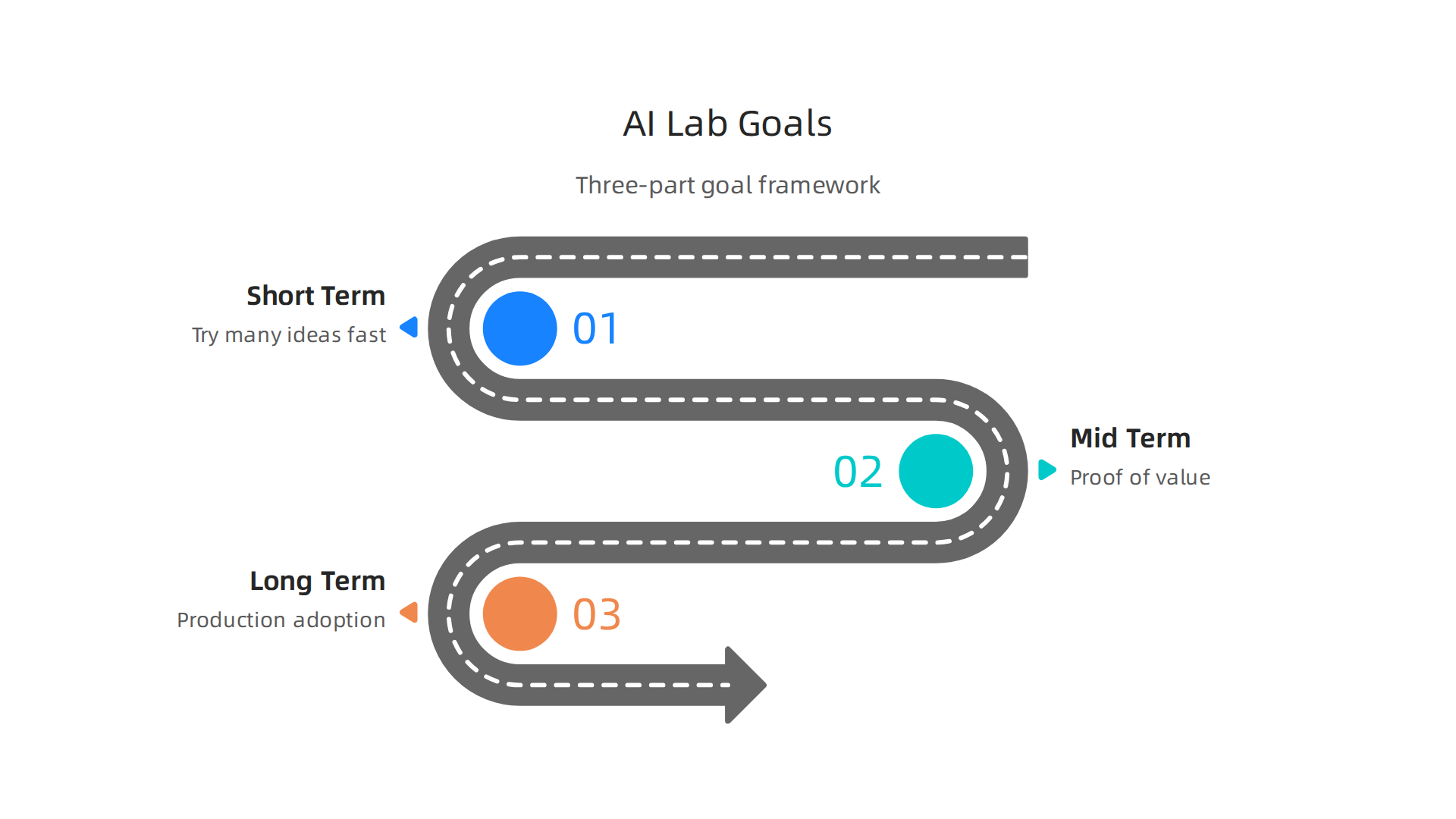
Think of goals in three parts:
-
Short-Term Goals: Try Many New Things Fast (Experimentation Velocity)
These goals are about how quickly your innovation lab can test out new AI ideas. It’s like a chef trying many recipes to see which ones taste good. The faster you try, the more you learn. For an AI innovation lab, this means making lots of small experiments with different AI tools or methods. You want to see how many experiments you can run in a week or month. -
Mid-Term Goals: Show What Works (Proof-of-Value)
After trying many ideas, some will look promising. Mid-term goals focus on showing that these ideas truly have value. This might mean building a small working example (a prototype) that solves a real problem or makes something better. For example, an AI innovation lab might create an AI tool that helps customer service agents answer questions faster. The goal is to prove that this tool actually saves time or makes customers happier. -
Long-Term Goals: Make it Real (Production Adoption)
This is the big one. Long-term goals are about taking the proven ideas and making them a regular part of the company’s work or products. This means the new AI tool or system is used by many people every day. It’s not just an experiment anymore; it’s a real solution. For an AI innovation lab, this could mean that an "apex technology" idea moves from the lab to being a core part of a major product or service.
Important Numbers to Watch (KPIs)
To know if your innovation lab is hitting its goals, you need to track important numbers called Key Performance Indicators (KPIs). These are like a scorecard for the lab’s success.
Here are some recommended KPIs for an AI innovation lab:
- Experimentation Rate: How many new ideas or tests does the lab start each month? More experiments can mean more chances to find great ideas.
- Prototype-to-Production Conversion: This measures how many ideas that look good as a prototype actually get used by the company. It shows if the lab’s ideas are practical. For example, "prototype deployment rate" and "idea-to-product conversion rate" are key ways to track this progress, showing the lab’s ability to turn concepts into real solutions Why Innovation Labs Are Crucial for Market Research Innovation.
- Impact on Product Metrics: How do the lab’s new ideas change important things like:
- Customer Happiness: Do customers like the products more?
- Cost Savings: Does the company save money?
- New Sales: Do new products bring in more money?
Some experts say that focusing on how fast you learn and try new things (like "experiment velocity") is more important early on than just looking at money made. This is because big money gains from new ideas often take a long time to show up Innovation Metrics: What to Measure Before Your Program …. Focusing on these immediate measures can help you understand how well your AI tools are helping developers be productive and deliver results. Learn more about how to measure the impact of AI on development by reading about AI Productivity Tools for Developers Deliver Measurable ROI and Faster Output.
When to Check Progress and Make Decisions
It’s important to regularly check on the innovation lab’s work. This is called evaluation cadence.
- Regular Check-ins: Meet often to see how experiments are going. For early ideas, this might be weekly or bi-weekly. For bigger projects, monthly check-ins could work.
- Who Decides? A special group, sometimes called a governance committee, should decide what happens next. They look at the results from the KPIs.
- Scale Up: If an idea is working really well and showing value, they decide to give it more resources and help it grow bigger.
- Sunset: If an idea isn’t working or isn’t meeting its goals, they decide to stop it. This frees up time and money for new, better ideas. It’s okay to stop things that aren’t working; it’s part of learning.
By setting clear goals, tracking the right numbers, and making smart decisions, an AI innovation lab can truly help a company grow and stay ahead in the world of "tumble tech" and fast changes, like what you might see at events like Utah Tech Week.
Get clear daily AI updates. The AI Newsletter Worth Reading delivers valuable insights straight to your inbox.
To make sure an innovation lab can truly bring new AI ideas to life and help the company, it needs the right tools and setup. Think of it like a builder needing a good toolbox. For an AI innovation lab, this "toolbox" is its technology stack.
Designing the tooling and tech stack for AI innovation labs
An effective AI innovation lab needs a solid set of tools that work well together. These tools fall into a few main groups, helping move ideas from a spark to a working "apex technology" solution.
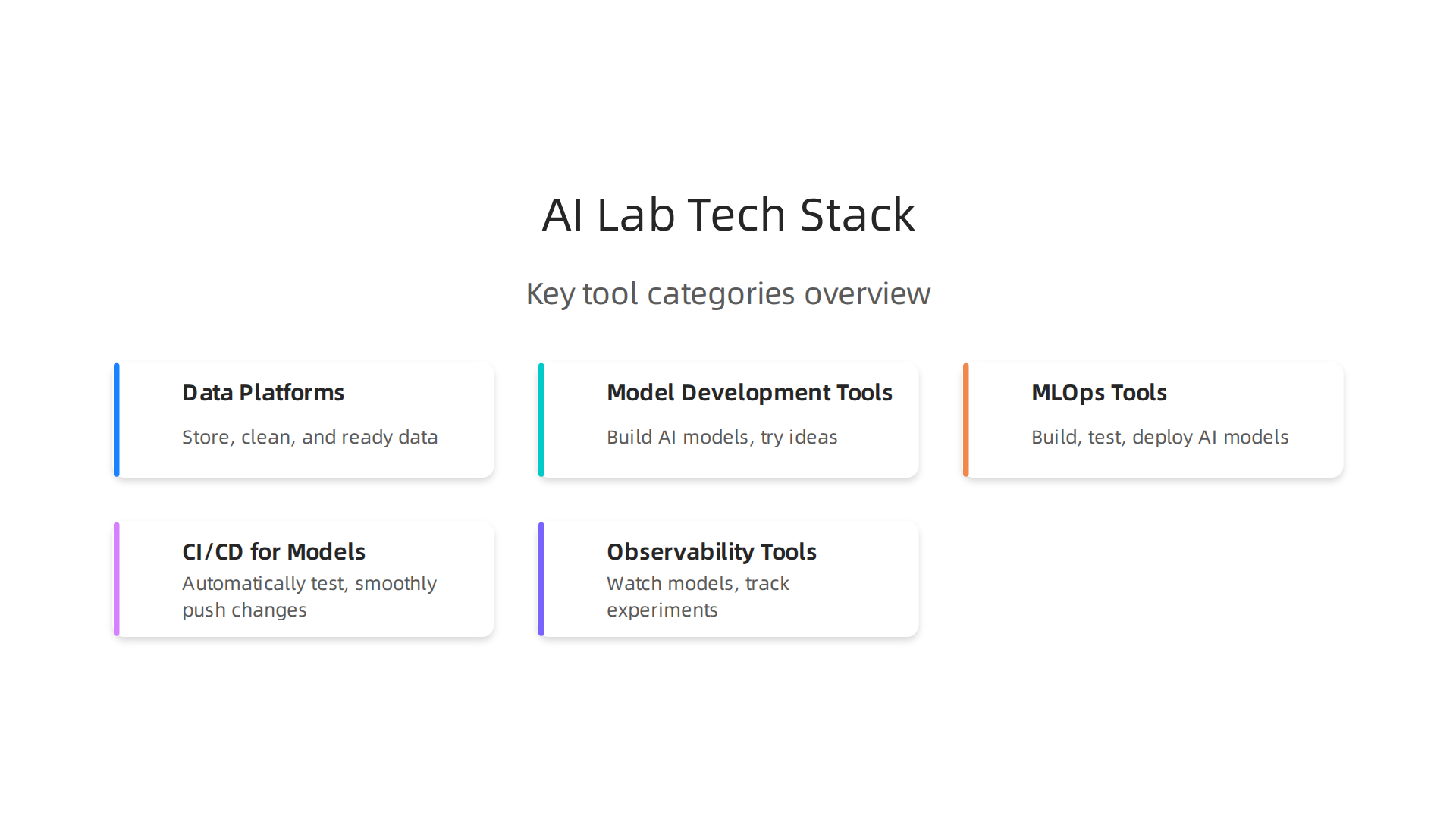
- Data Platforms: AI models need a lot of data to learn from. Data platforms are where this data is stored, cleaned, and made ready for use. It’s like having a well-organized pantry for all your ingredients.
- Model Development Tools: These are the tools that scientists and engineers use to actually build the AI models. This includes coding environments, special libraries, and ways to try out different AI ideas and algorithms.
- MLOps (Machine Learning Operations) Tools: This is a very important part of the toolbox. MLOps is like the system that helps you build, test, and put your AI models into use smoothly and without too much manual work. It takes ideas from the regular way of building software (called DevOps) and applies them to AI. MLOps helps manage the whole life of an AI model, from when data is first collected to when the model is being used every day. Many experts agree that MLOps tools help integrate and streamline the complex steps involved in AI workflows, making them more effective for teams in 2026 MLOps Platforms and Tooling: Managing the AI Development Lifecycle.
- CI/CD for Models: This is a part of MLOps. CI/CD stands for Continuous Integration and Continuous Delivery. For AI, it means having systems that automatically test new changes to a model and then smoothly push them out for use. It ensures that improvements happen quickly and reliably.
- Observability and Experimentation Tools: These tools help you watch how your AI models are doing once they are working. Are they making good decisions? Are they still accurate? They also help track all the different experiments an innovation lab runs, so you know what worked and what didn’t. When comparing tools in 2026, you’ll often see them grouped into categories like experiment tracking and model versioning MLOps Tools Comparison 2026: Platform Features, Pricing ….
Finding the Right Mix of Tools
When setting up your innovation lab, you need to decide if you will use:
- Third-party tools: These are ready-made tools and services from other companies. They can be very powerful and save time.
- Open-source tools: These are free tools that many people can use and improve. They offer flexibility and can be a good choice for some tasks.
- In-house components: Sometimes, you might need to build your own special tools for things that no other tool does.
The best approach often mixes these. You might use a big third-party platform for managing data, an open-source library for building models, and a small in-house tool for a very specific need. The key is to choose the right AI tools for developers to boost productivity and fit your team’s skills and budget choose the right AI tools for developers to boost productivity.
A Simple Tooling Checklist to Start
To begin safely and reliably, every AI innovation lab needs at least:
- A way to store and manage your data.
- Tools for coding and building AI models.
- A system to keep track of different versions of your models and code (like a digital notebook).
- Tools to help track and compare your experiments.
- A way to put your simple AI ideas to the test and see how they perform.
By carefully picking these tools, your innovation lab can turn "innovative technology" ideas into real solutions, moving from early experiments to production impact efficiently from experiments to production impact. This focus on a strong tech stack helps the lab deal with the fast pace of "tumble tech" and contribute meaningful advancements to the company.
A great set of tools is only as good as the people using them.

After choosing the right technology, an AI innovation lab needs the right team to bring innovative ideas to life. Building this team means picking the right roles and making sure everyone has the skills to work with "apex technology."
Hiring, roles, and skills: building the lab team
Creating a strong team for an AI innovation lab means bringing together different kinds of experts. In 2026, the job market for AI talent is very active. Companies are looking for specific skills to handle new AI challenges and "tumble tech" advancements.
Here are some key roles you’ll need:
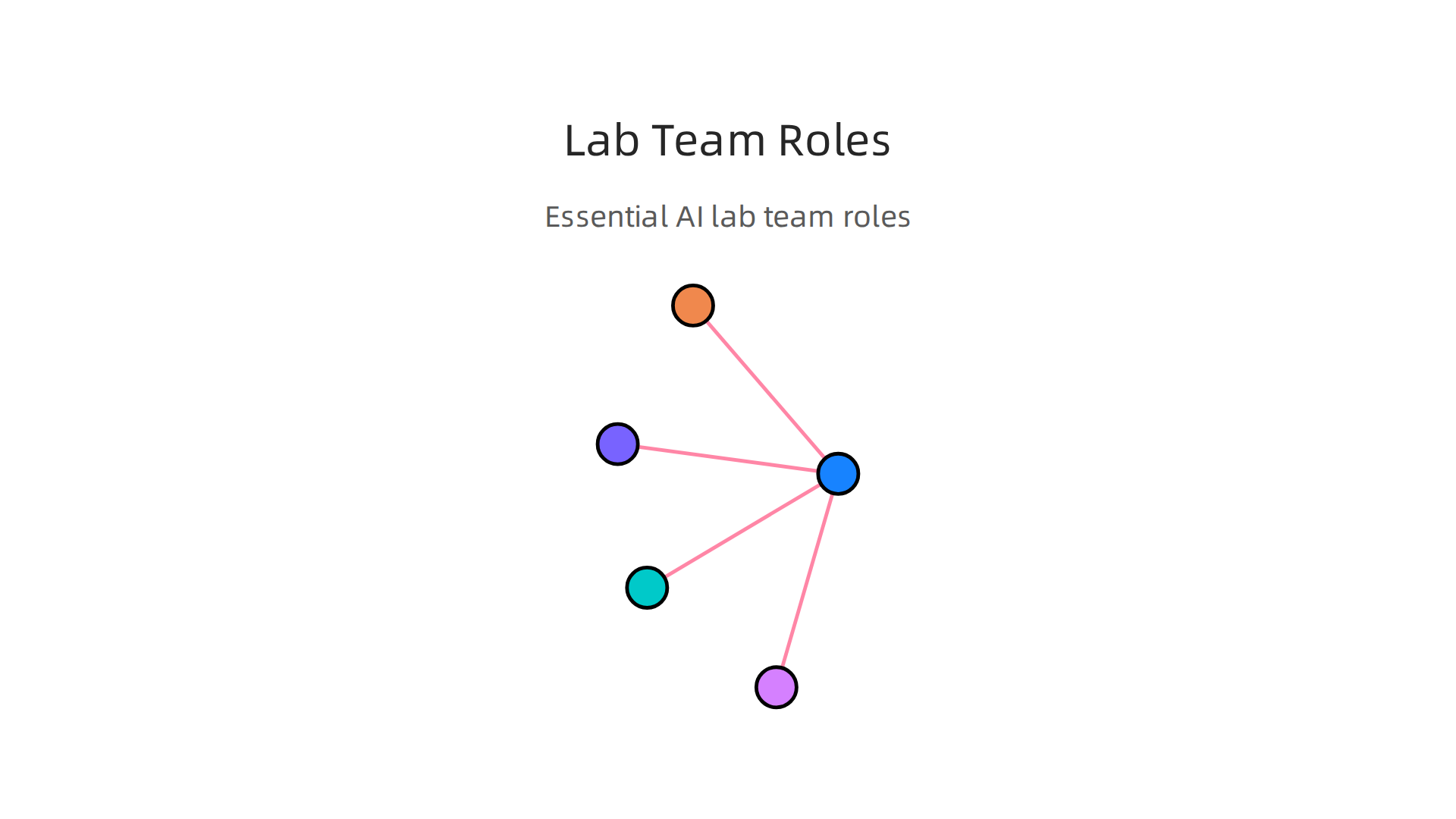
- AI/ML Engineers: These are the core builders. They design, train, and deploy the actual AI models. They need to understand how to work with modern AI systems, including things like foundation models. Many companies are seeking these engineers to build AI-native software in 2026 Your 2026 AI talent playbook.
- Data Engineers: AI models need lots of good, clean data. Data engineers are like the architects of data. They build the systems that collect, store, and prepare data so AI models can use it properly. They make sure the data is "AI-ready."
- AI Product Managers: These folks make sure the AI projects solve real business problems. They understand both the technology and what customers need. They help guide the team to build AI solutions that will actually be useful. Experts highlight the AI product manager role as critical for setting strategy and aligning AI efforts with business goals in 2026 AI Workforce Strategy 2026: Roles, Skills & Training Guide.
- UX/ML Researchers: These team members focus on how people will actually use the AI products. They make sure the AI is easy to understand and interacts well with users. They also explore new AI methods and ideas.
- AI Platform Engineers: This role supports the whole team by building and taking care of the shared tools and systems. They make sure everyone has what they need to build and deploy AI models smoothly. You might also hear about "AI Orchestrators" or "Agentic Engineers" who manage multiple AI tools working together AI-First Teams: How Roles, Skills, and Expectations Are Shifting in 2026. For a deeper look at these roles, check out this video on 6 AI Roles Companies Are Actually Hiring for in 2026.
Getting this mix right is key for any AI development team in 2026 How to Build and Structure an AI Development Team in 2026.
Helping Your Team Grow
Once you have your team, it’s important to help them keep learning and growing. The world of AI changes so fast that continuous learning is a must. Here’s how an innovation lab can support its people:
- Internal Rotations: Let team members try out different roles within the lab. This helps them learn new skills and see how different parts of a project fit together.
- Training Programs: Offer special courses and workshops. These can cover new AI tools, advanced coding techniques, or even ways to think more creatively about AI solutions. It’s about providing the Tailored Learning Paths for Software Developers in 2026 that truly help.
- Mentorship: Pair up newer team members with experienced ones. Mentors can share their knowledge and guide others, helping everyone grow faster.
- Upskilling: Encourage everyone to improve their existing skills and learn new ones that are important for AI. Many companies in 2026 focus on upskilling to meet the demands of AI The AI Skills Your Workforce Actually Needs in 2026.
This focus on learning helps developers stay at the top of their game and ensures the innovation lab has the talent it needs. If you’re looking to understand specific roles better, reading about Decoding IT Engineer Roles: Definitions, Skills, and Career Paths can be very helpful.
Mixing Technical Experts with Business Knowledge
An "innovation lab" needs more than just technical smarts. It also needs people who truly understand the business problems the company faces.
By blending technical staff with domain experts (people who know a lot about a specific industry or part of the business), the lab can:
- Solve the right problems: Make sure the AI solutions actually help the company with its real-world challenges.
- Build better products: Create AI tools that fit perfectly into how the business works.
- Work faster: When everyone understands both the tech and the business, they can make decisions and build things more quickly.
The goal is to create a team that can not only build amazing "innovative technology" but also make sure it has a real impact.
Stay informed about the fast-moving world of AI with concise daily updates.
The AI Newsletter Worth Reading
Bringing innovative ideas to life in an AI innovation lab is exciting. But the real magic happens when those new ideas and "innovative technology" leave the lab and become part of the company’s main products. This step is about making sure all the smart work done in the lab actually helps the business. It’s like a relay race where the lab passes the baton to the main engineering teams.
Integrating the lab into engineering workflows and delivery pipelines
The goal of an innovation lab is to create new things that can grow. To do this, we need clear ways to move new AI ideas from the lab to the main engineering groups. This helps make sure that advanced "apex technology" and fast-moving "tumble tech" developments are used well.
Here are some patterns that help bridge this gap:
- Feature Flags: Imagine a secret switch. Feature flags let engineers turn new AI tools or features on or off without changing the main code. This means the innovation lab can test new ideas with a small group of users first. If it works well, they can turn it on for everyone. If not, they can turn it off easily.
- Experiment Branches: When lab teams work on new AI projects, they often do so in their own separate code "branches." This keeps their work from interfering with the main product code. Once an experiment is successful, these branches can be carefully joined with the main code.
- Transfer Squads: Sometimes, a small team from the innovation lab will work closely with the main engineering team. This "transfer squad" helps move the new technology over, making sure everyone understands how it works. This helps prevent problems and ensures a smooth handoff. For more on building an AI roadmap from ideas to finished products, you can explore guides on how to From Experiments to Production Impact: Build Your AI Roadmap.
Handoffs, Code Ownership, and Reliability
When an AI project moves from the innovation lab, it needs clear rules. Everyone must know who owns the code and who is responsible for keeping it running. This is called a "handoff." Having a clear handoff process ensures that new AI features are reliable and perform well for users.
Making sure the AI tools work correctly and reliably in the real world is very important. This is called "production reliability." It means the new AI features need to be checked often and fixed quickly if any issues come up.
Governance and Documentation Practices
Good rules (governance) and clear instructions (documentation) are essential for successful integration. For AI, this is especially true in 2026, as new rules and laws are coming out. Companies need to know where their AI’s training data comes from and how it makes decisions. For example, governing AI in 2026 means having good risk assessments, keeping clear records, and monitoring systems after they are launched Governing AI in 2026.
Important practices include:
- Tracking Data: Knowing the source of all data used for AI training helps with being fair and open. Companies should track where data comes from and any rules about using it how enterprises are really managing AI compliance in 2026.
- Detailed Documentation: Writing down how the AI system works, what it’s for, and how it was built helps everyone understand it. This makes it easier for other teams to take over and improve the AI.
- Compliance: Following all the new AI rules and laws. This makes sure the AI is used safely and ethically.
By having these clear steps, the innovation lab can keep creating new value, and the company can quickly use these new ideas to make better products and services.
Creating new value with innovative technology in an innovation lab is exciting, but it’s super important to do it safely. This means paying close attention to security, making sure we follow all the rules (compliance), and being smart about how we handle data (data governance). Even when ideas are just starting as tumble tech or moving towards apex technology, these steps keep everyone safe and build trust.
Keeping Experiments Secure
When teams in the innovation lab are trying out new AI ideas, they need to have special protections in place. Think of it like a special sandbox for their experiments.
- Careful Data Access: Not everyone should see all the data. Access to sensitive information needs to be very limited. This means only people who truly need to use the data for their experiment should be able to see it.
- Making Data Anonymous: Sometimes, information about people can’t be used directly. So, the lab teams might change the data so it doesn’t show who it belongs to. This is called anonymization. It helps protect people’s privacy while still letting the AI learn.
- Separate Work Areas: It’s best to keep experiment data and tools separate from the main company systems. This way, if something goes wrong in an experiment, it won’t affect everything else. These separate environments act like firewalls.
Following the Rules: Compliance
In 2026, there are many new rules about how AI can be used, especially with data. Companies in places like Utah tech week and beyond need to be very careful.
- Protecting Personal Information (PII): This means names, addresses, or anything that can identify a person. AI systems must be built to protect this kind of data from the very start.
- Where Data Lives: Data residency rules mean that certain information might need to be stored in specific countries or regions. The
innovation labmust know where their training data comes from and where it needs to stay to follow the law. - Being Able to Show Your Work: It’s important to keep clear records of how an AI model was built, what data it used, and how it makes decisions. This helps with auditability. Companies must track the source of their data and its restrictions to manage how enterprises are really managing AI compliance in 2026. This is also known as model provenance.
Safe Ways to Experiment
To make sure all this works, the innovation lab needs clear ways of working.
- Safety Guards: These are like fences around a dangerous area. They stop AI experiments from doing things they shouldn’t, like making unfair decisions or using data incorrectly.
- Code Checks: Other engineers should always look at the code the lab team writes. This is called a code review. It helps catch mistakes and find security problems before they cause issues.
- Thinking Like a Hacker: Teams should try to find ways their AI system could be attacked or misused. This is called threat modeling. It helps them fix weak spots early.
These practices are part of a bigger idea called MLOps, which helps manage AI systems from start to finish. MLOps helps companies build, deploy, monitor, and govern AI models, as explained in MLOps Platforms and Tooling: Managing the AI Development Lifecycle. To learn more about setting up strong guidelines for AI, check out our guide on the future standard for AI implementation.
Staying on top of all the changes in AI security and compliance can feel like a lot. Get clear daily AI updates from The AI Newsletter Worth Reading.
Even with all the careful security and rule-following in place, the biggest question for any innovation lab is: when is an experiment ready to become a real product?

It’s exciting to build innovative technology, but the goal is to make a real difference for the business. This means we need to look closely at what the lab creates and decide if it’s worth turning into something bigger.
When to Productize Lab Outcomes
Deciding when to take an idea from the innovation lab and make it a full product isn’t always easy. It’s not just about how "cool" or technically advanced the tumble tech or apex technology is. You need to look at a few things:
- Real Problem Solving: Does the new idea fix a big problem for customers or for the company itself?
- Customer Interest: Have real customers shown they want this solution?
- Market Fit: Does it fit with what the market needs right now in 2026?
- Team Readiness: Can a team outside the lab actually build and support this idea?
If an idea passes these checks, it might be ready to move from a lab experiment to a product feature or even a new service.
Measuring Business Impact vs. Technical Novelty
It’s tempting to get excited about very new or complex technologies. However, for an innovation lab, success is often measured by its business impact. This is where "Return on Investment" (ROI) and "Key Performance Indicators" (KPIs) come in.
ROI helps us see if the money and time spent on an innovation bring back more value than they cost. You can figure this out by comparing the value gained to the money spent, then multiplying by 100 to get a percentage How to Measure Innovation Programme ROI (2026).
KPIs are like scorecards that show how well an innovation is doing. For example, an innovation lab might track how many ideas go from testing to becoming real products, or how much money new ideas bring in Why Innovation Labs Are Crucial for Market Research Innovation. Other important KPIs include how much money the innovation saves or how much happier customers are What KPIs matter for innovation labs and test beds?. It’s all about making sure that the new tech helps the company grow and do better. To understand how to take these lab discoveries and build them into a larger strategy, you can learn more about how to From experiments to production impact, build your AI roadmap.
Scaling Patterns for Lab Tools
Once an innovative technology is ready, there are different ways to make it available to more people:
- Internal Spin-Outs: Sometimes, a successful project from the
innovation labmight become its own small team or even a new company inside the larger organization. - Product Team Adoption: The lab’s findings can be given to existing product teams. These teams then build the innovation into products that customers already use. This is a common way to quickly get new features out.
- Platformization of Lab Tools: If the lab creates a really useful tool or way of doing things, it can be turned into a shared platform. Other teams in the company can then use this platform for their own projects, speeding up their work. This helps everyone benefit from the lab’s smart ideas.
Summary
Innovation labs give engineering teams a dedicated space to explore new technologies—especially AI—without the pressure of day-to-day delivery. This article explains what innovation labs are, compares common models (centralized, distributed squads, productized, and external partnerships), and shows where labs fit inside organizations. It covers how to set short-, mid-, and long-term goals, which KPIs matter (experimentation rate, prototype-to-production conversion, product impact), and how often to evaluate work. You’ll learn the core tooling needs—data platforms, model development, MLOps, CI/CD, and observability—plus a starter checklist to get a lab running. The guide details the roles an effective lab needs, how to support ongoing learning, and practical handoff patterns like feature flags and transfer squads. Finally, it walks through governance, security, compliance, and the criteria for productizing experiments so labs create measurable business value.