Technology Memes Unpacked How Developer Humor Shapes Community and Culture
Overview
Introduction
You know that feeling when you see a meme about fixing a bug by turning it off and on again, and you can’t help but laugh? That’s the power of the technology meme. For developers, these memes have become a quick language to share inside jokes, vent about frustrating code, and bond over shared experiences. But these funny images are more than just entertainment. They shape how technical knowledge spreads and how communities form around tools and frameworks.
The idea of a meme goes back further than the internet. According to the Internet meme article, the term was first used in 1993 by Mike Godwin to describe how ideas spread online. Today, tech memes are an important part of the developer ecosystem. They help new concepts travel fast and make complex topics feel approachable. To understand the roots of this technology, you might also read about when artificial intelligence was invented.
This article explores the history, psychology, economic impact, and future of tech memes in 2026. We will look at how these jokes have changed the way developers learn, work, and connect. If you want to keep up with the latest in AI development, consider subscribing to The AI Newsletter Worth Reading for daily updates.
The Rise of the Technology Meme: A Brief History
To understand where developer memes are today, it helps to look back at where they came from.
The word "meme" itself has a surprising origin. In 1976, biologist Richard Dawkins used it in his book The Selfish Gene to describe an idea that spreads from person to person, like a cultural gene. You can read more about the Meme meaning and history to see how this concept evolved.
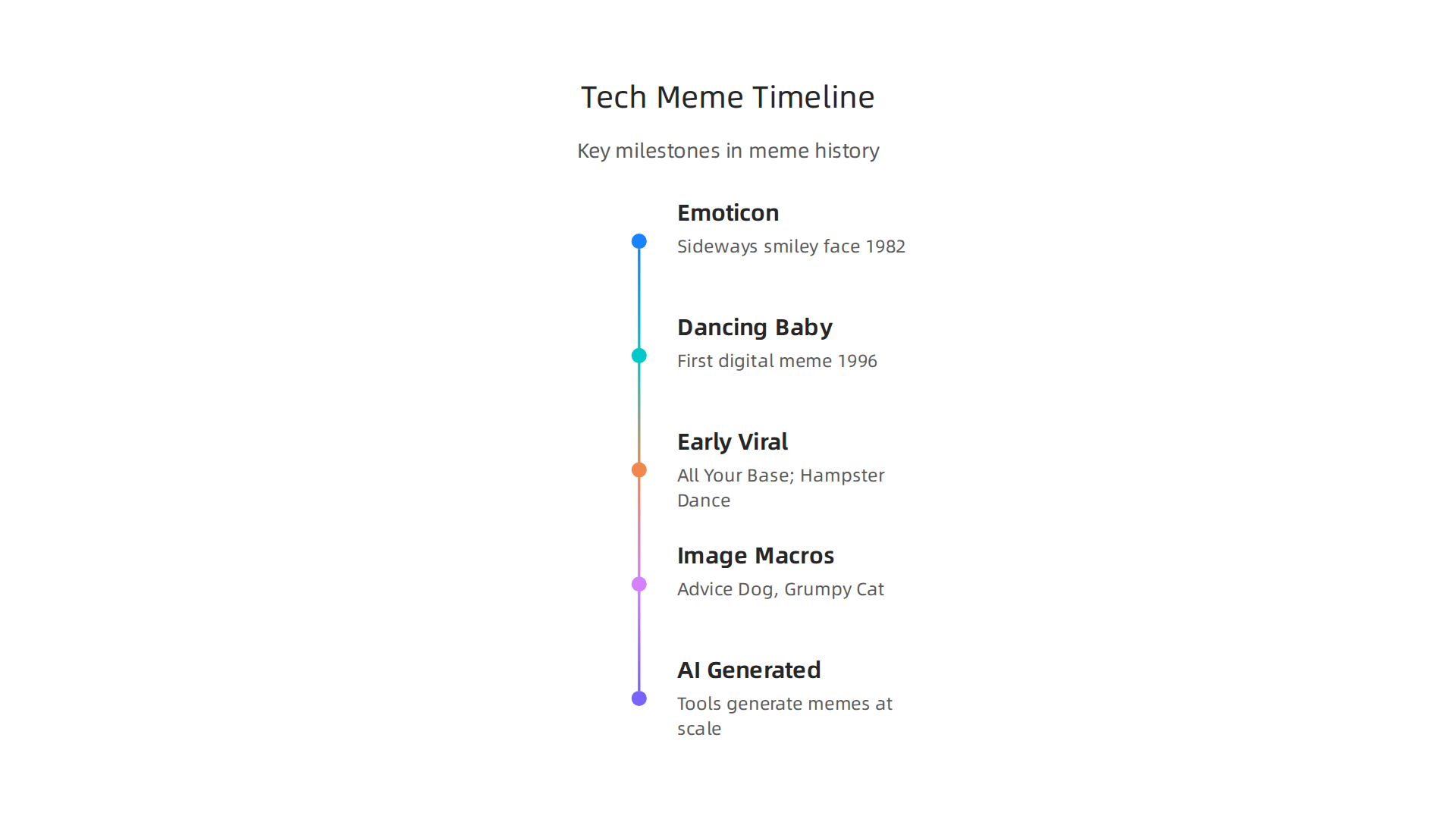
The first true internet meme was not an image at all. It was the sideways smiley face emoticon, :-), created in 1982 by computer scientist Scott Fahlman. This simple hack let people show emotion in text. Then came the Dancing Baby in 1996, which took hours to download but became a cultural touchstone. It is considered by many to be the first digital meme, as explained in this brief history of memes.
The tech community grabbed onto this new language fast. Early gems like "All your base are belong to us" came from a poorly translated video game. Others, like the Hampster Dance, showed how flash animations could go viral. For a deeper look at these early examples, check the academic origins of memes.
By the late 2000s, image macros like Advice Dog and Grumpy Cat ruled the web. And now, in 2026, we see AI generated memes that riff on the latest tools and frameworks. Understanding this history helps explain why developers love certain meme archetypes. They are a fast way to share frustration, celebrate wins, and pass along inside knowledge. The evolution of the technology meme mirrors the evolution of tech itself. Looking ahead, you might also explore advanced prompt engineering techniques to see how AI is now used to create new memes.
From Email Forwards to Twitter/X Virality
Before social media took over, the technology meme lived inside mailing lists and early forums. Sites like Slashdot and Something Awful were the breeding grounds where developer inside jokes spread slowly by email forward and message board reply. Then came Twitter and Reddit, which turned meme creation into a rapid, global conversation. Dev-specific communities on these platforms accelerated the pace of joke making and adoption. Now, platform algorithms heavily influence which tech memes gain worldwide attention. You can explore the full evolution in the Internet meme article on Wikipedia. Keeping up with these fast changes in tech culture is easier when you follow a solid software developer roadmap. The shift from niche forums to algorithm-driven feeds changed everything. To keep up with the bigger picture behind the memes, consider subscribing to The AI Newsletter Worth Reading for daily updates that cut through the noise.
Key Archetypes That Defined a Generation
Certain meme formats became universal shorthand for the ups and downs of coding. "This is Fine" captures how you feel when a production system burns but you still work. The "Distracted Boyfriend" meme helped developers compare old frameworks to new ones. These archetypes reduce complex emotions into images everyone recognizes. For more on these roles, see our computer science vs software engineering guide. And for the Distracted Boyfriend origin, check the history of memes from PBS.
How Tech Memes Foster Community and Belonging
When you work on a remote team, it is easy to feel disconnected from your coworkers. You might miss the inside jokes that happen in the break room. That is where the technology meme steps in. Shared humor creates a shared identity, especially for software developers spread across time zones.
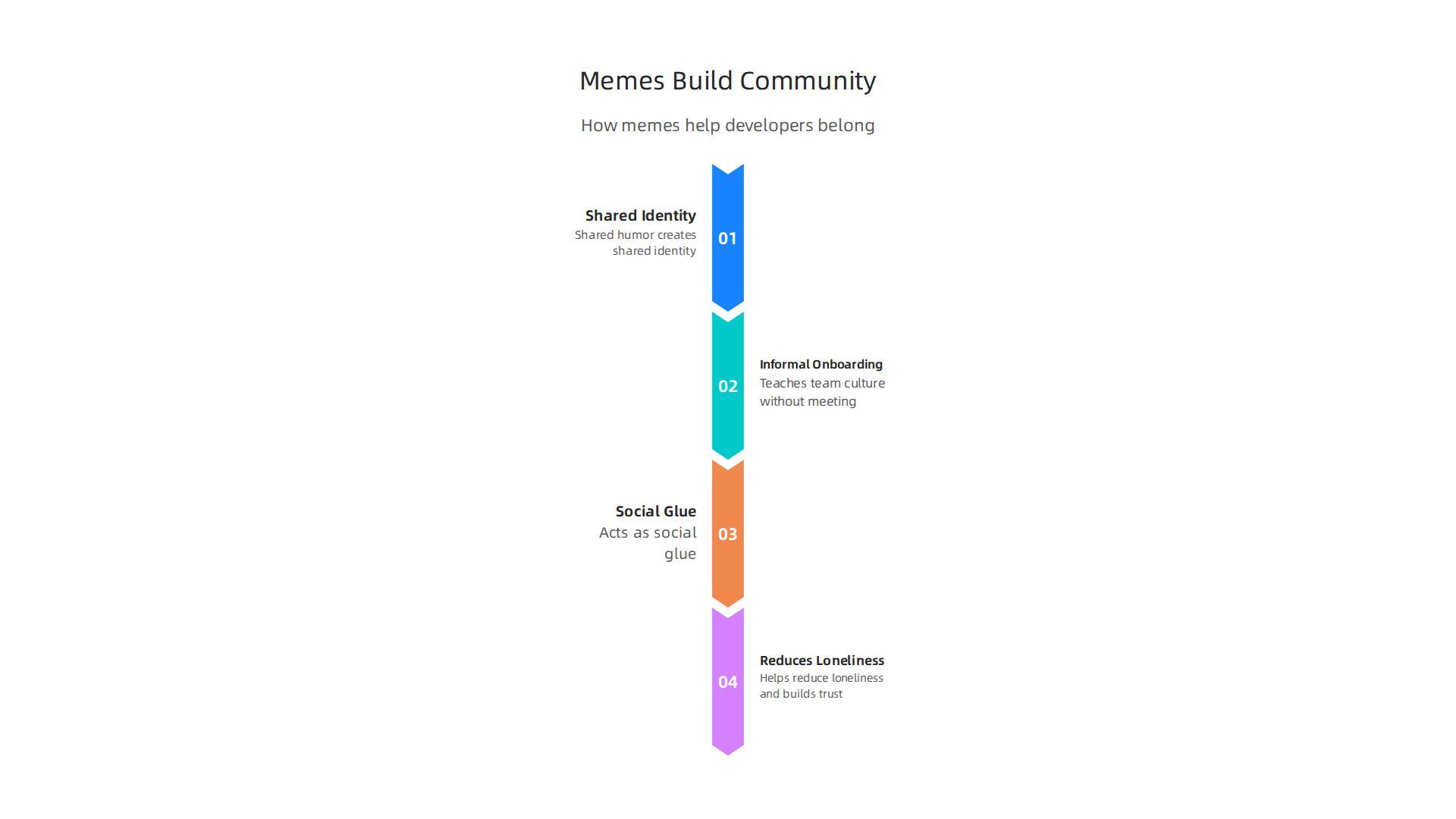
A funny meme about a bug you all face can make you feel like you belong to something bigger.

Research from Penn State shows that internet memes can influence a person’s sense of community and belonging. In one study, people who did not feel strongly connected to a group actually felt more belonging after seeing memes. For new developers, seeing the same memes their senior team members laugh at works as an informal onboarding tool. It teaches them the culture of the team without a formal meeting.
Remote work has made memes even more important. They act as social glue in virtual teams, filling the gap left by water cooler chats. When you share a relatable meme in Slack or Teams, you are saying, "I get it, and I am one of you." This helps reduce loneliness and builds trust.
If you are new to the tech world and want to learn more about the developer community, you might also benefit from an online school for developers that keeps you relevant in 2026. And for daily insights that help you stay connected to the broader tech scene, consider The AI Newsletter Worth Reading for clear daily AI updates.
Developers as a Meme Subculture
But developers have gone a step further. They created their own inside language with memes that outsiders rarely understand. Jokes about programming languages, frameworks, and tech debt become a secret handshake. When you laugh at a meme about debugging a legacy system, you are signaling you belong to the tribe. This is what the British Psychological Society calls the participatory culture of memes. For newcomers, getting the references is a quick way to feel accepted. If you are just starting out and want to learn the ropes, the junior software developer job market 2026 guide can help you understand what skills matter in this close-knit community.
Memes as Social Glue in Remote Work Environments
Remote teams have turned to the technology meme as a digital water cooler. Dedicated Slack channels for memes are now standard in many tech companies, letting coworkers share inside jokes and lighten the mood across time zones. This asynchronous humor helps bridge the gap between colleagues who never share a physical office. Research from Penn State shows that memes play a big role in creating a sense of belonging and community online. If you are new to remote development and want to understand the cultural lingo, the software developer roadmap for 2026 can help you navigate both technical skills and team dynamics. For daily insights into the tech trends shaping these conversations, check out The AI Newsletter Worth Reading.
The Role of Memes in Innovation and Problem-Solving
Beyond building bonds, memes also play a surprising role in how teams solve problems and come up with new ideas. A well-timed technology meme can act like a mental model. It takes a confusing system or a tricky bug and wraps it in a simple, funny image.

Suddenly, the whole team sees the problem in a new light.
Researchers who studied humor in software engineering found that memes and jokes help developers think more creatively. The research into humor and creativity in software engineering highlights how humor reduces the mental load during tough problem-solving tasks. This makes it easier for engineers to spot fresh solutions. When a meme makes everyone laugh, the brain relaxes and opens up to new possibilities.
Shared memes can also turn into real conversations about fixes. A team might see a meme about a slow CI/CD pipeline and start joking about it. That joke can lead to a serious discussion about improving the process. According to a recent report on AI-generated memes to boost morale, engineering teams now use AI-generated memes to spark these kinds of helpful talks.
If you are looking for more ways to turn creative ideas into real products, check out these AI startup ideas for 2026. It shows how a small shift in thinking can lead to something big.
Memes as Cognitive Shortcuts for Complex Ideas
A single technology meme can teach a design pattern or point out a devops mistake faster than a long explanation. Picture a meme comparing microservices to a team of chefs in a tiny kitchen. One look, and you get the chaos. This is how memes reduce the mental work of understanding abstract concepts. They rely on visual metaphors that stick in your brain. That is why educators and conference speakers now use memes to keep developer audiences tuned in. As shared in a piece about hidden humor in software engineering, humor helps people bond with the code and the team. For developers looking to learn new skills fast, free MIT online courses for developers can help build expertise in hot areas. And if you want to keep up with the fast changes in AI, check out The AI Newsletter Worth Reading for daily insights.
Serendipitous Discovery Through Shared Jokes
In today’s information society, memes do more than simplify complex ideas. They also spark serendipitous discovery. A technology meme about a niche library or tool can introduce developers to solutions they had never considered. That low-stakes format makes it easy to share half-formed thoughts, which sometimes grow into collaborative projects or even startup ideas. Recent research on humor and creativity in software engineering highlights why this works. If a viral meme inspires your next project, check out these AI startup ideas to turn fun into something bigger.
The Dark Side: Misinformation, Burnout, and Toxicity
Not every technology meme is a harmless laugh. Some oversimplify complex topics, spreading false ideas about tools and trends.
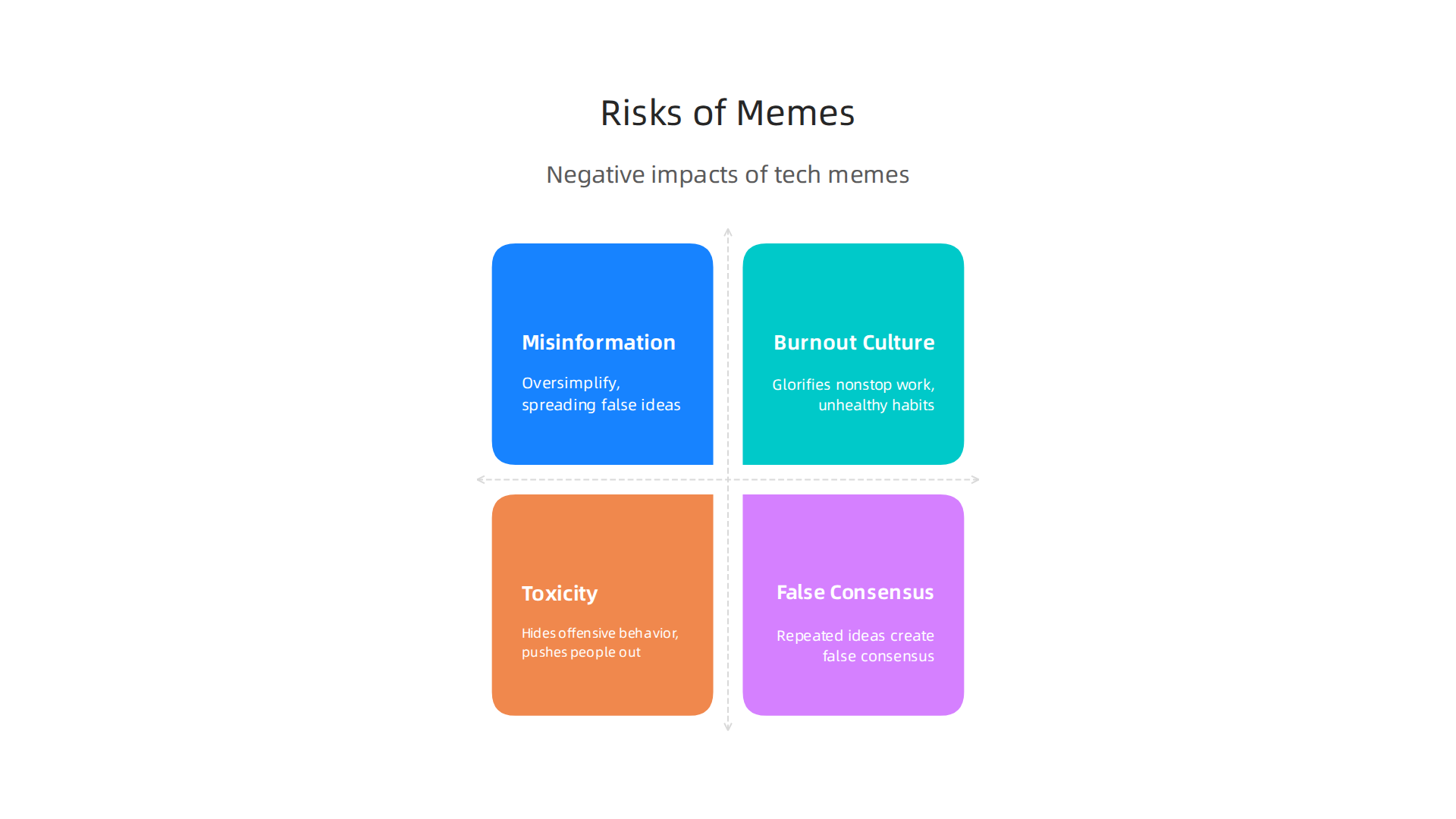
When a meme twists facts about AI or coding, it can mislead beginners and even experienced developers. Research shows that being exposed to bad information online can make it harder to process real emotions. This kind of digital noise adds to the confusion in our information society.
There is also the "always be coding" meme culture. It glorifies nonstop work and makes burnout feel normal. Many developers feel pressure to grind all day, every day. But that mindset is not sustainable. To build a healthy career, it helps to follow a balanced software developer roadmap that includes rest and boundaries.
Humor can also hide toxic behavior. When people hide behind anonymity online, they feel free to create offensive memes that hurt others. The online disinhibition effect makes it easier to cross lines that would never be crossed in person. This kind of toxicity pushes people out of tech communities instead of bringing them in.
To stay sharp on what matters, you need reliable information. If you want clear daily AI updates, The AI Newsletter Worth Reading delivers helpful insights without the noise.
When Memes Mislead: The Risk of Oversimplification
Beyond toxicity, memes can also confuse you with oversimplified messages. When a meme claims that a certain technology is dead or that one way is the only way, it can distort what is actually helpful for your work. Viral posts about security vulnerabilities often trigger unnecessary panic. Over time, seeing these oversimplified ideas repeatedly creates a false consensus in your community. The psychology behind memes and their impacts reveals how misinformation spreads. Instead of trusting a meme, check reliable sources like AI model comparison guides to make informed decisions.
Burnout Culture and the ‘I’m Fine’ Meme
The "this is fine" meme has become a symbol for tech workers in crunch mode. When a technology meme jokes about sleeping under your desk, it normalizes unhealthy habits. Research shows that how memes help us cope can become a coping mechanism that discourages seeking help. Some communities now create anti-burnout memes to flip the script. For a healthier workflow, check out our guide on the future standard for AI implementation. Get clear daily AI updates from The Deep View Newsletter by subscribing to The AI Newsletter Worth Reading.
The Economics of Tech Memes: Brands, Influencers, and Marketing
Big tech companies have caught on to something developers already knew: a good meme sells better than a press release. In 2026, brands like Duolingo, Ryanair, and MoonPie have turned meme marketing into a serious revenue channel. One deep dive into business meme marketing examples shows how Duolingo grew their TikTok from zero to 7.2 million followers and boosted app downloads by 67% during peak meme campaigns. These numbers prove the technology meme is no longer just inside humor. It’s a measurable business tool.
Influencers in the developer space also build entire followings by curating and creating memes. A roundup of programming memes defining developer culture shows how coder humor has become a form of social currency. When a meme about legacy systems or AI debugging goes viral, the creator gains credibility and reach. Brands notice this and often sponsor creators or join meme threads themselves.
Here’s where things get tricky. The line between organic community fun and paid brand content is blurring. A developer might laugh at a meme about “when was ai invented” only to realize it’s part of a marketing campaign for a new AI tool. This blending of human factors engineering (how people engage emotionally) with brand strategy is reshaping the information society. What used to be a shared joke among peers is now a targeted ad. For teams trying to stay above water, understanding this shift matters. If you are evaluating tools that brands push through memes, check our guide on how to go about selecting AI development tools so you pick based on merit, not hype.
Brands Hijacking Memes: Authenticity vs. Cringe
When brands jump on a meme just because it’s trending, developers usually spot the fakeness in seconds.

The developer community is highly sensitive to inauthentic marketing. A glance at developer sentiment on Reddit shows how quickly people call out forced corporate humor. Successful brand campaigns add real value or witty commentary instead of just copying a template. If your team wants to avoid the cringe factor while using memes to share knowledge, check out our list of best AI apps for developers in 2026 for authentic recommendations. And for staying ahead of AI trends without the noise, consider subscribing to The AI Newsletter Worth Reading for clear daily AI updates.
The Rise of Developer-Focused Content Creators
It’s not just brands jumping on the bandwagon. A new wave of developer influencers on YouTube, TikTok, and X/Twitter relies heavily on the technology meme to teach coding concepts and share relatable struggles. These creators bridge the gap between education and fun, making complex topics stick through humor. According to coverage of programming memes defining developer culture in 2026, this blend of entertainment and learning is reshaping how developers consume information. Sponsorships and platform monetization have even turned meme creation into a viable career path. If you want to follow their lead and build your skills, an online school for developers can help you stay relevant.
The Future of Technology Memes in an AI-Mediated World
But what happens when the joke writer itself is a machine? Since the 1956 Dartmouth Conference (the answer to when was AI invented), we’ve come to a point where AI tools can now generate memes at scale.
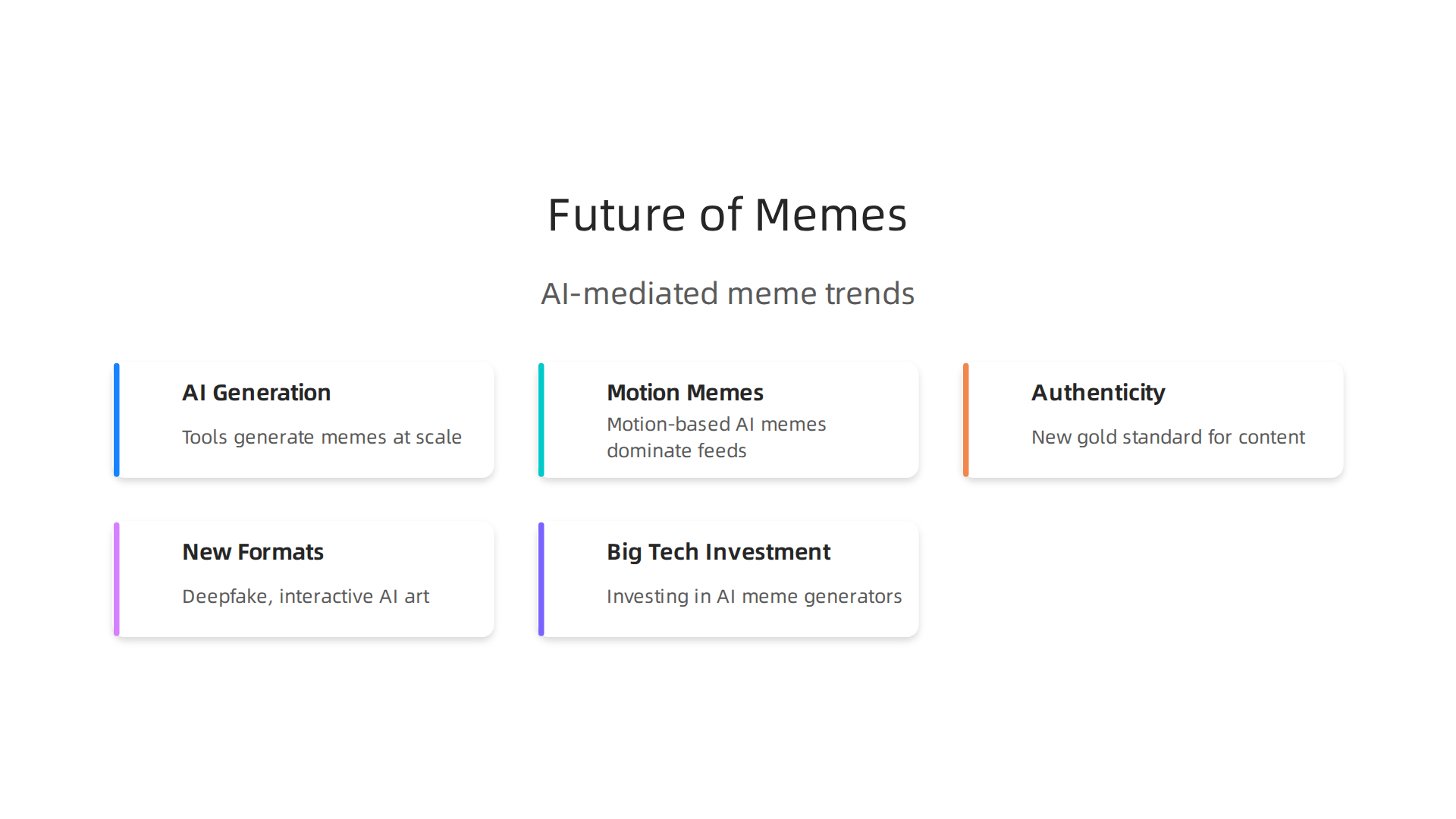
You type a prompt, and seconds later you get eight different variations. According to the Viggle AI Blog on how AI is changing the meme ecosystem in 2026, motion-based AI memes now dominate feeds. They loop, dance, and react. This raises a big question: where does creativity end and automation begin?
As AI-generated content floods feeds, authenticity becomes the new gold standard. The technology meme that feels handmade, raw, and human will stand out more than ever. That’s where human factors engineering comes in. Understanding what makes a joke land requires understanding how humans actually think and feel. AI can copy patterns, but it can’t replicate genuine lived experience. People are already getting tired of the same AI-generated templates, and communities are calling for a reset.
New meme formats will also emerge. Think deepfake reactions, interactive AI art, and real-time personalized memes. The information society we live in now moves so fast that memes are becoming modular building blocks. Big tech companies are investing heavily in AI meme generators because they know attention is currency.
If you want to stay ahead of these trends and understand how AI is reshaping content creation, you need reliable daily updates. We recommend The AI Newsletter Worth Reading for clear daily AI updates straight to your inbox. And for a deeper look at how these AI memes are actually made, check out this guide on advanced prompt engineering techniques to build your own meme-generating prompts.
AI-Generated Memes: Creativity or Noise?
You open your social feed, and it’s wall-to-wall AI-generated memes. Each one is a technology meme churned out in seconds by tools like DALL·E and ChatGPT. The barrier to entry has never been lower. But all that volume creates a problem: the genuinely clever memes get lost in an endless scroll of noise. According to the Top AI Memes 2026 roundup from Webopedia, even the smartest algorithms still need human input to truly land a joke. Human curation and context will remain essential for meme quality. If you want to see which AI models can actually produce high-quality content, check out this AI model comparison guide for 2026 for a breakdown of the top tools.
Impact on Authenticity and Community Trust
As AI blurs the line between human and machine content, trust in the technology meme is fading.

Communities may soon enforce new norms, like requiring labels for AI-generated memes. Developers, already skeptical of industry hype, are becoming more discerning consumers. One Reddit discussion about the great meme reset of 2026 shows this growing fatigue. The need for authenticity in memes mirrors the broader push for clear rules in AI implementation. To stay updated on how AI is reshaping trust, check out The AI Newsletter Worth Reading for daily insights.
Summary
This article examines the rise and impact of technology memes in developer culture, tracing their history from early internet jokes to AI-generated content in 2026. It explains how memes act as social glue for remote teams, speed up learning by turning complex ideas into visual metaphors, and even spark innovation or hiring trends. The piece also covers the economic side—how brands and influencers leverage memes—and the downsides, including misinformation, burnout normalization, and toxicity. Finally, it explores the future as AI floods feeds with automated memes and argues that authenticity, human curation, and clear norms will determine which memes keep value. After reading, you’ll understand why memes matter, how to use them constructively, and what to watch for as AI changes the landscape.