
10 Free Coding Courses That Teach Job Ready Skills in 2026
Overview
Introduction
The tech world moves fast. Really fast. In 2026, new AI tools, coding frameworks, and developer platforms seem to appear every week. If you are a developer, a career changer, or just someone who wants to keep your skills sharp, staying current can feel like a full time job. You know you need to learn. But with so many options out there, where do you even start?
That is the problem most developers face today. Skill gaps grow quickly when you are not learning. At the same time, information overload makes it hard to separate quality resources from noise. You need something that works, that is free, and that delivers real skills you can use on the job.

The good news? Free coding courses have never been better. Platforms like freeCodeCamp, Harvard’s CS50, and Coursera offer top notch training without charging a dime. In fact, thousands of people have built entire careers using nothing but free resources available online. According to one roundup of the best free coding courses and resources in 2026, some platforms have helped over 40,000 learners land jobs. That is real proof that free learning works.
This article cuts through the confusion. We have curated 10 of the highest rated free coding courses that deliver job ready skills without any tuition costs. Whether you want to dive into web development, AI training, Python, or full stack engineering, there is something here for you. And because we live in a world where technology evolves overnight, staying informed matters just as much as building skills.
If you want to keep your finger on the pulse of AI and developer trends, consider subscribing to the AI Newsletter Worth Reading for clear daily updates that help you stay ahead. Also, if you are looking for a structured path to keep learning, check out our guide on how an online school for developers keeps you relevant in 2026.
Ready to start learning for free? Let us dive into the best courses you can take right now.
1. freeCodeCamp – Still the Gold Standard for Full-Stack Coding
If you are looking for free coding courses that actually lead to real jobs, freeCodeCamp is probably the best place to start.
This platform has been around for years, and it keeps getting better. It offers a complete, project based curriculum that covers everything from HTML and CSS to JavaScript, front end libraries, and beyond.
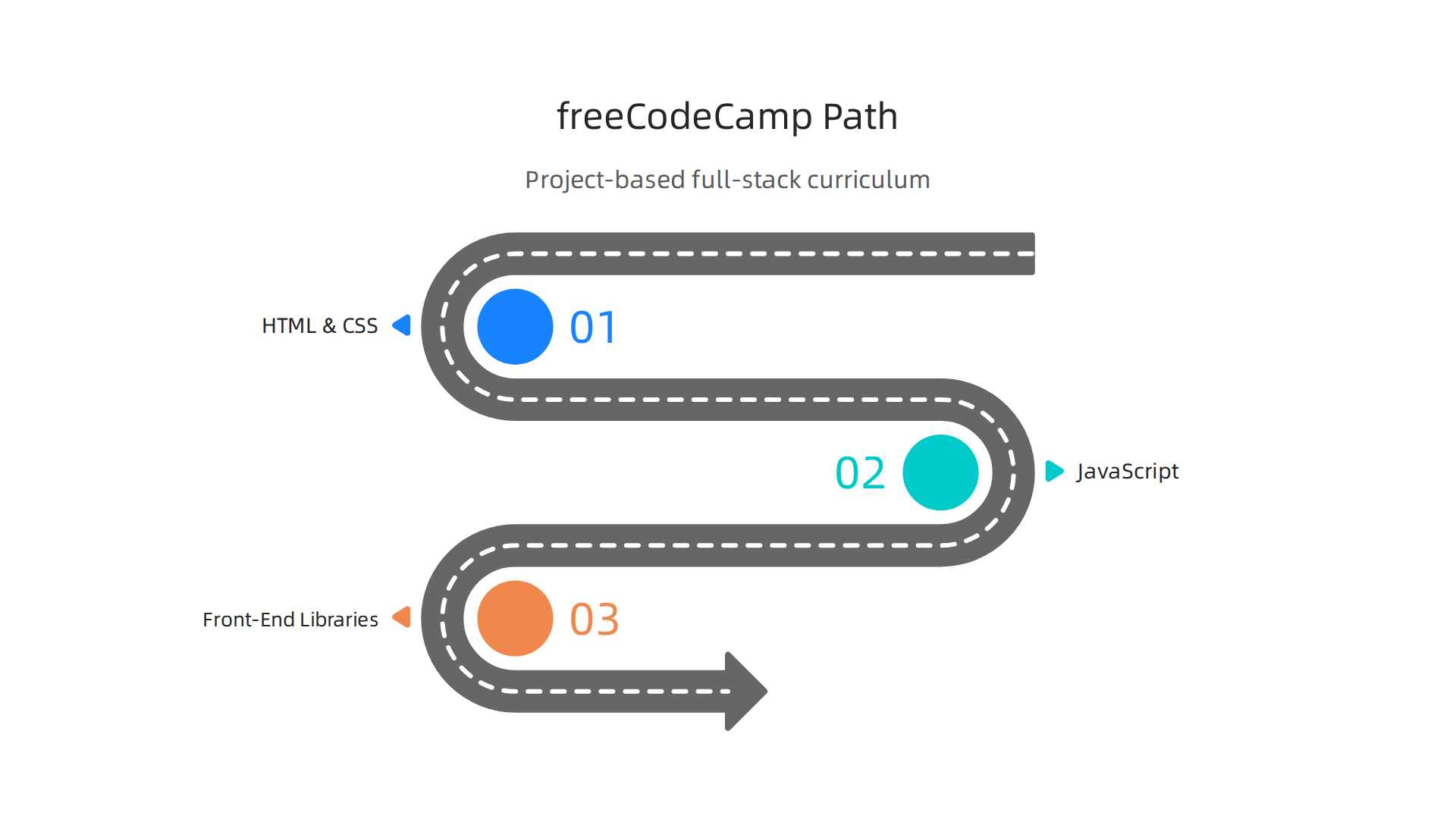
You work through real projects and earn certifications that prove what you can do. You can build a portfolio of over 10 projects before you even finish.
The best part? It is 100% free. No hidden fees, no paywalls. freeCodeCamp has helped more than 40,000 graduates land jobs at companies like Google, Amazon, and Microsoft. You can review the freeCodeCamp job placement data to see the numbers.
The interactive coding environment makes it easy to practice as you learn. You write code right in your browser, and it checks your work instantly. And the community of fellow learners is huge and active. If you get stuck, forums and chat groups are right there to help. This lowers the learning curve a lot.
Once you finish a few certifications, you will have a solid foundation. Want to know what to do next? Read our guide on how to land a software engineer entry level job in 2026 for a clear next step.
Staying current with the broader tech landscape is also part of the journey. The AI Newsletter Worth Reading delivers daily updates to help you stay informed while you learn.
2. The Odin Project – Open-Source Full-Stack Curriculum
If you like learning by building real things and want a curriculum that changes as fast as the tech world, The Odin Project is a smart choice. It is completely free and open-source, meaning anyone can contribute to keep the lessons up to date. That is a big deal in 2026 when tools and frameworks shift so quickly.
Instead of following a set order of certifications, The Odin Project gives you a full-stack path using either Ruby on Rails or Node.js. You learn by working on projects that feel like actual job tasks. You build a calculator, a weather app, a chess game, and even a social media clone. Each project pushes you to solve problems the same way developers do on the job.

The community is huge and active. When you get stuck, you can ask for help on Discord or GitHub. And because the curriculum is open-source, developers from around the world are constantly fixing broken links, adding new topics, and improving explanations. That means you are never learning from outdated material.
The Odin Project is perfect for people who want free coding courses that go deep into real development workflows. It is also a great way to prepare for a bootcamp or skip one entirely. Many graduates land jobs by showing off their project portfolio from the course.
If you are curious about other paths, check out our full software developer roadmap for 2026 to see how The Odin Project fits into the bigger picture.
And here is a reality check: even paid bootcamps cost around $14,000 on average, but they still can’t beat the price of free. You can start The Odin Project right now with nothing but a computer and an internet connection.
3. Harvard’s CS50 – Introduction to Computer Science (edX)
You have probably heard of Harvard’s CS50. It is one of the most famous computer science courses in the world. And here is the best part: you can take it for free through edX.
No application, no tuition, no strings attached.
CS50 covers the real foundations of programming. You will learn algorithms, data structures, and how to write code in C, Python, and SQL.
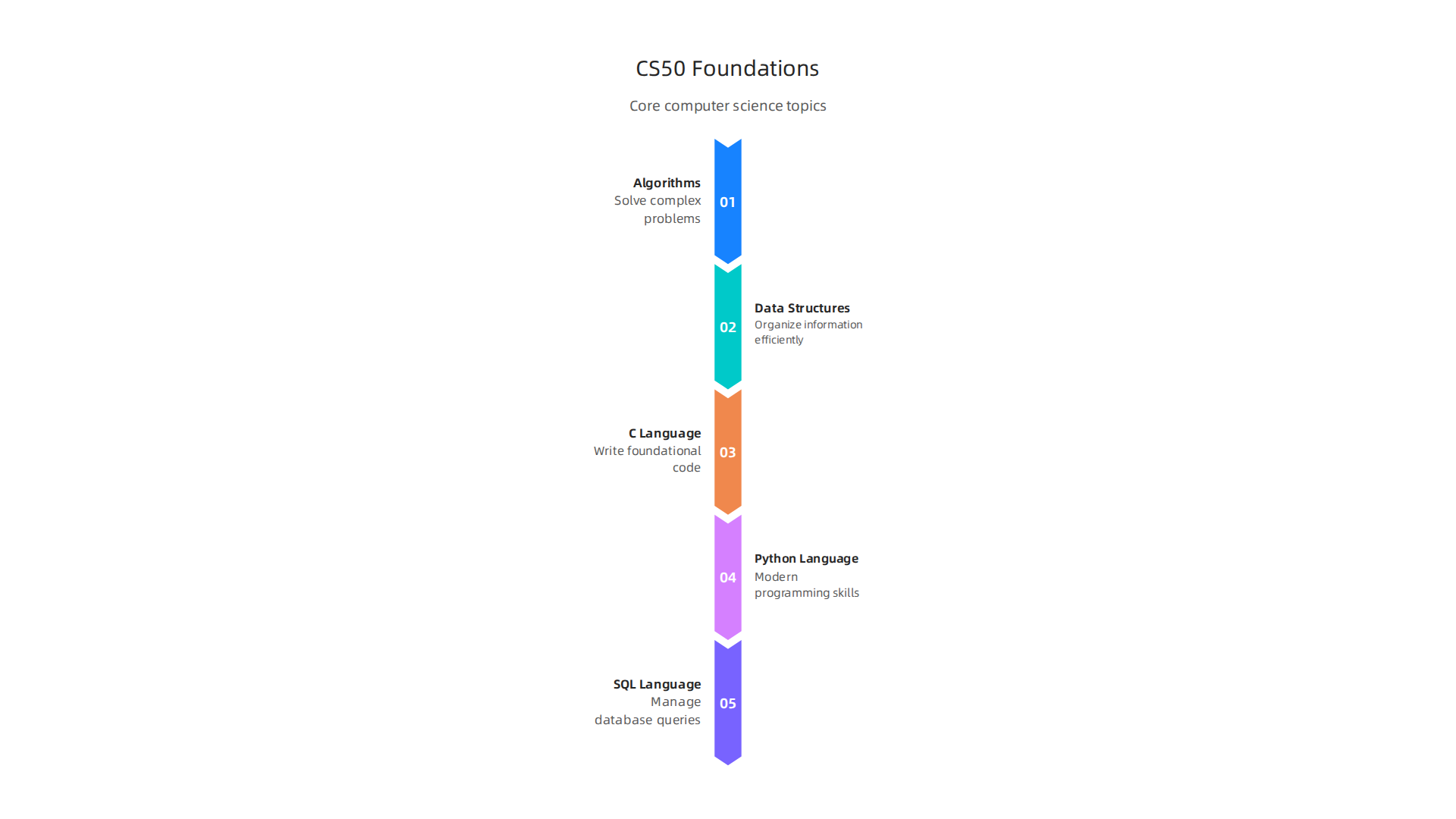
The course is tough but fair. Each week brings a video lecture from Professor David Malan, a problem set to solve, and access to a huge online community where students help each other. The projects push you to think like a real engineer.
If you want a certificate to share on LinkedIn or your resume, you can pay for a verified certificate. But auditing the course costs exactly zero dollars. That makes CS50 one of the best free coding courses available in 2026, especially if you want a top-tier university experience without the price tag.
Many people worry that free courses are not good enough to land a job. But as more than 40,000 freeCodeCamp graduates have shown, free coding courses can lead to real careers. CS50 gives you the same solid foundation that Harvard students get.
After you finish, you will have a strong base for deeper study. Check out our guide to the best computer science certifications in 2026 to see where CS50 can take you next.
And if you want to stay on top of the fast-moving tech world once you finish, subscribe to The AI Newsletter Worth Reading for clear daily updates straight to your inbox.
4. MIT OpenCourseWare – Deep Dive into Computer Science
After tackling Harvard’s CS50, you might be ready for an even deeper dive into computer science at the university level. MIT OpenCourseWare (OCW) gives you direct access to the same materials MIT students use, completely for free. No registration, no fees, no catch.
MIT OCW offers full lecture notes, assignments, exams, and even video lectures from actual MIT courses. You can browse over 2,500 courses covering the entire undergraduate and graduate curriculum. Two standout courses for beginners are Introduction to Computer Science and Programming in Python (6.0001) and Introduction to Algorithms (6.006). These courses carry real MIT rigor, which employers recognize and respect.
The impact of this free resource is huge. Over the past 25 years, more than 500 million learners worldwide have used MIT OpenCourseWare to expand their knowledge. Whether you are a student, an educator, or a self-learner, you can find materials that challenge you at a university level.
MIT OCW differs from Harvard’s CS50 in one big way: CS50 is a single course, while MIT OCW is an entire catalog. You can start with programming basics and work your way up to advanced topics like artificial intelligence and machine learning. For anyone seeking deep, self-directed study, MIT OCW ranks among the best free coding courses in 2026.
To see how these free resources can accelerate your career, check out our guide on MIT free online courses for dev upskilling.
5. Fast.ai – Practical Deep Learning for Coders
So you have explored MIT’s full catalog of computer science courses. Now you might want to focus on one of the hottest areas in tech: artificial intelligence. Fast.ai gives you a completely different approach to learning deep learning. Instead of starting with complex math and theory, this course lets you build working AI models on day one.
You learn the "how" first and the "why" later.
The entire Fast.ai course is free. You get Jupyter notebooks, video lectures, and access to a helpful online forum where thousands of learners and instructors answer questions. The teaching method is called top-down learning. You train a model to recognize images or classify text within the first few hours. Then over the next weeks, you peel back the layers to understand what is really happening under the hood.
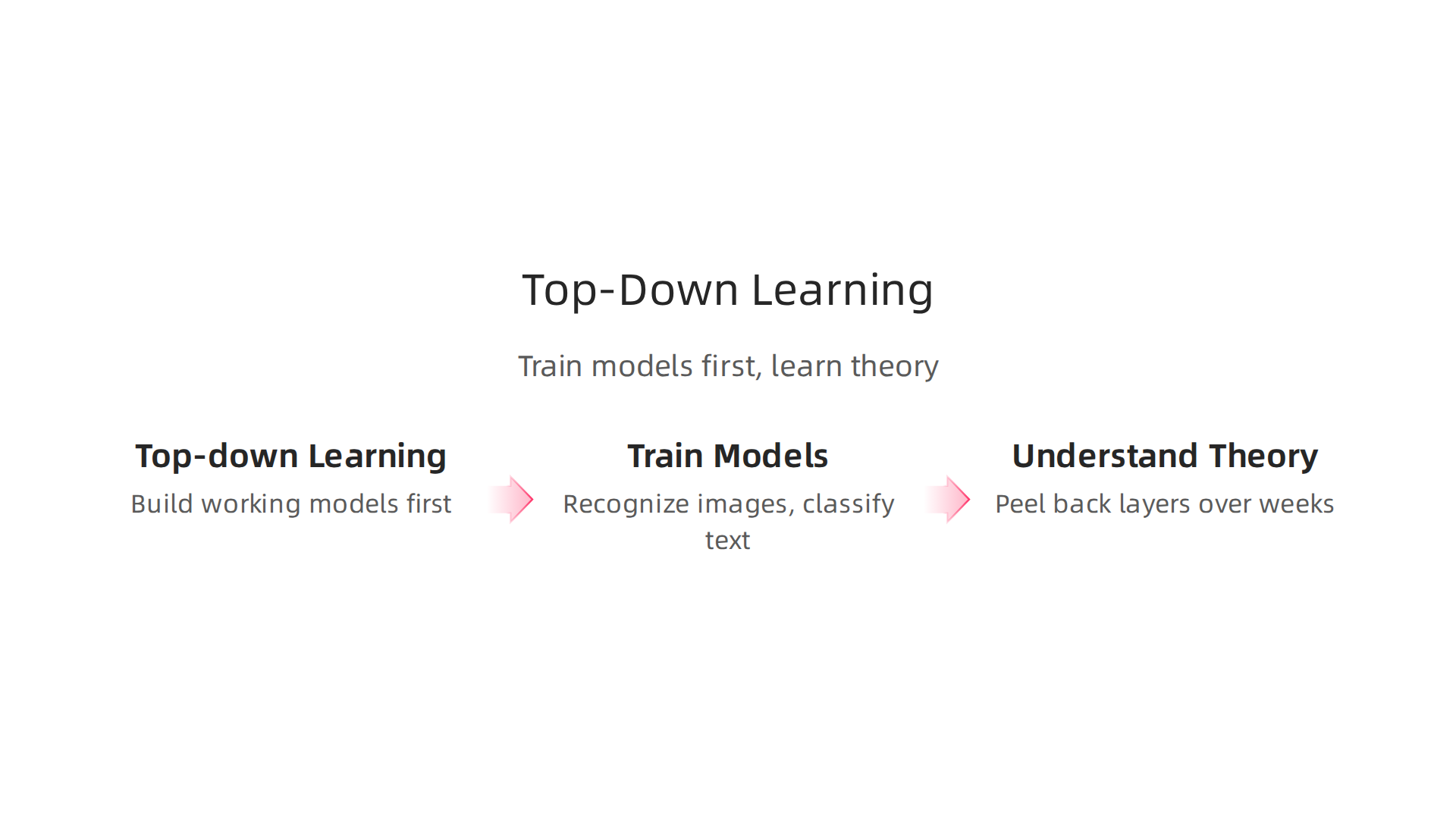
This hands-on style works incredibly well for developers who want to apply AI to real projects quickly.
Fast.ai is also one of the best free coding courses in 2026 for anyone moving into an AI engineering role. The skills you build here translate directly to business problems like customer feedback analysis, content moderation, and chatbot development. According to the Fast AI Machine Learning Course: Complete 2026 Guide, graduates often transition from software engineering into machine learning roles or even start AI-powered businesses.
If you already have some programming experience and want to jump straight into practical AI, Fast.ai is a fantastic next step. For more structured paths, check out our list of best computer science courses for AI development to see how Fast.ai compares with other options.
The AI field moves fast. New models, tools, and best practices appear every week. To keep your learning on track and stay informed about the latest breakthroughs, consider subscribing to The AI Newsletter Worth Reading. It gives you clear daily updates so you never fall behind.
6. DeepLearning.AI Specializations (Coursera Audit)
Fast.ai gives you a hands-on, top‑down approach to deep learning. But if you prefer a more structured, university‑style curriculum, the DeepLearning.AI Specializations on Coursera are another top pick among free coding courses in 2026. Andrew Ng, a pioneer in AI education, teaches these courses himself. You start with the basics of neural networks and progress through convolutional networks (CNNs), recurrent networks (RNNs), and more advanced topics like sequence models.
The best part? You can audit every course for free. That means you get access to all the video lectures, reading materials, and programming assignments in TensorFlow and Python without paying a cent. A verified certificate costs extra, but the knowledge you gain from the audited content is exactly the same. Many learners use the audit option to build real skills before deciding if they want a formal certificate.
Online learning like this is proven to work. According to the latest data, retention rates for online learners can reach up to 60%, compared to just 8–10% in traditional classrooms (Is Online Learning Here to Stay? Trends & Insights for 2026). So when you commit to a specialization like this, you are not just watching videos. You are building lasting knowledge.
DeepLearning.AI fits perfectly into any AI training plan because it bridges theory and practice. You code real projects that you can add to your portfolio. And because the courses are on Coursera, you can learn at your own pace, fitting study time around your job or other commitments.
If you want to compare DeepLearning.AI with other platforms that offer similar free coding courses, take a look at our roundup of the best free AI courses for developers in 2026. It covers IBM Skills, edX, and more to help you choose the right path for your career goals.
7. Google’s Machine Learning Crash Course
Another standout among today’s free coding courses is Google’s Machine Learning Crash Course (MLCC). This self‑paced program is perfect if you already know a bit of coding and want to dive into machine learning. Google built it for developers, so the focus stays on practical skills you can use right away.
The course combines short video lectures with hands‑on exercises that use TensorFlow APIs. You will cover core ML concepts like linear regression, neural networks, and even fairness in AI. Each module walks you through real code examples, helping you see how theory turns into working models. And because it’s completely free, you get all this high‑quality AI training without spending a dime.
What makes MLCC special is the way it balances depth with accessibility. The course assumes you have some programming experience, but it does not assume a math background. Concepts are explained in plain language, and the exercises let you learn by doing. You can go at your own speed, replaying videos or repeating code challenges until the ideas click.
Online self‑paced courses like this are proven to boost learning. Recent data shows that AI‑powered personalized learning can increase student engagement by up to 60% (25 AI in Education Statistics to Guide Your Learning Strategy in 2026). Structured programs like MLCC give you that same kind of focused, interactive experience.
If you want to explore more ways to learn AI skills, check out this guide on the best computer science courses for AI development in 2026. It covers other platforms that pair well with Google’s crash course.
And if you want to keep up with the fast‑moving world of AI, get clear daily updates from The AI Newsletter Worth Reading. It helps you stay sharp on the tools and trends that matter most.
8. Stanford CS229 – Machine Learning (Online Materials)
If you want to build a deep understanding of machine learning theory, Stanford CS229 is one of the best free coding courses you can find. This legendary class has been taught by Professor Andrew Ng for years. And the best part? All the lecture notes, problem sets, and videos are available for free on the course website.
CS229 is not for beginners. It assumes you already know basic programming and college-level math. But if you are ready to put in the work, you will learn the math behind linear regression, support vector machines, neural networks, and more. The material is mathematically rigorous. That makes it perfect for developers who want a strong theoretical foundation.
This kind of open access to top university content has changed how people learn. MIT OpenCourseWare started this movement 25 years ago, and it has now reached over 500 million learners worldwide. You can read about that impact in a recent feature on MIT OpenCourseWare’s 25-year milestone. Stanford CS229 follows the same spirit by giving its full course materials to anyone for free.
CS229 works great when paired with a more applied course like Fast.ai. You get the theory from Stanford and the hands-on practice from Fast.ai. That combo gives you a well-rounded education in machine learning without spending any money.
If you are looking for more ways to learn AI skills for free, check out this guide on the best AI courses online free for developers in 2026. It covers platforms like Coursera, edX, and IBM Skills that pair well with Stanford’s materials.
9. Kaggle Learn – Hands-On Data Science and Machine Learning
Now it’s time to get your hands dirty. While Stanford CS229 builds theory, Kaggle Learn focuses on practice. This platform offers micro-courses that are short, practical, and completely free.

You can learn Python, data cleaning, machine learning, and deep learning in bite-sized lessons. And because Kaggle is owned by Google, you get access to real datasets and a built-in coding environment right in your browser.
Each course ends with a project. And those projects can become the foundation of your data science portfolio. Employers love seeing real work on real problems. One Kaggle community member explains how participating in competitions helps with skill development and career growth in this post about the Unleash Your Data Science Potential: 5 Benefits of Doing Kaggle.
The short courses are a perfect addition to your list of free coding courses. You can start with Python basics and move straight into a real Kaggle competition. That hands-on experience teaches you to clean messy data, engineer features, and tune models. It is one of the best ways to prove you can apply what you have learned.
If you are planning your career path, check out this software developer roadmap 2026. It shows how Kaggle projects fit into a bigger plan for breaking into AI roles.
And if you want to keep learning about the latest tools and trends, get clear daily AI updates from the The AI Newsletter Worth Reading. It helps you stay ahead in the fast-changing world of data science and machine learning.
10. Microsoft Learn – AI and Developer Paths
Microsoft Learn is another top pick on our list of free coding courses. It is designed for people who want to build real skills in AI, cloud computing, and software development.
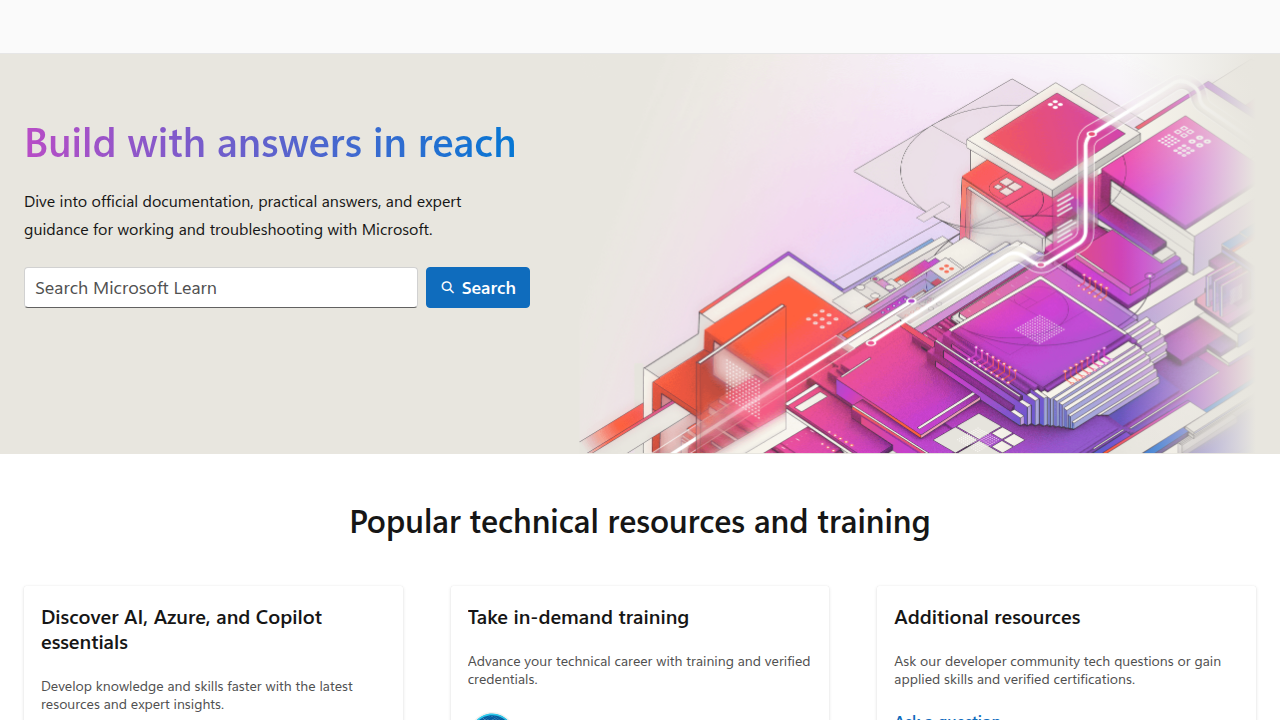
The best part? Everything is free.
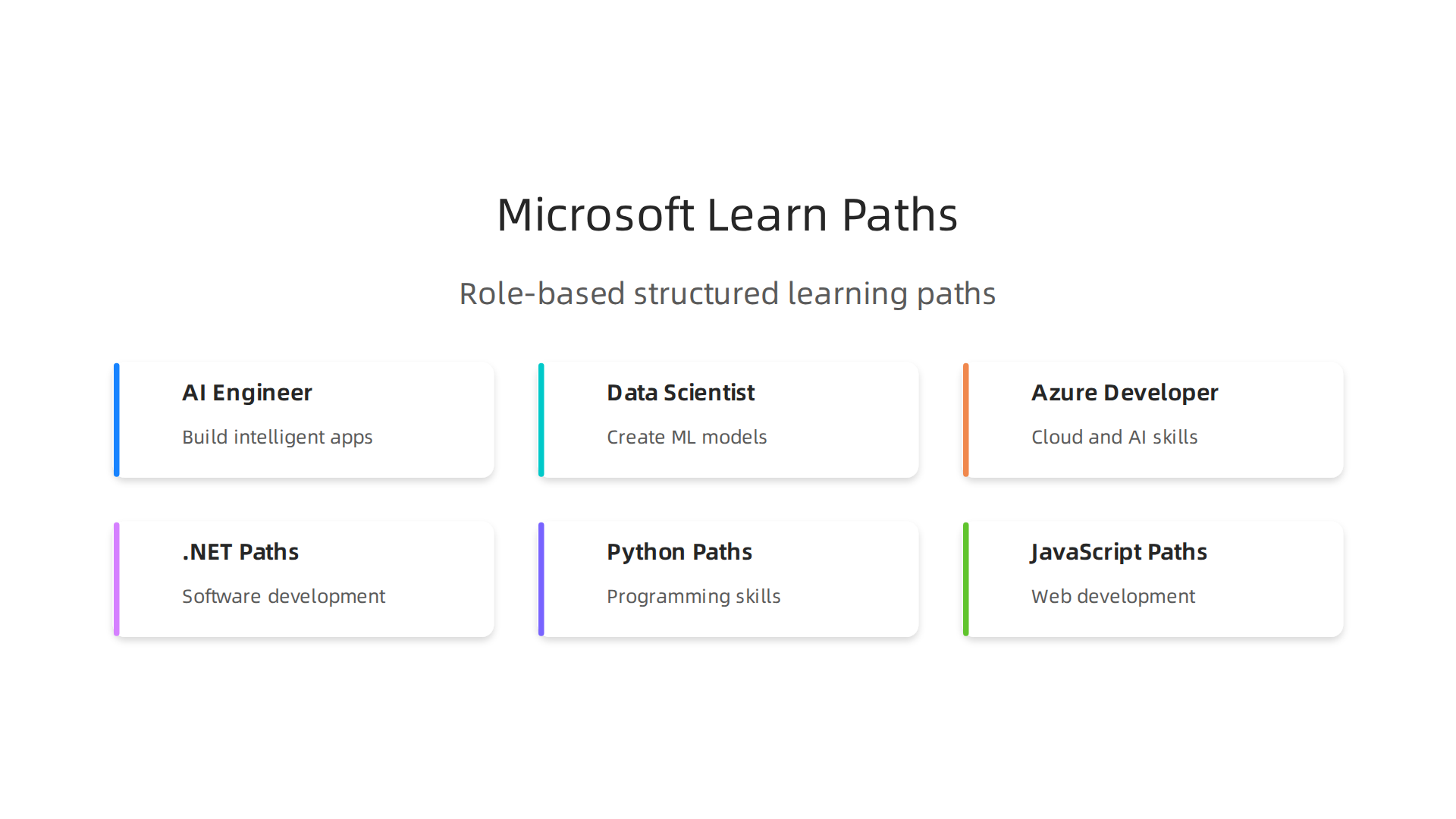
The platform organizes content into role-based learning paths. That means you pick a role like AI Engineer, Data Scientist, or Azure Developer, and Microsoft Learn gives you a structured sequence of modules.
Each path includes interactive coding environments and sandboxes. You write and test code right in your browser, just like on Kaggle. No setup needed.
Microsoft Learn is especially useful if you work in a Microsoft-centric environment. Many companies use Azure, Microsoft 365, and Power Platform. If your goal is to get hired at one of those companies, these learning paths can give you a head start. You also earn digital badges for completing modules. You can add those badges to your LinkedIn profile to show employers what you know.
The AI training modules cover topics like building intelligent apps with Azure AI, using cognitive services, and creating machine learning models. The developer paths include .NET, Python, and JavaScript. If you want to learn how cloud and AI work together, this is one of the best places to start.
For more free options, check out this guide to free online AI courses for developers in 2026. It compares Microsoft Learn with other platforms like IBM Skills, Coursera, and edX.
Summary
This article curates ten of the highest‑rated free coding courses available in 2026 and explains why they still deliver job‑ready skills without tuition. It reviews platforms from project‑based options like freeCodeCamp and The Odin Project to university‑level offerings such as Harvard’s CS50 and MIT OpenCourseWare, and covers applied AI training from Fast.ai, DeepLearning.AI (audit), Google’s ML Crash Course, and Stanford CS229. You’ll learn which courses fit different goals—web development, full‑stack, data science, or AI—what to expect in terms of projects, communities, and certificates, and how to combine applied and theoretical paths. The article also highlights hands‑on options like Kaggle and Microsoft Learn, shows how free resources can lead to real jobs, and points to next steps for building a portfolio and preparing for interviews so you can turn free learning into a career outcome.